Insects are the great unknown of Cabañeros, but in recent years several groups have been studied: day- and night-flying butterflies, grasshoppers and their relatives, dragonflies, hoverflies… Of them all, butterflies are the ones that attract visitors most, and rightly so. Besides their beauty, they matter to the park: their caterpillars feed on plants, the adults pollinate, and both are food for many insect-eating animals. Many also serve as indicators of the health of an ecosystem.
Everything that follows comes from the park’s visitor guide (OAPN, 2011), which gathers the results of those studies (in Spanish). The section on monitoring, further down, comes from the park newsletters.
How many butterflies there are and when to see them
In the park at least 74 species of day-flying butterflies have been found, roughly a third of those recorded in the Iberian Peninsula and the Balearic Islands. Of the night-flying ones, in work carried out during 2009 220 species were identified.
Spring and summer are the best seasons to see them as adults, and June is the month when most species fly, both day- and night-flying. Some, such as the Cleopatra and the Red Admiral, spend the winter in the park as adults and can already be seen at the end of March.
The commonest
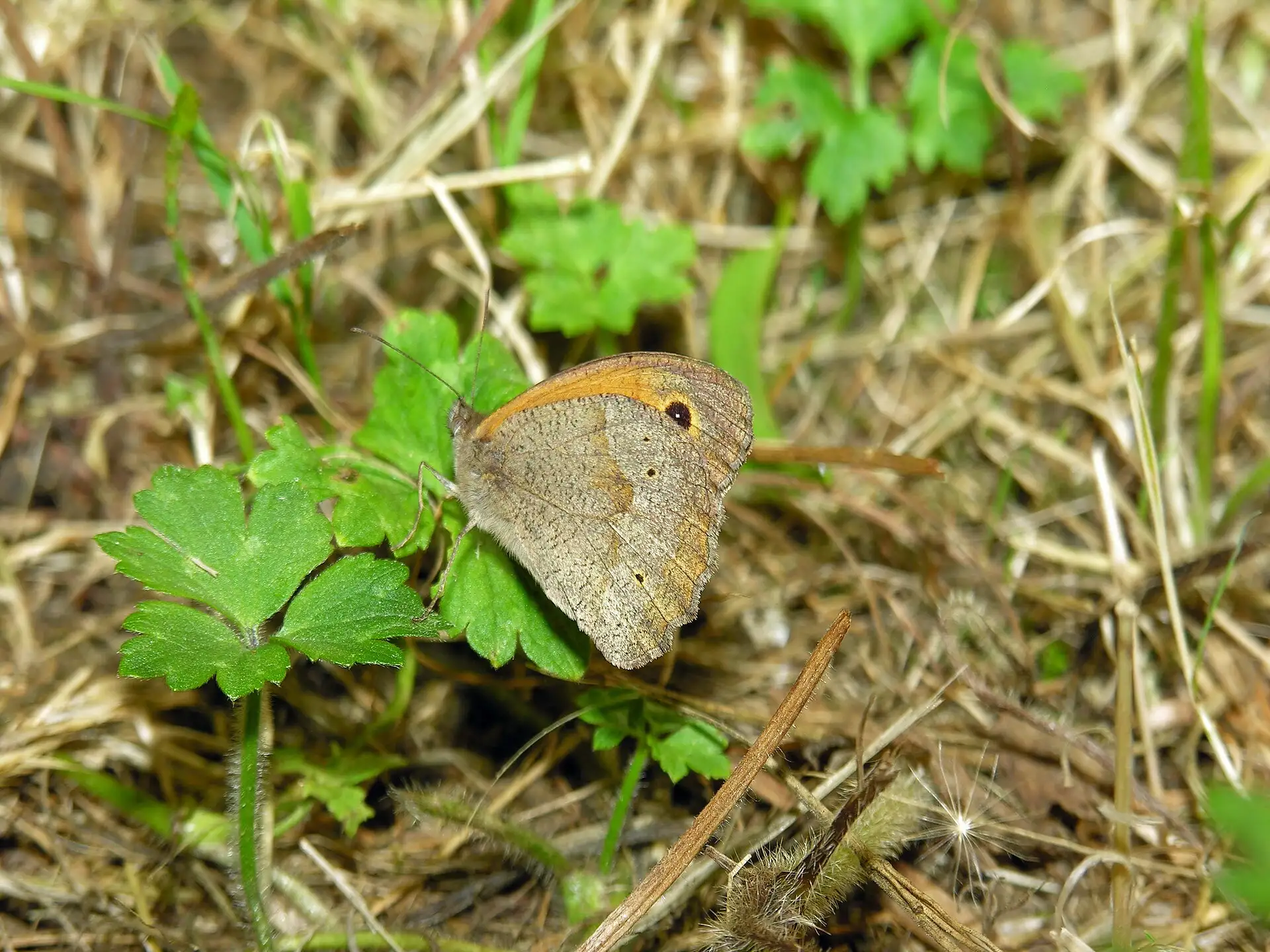
The commonest and most abundant in the park is a small butterfly, the Small Heath (Coenonympha pamphilus). The second is the Meadow Brown (Maniola jurtina), of the same family but bigger, which lives mainly on the raña and in several mountain ranges.
Meadow Browns have a curious habit: in the hottest hours they look for the shade of a tree or a bush. In high summer, on the raña, where trees are scarce, huge numbers gather under the few there are. The Southern Brown Argus (Aricia cramera) does the same, and in the summer months it can be extraordinarily abundant on the raña.
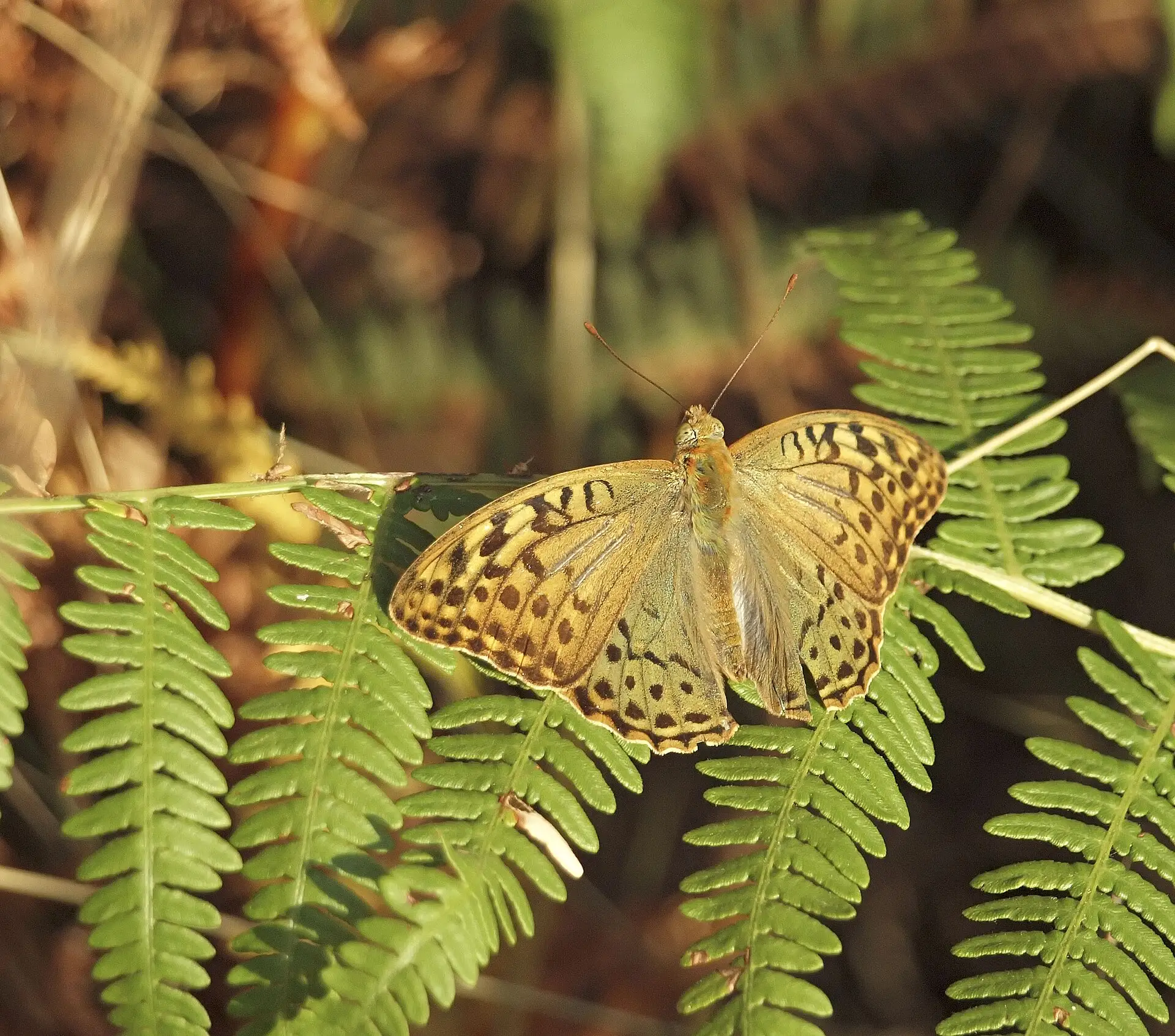
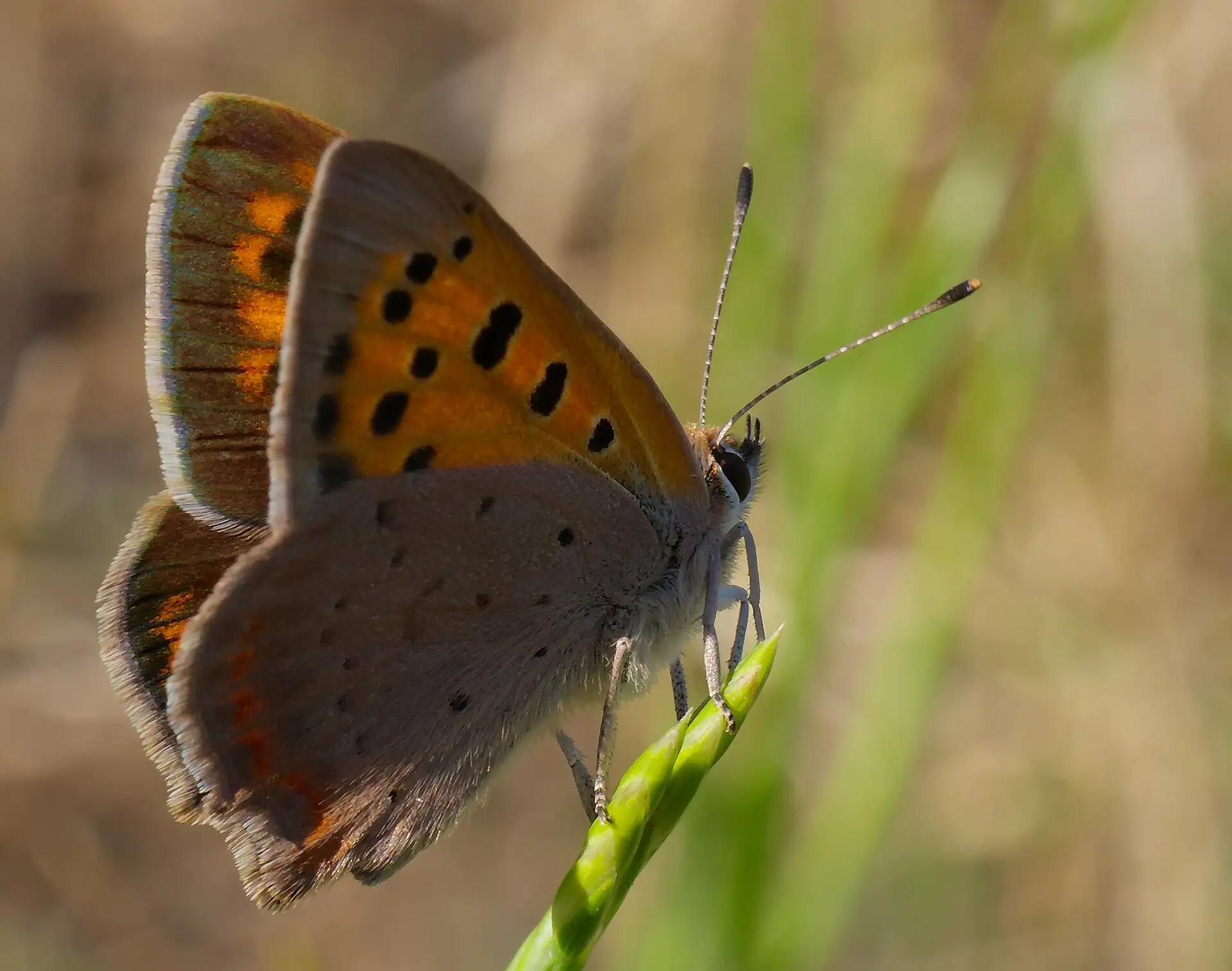
The Cardinal (Argynnis pandora) is one of the largest and most widespread in the park. It is seen in open areas near woods, in clearings in the scrub and where robust, nectar-rich plants abound. Also found all over the park, above all in the low areas of the southern third, is the much smaller Small Copper (Lycaena phlaeas), which appears in any kind of habitat.
Small Copper, a small copper-coloured butterfly with black dotsPhoto: Andreas Eichler, CC BY-SA 3.0Photo 3 of 3
1 / 3
Showy but scarce
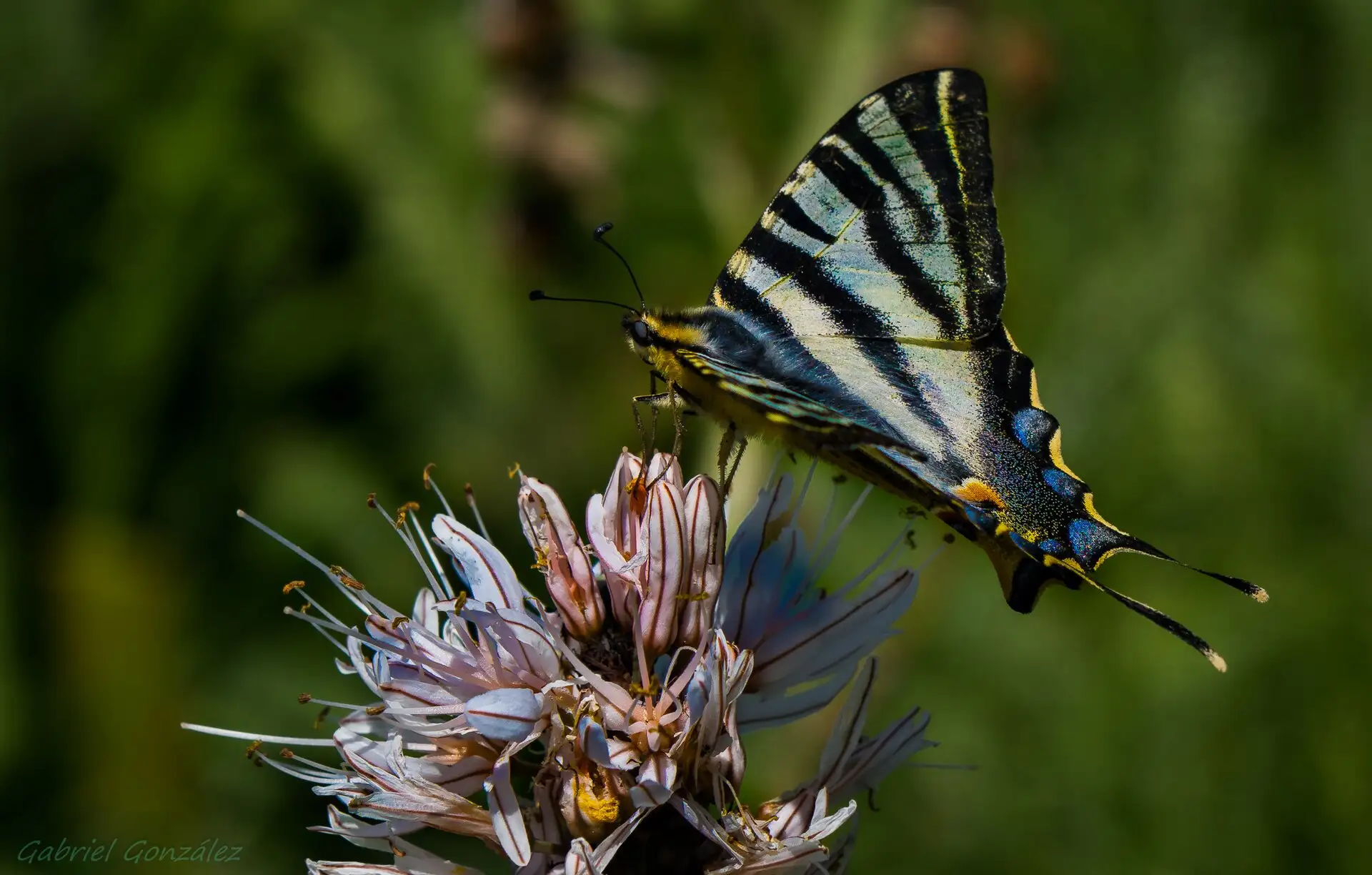
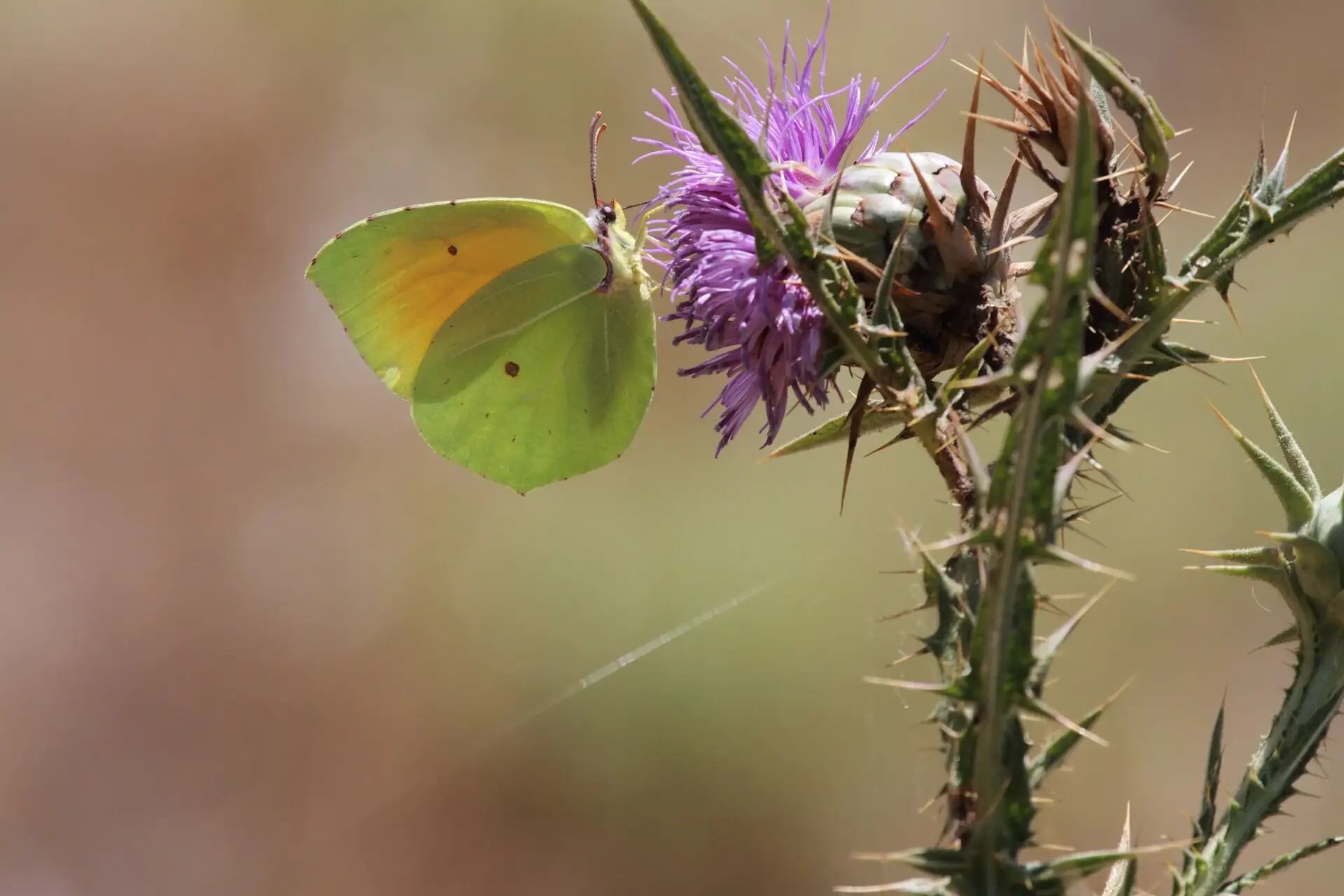
Spread across the park, though in small numbers, live butterflies as eye-catching as the Southern Scarce Swallowtail (Iphiclides feisthamelii), the Cleopatra (Gonepteryx cleopatra) and the Red Admiral (Vanessa atalanta). The last two overwinter in Cabañeros as adults, so they can be seen from the end of March.
Southern Scarce Swallowtail, white with black stripes and long tails, on a flowerPhoto: Gabriel González, CC BY 2.0Photo 1 of 2
Other species are more demanding about where they live:
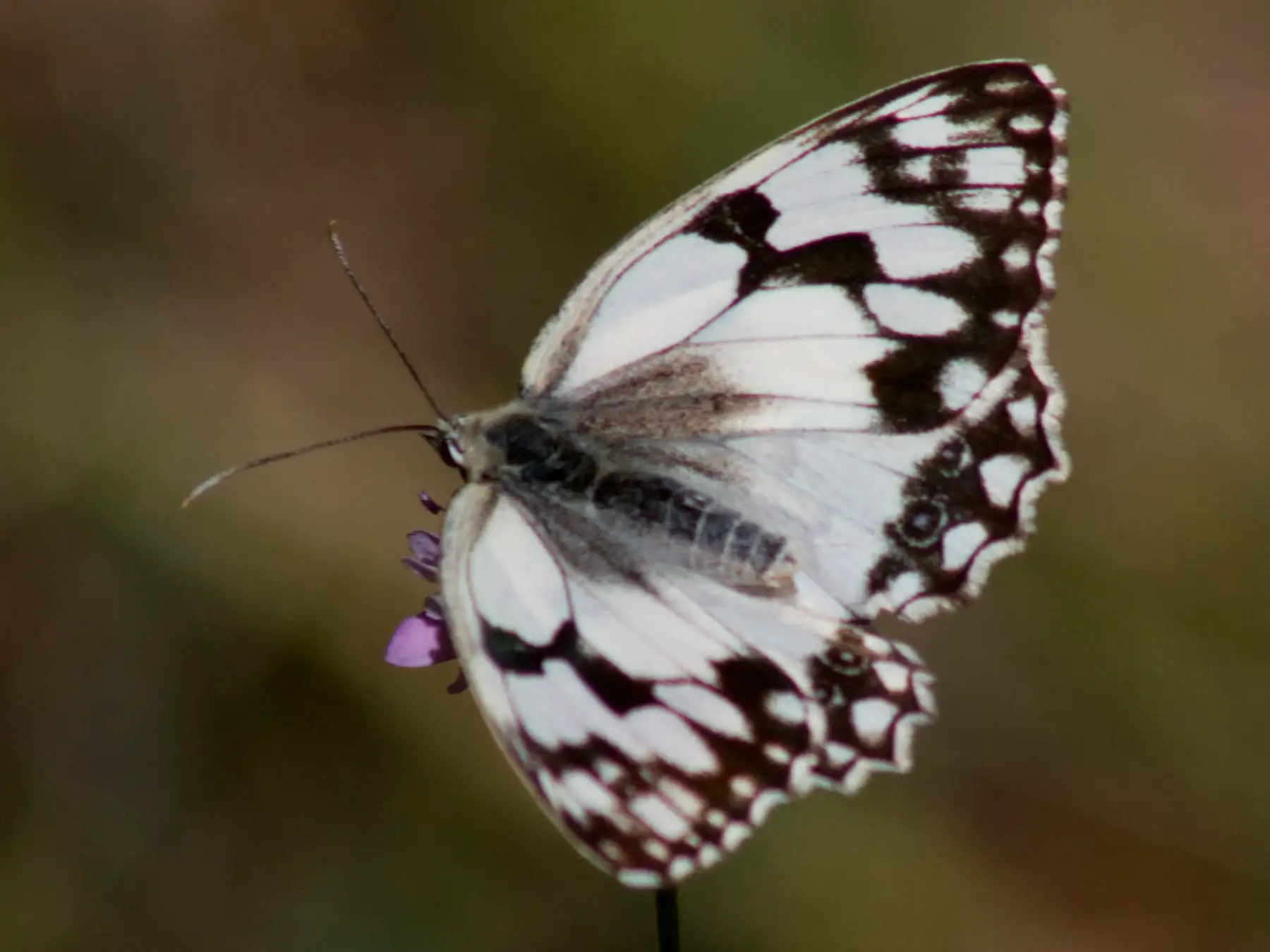
In open areas. The Iberian Marbled White (Melanargia lachesis) prefers flower-rich grasslands, clearings in woods or scrub and the edges of riverside woods.
Beside water. Near rivers and streams and their riverside woods live the Orange-tip (Anthocharis cardamines), the Spanish Purple Hairstreak (Laeosopis roboris), the Peacock (Inachis io), in the upper stretch of the Estena river, and the Holly Blue (Celastrina argiolus), which settles on damp earth and on the edges of puddles to suck mineral salts.
In Pyrenean oak, cork oak and holm oak woods. The False Ilex Hairstreak (Satyrium esculi) and the Purple Hairstreak (Thecla quercus) depend on these trees, on which their caterpillars feed.
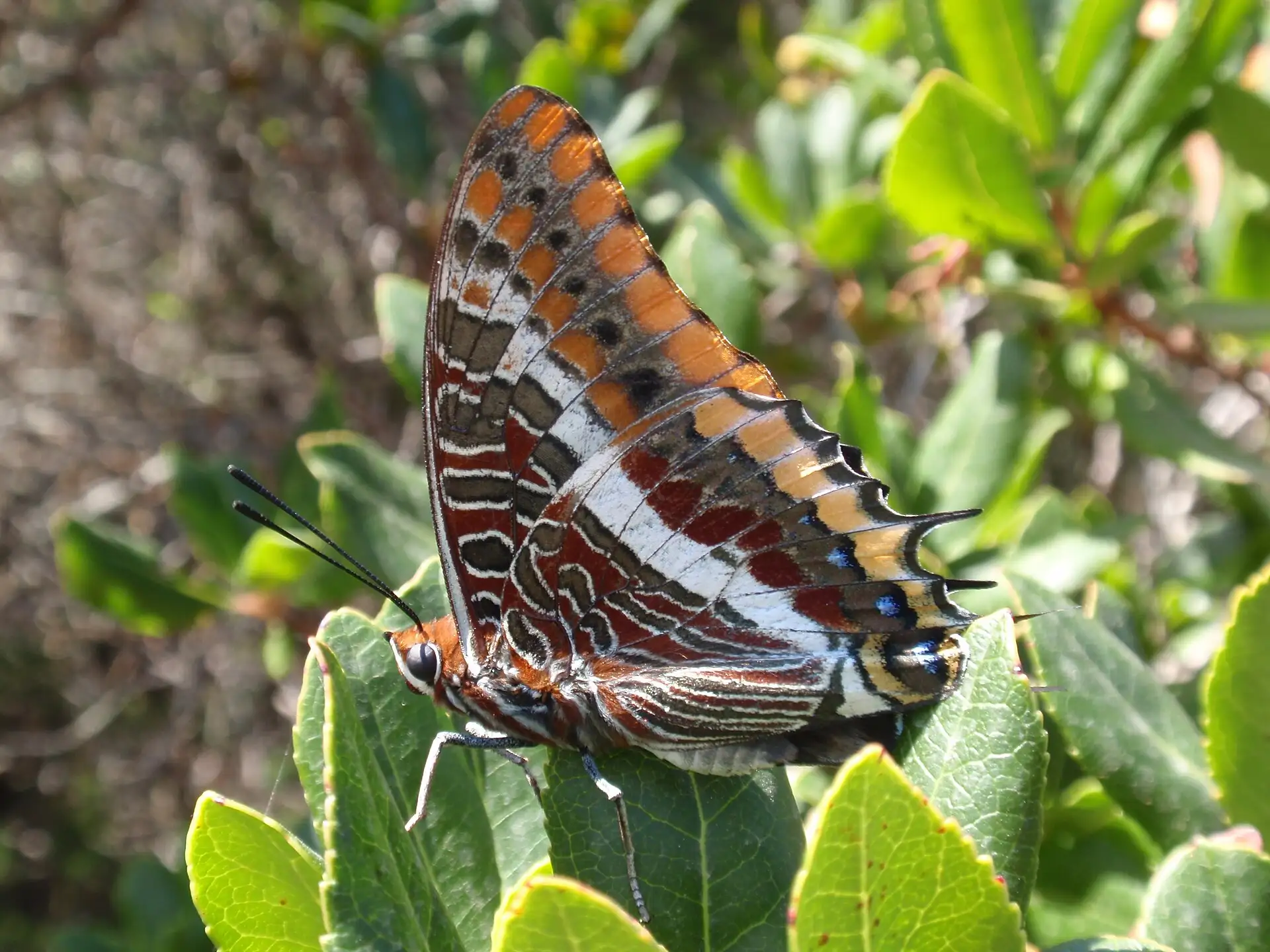
In the woodland. Here the Two-tailed Pasha (Charaxes jasius) stands out, the biggest native day-flying butterfly of the Peninsula. It has two generations a year, one in spring, very scarce, and another in autumn, much more numerous.
Two-tailed Pasha resting on a leaf, with brown and orange wingsPhoto: Acélan, CC BY-SA 3.0Photo 2 of 2
1 / 2
The night-flying butterflies
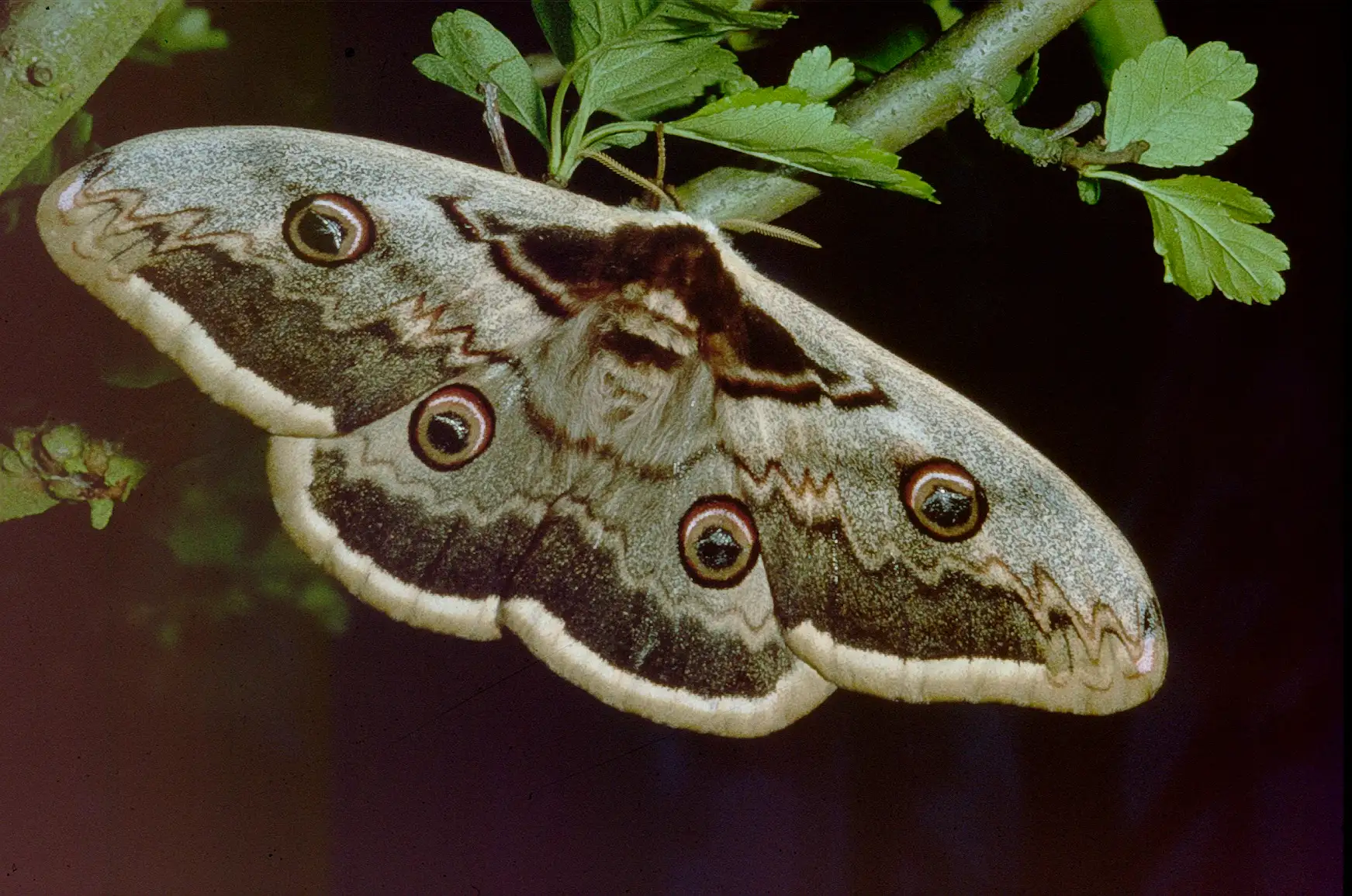
The most striking is the Giant Peacock Moth (Saturnia pyri), the largest insect in Europe, with a wingspan of up to 15 centimetres. It has brown wings with zigzag patterns and a large eyespot on each, which recalls the eyes of an owl and seems to serve to frighten predators. Its caterpillars eat the leaves of ash trees, poplars, walnuts, apple trees, pear trees, blackthorns and other trees. The adult flies from the end of March to early April and, since it no longer feeds, lives no more than a week.
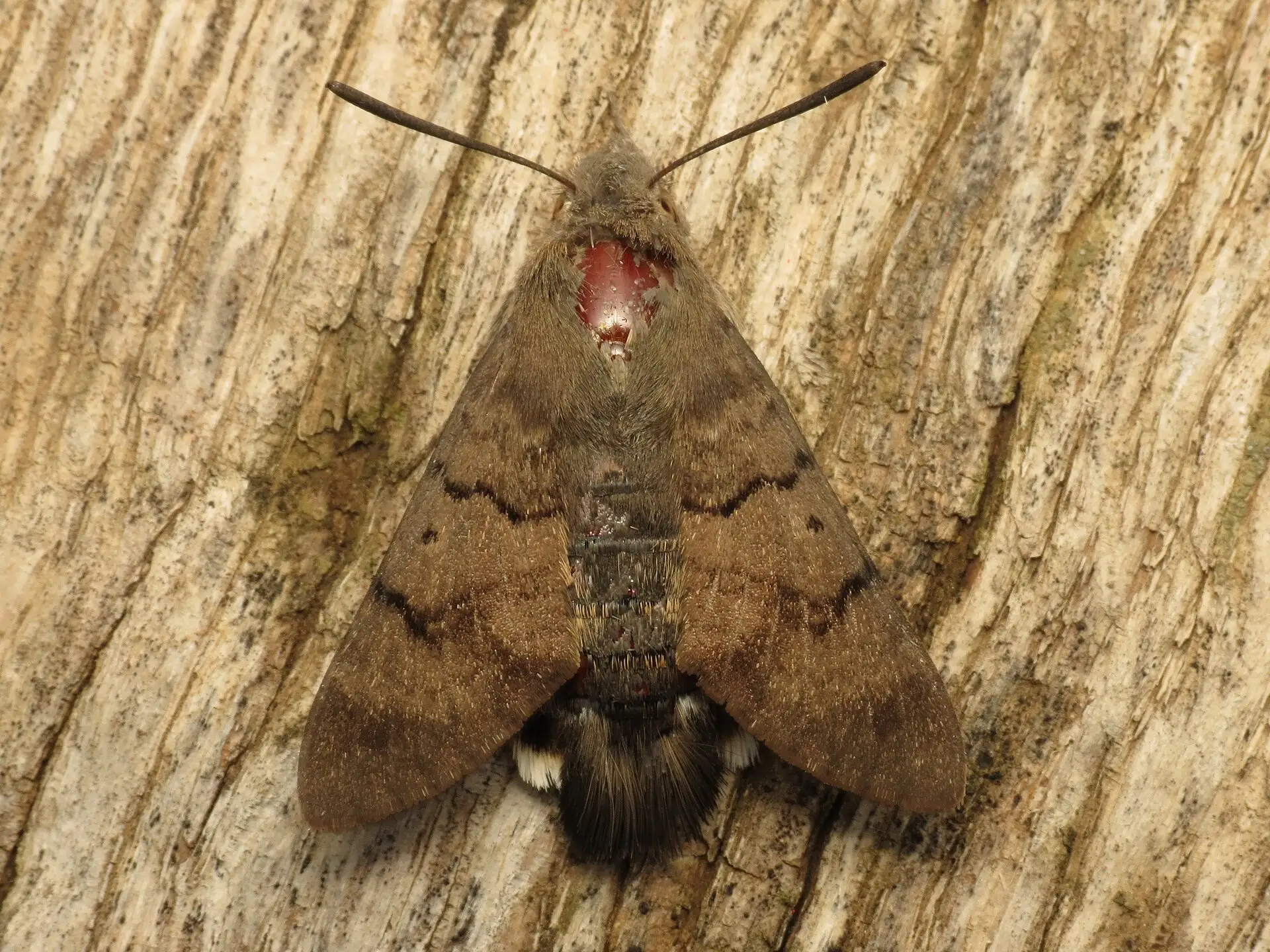
At the other extreme is the Hummingbird Hawk-moth (Macroglossum stellatarum), which, although it is a moth, flies only by day. It is recognised by its very rapid wingbeat and its acrobatic flight, like that of a hummingbird, and in spring it is easy to see sipping nectar from flowers. It lives in southern Europe and makes long migrations: in spring and summer it reaches the whole continent.
Most of the park’s night-flying species, however, are much more discreet, in colours designed to go unnoticed while they rest by day. The best-represented families are the owlet moths and the geometer moths.
Giant Peacock Moth with open wings and an eyespot on eachPhoto: Entomolo, CC BY-SA 3.0Photo 1 of 2
Since 2016 the park has counted its butterflies within the European monitoring scheme (BMS), using the Pollard transect method. It consists of always walking the same path, at a steady pace and without looking back, noting the butterflies that enter an imaginary box five metres on each side in front of the observer. It is done from March to October, between 10 and 11 in the morning, with at least 13 °C (or 10 °C in full sun) and no rain or strong wind. There are three routes: El Peral, in open areas; El Brezoso, in dense scrub and heathland, and one beside the river at Navas de Estena, the dampest.
Year
Visits
Species
Individuals
2016
8
40
404
2017
16
52
1.389
2018
15
53
1.367
2019
18
48
1.431
2020
11
50
1.142
2021
15
54
1.632
2022
15
54
1.466
2023
No sampling
2024
17
53
2.056
2025
45 days
47
2,222
In 2025 the largest number of individuals since the programme began was recorded, 2,222, and the commonest were the Southern Brown Argus (22 %), the Meadow Brown (14 %) and the Small Heath (9 %). In 2024 the kings were the Small Copper (538) and the Southern Brown Argus (231), and the Marsh Fritillary (Euphydryas aurinia), listed as vulnerable, set its record with 8. The monitoring keeps giving surprises: in 2024 Euchloe belemia and Lysandra bellargus were recorded in the park for the first time, and in 2025, Polyommatus thersites.
If you like them, you can help. The Zerynthia project, with the Ministry and Tragsatec, collects sightings from anyone to learn more about the state of butterflies, and at the citizen-science meetings held in the park hundreds of observations are noted in a morning: in May 2023, about 400 of about 200 species (of all kinds, not only butterflies), which ended up on Observation.org. Sources: park newsletters of May–June 2023, May–June and November–December 2024, September–October 2025 and May–June 2026 (all the newsletters) (in Spanish).
Tips for seeing them
Go between April and July, best in June, and in the middle hours of sunny, windless days.
In summer, look under the isolated trees of the raña: that is where Meadow Browns and Southern Brown Arguses shelter from the heat.
Look for nectar-rich flowers in clearings and along the edges of paths, and for damp earth beside streams.
Look, photograph and let them go on their way: no animal may be captured in the park.
Bibliography
OAPN (2011). Guía de visita del Parque Nacional de Cabañeros, chapter on invertebrates. PDF