
Plan your trip
When to go to Cabañeros
Every season has something: the rut in autumn, cranes in winter, rockrose in flower in spring and summer sunrises.
The year at a glance
What happens in the park over the twelve months. The current month is highlighted.
| Event | Jan | Feb | Mar | Apr | May | Jun | Jul | Aug | Sep | Oct | Nov | Dec |
|---|---|---|---|---|---|---|---|---|---|---|---|---|
| Mammals | ||||||||||||
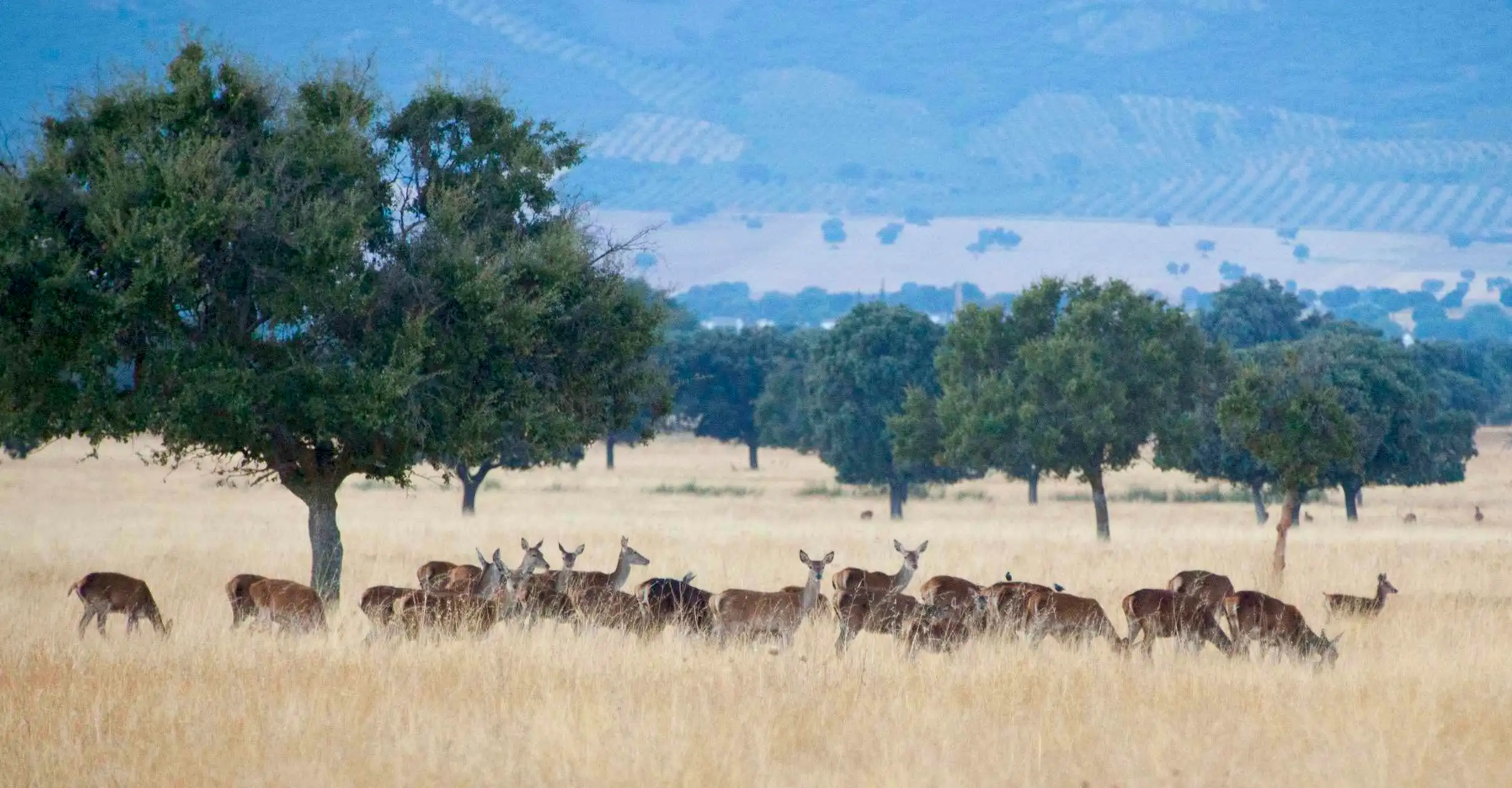
| Red deer rutMost intense from mid-September to mid-October; it varies with the rain. | No | No | No | No | No | No | No | No | Yes | Yes | No | No |
| Large herds on the rañaAfter the rut, the deer gather to eat acorns; in November, herds of more than 400. | No | No | No | No | No | No | No | No | No | Yes | Yes | Yes |
| Hinds with their calvesThey come back to the raña with their calves; the stags, with new antlers in velvet. | No | No | No | No | Yes | No | No | No | No | No | No | No |
| Roe deer rut (the «bark»)It starts in June; you hear it mostly at dawn and dusk. | No | No | No | No | No | Yes | No | No | No | No | No | No |
| Birds | ||||||||||||
| CranesThe first ones are usually seen around 15 October; a mild autumn in northern Europe delays them, as in 2023. | Yes | Yes | No | No | No | No | No | No | No | Yes | Yes | Yes |
| Cinereous vulture breedingIt lays its single egg between mid-February and early March; the chick flies in August. | No | Yes | Yes | Yes | Yes | Yes | Yes | Yes | No | No | No | No |
| White storksFrom spring to autumn, a colony on Portuguese oaks and holm oaks next to the observatory. | No | No | Yes | Yes | Yes | Yes | Yes | Yes | Yes | Yes | No | No |
| Bee-eater and short-toed snake eagleSummer birds: they arrive in March and leave in September. | No | No | Yes | Yes | Yes | Yes | Yes | Yes | Yes | No | No | No |
| Plants and insects | ||||||||||||
| The raña in flowerViper's bugloss and French lavender turn the raña purple; peonies in the holm oak and cork oak woods. It depends on the rain. | No | No | Yes | Yes | Yes | No | No | No | No | No | No | No |
| Gum rockrose in flowerThe slopes are covered in white flowers. | No | No | No | Yes | Yes | Yes | No | No | No | No | No | No |
| ButterfliesSpring and summer; June is the month with the most species on the wing. | No | No | No | Yes | Yes | Yes | Yes | Yes | Yes | No | No | No |
| Peat bogs at their bestLate spring and early summer: cross-leaved heath and carnivorous plants. | No | No | No | No | Yes | Yes | No | No | No | No | No | No |
| Autumn colours and fungiMost striking in the riverside woods and the shady slopes of the sierras. | No | No | No | No | No | No | No | No | No | Yes | Yes | No |
| Autumn fruit and flowersStrawberry tree with flowers and fruit at the same time, mastic and flax-leaved daphne; carpets of Merendera on the Colada de Navalrincón. | No | No | No | No | No | No | No | No | No | Yes | Yes | No |
| Night sky | ||||||||||||
| Milky WayOn moonless nights, with its brightest part to the south, in Sagittarius. | No | No | No | No | No | Yes | Yes | Yes | Yes | No | No | No |
| PerseidsThe summer meteor shower, around 12 August. | No | No | No | No | No | No | No | Yes | No | No | No | No |
| GeminidsIn mid-December; one of the showers with the most meteors per hour. | No | No | No | No | No | No | No | No | No | No | No | Yes |
| Weather and rules | ||||||||||||
| It may snowNow and then, mostly between December and April. | Yes | Yes | Yes | Yes | No | No | No | No | No | No | No | Yes |
| Heat and droughtJuly, average highs of 30.7 °C; August, the driest month. | No | No | No | No | No | No | Yes | Yes | No | No | No | No |
| No smokingFrom 1 June to 30 September, because of fire risk. | No | No | No | No | No | Yes | Yes | Yes | Yes | No | No | No |
Swipe the table on your phone. The months are approximate: they depend on each year's rain and heat.

March · April · May
Spring
The hills burst into flower, the summer birds arrive and the raña fills with life.
What to see
- Gum rockrose in flower, from April to June.
- In wet years the raña turns purple with viper's bugloss and French lavender, and peonies flower under holm oaks, oaks and cork oaks (on La Viñuela, for example).
- The bee-eater and the short-toed snake eagle arrive; the storks move into their nests.
- The cinereous vulture chicks hatch, in late March and April.
- In May, the hinds come back to the raña with their calves.
The weather
Spring rain and, at times, storms from the east that bring heavy showers. More about the climate
Good trails
- The Tabla del Acebo path, at Navas de Estena, passes a peat bog, at its best in late spring.
- The botanical trails at Casa Palillos and Torre de Abraham, short and flat.
What to avoid
- Check the forecast: spring downpours can turn the tracks muddy.

June · July · August
Summer
Dry heat: get up early, walk in the shade and come back at dusk.
What to see
- The roe deer rut in June, the «bark», at dawn and dusk.
- June is the month with the most butterflies on the wing.
- By late summer, the stags have their antlers and can be seen on the raña.
- In August the cinereous vulture chicks fly for the first time.
The weather
July is the hottest month (average highs of 30.7 °C) and August has almost no rain. More about the climate
Good trails
- Short walks early or late in the day, such as the botanical and river trail at Torre de Abraham, through riverside woodland.
- The 4×4 tour, early in the morning or late in the afternoon.
What to avoid
- The middle of the day.
- From 1 June to 30 September smoking is not allowed.
- At Gargantilla the streams dry up: there is no water and no springs.

September · October · November
Autumn
The rut, the cranes and the colours of the woods: the park's high season.
What to see
- The rut, from mid-September to mid-October.
- The first cranes, around 15 October.
- The winter birds arrive: red kites, lapwings, thrushes and black redstarts.
- In November, herds of more than 400 deer on the raña.
- Fungi and colours in the riverside woods and on the shady slopes.
- The strawberry tree, with flowers and fruit at the same time; and on the Colada de Navalrincón, carpets of Merendera, which flower when the days get shorter.
The weather
The rain returns, often with westerly storms lasting two or three days. More about the climate
Good trails
- For the rut: Casa Palillos, the first section of the Colada de Navalrincón starting from Torre de Abraham, and La Viñuela.
- The oak wood on the way up to Rocigalgo, «spectacular in autumn» according to the park.
What to avoid
- Going without booking in the middle of the rut: the 4×4 tours and the accommodation fill up. There are fewer people on weekdays.

December · January · February
Winter
Cold, a green raña and cranes: fewer people and very clear light.
What to see
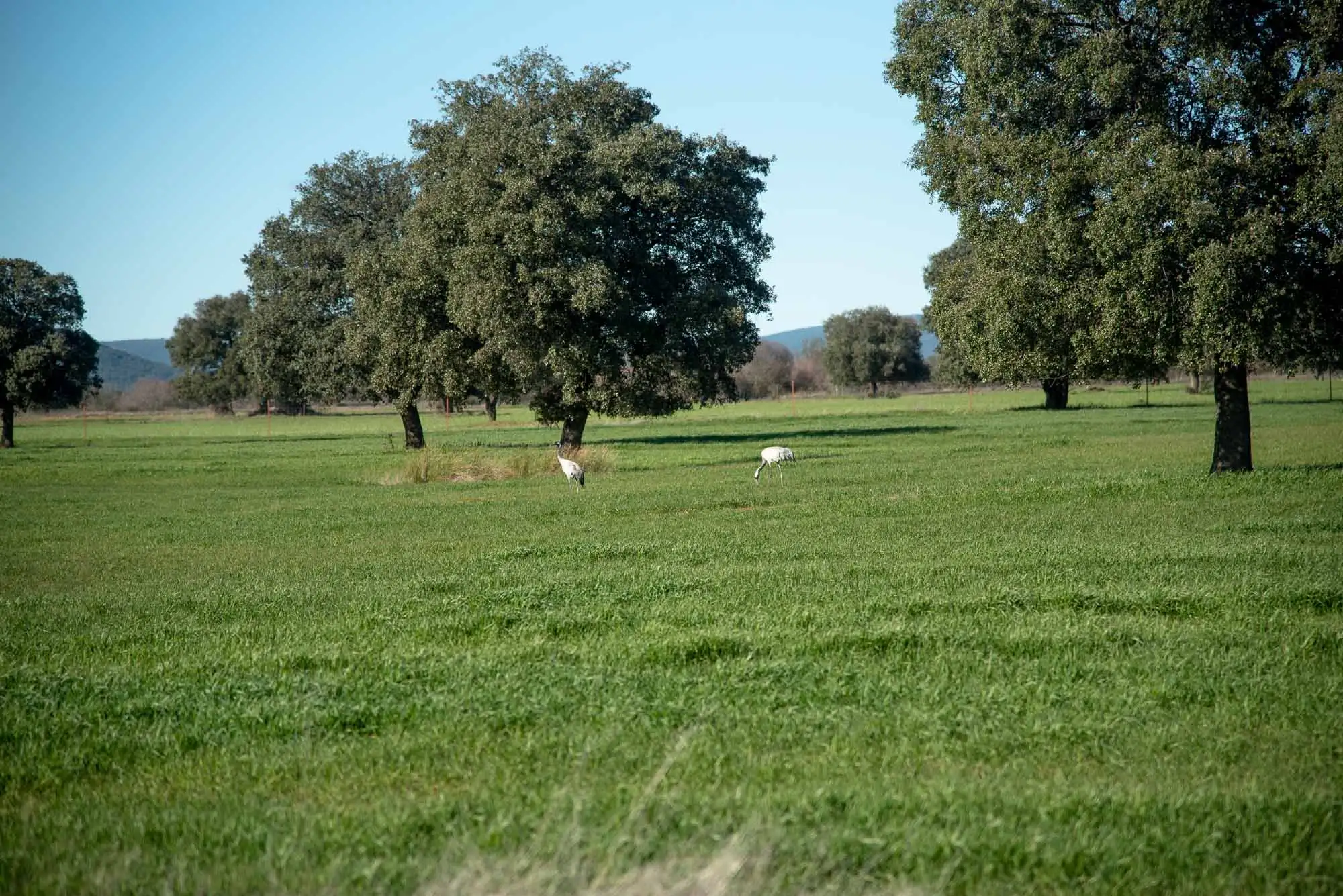
- The cranes, which spend the winter here: in the latest counts, between 4,400 and 5,800 at the Torre de Abraham and Las Povedas roosts.
- The deer stay on the raña until late December; then they go up into the hills.
- The cinereous vulture lays its single egg, between mid-February and early March.
The weather
December is the coldest month (average lows of −0.2 °C); January has the most rainy days and February the most rain. Now and then it snows. More about the climate
Good trails
- The stork observatory and Casa Palillos, looking over the raña.
- The 4×4 tour of the raña, to see the cranes and the deer.
What to avoid
- The Colada de Navalrincón: some stretches get waterlogged in winter.
- Early morning ice on the road.
Month by month
The essentials of each month, to help you choose a date.
January
Cranes on the raña and winter light.
- Cranes
- January, the month with the most rainy days
- It may snow
February
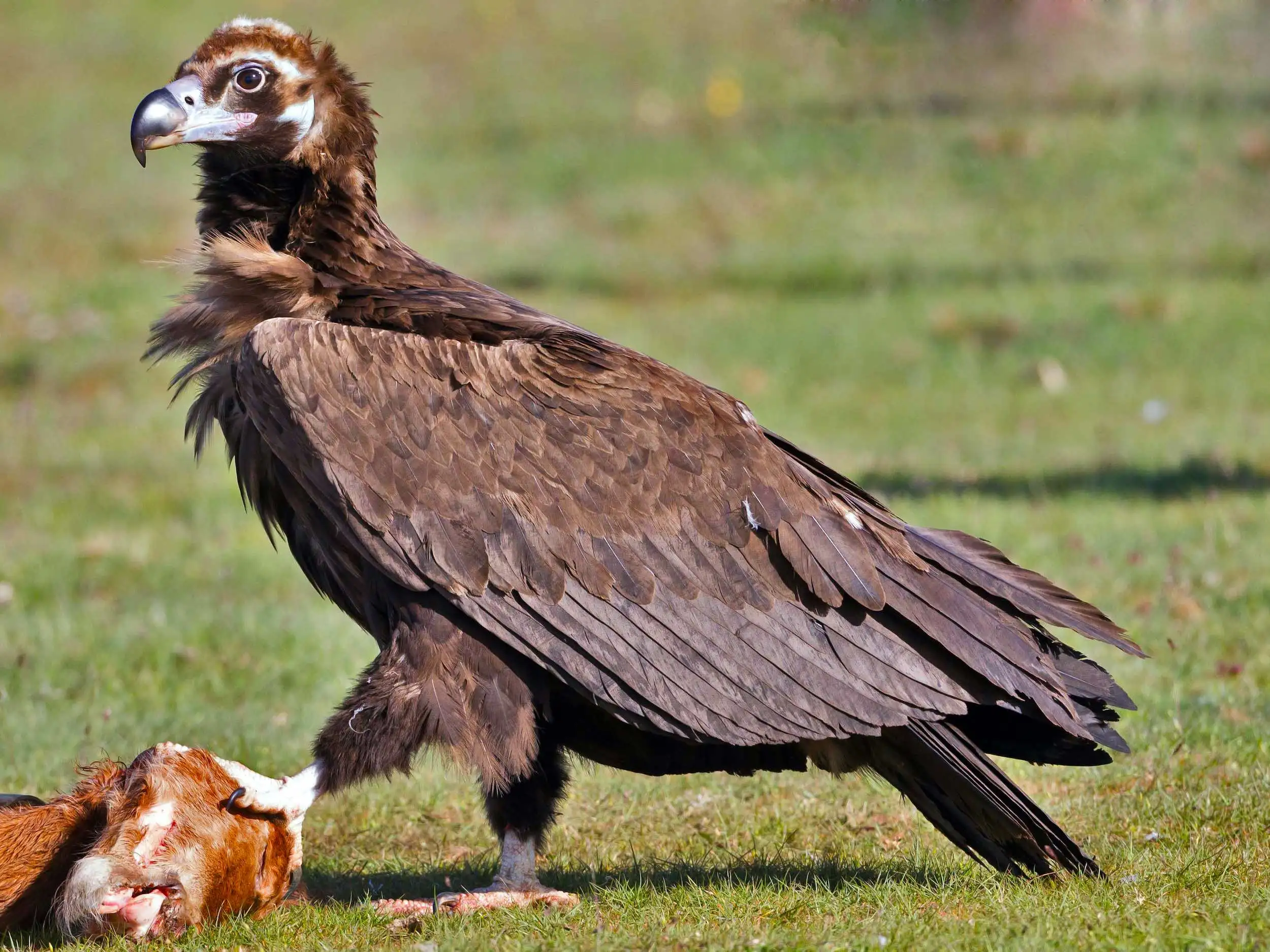
The cinereous vulture lays its single egg.
- Cinereous vultures lay their eggs
- Last weeks of the cranes
- The wettest month
March
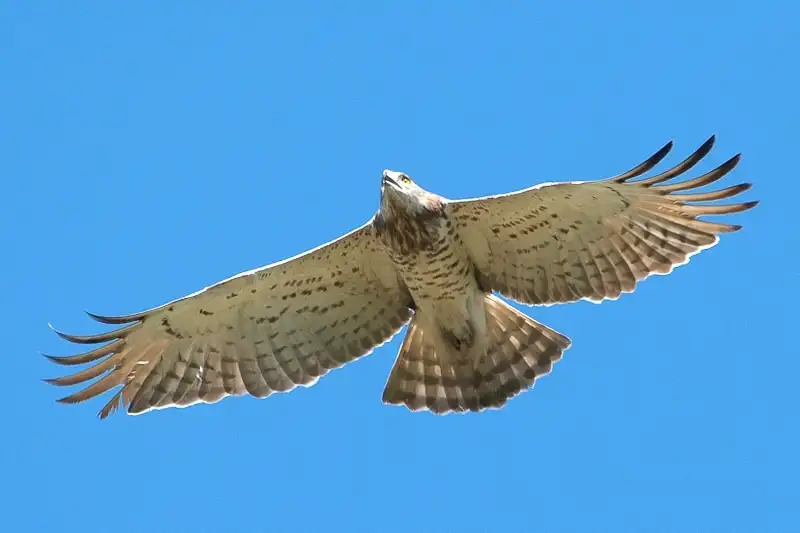
The summer birds arrive.
- The bee-eater and the short-toed snake eagle arrive
- The storks return
- Cinereous vulture chicks hatch
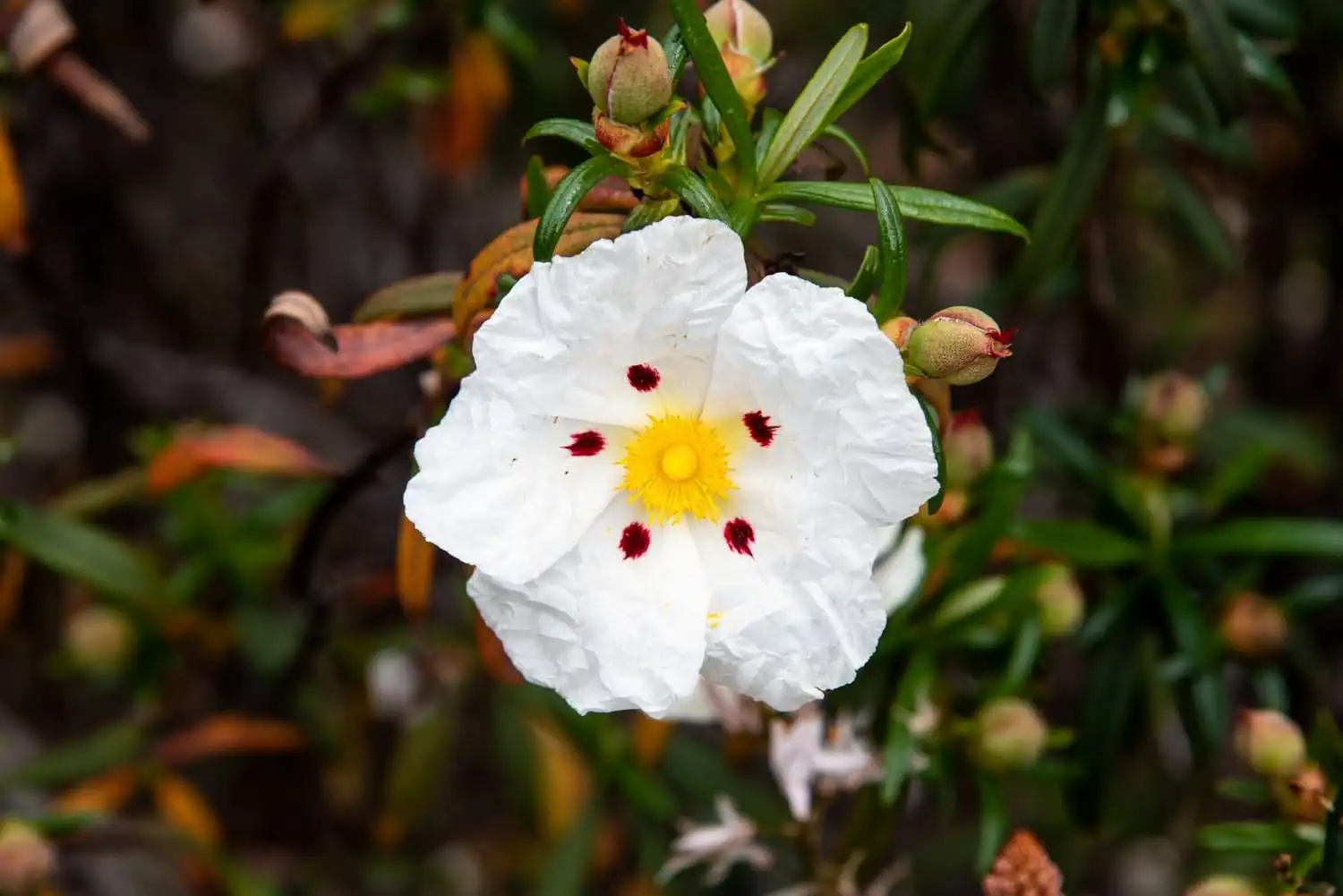
April
The rockrose flowers and the butterflies fly.
- The rockrose starts to flower
- First butterflies
- Cinereous vulture chicks in the nest
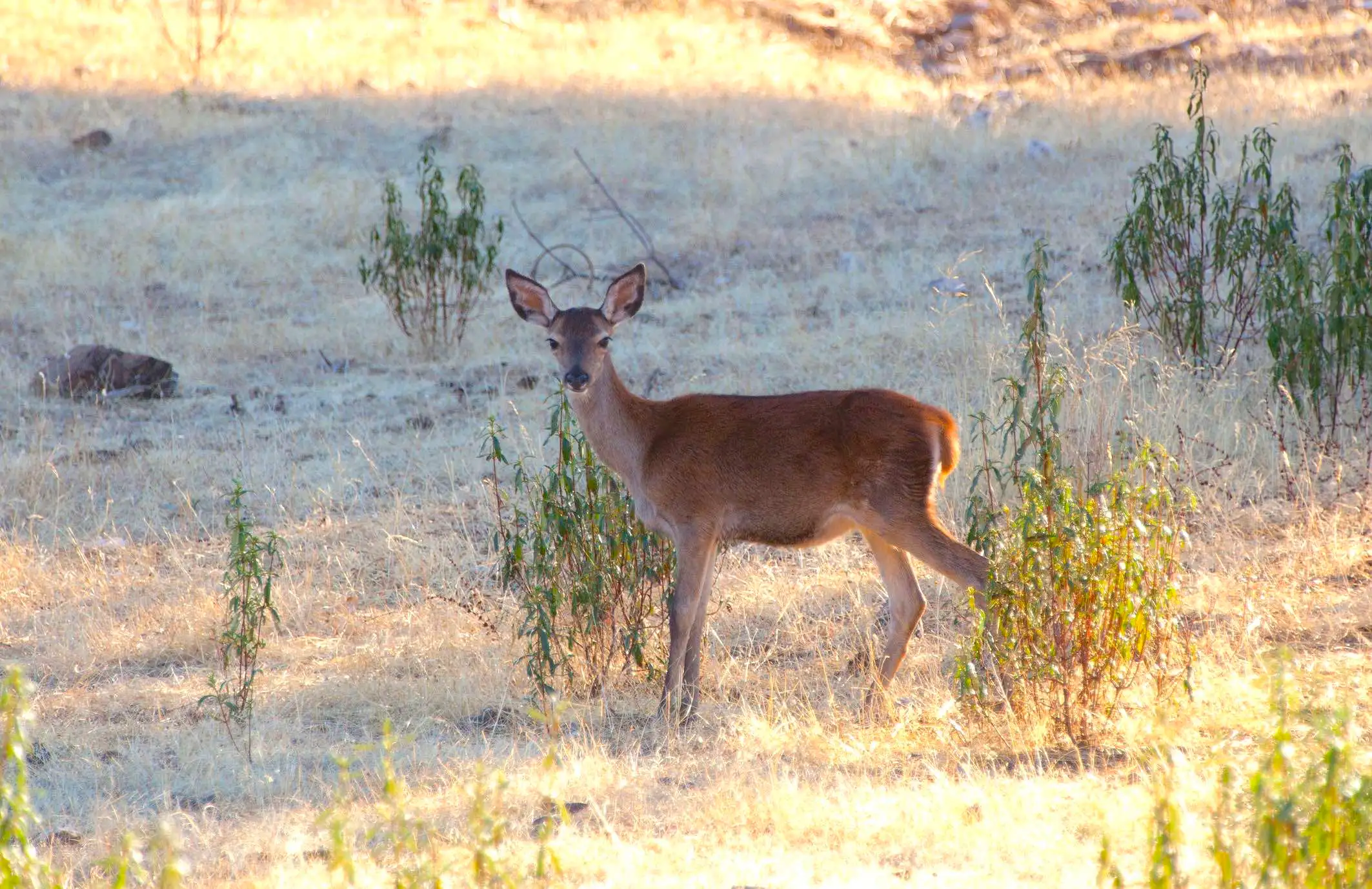
May
The hinds come back to the raña with their calves.
- Hinds with calves on the raña
- The rockrose in full flower
- The peat bogs at their best
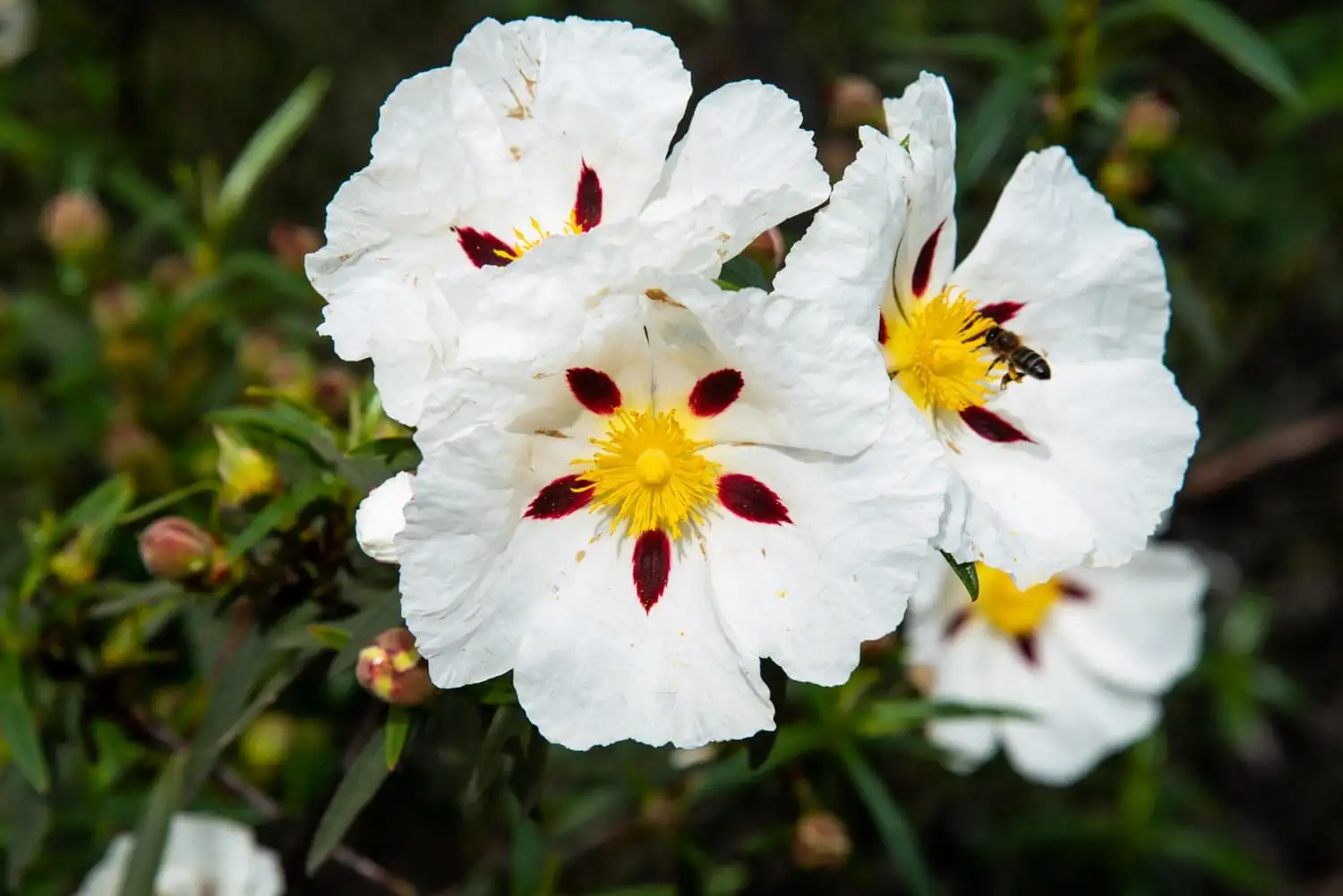
June
The roe deer barks and more butterflies fly than ever.
- Roe deer rut
- The month with the most butterflies
- From the 1st, no smoking
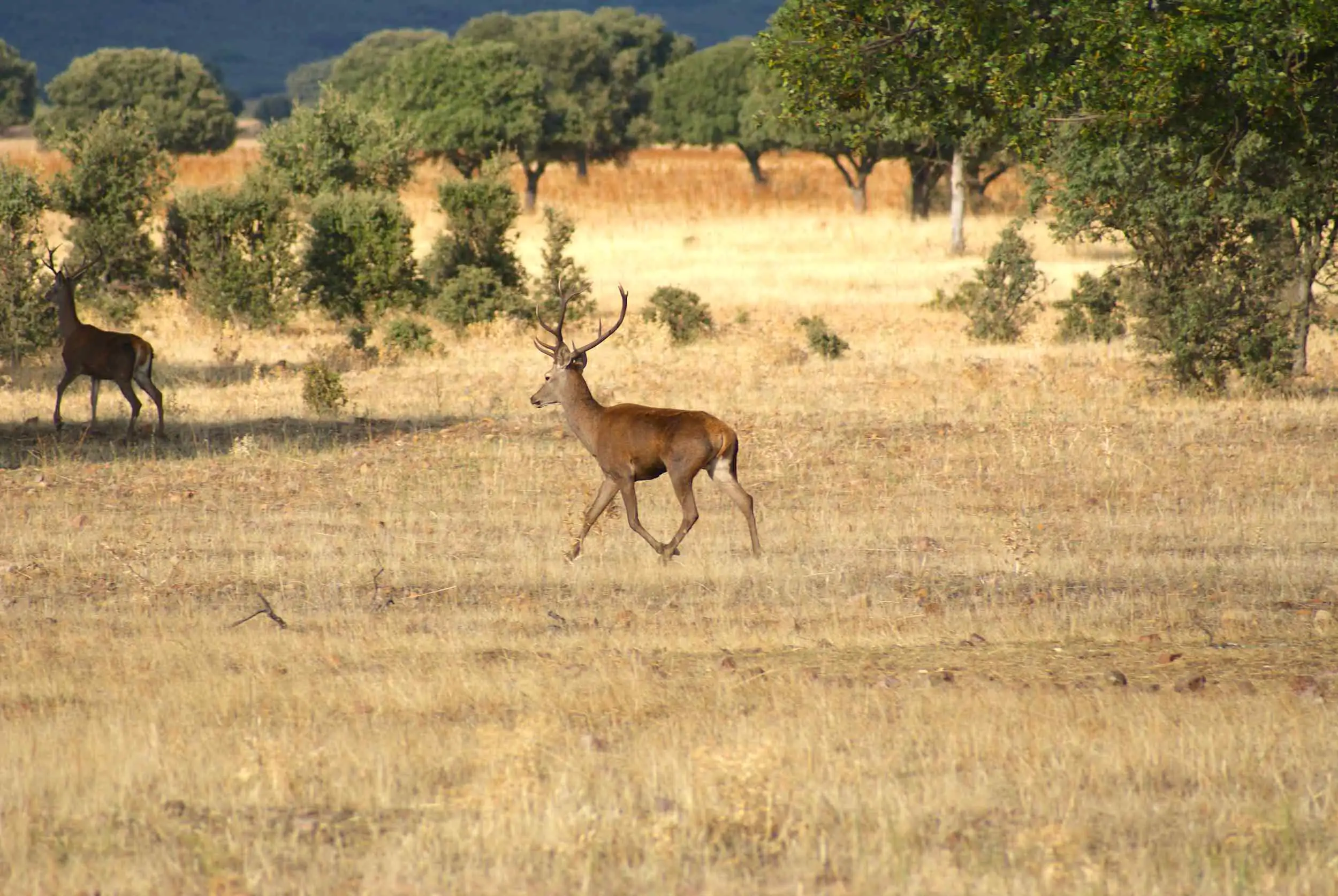
July
The hottest month: get up early.
- Average highs of 30.7 °C
- The stags show off their antlers
- Short trails, early in the day
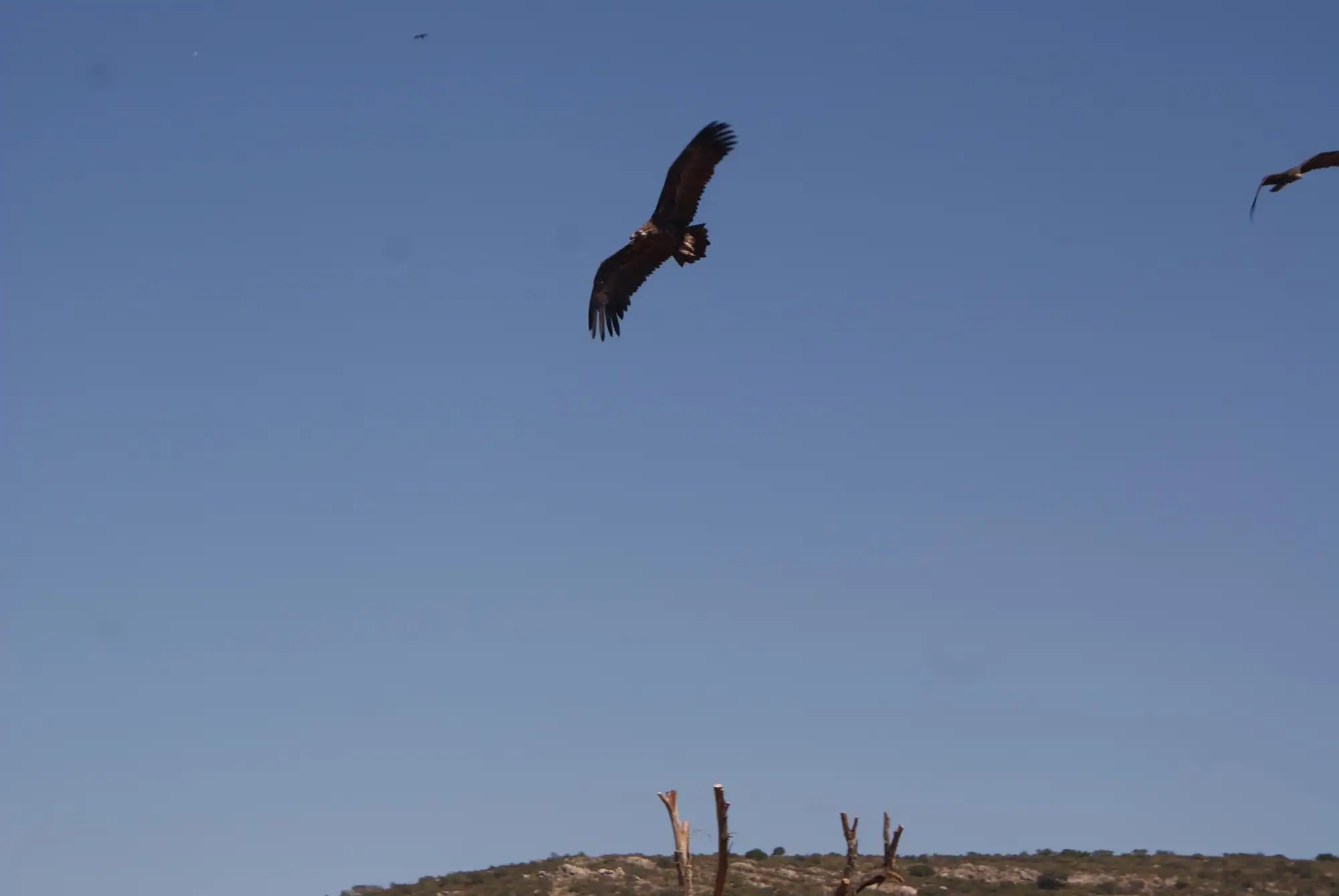
August
Countdown to the rut.
- First flights of the cinereous vulture
- The stags follow the hinds
- Book the rut 4×4 tour now
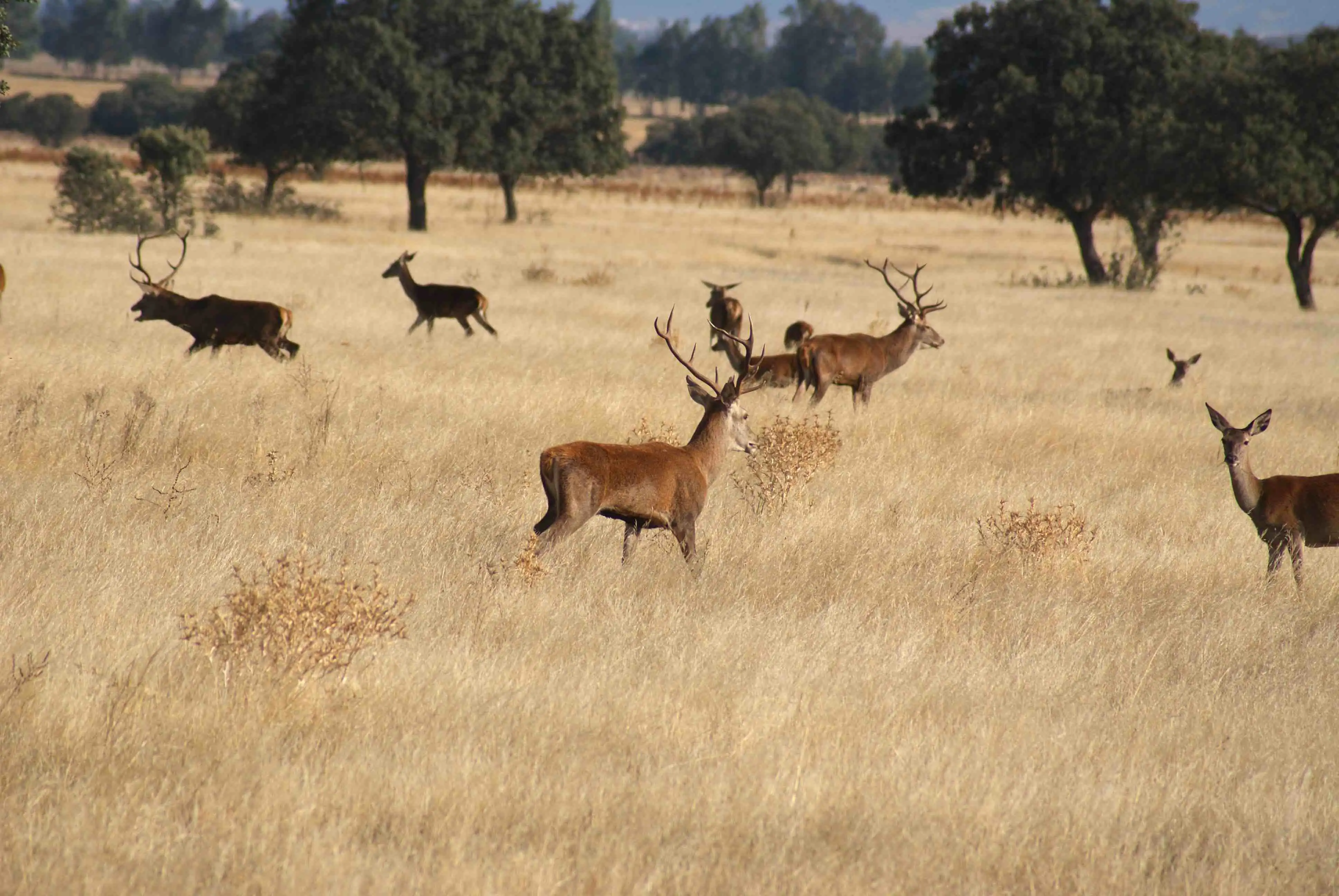
September
The rut starts with the first rains.
- First roars
- Best at dawn and dusk
- Last bee-eaters and short-toed snake eagles
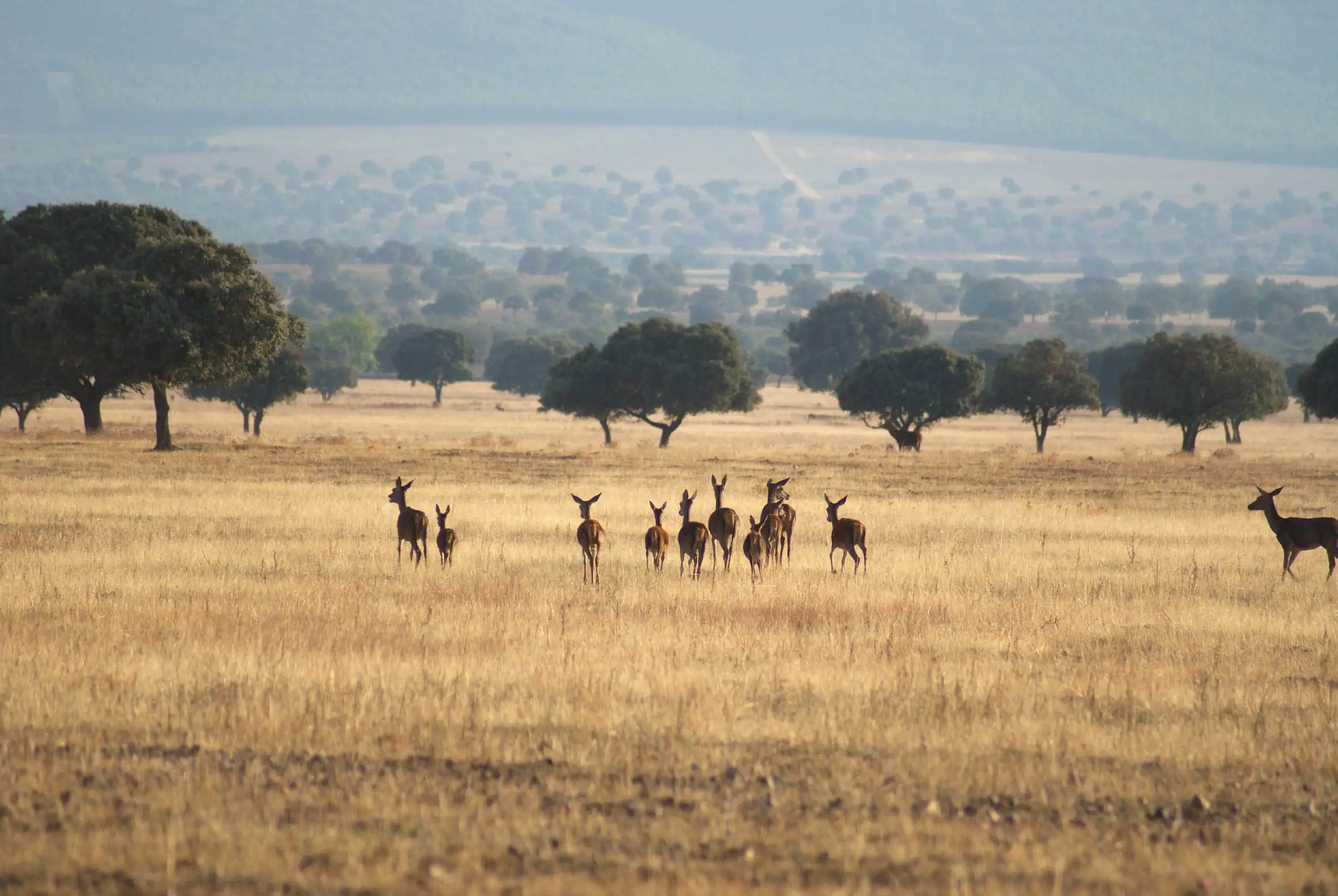
October
Rut, first cranes and autumn colours.
- The rut, until mid-month
- First cranes, around the 15th
- Fungi and colourful woods
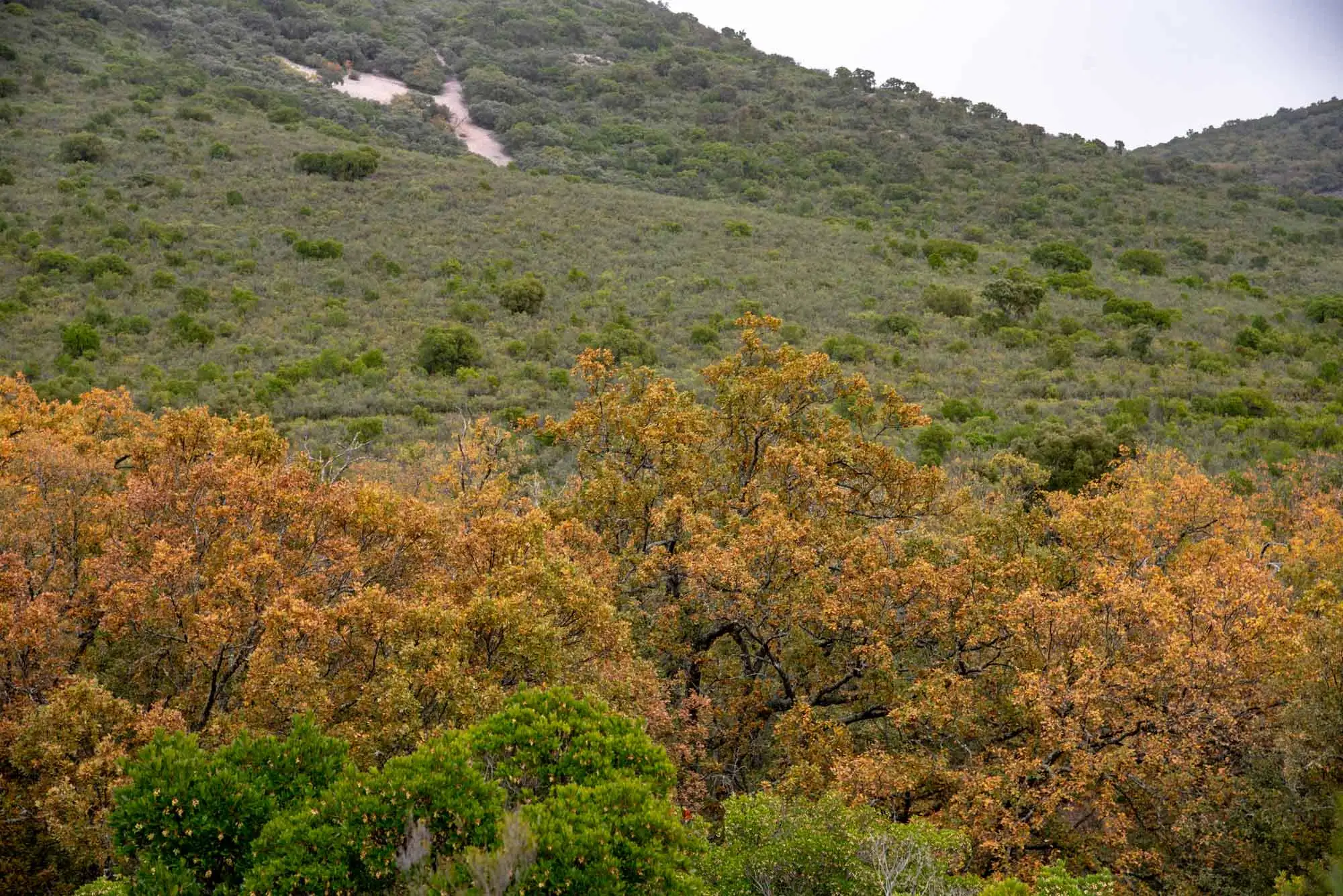
November
Herds of hundreds of deer eating acorns.
- Herds of more than 400 deer
- The winter birds arrive
- Autumn, on the shady slopes and by the rivers
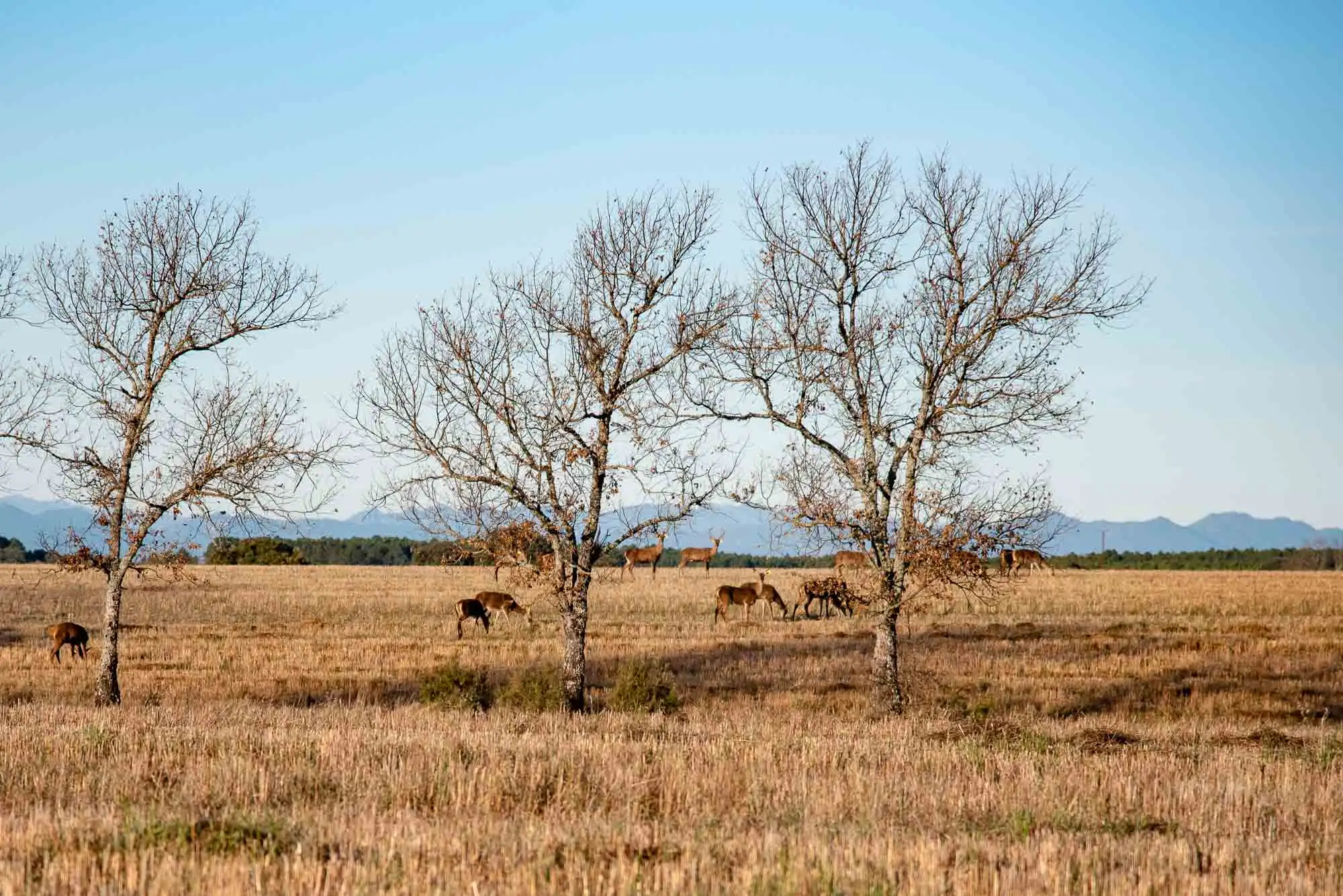
December
The coldest month, with the raña still full of deer.
- Deer on the raña until the end of the month
- Cranes
- Average lows below zero


Sources and fact-checking
- Cabañeros National Park newsletter, July-August 2022 (in Spanish)
- Cabañeros National Park newsletter, September-October 2022 (in Spanish)
- OAPN. Visitor guide to Cabañeros National Park (2011, in Spanish)
- MITECO-OAPN. General information on Cabañeros National Park (April 2025, in Spanish)
- cabaneros.org species pages (common crane, cinereous vulture, white stork, bee-eater, short-toed snake eagle, lesser kestrel and gum rockrose), with their own sources
- «Desde el parque» newsletter of Cabañeros National Park, March-April 2024 (in Spanish)
- «Desde el parque» newsletter of Cabañeros National Park, September-October 2024 (in Spanish)
- «Desde el parque» newsletter of Cabañeros National Park, July-August 2023 (in Spanish)
- National Geographic Institute, «Lluvias de meteoros» (in Spanish)
- «Desde el parque» newsletter of Cabañeros National Park, September-October 2023 (in Spanish)
- «Desde el parque» newsletter of Cabañeros National Park, November-December 2023 (in Spanish)
- «Desde el parque» newsletter of Cabañeros National Park, January-February 2025 (in Spanish)
- «Desde el parque» newsletter of Cabañeros National Park, January-February 2026 (in Spanish)
Checked on 13 October 2026. The climate data come from the Retuerta del Bullaque weather station quoted in the official guide; they are not a forecast.