
Plan your trip
Plan your visit
Where to get information, what to book, how to get there and which rules to know before entering the park.
Before you go, in thirty seconds
No entry fee
Self-guided trails, guided walks and visitor centres are free. Only the 4×4 tours are paid.
No public transport to the park
Buses reach the villages around it. You need a car to get to the trails.
Phone before you go
Many opening times change with the season. The park gives information and books guided walks on 926 783 297.
At dawn or dusk
The first and last hours of daylight are the best for seeing wildlife.
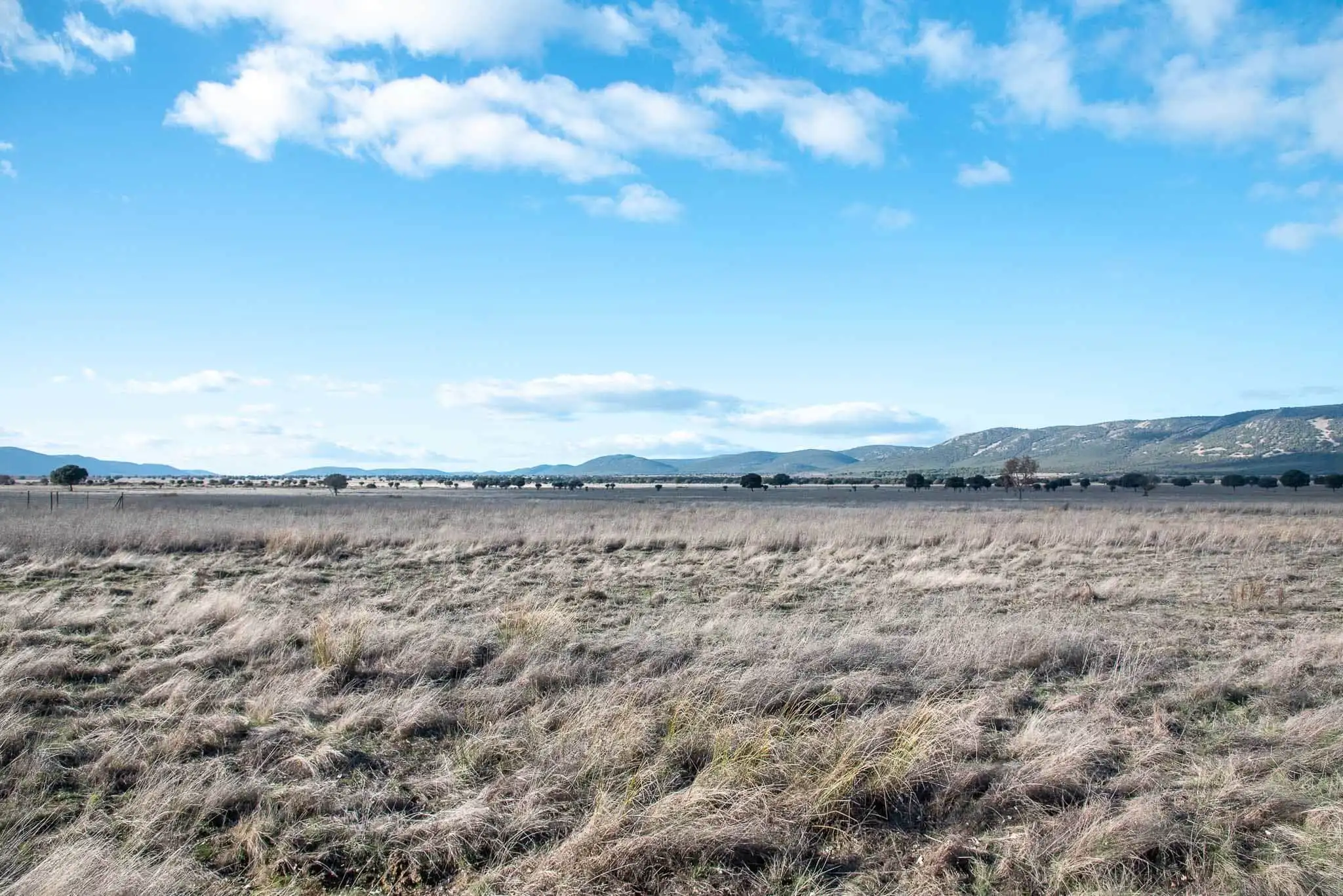
Raña and sierra
The park recommends getting to know both its landscapes and combining a walk with a 4×4 tour.
Emergencies, 112
If you go on your own, take a charged phone and plenty of water, especially in summer.
Visitor centres
Entry to all of them is free, and the park recommends stopping at one before you start. Where the official timetable allows, we tell you whether it is open today.
Horcajo de los Montes
National Park Visitor Centre
The largest in the park. Its exhibition takes you through the ecosystems of Cabañeros across the four seasons, and a reconstructed farmhouse (quintería) shows the culture and traditions of the area. It has projection rooms, a library, a picnic area and a car park.
- Opening times
- Fridays, Saturdays, Sundays and public holidays, from 10:00 to 18:00. In January and February it does not open on Fridays.
- Where
- CM-4017 road, 1 km from the village
Alcoba, next to the raña
Casa Palillos Visitor Centre
On the edge of the raña. It has audiovisuals about the park, two short accessible trails (botanical and ethnographic), a picnic area and an observation hide from which, depending on the season, you can see groups of deer. The 4×4 tours of the raña start here. Since 2026 there are large letters next to the centre, «PN CABAÑEROS», for a photo with the raña behind you.
The exhibition room and the scale model are closed for renovation.
- Opening times
- Every day from 9:00 until dusk: 18:00 in winter, 19:00 in spring and autumn and 20:00 in summer.
- Where
- Road from Pueblonuevo del Bullaque to Santa Quiteria
Next to the Torre de Abraham reservoir
Torre de Abraham Visitor Centre
It reopened in March 2026 with a renewed exhibition: you go in through a dim corridor with a projection about cranes and wetlands, and inside there is a footprint game with sand and stamps, a scale model with a species game and the songs of the local birds. Next to it, a recreation area with tables, a children's play area and toilets, and an accessible botanical trail on boardwalks beside the Bullaque.
- Opening times
- Varies with the time of year. Phone before you go.
- Where
- CM-403 road
Pueblo Nuevo del Bullaque
Park administrative centre
It is not a visitor centre but the park office. It answers the information line, confirms the opening times of the other centres and books the guided walks, which are free.
- Opening times
- June to September, from 9:00 to 19:00. October to May, Monday to Thursday from 9:00 to 18:00 and Fridays from 9:00 to 15:00.
- Where
- Abenójar-Torrijos road, no number
Information points, museums and viewpoints
Opening times of the information points and museums vary with the season: confirm them by phone.
Navas de Estena information point
Avenida Montes de Toledo, 24
Park information and a small exhibition on banditry in the area. The Boquerón del Estena and the Tabla del Acebo path start nearby.
Los Navalucillos information hut
5 km from kilometre 16 of the CM-4155 (Toledo)
At the start of the El Chorro, Chorrera Chica, Rocigalgo and La Encina trails. It is a good idea to sign in here before you start walking.
Alcoba Ethnographic Museum
Horcajo road, Alcoba
Traditional tools of the area, a shepherds' and charcoal burners' hut rebuilt in the courtyard and a model of a charcoal kiln.
Zoorama, wildlife museum in Retuerta del Bullaque
Navas de Estena road, 5
Municipal museum with park information and an exhibition on its wildlife.
Temporarily closed for renovation.
Stork observatory
3 km from Casa Palillos, towards Santa Quiteria
Wooden observation hide on the southern edge of the park, looking over the raña. From spring to autumn, a white stork colony on Portuguese oaks and holm oaks.
Torre de Abraham reservoir viewpoint
CM-403 road
Three panels and wide views over the reservoir and the Retuerta raña.
Tabla del Acebo y las Fuentes recreation area
On the outskirts of Navas de Estena
Car park, tables and an accessible boardwalk beside the Estena river.
Three ways to explore the park
Some areas have walking trails and others can only be visited by 4×4. Combining them is the best way to get to know the raña and the sierra.
On foot, on your own
FreeNo booking
The park has 16 waymarked walking trails of different lengths and difficulty, and several have a leaflet so you can do them self-guided. On very busy days there may be visitor limits at the Boquerón del Estena and on the trails starting from Los Navalucillos.
See the walking trailsOn foot, with a guide
FreeBooking needed
A park interpretive guide goes with you. The three trails on the Gargantilla estate can only be done this way; the Boquerón del Estena and El Chorro de Los Navalucillos can be done with a guide or on your own. Book at least 48 hours ahead, by phone at the administrative centre or through the National Parks Booking Centre.
Booking CentreBy 4×4, with a guide
PaidBooking needed
Three routes with the licensed company, Visitacabañeros: the raña, the Mediterranean forest and a short hour-and-a-half visit from Casa Palillos. They include stops to watch wildlife; the first and last tours of the day are the best for seeing it.
See the 4×4 tours
Guided walks are booked on 926 783 297 or through the National Parks Booking Centre. The 4×4 tours, with Visitacabañeros: phone numbers and conditions on their page.
Getting there
Depending on the trail you want to do, it is better to come in through one village or another: the park is large and its access points are spread out.
By car
- From Ciudad RealCM-403
- From ToledoCM-4013 or CM-401
- From Talavera de la ReinaCM-4102
Two roads cross the park. The CM-4017, between Horcajo de los Montes and Retuerta del Bullaque, runs through rockrose, heather and strawberry trees. The CM-4157, to the north, crosses Pyrenean oak, cork oak and ash woods.
The park advises against driving on the CM-4157 between the Risco de las Paradas and Valdeazores because of its poor condition.
By bus
There is no public transport to the park itself, but there is to the villages around it:
- AISACiudad Real to Alcoba and Horcajo de los Montes.
- BogasbusCiudad Real to Pueblonuevo del Bullaque, Retuerta del Bullaque and Navas de Estena.
- SAMARMadrid, Toledo and Piedrabuena, stopping at Pueblonuevo del Bullaque; and Madrid (via Toledo) or Talavera de la Reina to Los Navalucillos.
Timetables from each company.
The rules, in brief
The most common questions. The park's rangers make sure the rules are followed.
No fire
No bonfires and no barbecues. From 1 June to 30 September smoking is not allowed either.
No swimming
Swimming in the park's rivers is not allowed.
No camping
Camping and staying overnight inside the park are not allowed.
Stay on the paths
Do not leave the marked paths.
Dogs on a lead
They can go on the trails, always on a lead, but they are not allowed in the visitor centres.
Bikes, on two trails
Only on Castellar de los Bueyes and the Colada de Navalrincón. Not on the others.
No motor vehicles
Unless expressly authorised.
Leave nothing behind
No rubbish and no cigarette ends: they are waste too.
Do I have to pay to enter Cabañeros?
No. Entering the park, walking the trails and visiting the visitor centres are free. The guided walks are free too, although they must be booked. The only paid activity is the 4×4 tours, run by a licensed company. Everything is in Plan your visit.
Can I bring my dog?
Yes, on the trails, but always on a lead: animals running loose are not allowed. Dogs cannot go into the visitor centres.
Which trails are good with children?
The easiest are the Camino del Acebo y las Fuentes (flat, beside the river), La Encina (1 hour), La Chorrera at Horcajo, suitable from 4 or 5 years old, and the visitor centre trails, half an hour long with no slopes.
With children and reduced mobility
Four of the park's routes are accessible for people with reduced mobility. They are short and flat, and also good with small children:
- Casa Palillos botanical trail0.6 km · 30 min
- Casa Palillos ethnographic trail0.8 km · 30 min
- Torre de Abraham botanical and river trail0.9 km · 45 min, and since 2025 a 490 m branch to the car park
- Tabla del Acebo boardwalk, at Navas de Estenathe first half kilometre of the path
For families, the short 4×4 tour from Casa Palillos lasts an hour and a half.
Tips
- Stop first at a visitor centre or information point: they will advise you on what to do depending on the day and the season.
- Bring binoculars: for the deer on the raña and the birds of prey in the sierra.
- Footwear and clothing for the season: summer is dry and very hot; winter, cold and damp.
- In summer, plenty of water, a cap, sunglasses and sun cream.
- At Gargantilla there are no springs, no bar and no shop: bring food and drink.
- If it has rained a lot, phone first. When the rivers flood, the Boquerón, El Chorro and Rocigalgo close for a few days, and at Easter 2024 the small road from Santa Quiteria to Casa Palillos and the Torre de Abraham track were closed.
- If you want peace and quiet, avoid public holidays: at Easter 2026 more than 10,000 people visited the park. In the whole of 2025 there were 85,953.
- The visitor centres have a bird guide with the area's best birdwatching spots.
- For accommodation, restaurants or motorbike routes around the area, the Ciudad Real provincial council has its tourism website, destinocabaneros.com.
- Come back in another season: the rut in autumn, cranes in winter, rockrose in flower in spring.
Sources and fact-checking
- MITECO-OAPN. General information on Cabañeros National Park (PDF, updated April 2025, in Spanish)
- MITECO. Cabañeros: visitor centres and other facilities (in Spanish)
- MITECO. Cabañeros: routes (in Spanish)
- Cabañeros NP (OAPN). «Desde el parque» newsletter, from January-February 2025 to March-April 2026 (bookings, closures after rain, Torre de Abraham, visitors; in Spanish)
- National Parks Booking Centre. Guided visit to the «Parque Nacional de Cabañeros» Visitor Centre (in Spanish)
Information checked on 13 October 2026. Opening times may change without notice: if in doubt, phone the park. The «open today» label is worked out from the official timetable and Madrid time, and does not know about public holidays.