
Plants
Herbaceous communities
Introduction
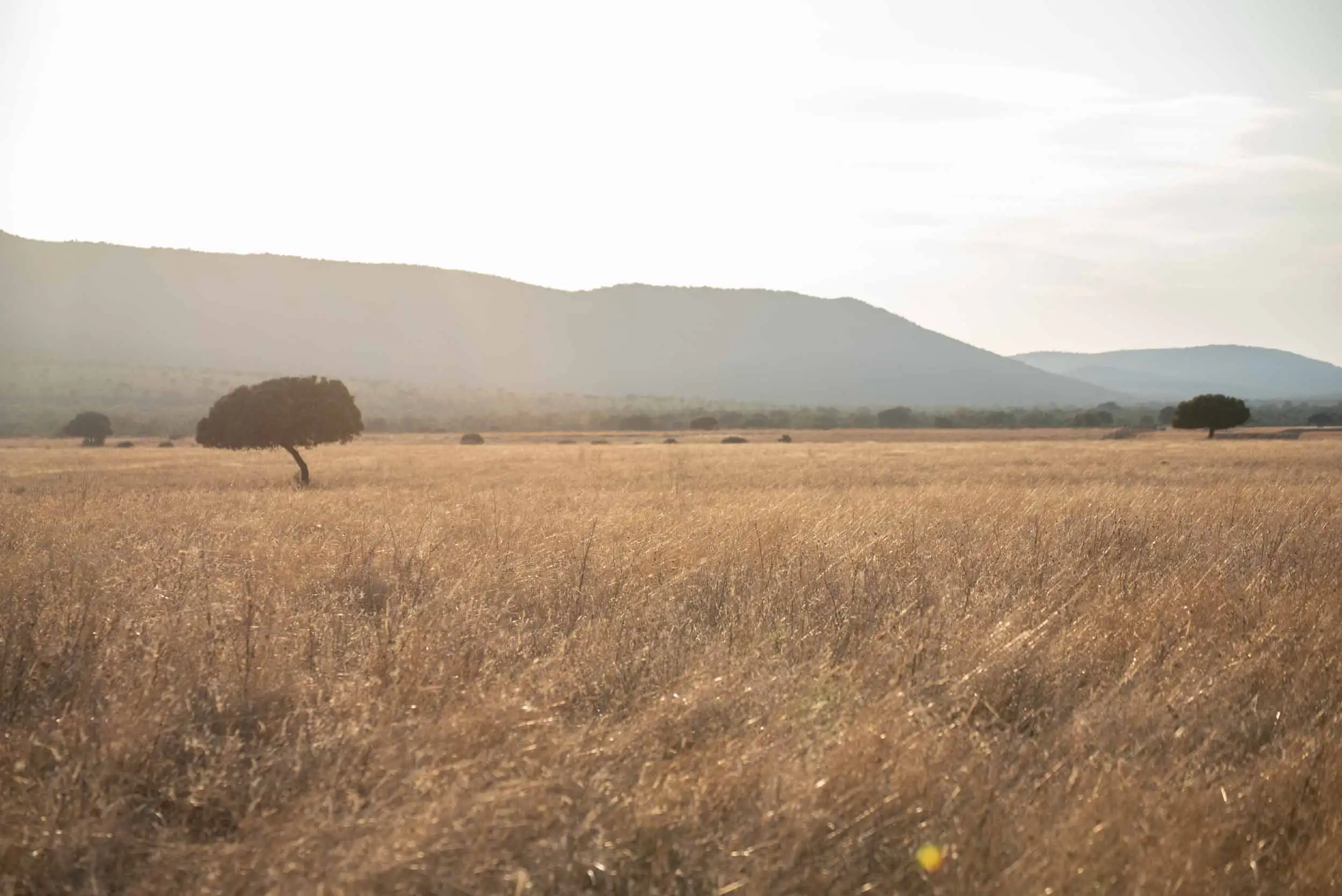
Herbaceous species are made up of annual herbs and perennial herbs and occupy about 4,500 hectares of Cabañeros National Park, 11.7 per cent of the total area. This area includes the herbaceous layer that grows beneath the great dehesas of the park’s famous raña, the largest area dominated by this type of formation. These are the last replacement stages of the climatophilous and edaphohygrophilous woods that predominate in Cabañeros.
The herbaceous communities of the Montes de Toledo, especially within Cabañeros National Park, are abundant in the valleys and flat areas, where they occur as agricultural crops, now absent from the park, or forming native herbaceous communities, such as artificial pastures. Their preservation is due to human intervention (ploughing, fires, burning, grazing and so on), which prevents these communities from being replaced by other stages of ecological succession such as shrub and tree formations. The clearest example is the savanna-like landscape of the Raña de Cabañeros, the result of clearing, charcoal burning and grazing by people.
At present, cultivation inside Cabañeros is anecdotal and, together with rural abandonment, has caused a slow process of scrub encroachment, above all at the ecotone between woodland and raña areas. It is in this transition zone that the arrival of propagules of the different scrub species is most likely, and where the incorporation of pioneer colonising species can be seen: lavenders, rockroses and so on.
Today, without human disturbance, these communities are kept going thanks to the teeth of wild herbivores, specifically red deer. In fact, these communities are called <<pastures>> because they serve as food for livestock and game. However, most of these communities only partly cover the soil and their development is ephemeral with low pastoral quality, which makes these pastures a low-quality food.
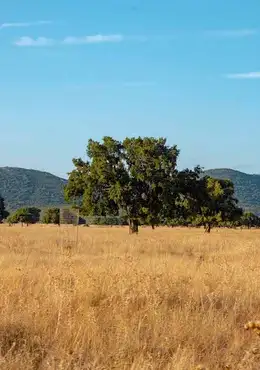
An example of these pastures are the therophyte communities –annual species that spend the unfavourable season as seeds–, those that proliferate most within the park and those that predominate on the raña.
There are other natural pastures such as the «majadales» that offer greater nutritional quality and a longer period of use thanks to their perennial species. Their conservation is favoured by the pastoral paradox, that is, the consumption of a species by livestock makes that species increase in abundance through the action of grazing.
In Cabañeros National Park, as far as is known, there are 20 alliances corresponding to 17 syntaxonomic orders. These make up more than 30 associations of herbaceous communities. According to the biotope and ecology of the plant species that dominate in each community, they have been classified as follows:
- Therophytic communities: annual species.
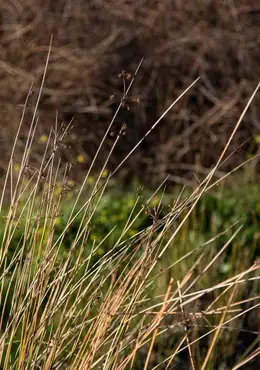
- Mesophytic communities: perennial species.
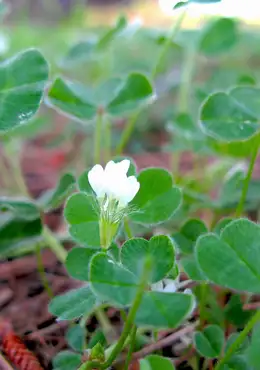
- Xeromesophytic communities: annual and perennial species.
- Amphibious communities: geophytes and annuals in areas of temporary flooding.
- Hygropeat communities: peat-loving species of «trampales» and «bonales».
- Aquatic communities: hydrophytes and helophytes on water surfaces.
- Rupicolous communities: chasmophytes.
Classification of herbaceous communities
 Mesophytic communities
 Xeromesophytic communities
 Therophyte communities
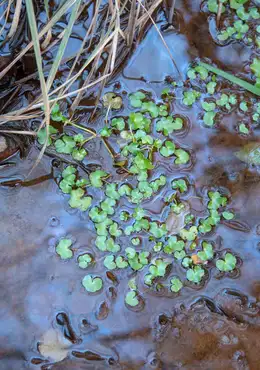 Amphibious, hygropeat and aquatic communities
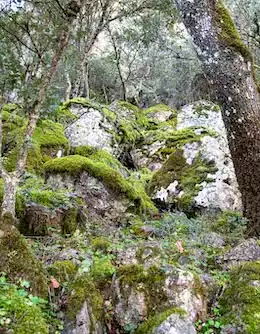 Rock communities
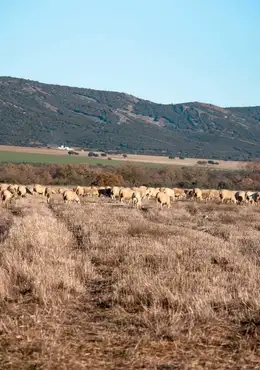 Dehesas
Bibliography
- Vicente García Canseco (Coor.) (1997). Parque Nacional de Cabañeros. Madrid, Spain: Ecohábitat.
- Perea García-Calvo, R., Perea Ruiz-Tapiador, D., Giménez Velasco, G.F. (2015). Vegetación y flora del Parque Nacional de Cabañeros. Volumen I. El paisaje vegetal: ecología, conservación y rutas de interés geobotánico. Madrid, Spain: Editorial Solitario