
News · Autumn in the park
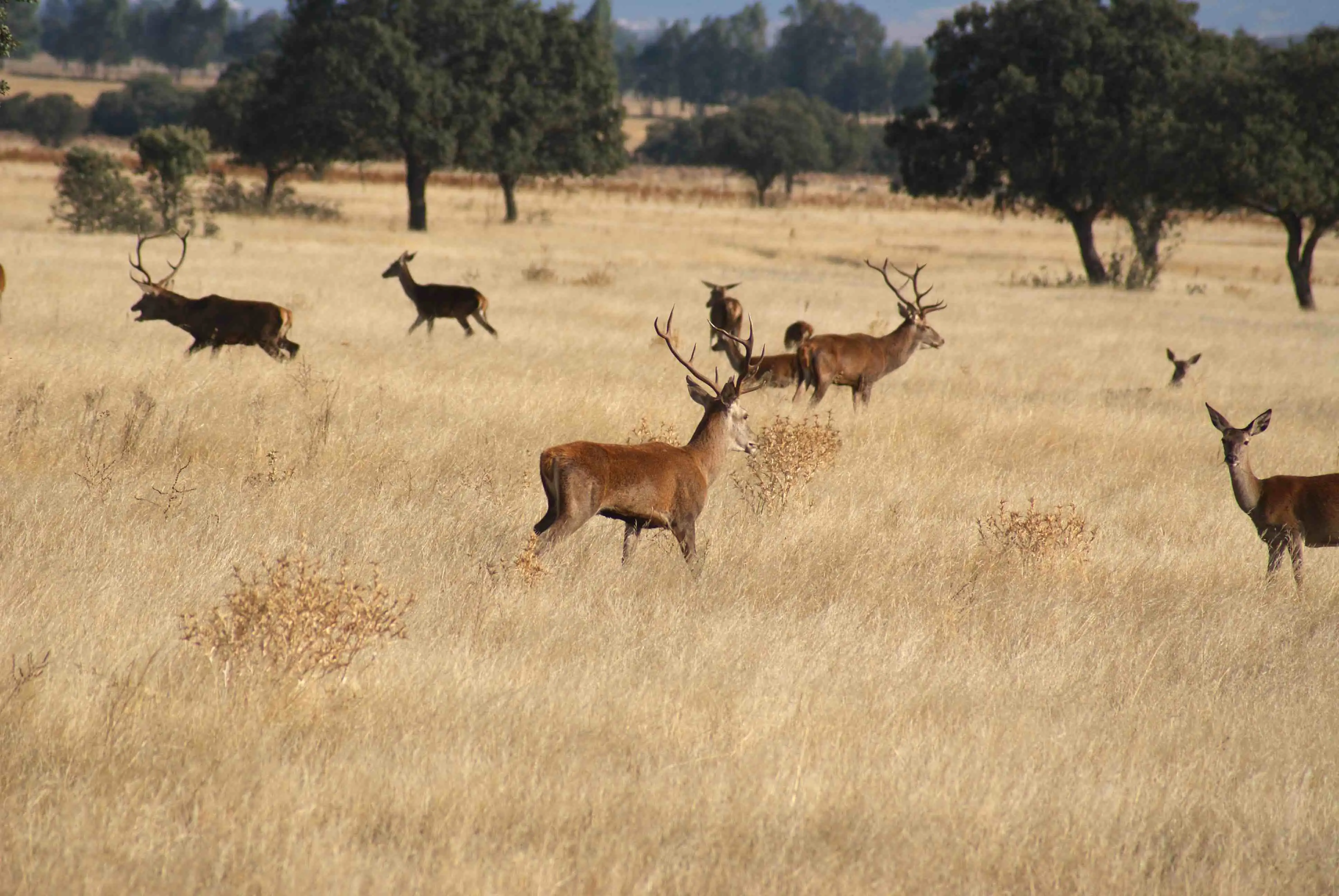
The red deer rut in Cabañeros: autumn is heard before it is seen
Deer, rañas and a mountainside that, for a few weeks, has quite a lot to say.
Published on 7 October 2026.
In Cabañeros there is a way of knowing it is autumn without looking at the calendar. You only have to stop and listen. Between September and October, the roars of the red deer change the atmosphere of the raña and the mountains. It is the season of the rut, one of the most interesting moments to visit the park.
Coming here to rest from the noise, these days, needs a little qualification. Although this is one of the noises people make the trip for.
What the rut is
The rut is the red deer’s mating season. The stags give their characteristic roars, compete with one another and try to gather groups of hinds to breed with. The encounters can include clashes with antlers: behind the scene we watch there is considerable effort.
The park’s visitor guide, in its section on the red deer, describes this behaviour throughout September and part of October. It also tells what comes next: the animals gather again on the raña and make use of foods such as acorns.
The deer we see belong to the same hillside all year round. What changes in these weeks is their activity, and with it the way we watch them. To get to know this and other residents of the park better, you can browse the mammals section.
When to go: a season, not an exact date
September and October are the usual reference, but nature does not hand over a fixed programme with an opening time. The rains and the conditions of each autumn influence how the season unfolds.
An example is the park’s newsletter for September and October 2022: the rains of mid-October caused a rebound just as activity was starting to drop. It is a precedent that helps to understand variation between years, not a forecast for this one.
So, before you set off, check the situation with the park’s information services and look at the forecast. The date gives guidance; what is happening on the hillside finally decides.
The raña, with eyes and ears
The great plains of Cabañeros, dotted with trees and ringed by mountains, let you take in the landscape with a breadth that is hard to find in a closed forest. During the rut, looking and listening are part of the same visit. Sometimes you will locate the sound first and the animal afterwards; at other times you will have to settle for knowing it is out there somewhere.
To tour the interior of the park there are guided 4x4 tours, with departures and options worth checking when you book. The Ministry recommends the first and last hours of the day for watching wildlife. That helps planning; it does not guarantee a particular scene or replace the access conditions of each route.
And it is worth leaving some time for the landscape. Going only to get the photo of the deer can mean we come back with one photo and miss half of Cabañeros.
Tips for enjoying it without getting in the way
- Bring binoculars. Bringing the image closer is better than getting closer to the animal.
- Speak softly and listen. Do not use calls or recordings of roars to provoke a response.
- Respect paths and authorised areas. A park track is not an invitation to enter with any vehicle.
- Pack clothes for the change in temperature and check the forecast before setting out.
- Enquire and book in advance if you choose a guided tour. Departures and places are checked with whoever organises the activity.
There is no need to turn the outing into a spotting contest. Sitting, waiting and picking out a roar in the distance is also a good way of getting to know the park. And it has the advantage that, for once, we are not the ones carrying the conversation.
Planning the visit
The essentials of the season (dates, times, where to see it and how to book) are gathered on our page about the red deer rut in Cabañeros, and what the park offers the rest of the year, in when to go. In the guide to 4x4 routes you will find the service’s contacts and the route options. You can also look at maps and resources and our information on the climate of Cabañeros.
Sources: OAPN visitor guide, section on the red deer; park newsletter for September–October 2022; official information on routes and wildlife watching. Sources linked in the text.