
Plants
Heathlands
Characteristics of heathlands
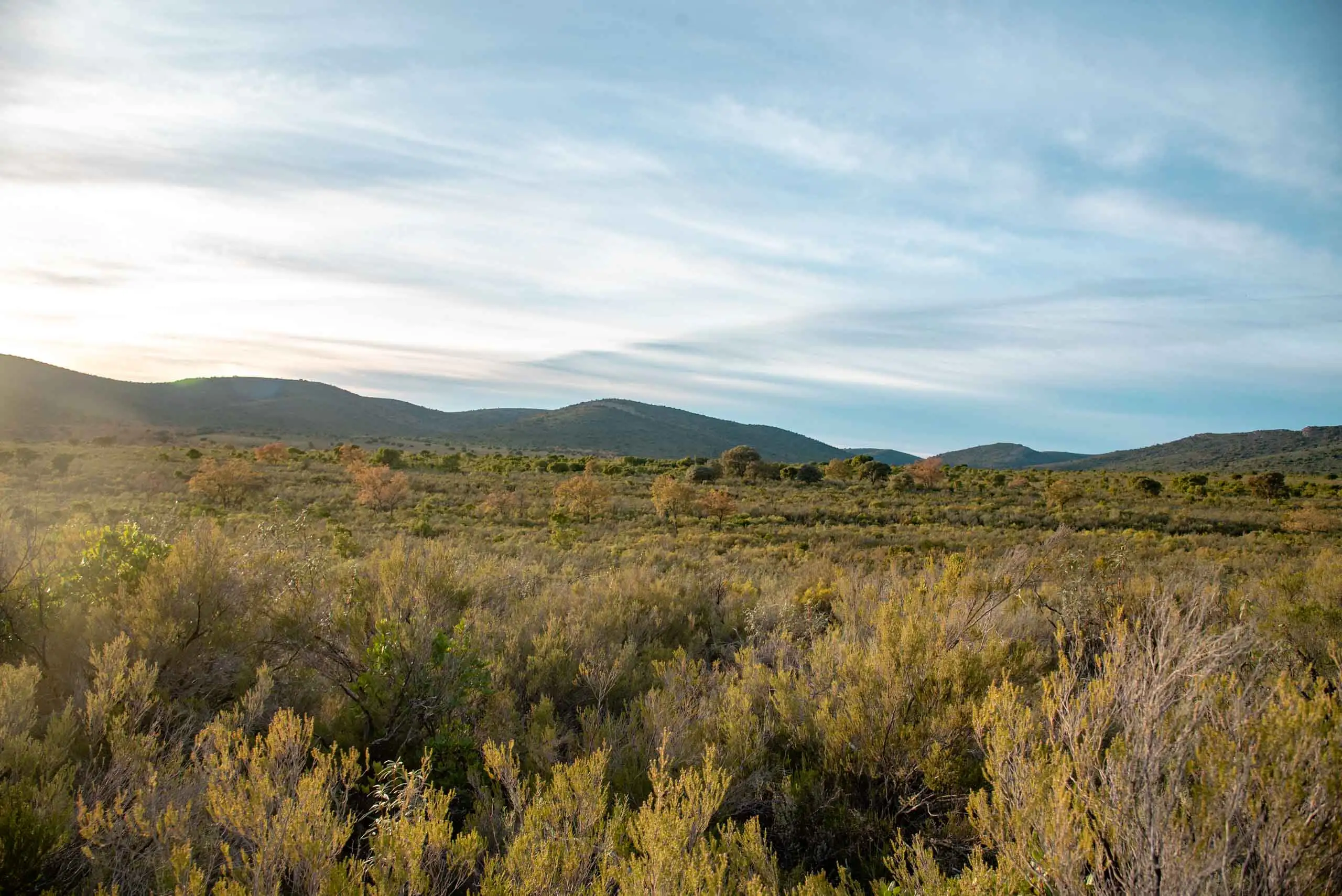
- Extensive stands of one or several species of heather belonging to the genus Erica.
- The most characteristic in Cabañeros is the «brezal rubio» or «colorao», dominated by the species Erica australis, which forms an almost single-species heathland high on the slopes, giving a reddish colour to the summits at the end of winter.
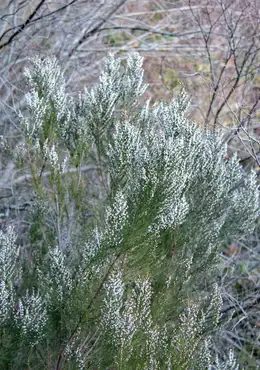
- Heathlands dominated by tree heath (Erica arborea) also stand out, found preferably in areas of Mediterranean scrub, places representative of the degradation stages of «madrigales», holm oak woods, cork oak woods and Portuguese oak woods.
- The hygropeat heathlands of «trampales» and peat bogs have the presence of Erica tetralix. They also appear with some frequency accompanied by besom heath (Erica scoparia).


Habitat and distribution of heathlands
- It usually covers the upper parts of slopes and places cooler and damper than rockrose thickets.
- Erica scoparia usually develops in rather damp areas, such as valley floors or streams, and produces large, impenetrable heathlands, giving rise to plant place names such as <<El Brezoso>>, right in the national park.
- The Erica lusitanica heathland occupies fairly damp runnels and ravines with a sub-Atlantic setting in the western half of the Montes de Toledo. It flowers earlier than Erica arborea, and they can be confused because of similarities between their white flowers.
- The dwarf heathlands, or small heathlands, of Erica umbellata, lie on eroded and disturbed soils such as firebreaks and forest tracks. Also on lithosols in summit areas.


Species that accompany heathlands in Cabañeros
- Rockroses such as Halimium ocymoides.
- The Euro-Siberian heather (Calluna vulgaris).


Photos of heathers


News from the park
In spring 2024, one of the best flowerings in recent years, the park highlighted heathlands in flower, tree heath (Erica arborea) and Spanish heath (Erica australis) tinting the slopes white and pink, for example on the El Chorro de Los Navalucillos route. Source: park newsletter of March–April 2024 (in Spanish).
Shrub formations: scrub and shrublands
 Rockrose thickets
 Heathlands
 Broom and retama thickets
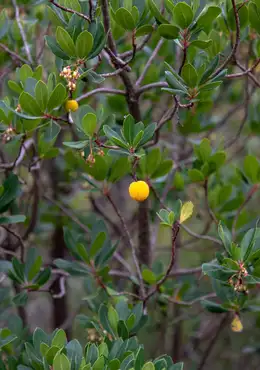 Strawberry-tree thickets
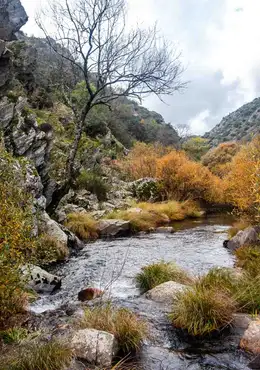 Willow thickets
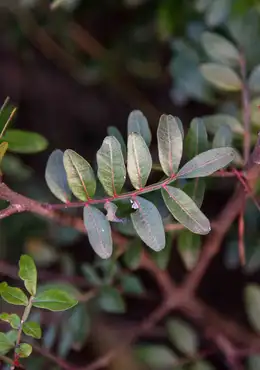 Mastic and kermes oak thickets
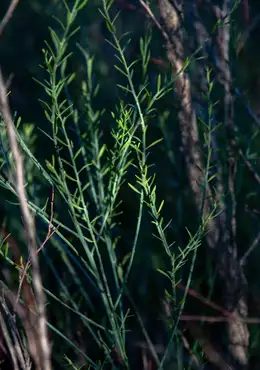 Tamujo thickets
Bibliography
- Vicente García Canseco (Coor.) (1997). Parque Nacional de Cabañeros. Madrid, Spain: Ecohábitat.
- Perea García-Calvo, R., Perea Ruiz-Tapiador, D., Giménez Velasco, G.F. (2015). Vegetación y flora del Parque Nacional de Cabañeros. Volumen I. El paisaje vegetal: ecología, conservación y rutas de interés geobotánico. Madrid, Spain: Editorial Solitario