
Plants
Rockrose thickets
Characteristics of rockrose thickets
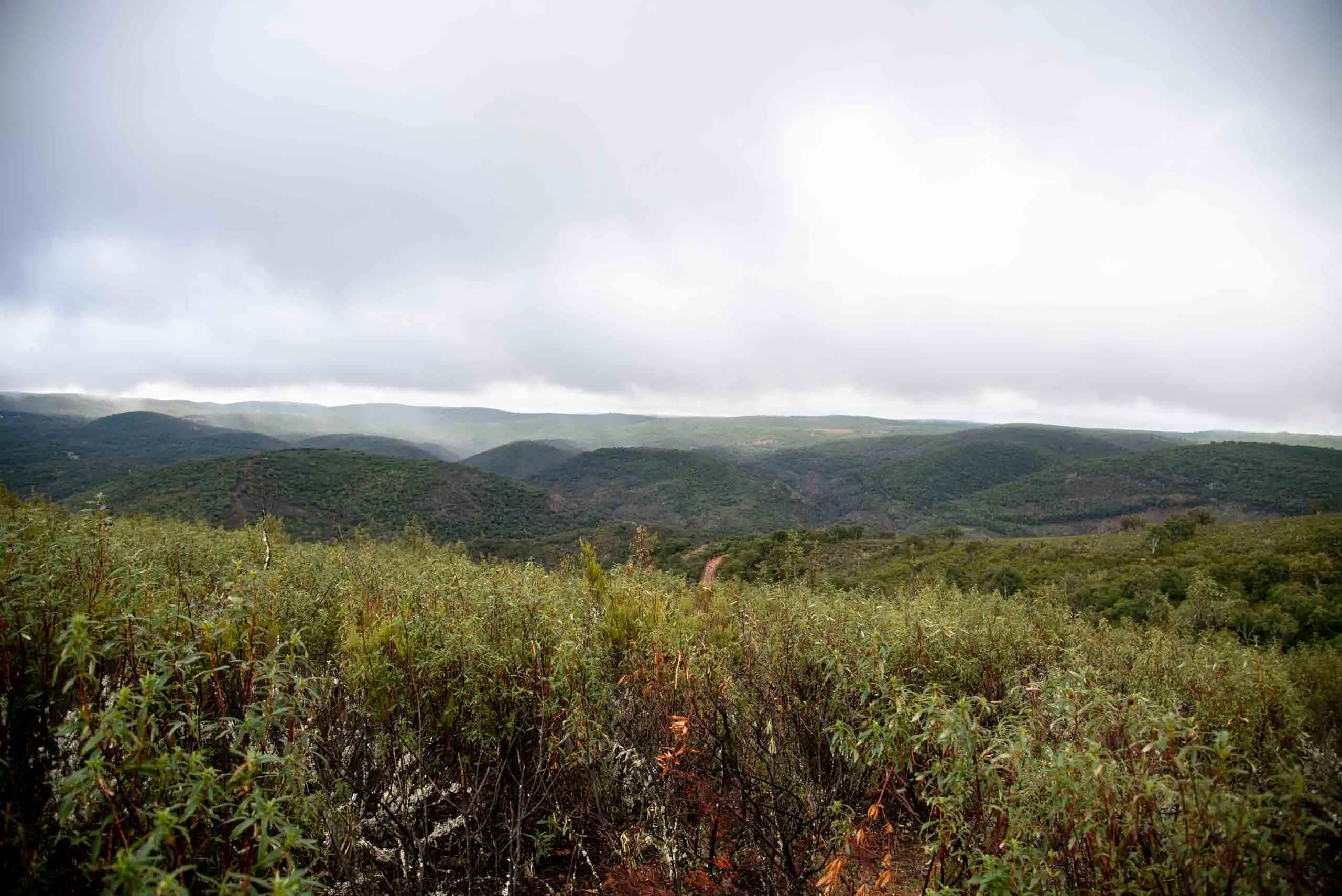
- Rockrose thickets are shrub formations that sometimes exceed 2 metres in height and that make up one of the most typical degradation stages of the sclerophyllous woods of Cabañeros.
- The best-known and most abundant species is the gum rockrose (Cistus ladanifer), which covers extensive patches of single-species rockrose thicket, being a very common replacement of holm oak, cork oak and Portuguese oak woods.
- There are other rockrose species that form single-species communities such as Cistus monspeliensis, Cistus albidus and Cistus laurifolius.
- They make up 55 per cent of all the scrub of Cabañeros National Park.
- It even gives its name to the region bordering Cabañeros called La Jara.
- These communities indicate the presence of poor, degraded soils that suffer recurrent fires, since they regenerate easily.
- They find it hard to evolve towards more advanced stages because of their great stability.
- Cervids contribute to the dispersal of their seeds.
- The thickets of grey-leaved rockrose (Cistus albidus), scarce in Cabañeros, stand out for their large pink flowers.
- Cabañeros is the kingdom of the rockroses: besides those already mentioned, there are other species such as Cistus salviifolius, Cistus populifolius, Cistus crispus or Cistus psilosepalus. These do not form large single-species communities.
- There are other species known as «jarillas» or «jaguarcillos», of the genus Halimium, quite abundant, especially Halimium ocymoides. They cover much of the slightly degraded damp soils and disturbed soils, as on firebreaks and plantations (Las Llanas, Piedras Picadas), and on high summits such as the Rocigalgo.
Habitat and distribution of rockrose thickets
- Present in all the mountains and woodland patches of the Raña.
- Wide altitude range: from the lowest to crests above 1,400 metres, where they are associated with heathers.
- The grey-leaved rockrose thickets can be found in areas of steeper slope and less soil at the Plaza de los Moros, in Horcajo de los Montes.
- Specimens of the Montpellier cistus or black rockrose (Cistus monspeliensis) can be seen on the Colada de Navalrincón route (Pueblonuevo del Bullaque), in warmer areas and, in general, on clay soils, since it does not tolerate recurrent frosts well.
- The small stands of laurel-leaved rockrose thickets (Cistus laurifolius) appear in the supra-Mediterranean belt, in places of degraded Pyrenean oak woods.
Leaf type of the gum rockrose Cistus ladanifer
- Long and narrow, and abundantly impregnated with a sticky substance, labdanum, a strongly scented oil that gives them a shiny look and sticks easily to hands and clothes. They are 5 to 10 cm long and are opposite, lanceolate and greyish green in colour.
Types of rockrose in Cabañeros
Gum rockrose (Cistus ladanifer)

Grey-leaved rockrose (Cistus albidus)


Sage-leaved rockrose (Cistus salviifolius)

Curly rockrose (Cistus crispus)


Montpellier cistus (Cistus monspeliensis)


Laurel-leaved rockrose (Cistus laurifolius)


Poplar-leaved rockrose (Cistus populifolius)


Halimium / «blancarejo» / «lancarejo» (Halimium ocymoides)


News from the park
In spring 2024 the mountains were covered in the white of gum rockrose in flower. The park newsletter recalled a detail that can be seen in any rockrose thicket: some flowers are entirely white, the «immaculate» ones, and others carry a violet blotch at the base of each petal, the «maculate» ones. The grey-leaved rockrose, with its purple flowers, struck the discordant note. Source: newsletter of March–April 2024 (in Spanish).
Shrub formations: scrub and shrublands
 Rockrose thickets
 Heathlands
 Broom and retama thickets
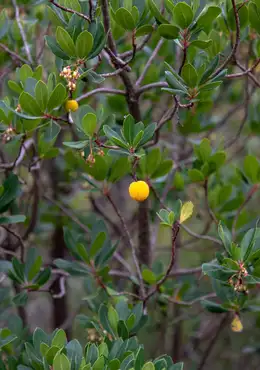 Strawberry-tree thickets
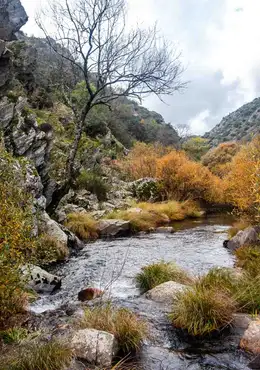 Willow thickets
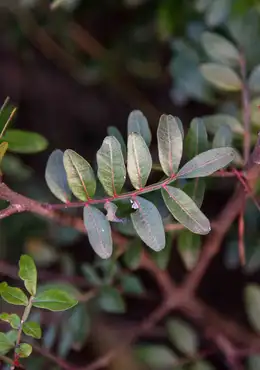 Mastic and kermes oak thickets
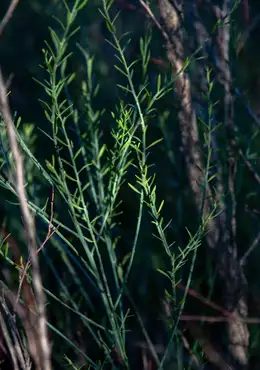 Tamujo thickets
Bibliography
- Vicente García Canseco (Coor.) (1997). Parque Nacional de Cabañeros. Madrid, Spain: Ecohábitat.
- Perea García-Calvo, R., Perea Ruiz-Tapiador, D., Giménez Velasco, G.F. (2015). Vegetación y flora del Parque Nacional de Cabañeros. Volumen I. El paisaje vegetal: ecología, conservación y rutas de interés geobotánico. Madrid, Spain: Editorial Solitario