
Plants
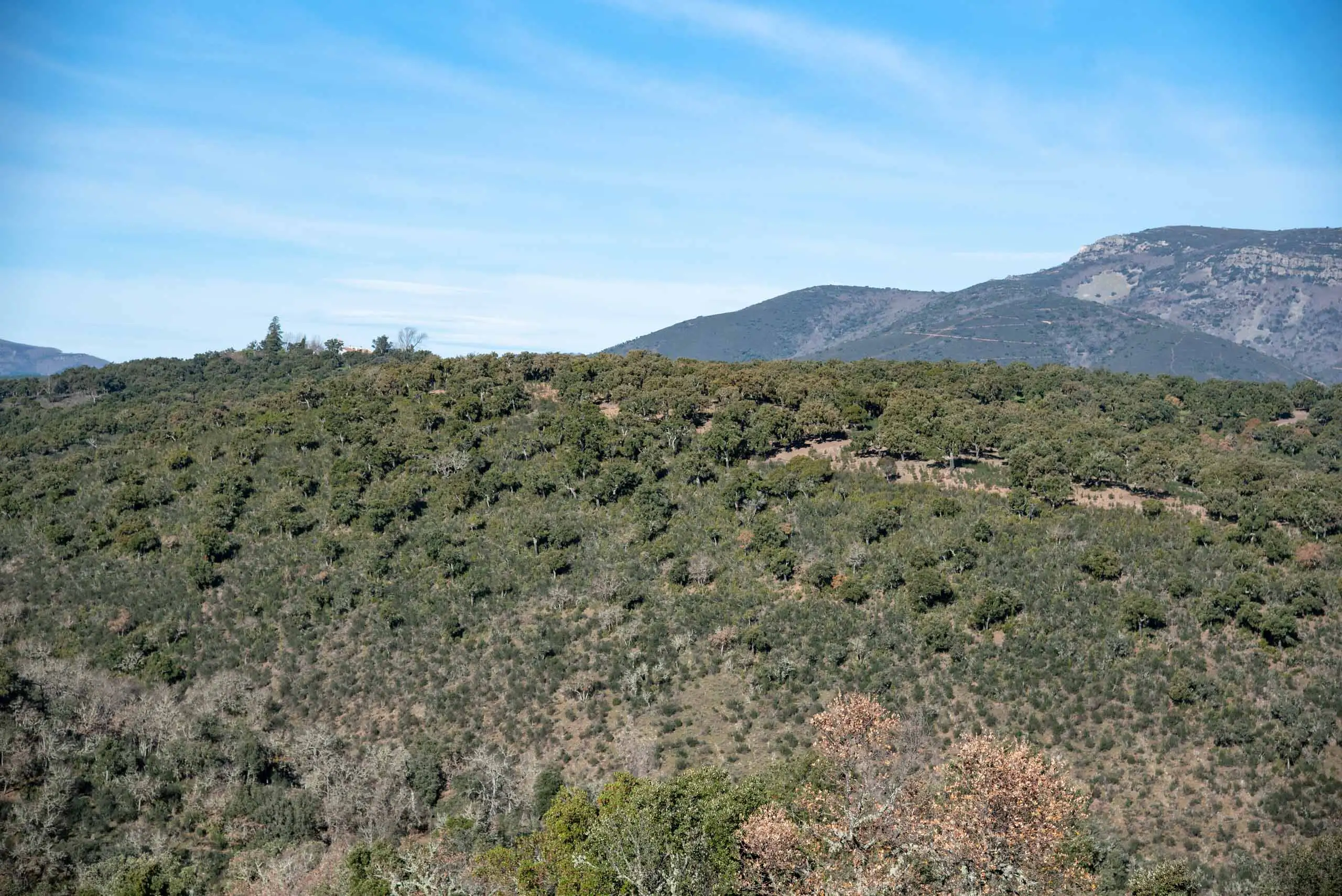
Cork oak woods
Characteristics of cork oak woods
- They are formations similar to holm oak woods with a shadier structure.
- They are distributed across the Montes de Toledo in a more localised way given their narrower ecological range.
- It does not tolerate warm soils. It needs more moisture and milder temperatures than the holm oak.


Location
- South-west of the Iberian Peninsula, in areas of mild winters, siliceous soils and annual rainfall above 600 mm.
- It does not usually appear above 1,000 metres given its thermophilous nature.
- In Cabañeros, within the central sector of the Montes de Toledo, it marks the inland limit of distribution of the Luso-Extremaduran cork oak woods.
- In the eastern area of Urda, Los Yébenes or Fuente del Fresno there are no specimens.


Leaf type of the cork oak
- The leaves are simple, evergreen, alternate, oval or rounded, with a dark green upper side, whitish underside and an entire margin or with soft points that do not prick like those of the holm oak.

Cork oaks of Cabañeros
- More than 8,000 hectares (over 20% of the park) where the cork oak is the dominant tree.
- Very little presence on cold shady slopes such as the Rocigalgo and in dry areas such as Pueblonuevo. It is a clear indicator of hygrothermophilous environmental conditions where humidity is higher and frosts weaker, displacing the holm oak.
- Found in low areas and foothills, gentle, not very steep hills.

Species that accompany cork oaks in Cabañeros
- On gentle hills, Portuguese oaks, holm oaks and some Pyrenean oaks appear.
- Some dehesas show all three species –cork oak, Portuguese oak and holm oak– as in the Upper Bullaque (in Retuerta) and in the south of Cabañeros, on the boundary with Alcoba.
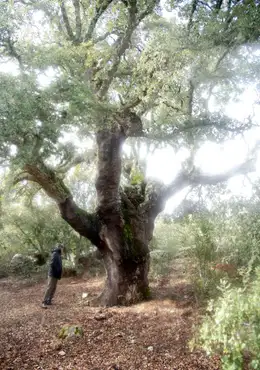
- Hybrids between holm oak and cork oak appear, called «mestos» (Quercus x mixta Villalobos ex Colmeiro), like the famous specimen at Santa Quiteria, which casts more than 650 metres of shade.
- Strawberry trees (Arbutus unedo), myrtle (Myrtus communis), laurustinus (Viburnum tinus), mock privet (Phillyrea angustifolia).
- Ferns (Pteridium aquilinum and Asplenium onopteris).
- Rockrose and heath thickets in areas more degraded by fire or grazed.
- The rockrose thicket characteristic of holm oak woods (Cistus ladanifer) is replaced by poplar-leaved rockrose thickets (Cistus populifolius) in places that demand more moisture, appearing alongside abundant heathers.
- Dwarf heathland (Erica umbellata) and rockroses are also usual in more degraded stages of cork oak woods.
- Therophytic grasslands (of annual species) are similar to those beneath holm oak woods.

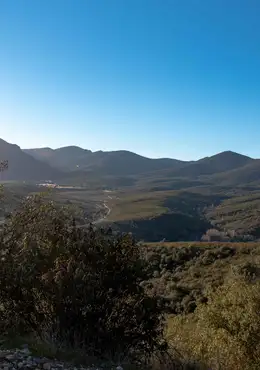
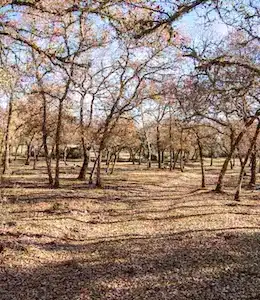
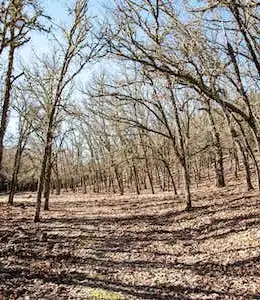
Photos of cork oaks in Cabañeros


Climatophilous and edaphoxerophilous woodland
Bibliography
- Vicente García Canseco (Coor.) (1997). Parque Nacional de Cabañeros. Madrid, Spain: Ecohábitat.
- Perea García-Calvo, R., Perea Ruiz-Tapiador, D., Giménez Velasco, G.F. (2015). Vegetación y flora del Parque Nacional de Cabañeros. Volumen I. El paisaje vegetal: ecología, conservación y rutas de interés geobotánico. Madrid, Spain: Editorial Solitario