
Plants
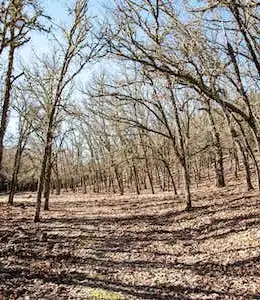
Pyrenean oak woods
Characteristics of Pyrenean oak woods
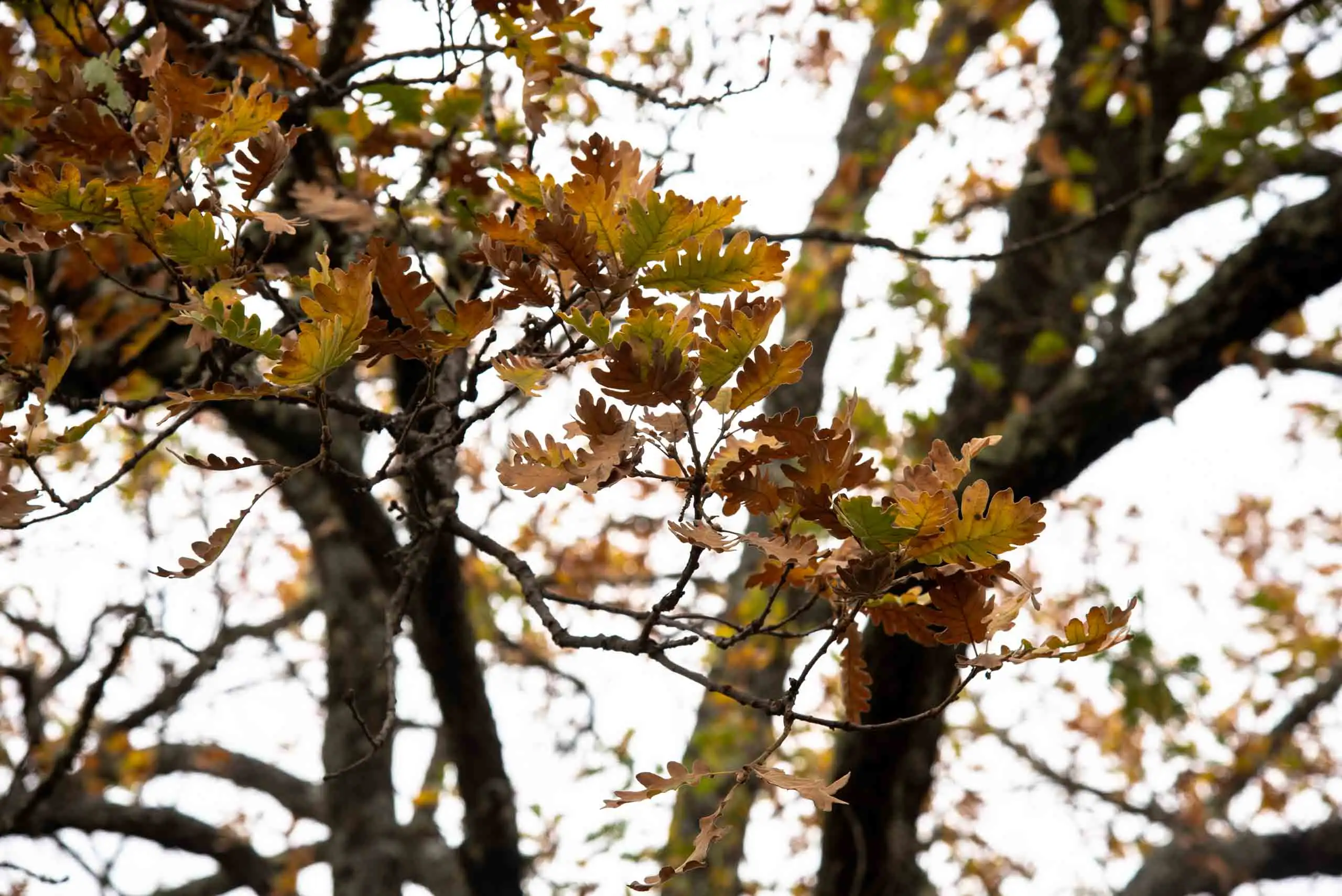
- Tree formations made up of a type of oak with marcescent leaves, the Pyrenean oak or melojo.
- They cover, as single-species stands, the highest parts of the mountains, in general above 1,000 metres, keeping their dry leaves well into winter.
- They require high rainfall and acid, decarbonated soils.
- They occupy the coldest parts of the Montes de Toledo.


Habitat and distribution of Pyrenean oak woods
- It is distributed mainly across Spain, France and Morocco.
Leaf types


- Leaves velvety on both sides with very deep lobes .
- Simple, alternate and deciduous, although in some specimens, especially the youngest, they stay dry in winter and fall when the new leaf bud pushes them off (marcescent). The flowers grow on long, hanging, yellowish stalks (catkins) and the acorns are globular and bitter.
Pyrenean oak woods of Cabañeros
They settle in two distinct niches:
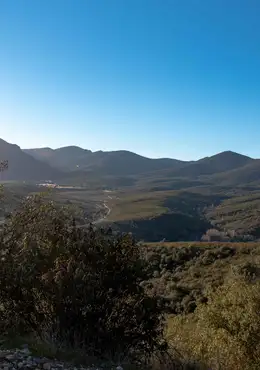
- Shady, cold slopes of the supra-Mediterranean belt, generally above 1,000 metres. These cover extensive slopes and take over by altitude from the holm oak, cork oak and Portuguese oak woods that remain on the basal or middle levels, or both, of the mountains depending on exposure (shady or sunny slope). On shady slopes, the Pyrenean oak wood can descend to 900 metres, while on sunny slopes it does not go below 1,200 metres, counteracting the higher temperatures and receiving more rainfall, which makes it take on a more shrubby habit. Since most peaks of the Montes de Toledo do not exceed 1,200 metres, the Pyrenean oak woods occupy shady-slope areas only partially, in the summit areas, as at El Chorro (Rocigalgo Massif). Sometimes the Pyrenean oak woods cover the mountains completely, as in the Sierra de San Pablo de los Montes and the Sierra de la Hiruela.
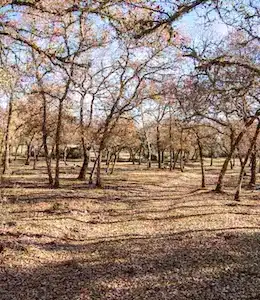
- Valley floors: they occupy a smaller area and live thanks to the soil moisture characteristic of these places and the coolness of ravines where light does not usually reach. Their distribution is localised and in Cabañeros we can highlight the Pyrenean oak wood of the El Brezoso stream or that of La Viñuela.


Species that accompany Pyrenean oak woods in Cabañeros
On the shady, cold slopes of the supra-Mediterranean belt:
- Small trees such as the wild service tree (Sorbus torminalis) or the maple (Acer monspesssulanum)
- Shrubs such as brooms (Cytitsus streatus, Cytisus scoparius, Genista florida), wild roses (Rosa spp), the laurel-leaved cistus (Cistus laurifolius) and herbaceous plants such as Geum sylvaticum or Arrhenatherum elatitus, and ferns (Pterdidium aquilinum).

Valley floors:
- Hawthorns (Crataegus monogyna), poplar-leaved rockrose (Citus populifolius), peonies (Paeonia Broteri), besom heath (Erica scoparia) and showy flowers such as daffodils (Narcissus spp.) and some orchids (Orchis Mascula and Dactylorhiza sulphurea).
Photos of Pyrenean oak woods and oaks


News from the park
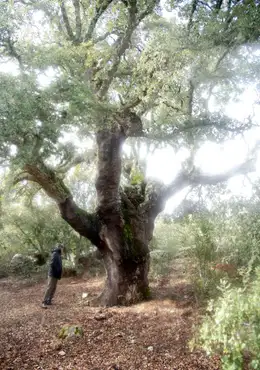
- A violet beetle. The flower chafer Protaetia (Euposia) mirifica, metallic violet and listed as vulnerable, is known only from eight Spanish provinces and lives in mature Pyrenean oak and Portuguese oak woods with hollows and dead wood. In 2024 it appeared at Hontanar; the other record in the province of Toledo was from 2007, on the El Chorro route.
- Life in the hollows. In the hollows of old trees lives a world of saproxylic beetles, those that feed on dead wood and return its nutrients to the soil. A study in which the University of Alicante takes part has compared the communities of these beetles in the hollows of Pyrenean oaks, ash trees and holm oaks of the park between 2009–2010 and 2021–2022, to predict how vulnerable they are to global warming, which is felt more in the Mediterranean than anywhere.
- A fungus new to science. Hohenbuehelia quercicola, a fungus 5 to 20 millimetres across that grows on the bark of old Pyrenean oaks, was described in 2026 from specimens from San Pablo de los Montes, a village neighbouring the park. G. F. Giménez, of the park team, took part in its discovery.
Sources: park newsletters of July–August 2023, November–December 2024 and May–June 2026 (all the newsletters) (in Spanish).
Climatophilous and edaphoxerophilous woodland
Bibliography
- Vicente García Canseco (Coor.) (1997). Parque Nacional de Cabañeros. Madrid, Spain: Ecohábitat.
- Perea García-Calvo, R., Perea Ruiz-Tapiador, D., Giménez Velasco, G.F. (2015). Vegetación y flora del Parque Nacional de Cabañeros. Volumen I. El paisaje vegetal: ecología, conservación y rutas de interés geobotánico. Madrid, Spain: Editorial Solitario