
Plants
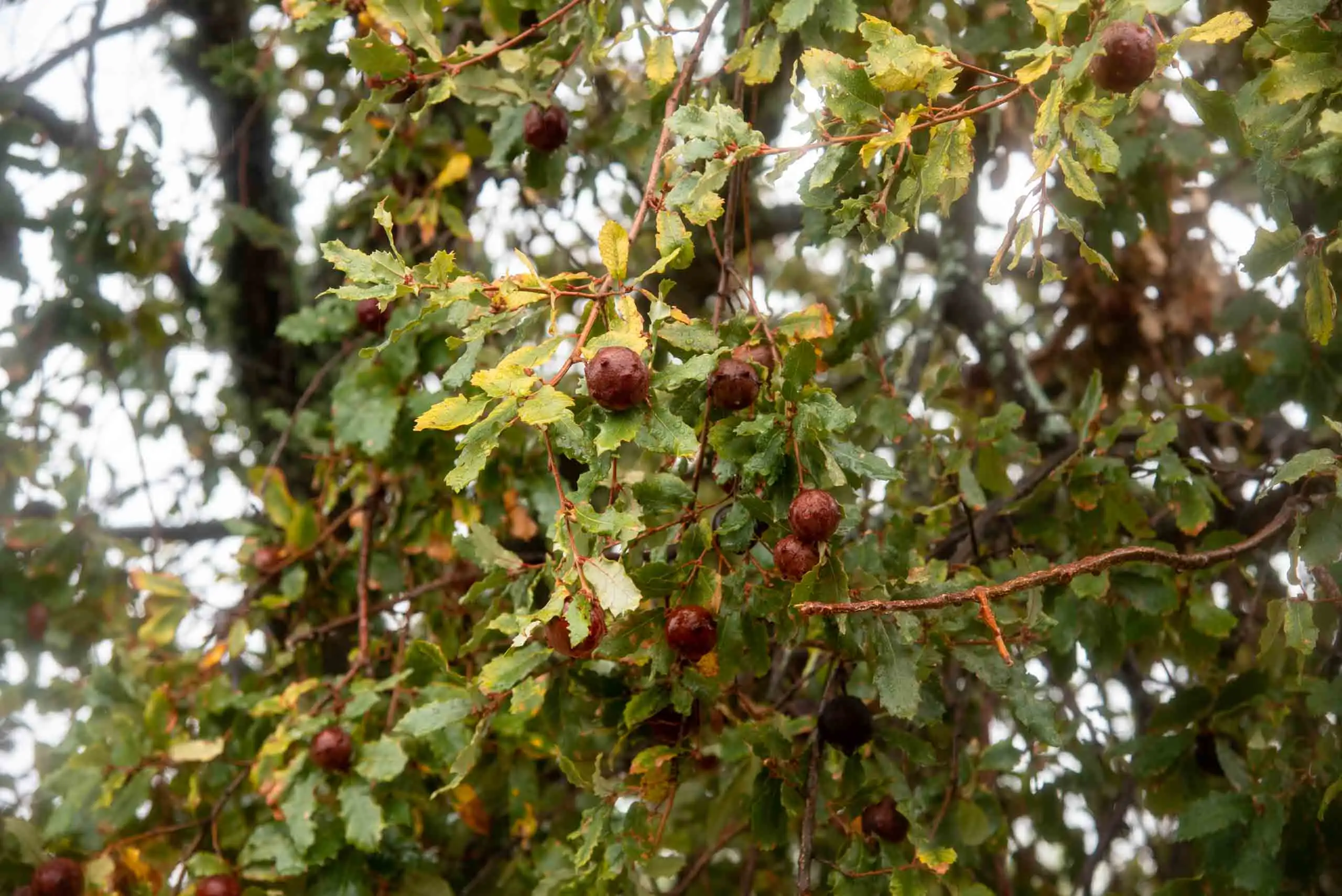
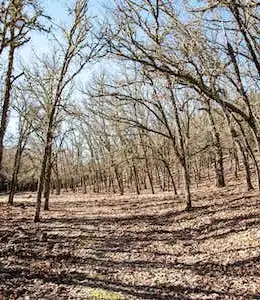
Portuguese oak woods
Characteristics of Portuguese oak woods
- Quercus faginea Lam. subsp. broteroi (Cout.) A. Camus
- Woods dominated by the Lusitanian Portuguese oak.
- Sub-Mediterranean or attenuated Mediterranean temperament, less xerophilous.
- Considered a co-dominant formation together with holm oaks, cork oaks and Pyrenean oaks.


Location
- A species endemic to the Iberian Peninsula and North Africa. Subsp. broteroi lies preferably in the south-western quadrant of the peninsula and north-west Africa, while subsp. faginea usually occurs mainly in the eastern half of the peninsula and becomes scarce towards the west.
Leaf types
- Unlike holm oaks and cork oaks, it has deciduous leaves that stay on the tree for much of the winter (marcescence)
- Leaves less hardened than those of the holm oak and the cork oak.


Portuguese oak woods of Cabañeros
- They are considered climax communities of a climato-temporihygrophilous series common on the foothills, valleys and shady slopes of the park.
- They have been harmed in favour of the holm oak for its better charcoal, browse and acorn.
- At present they are recovering a lot of lost ground at the expense of the holm oak.
- The most mature Portuguese oaks lie in depressions such as valleys or stream beds and foothills where they receive a greater water supply.
- Worth noting are the Portuguese oak woods of the rañas that were or still are cultivated, where cryptochannels proliferate (small runnels that have lost their natural channel because of ploughing) and clay soils tend to get waterlogged in rainy winters.
- It resists waterlogging, frosts and inversion fogs –usual in open valleys such as those of the Bullaque, Las Navas or Milagro rivers– better than the holm oak and the cork oak.
- It competes better at the foot of mountains, in topographic depressions, cool shady slopes, surroundings and quaking bogs, small seasonal streams and cold, damp pedrizas.

Species that accompany Portuguese oak woods in Cabañeros
- Holm oak and Portuguese oak woods: the Portuguese oak pushes the holm oak aside in the coldest and dampest places. This mix of stands covers a significant area of the park.
- Cork oak and Portuguese oak woods: the same happens.
- Pyrenean oak and Portuguese oak woods: a less frequent association in which the Pyrenean oak occupies the coldest places. However, on valley floors the two formations can both appear.
- Near river courses, it is associated with ash trees, alders and birches, forming an active part of the edaphohygrophilous communities and contributing to the formation of so-called <<gallery forests>>.
- There are some cases of Algerian oak (Quercus canariensis Willd.) in the middle-lower stretch of the Bullaque river, although given hybridisation between the different species of Quercus, especially these two (Quercus x marianica C. Vicioso), their taxonomic assignment is complicated.
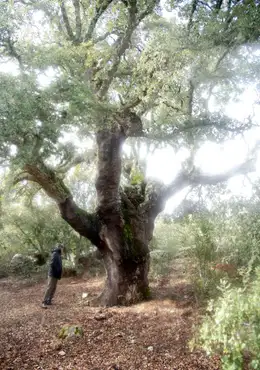
Photos of Portuguese oak woods and Portuguese oaks


News from the park
- A violet beetle. The flower chafer Protaetia (Euposia) mirifica, vulnerable, lives in mature Portuguese oak and Pyrenean oak woods with hollows and dead wood. In 2024 it was recorded at Hontanar, and before that only on the El Chorro route, in 2007.
- A scarce hoverfly. Dusmet’s hoverfly (Mallota dusmeti), an endemic of the western Mediterranean and vulnerable, breeds in the water-filled hollows of Portuguese oaks, holm oaks and cork oaks; the adults eat pollen and nectar, for example of the gum rockrose. It has been proposed to include it in the List of Wild Species under Special Protection.
Sources: park newsletters of November–December 2024 and January–February 2025 (all the newsletters) (in Spanish).
Climatophilous and edaphoxerophilous woodland
Bibliography
- Vicente García Canseco (Coor.) (1997). Parque Nacional de Cabañeros. Madrid, Spain: Ecohábitat.
- Perea García-Calvo, R., Perea Ruiz-Tapiador, D., Giménez Velasco, G.F. (2015). Vegetación y flora del Parque Nacional de Cabañeros. Volumen I. El paisaje vegetal: ecología, conservación y rutas de interés geobotánico. Madrid, Spain: Editorial Solitario