
Plants
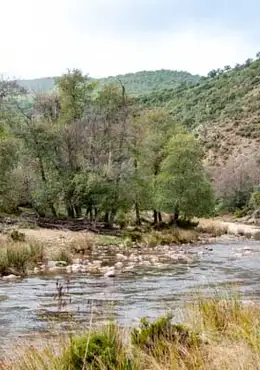
Alder woods
Characteristics of alder woods
- Slender formations about 15 metres high.
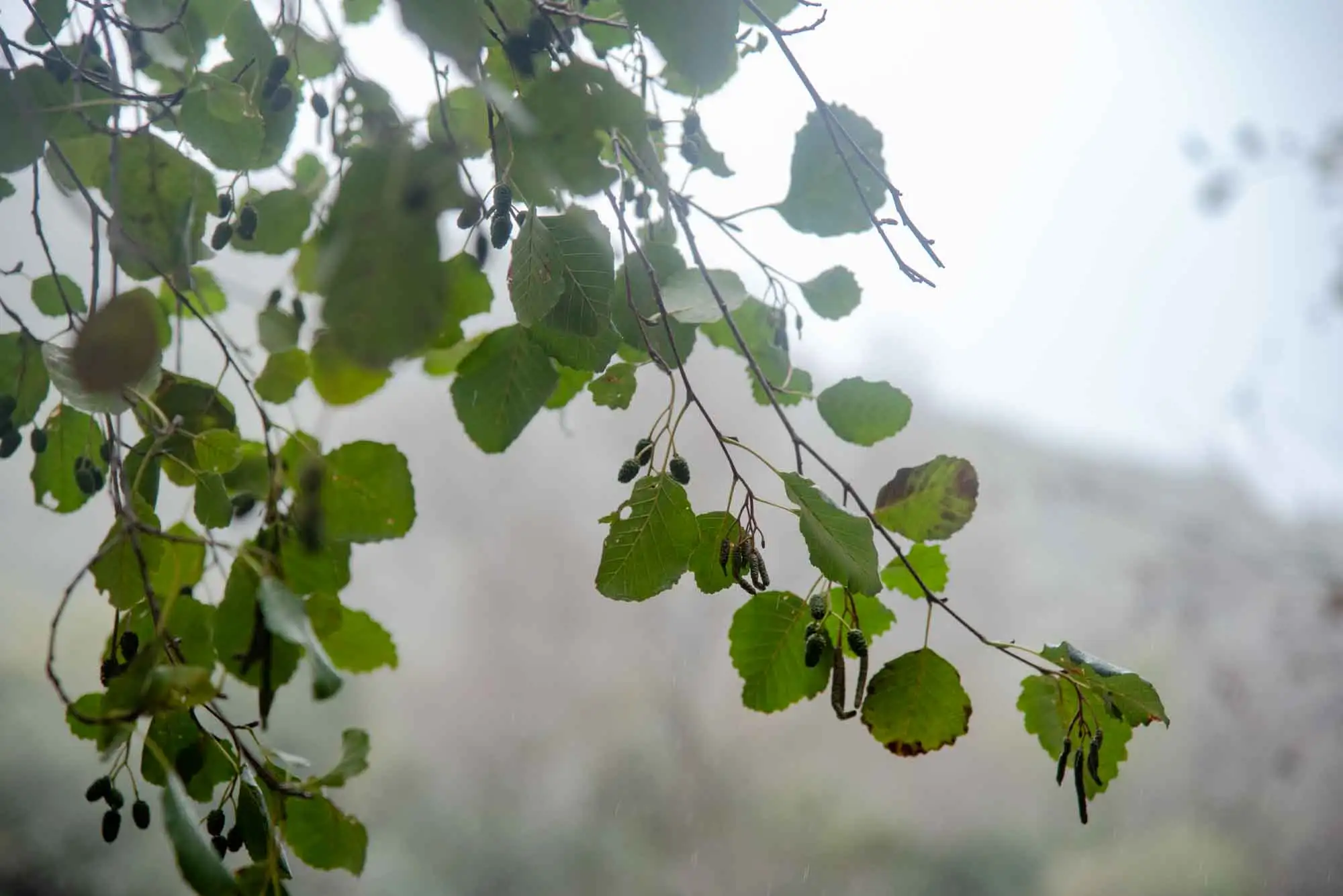
- The alder (Alnus glutinosa) predominates, a deciduous, acidophilous, fast-growing tree.
- They need permanent moisture and their roots must always be soaked in water. Given the seasonal character of the rivers and streams of the Montes de Toledo, it is hard to find.

Habitat and distribution of alder woods in Cabañeros
- They lie in areas of permanent watercourses with Atlantic influence.
- They appear occasionally in the middle stretches of the larger rivers.
- On the Estena river, one of the few permanent rivers of the region.
- They appear in the central sector of Cabañeros and, more abundantly, in the western sector (Viejas, Igor and Guadarranque rivers…).

Leaf type
- Deciduous, simple, alternate, rounded, oblong and even heart-shaped, 4–14 cm, with a somewhat irregular, sinuate outline, with the margin finely serrated or toothed and generally with the apex notched and not pointed.

Species that accompany alders in Cabañeros
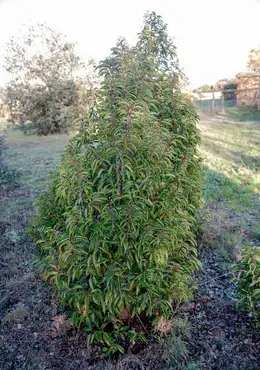
- Willows (Salix atrocinerea and Salix salviifolia)
- Ash trees (Fraxinus angustifolia)
- Alder buckthorns (Frangula alnus subsp. alnus)
- Wild grape vine (Vitis sylvestris). A climbing species.
- Black bryony (Dioscorea communis). A climbing species.
- Beneath the alders grow tussock sedges, above all Carex elata subsp. reuteriana, which indicates the quality of the water and the low degree of human alteration.
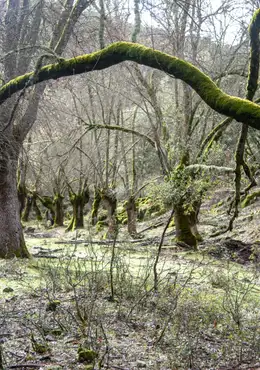
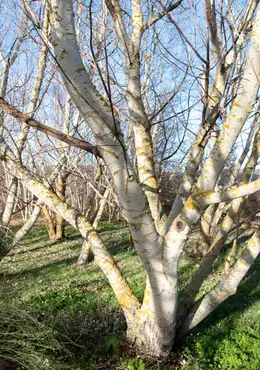
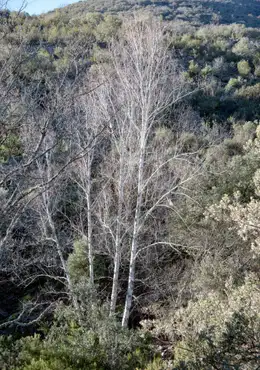
Photos of alders


Edaphohygrophilous communities: riverside woods
Bibliography
- Vicente García Canseco (Coor.) (1997). Parque Nacional de Cabañeros. Madrid, Spain: Ecohábitat.
- Perea García-Calvo, R., Perea Ruiz-Tapiador, D., Giménez Velasco, G.F. (2015). Vegetación y flora del Parque Nacional de Cabañeros. Volumen I. El paisaje vegetal: ecología, conservación y rutas de interés geobotánico. Madrid, Spain: Editorial Solitario