
Plants
Portuguese laurel groves
Characteristics of Portuguese laurel groves
- They form small groves with laurel-leaved species similar to the Canary laurisilva that were frequent on the peninsula in subtropical times, with higher temperature and humidity.
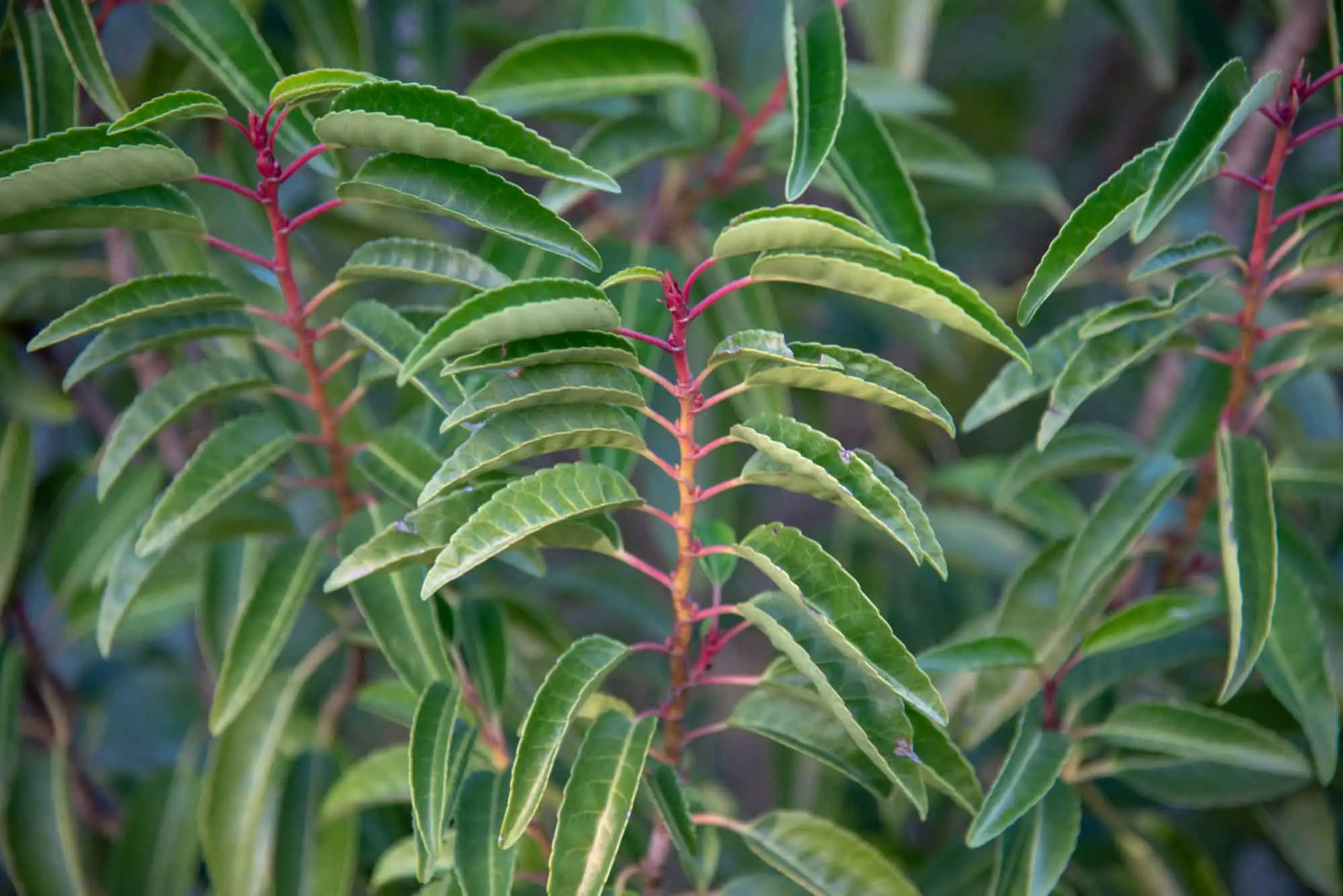
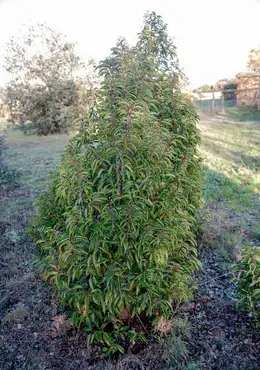
- Formations made up of a small evergreen tree called the Portuguese laurel (Prunus lusitanica subsp. lusitanica).
- They are relics of the tropical climate typical of the Tertiary period.
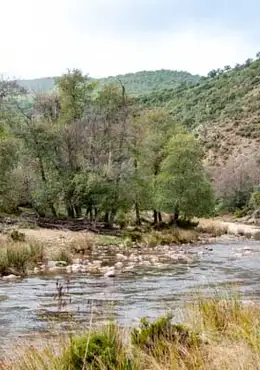
- Although they are not directly tied to watercourses, they do make use of their moisture and sheltered setting, lying in ravines and gorges. As the saying goes, <<the Portuguese laurel likes to see the water, but not to touch it>>.
- They receive significant rainfall (over 700 mm a year) and the extra input of runoff water and slope springs.
- They are considered a protected habitat throughout Castilla-La Mancha.

Habitat and distribution of birch woods in Cabañeros
- Sheltered damp areas where oceanic winds arrive.
- They have a wide altitude range in the Montes de Toledo: from 400 metres in the Arroyo de los Torneros (at Fresnedoso) up to almost 1,200 metres in the Garganta de las Lanchas (in Las Hunfrías). Their average height is 800 metres.
- They lie in shady areas or intricate ravines, forming communities of about 8 metres in height in which the Portuguese laurel dominates.
- The Montes de Toledo hold the largest number of known populations on the Iberian Peninsula, with 33 localities.
- The best-preserved formations are in Las Villuercas, between Alía and Guadalupe.
- In Cabañeros, the population at Piedras Picadas and other isolated individuals in some damp ravines are worth noting.

Leaf type
- The leaves are persistent, simple, alternate, ovate-lanceolate, with a slightly serrated margin, of leathery appearance, dark green and glossy on the upper side, while on the underside they are paler and hairless.

Species that accompany birches in Cabañeros
- Laurel-leaved species such as strawberry trees (Arbutus unedo), laurustinus (Viburnum tinus) and hollies (Ilex aquifolium).
- Tall heathers (Erica arbórea, E. lusitanica and E. scoparia).
- Some relict ferns (Osmunda resalís, Blechnum spicant, Dryopteris affinis).
Edaphohygrophilous communities: riverside woods
Bibliography
- Vicente García Canseco (Coor.) (1997). Parque Nacional de Cabañeros. Madrid, Spain: Ecohábitat.
- Perea García-Calvo, R., Perea Ruiz-Tapiador, D., Giménez Velasco, G.F. (2015). Vegetación y flora del Parque Nacional de Cabañeros. Volumen I. El paisaje vegetal: ecología, conservación y rutas de interés geobotánico. Madrid, Spain: Editorial Solitario