
Birds
Birds of the grasslands of Cabañeros
A short introduction to the grasslands
Historically, the grasslands of Cabañeros have a clearly human origin, linked above all to fire and grazing, which have kept plant succession <<slowed>> at pioneer communities. However, the ploughing of most of the central raña of Cabañeros dates from the period 1957 to 1960. There are areas of the Raña de Santiago that have been sown only once in 30 years. In fallow periods, livestock, especially sheep, benefited from the regrowth of the leftover grain scattered after the harvest. And in years of heavy rain, crops sown in the furrows could be lost through root asphyxia (a process in which water displaces oxygen in the soil, limiting the plants’ ability to breathe through their roots). In the 1970s the crops were not even harvested.
Birds of the grasslands
The constant variation in the productivity of the raña grasslands is, naturally, much greater than in the scrub. In addition, its plant community is in the first phase of succession, which means almost 20 per cent more trans-Saharan migrants on the raña than in the woodland. This agrees with the results of HELLE and FULLER (1988), which point to an inverse relationship between the stability of plant communities and the proportion of trans-Saharan migrants they hold.
Species of colder environments reach 61 per cent of the total in the grasslands and 72.5 per cent in the scrub and woodland. When it comes to species of more thermophilous environments, the figures drop markedly: 27.6 per cent in grasslands and 22.5 per cent in woodland and scrub, a direct consequence of the absence of palaeoxeromontane birds in the grasslands and the greater presence of cosmopolitan species.
There are great differences in the feeding characteristics of the bird communities between winter and summer on the raña.
Wintering birds in the grasslands
| TROPHIC STRUCTURE OF THE WINTERING BIRD COMMUNITY | NUMBER OF SPECIES | PERCENTAGE IN % |
|---|---|---|
| Predators | 9 | 21.42 |
| Insect-eaters | 7 | 16.66 |
| Fruit-eaters | 2 | 2.38 |
| Seed-eaters | 12 | 27.9 |
| Omnivores: with a high winter intake of seeds | 9 | 21.42 |
| Strict omnivores | 4 | 9.52 |
| TOTAL | 42 species |
The table shows the scarce presence of insect-eaters (16.66%) and fruit-eaters (2.38%). Among the insect-eaters, grassland feeders and opportunistic species that feed under stones clearly stand out. By contrast, there is a high percentage of seed-eaters (27.9%) and of generalists that eat a lot of seeds in winter (21.42%).

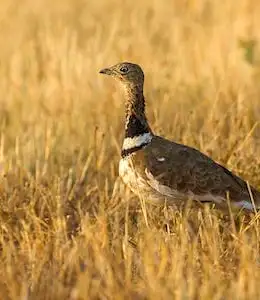
Most birds in winter are seed-eaters and plant-eaters, such as the Little Bustard (Tetrax tetrax) and the Calandra Lark (Melanocorypha calandra). These species often form very conspicuous flocks, like other small insect-eating species, such as the Meadow Pipit (Anthus pratensis) or the Black Redstart (Phoenicurus ochrurus), and other generalists such as the Eurasian Magpie.


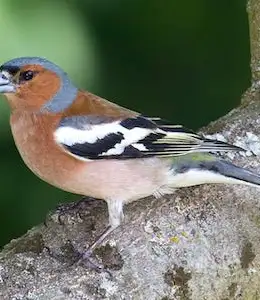
Another bird that stands out is the White Wagtail (Motacilla alba), cunning, which eats the fauna living under stones (beneath the stones) that is turned up when tractors till the soil. Ploughed areas are also used by the Eurasian Skylark (Alauda arvensis), the Spanish Sparrow (Passer hispaniolensis) and the Common Chaffinch (Fringilla coelebs).


In general terms, the ploughed areas of the raña hold few species but with considerable density and abundance.
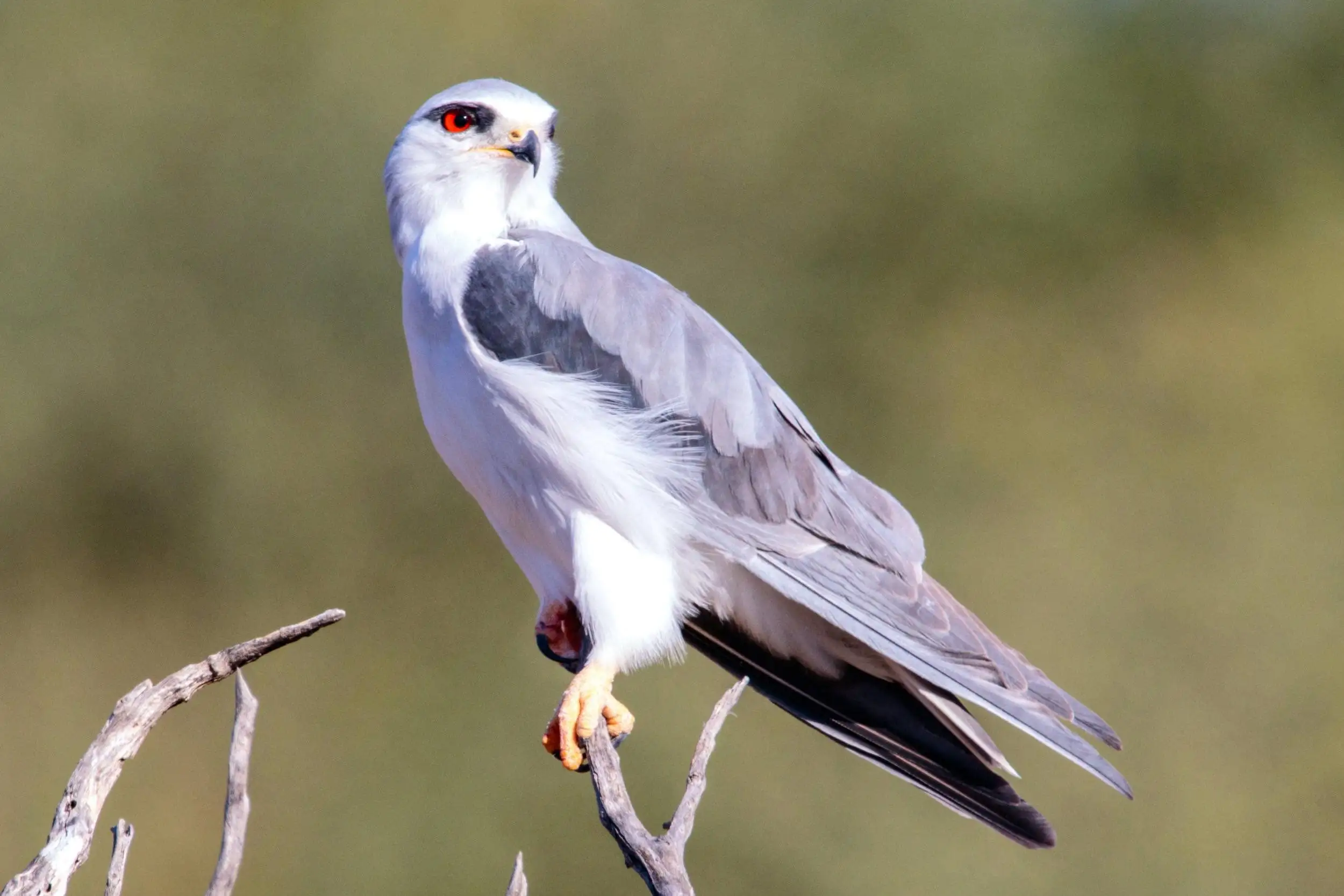
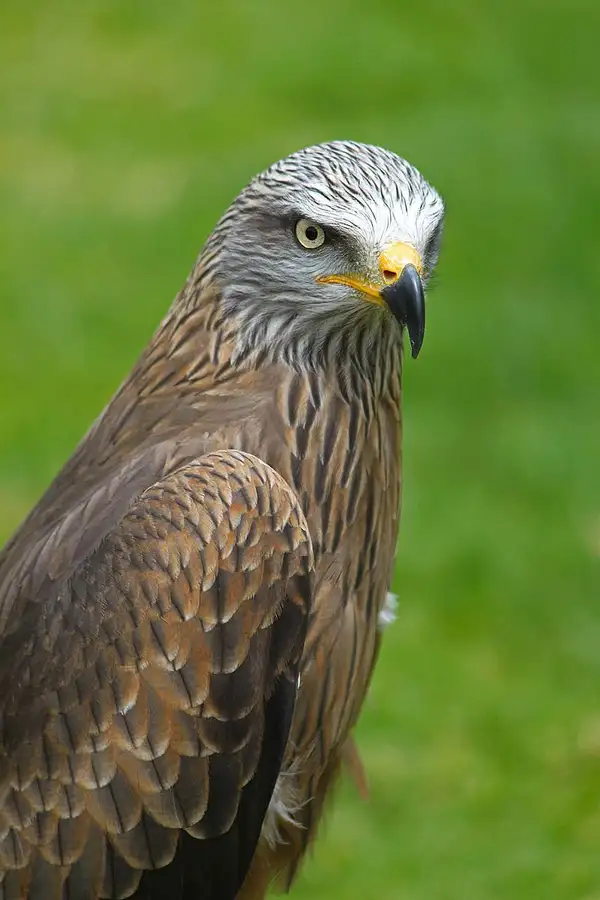
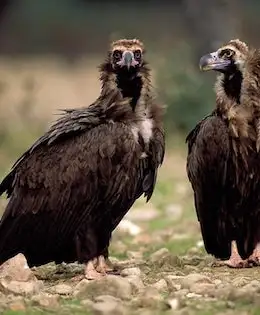
Among winter predators, the unusual Black-winged Kite (Elanus caeruleus) and the Merlin (Falco columbarius) occasionally appear, the latter a great hunter of small birds over these plains. Young imperial eagles also appear, following groups of vultures to find their food. The Common Buzzard (Buteo buteo) and the Red Kite (Milvus milvus) are also present all year round. The latter is more present in winter, with a roost of about 80 birds very close to Cabañeros.


As for feeding, the winter birds look for their food on the ground. By contrast, the summer birds pick it from the herbaceous layer.
Breeding birds in the grasslands
Here the situation is quite different. The largest groups are the insect-eating species, at 39.21 per cent, and the generalist species with a high insect intake in summer. Although predators remain constant, there is a much smaller presence of seed-eaters, at 7.84 per cent. A clear replacement can therefore be seen of a mainly seed-eating bird community by a more abundant, insect-eating summer one.
| TROPHIC STRUCTURE OF THE BREEDING BIRDS | NUMBER OF BIRD SPECIES | PERCENTAGE IN % |
|---|---|---|
| Predators | 10 | 19.6 |
| Insect-eaters | 20 | 39.21 |
| Fruit-eaters | 1 | 1.2 |
| Seed-eaters | 4 | 7.84 |
| Omnivores with a high summer intake of insects | 10 | 19.6 |
| Strict omnivores | 6 | 11.76 |
| TOTAL | 51 species |
The breeding bird communities that occupy the Cabañeros grasslands show a Mediterranean affinity, such as the Western Black-eared Wheatear (Oenanthe hispanica), found between the raña of Los Pescados and Los Esmataos, and the Thekla’s Lark (Galerida theklae). Here is also the only stable population of Great Bustard in the Montes de Toledo, which lives alongside other steppe species, for example the Little Bustard (Tetrax tetrax) and the Eurasian Stone-curlew (Burhinus oedicnemus).


Almost all these birds feed on the ground. Within their wide feeding spectrum, the insect-eaters make use of the abundant orthopterans (grasshoppers and crickets), above all a species able to appear in a gregarious phase, the Moroccan locust (Dociostaurus maroccanus). This insect is in turn eaten by another orthopteran, Decitucus albifrons, a species very typical of low pastures that do not dry out in summer, with carnivorous habits. Thanks to it, the presence of the locust is regulated. Finally, it is worth noting that 50 per cent of the medium and large summer insect-eating birds are specialised in catching this kind of large insect.

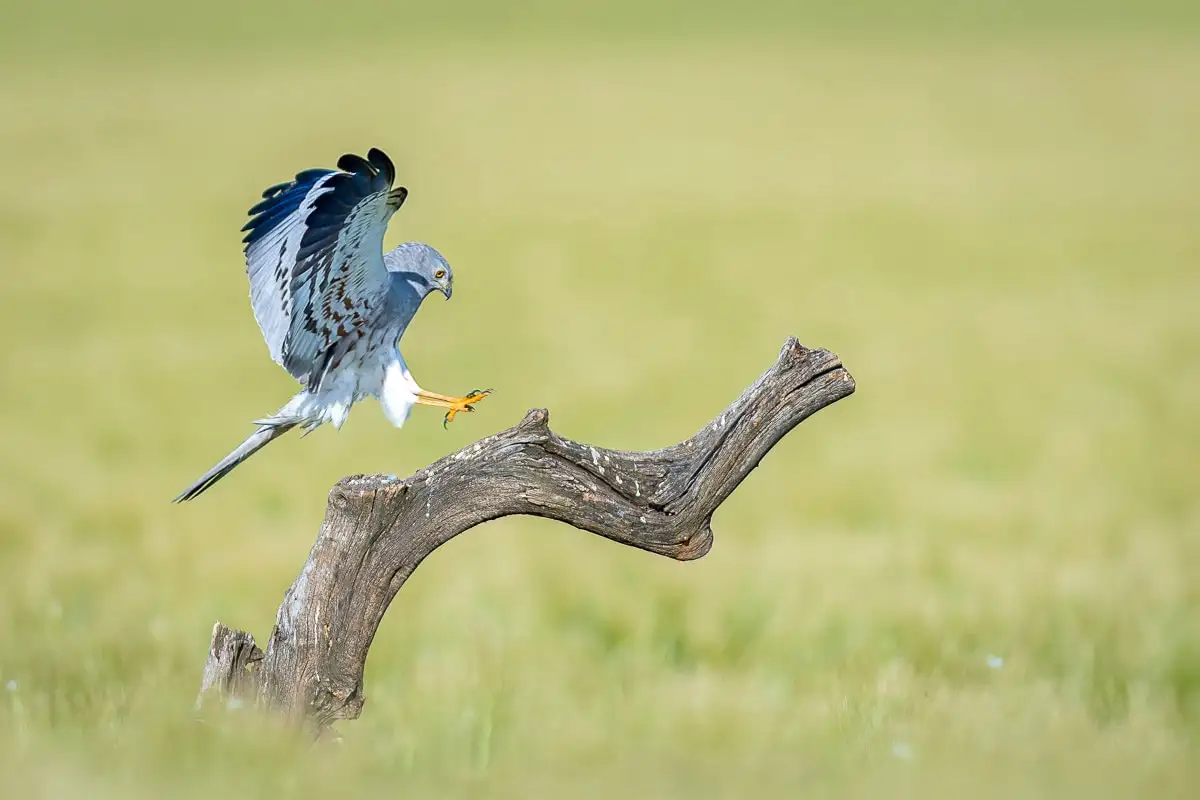
Predators such as Montagu’s Harrier (Circus pygargus) and the buzzard also eat a high percentage of insects in summer. And other species, such as the Little Owl (Athene noctua), which in winter feed on the small mammals usual in grasslands and scrub edges, such as small rodents (Mus spretus, Pitymys duodecimcostatus, Apodemus sylvaticus…), gradually switch to eating insects when March arrives.

The stork
Storks are trans-Saharan migrants and breeders that arrive in Cabañeros between the end of December and mid-January. Their food consists of amphibians in wetlands or flooded meadows, such as the natterjack toad (Bufo calamita) and the larvae of the western spadefoot (Pelobates cultrives). It is also an opportunistic bird on land turned over by farm work, following tractors together with White Wagtails and crows.

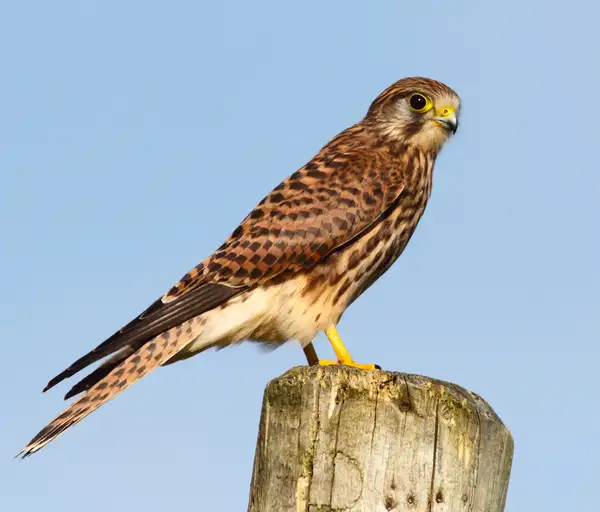
From May onwards, storks base their diet on orthopterans, forming groups of 300 birds, with their peak abundance coinciding with that of the Moroccan locust. Some authors (CARRASCAL et al, 1990) point out that this strategy of feeding in flocks makes it easier to locate food sources and increases the amount eaten. Sometimes groups of storks associate in commensalism (an association between two species without harming each other, for the feeding benefit of one or both), with other species such as the Black Kite (Milvus migrans), the Lesser Kestrel (Falco naumanni) or the Common Kestrel (Falco tinnunculus).

The moments of greatest activity are in the first hours of the morning and the last of the afternoon. In between, in the middle hours of the day, they settle on small wetlands, such as the Los Esmataos pond, the Baen Ancho or the Cercón de los Toros, where they rest, preen and regurgitate pellets (balls made of undigested food remains that some carnivorous birds regurgitate). Storks usually sleep in the nest or near the colonies.
The number of breeding pairs in the park and their productivity generally depend on the availability of food, and usually range between 12 and 30 pairs. In Cabañeros, in summer, storks live mainly on orthopterans, and their abundance is determined by the amount of rain. Therefore, in the driest years both are scarcer.
In many storks a white colour is seen <<painted>> on their legs. This is due to their droppings, which some authors (SHULZ, 1987) interpret, in storks wintering in Africa, as behaviour related to thermoregulation. This practice may also be attributed to the storks of Cabañeros.
Migration passages
In autumn and spring, the transition seasons, there is a greater abundance of small insects (winged ants, mayflies and so on), so migrant communities take advantage of these resources, attracting a great diversity of birds that eat these small insects, for example: Hirundinidae, Turdidae, Muscicapidae, and so on.
During these periods, the most important birds are the tits, which eat insects from the trees of the raña, and the early-arriving insect-eaters, such as the Great Spotted Cuckoo (Clamator glandarius).

More birds of Cabañeros
Bibliography:
- Jiménez García Herrera, José. (1997). Avifauna. En Parque Nacional de Cabañeros (pp. 192-224). Madrid, España: Ecohábitat.