
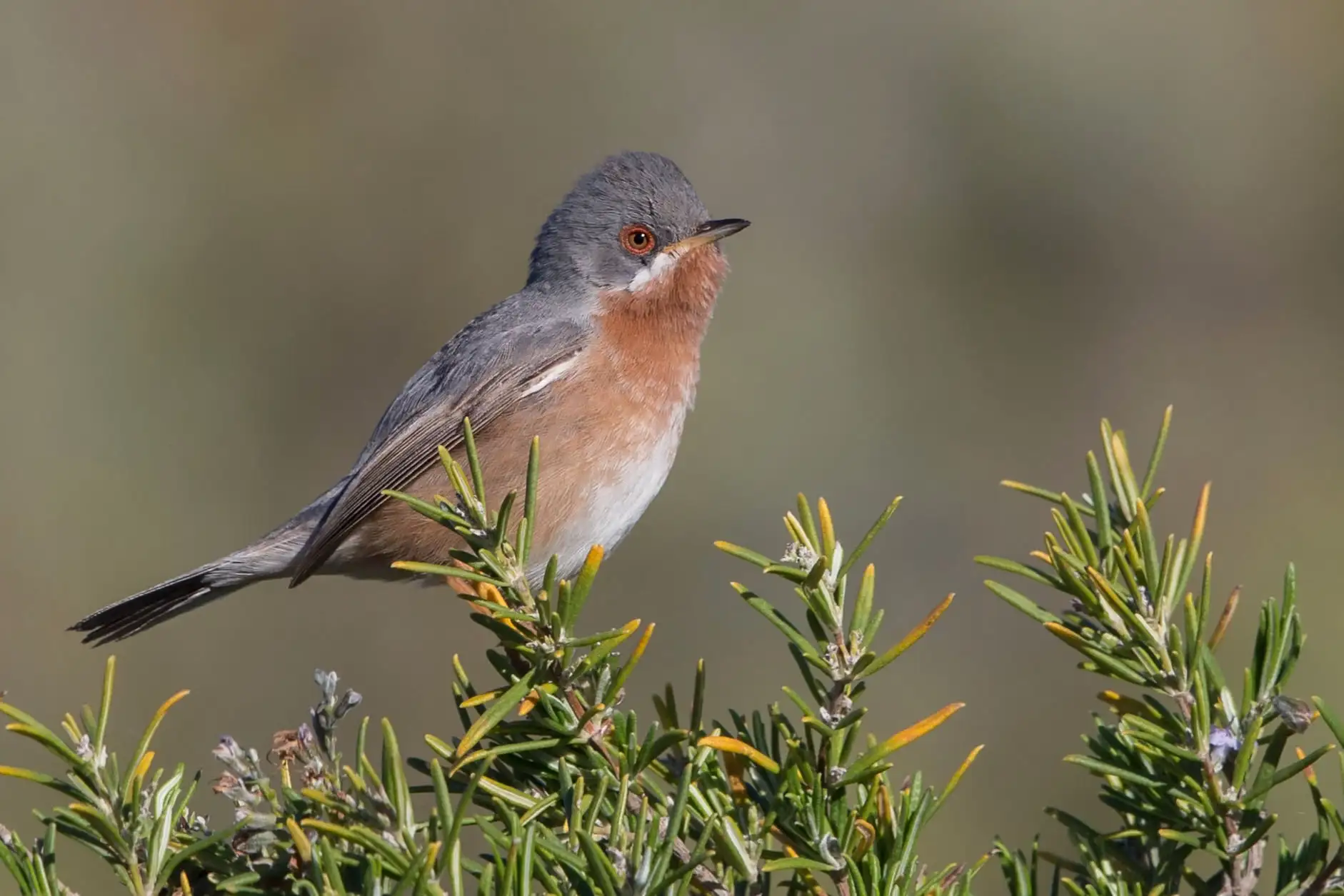
Birds
Birds of the dehesas
A short introduction to the dehesas
The dehesas of Cabañeros are, in fact, land that was transformed for farming, sparing some trees, and that is now abandoned but, because of its shape, is still called by that name. They lie in the south of the park, on waterlogged soils where the most abundant species is the Portuguese oak.

Birds of the dehesas
The birds that breed in the dehesas make up groups of few species, for example:
- Corn Bunting (Miliaria calandra)
- Spanish Sparrow (Passer hispaniolensis), which keeps several colonies in the area on holm oaks, ash trees and Portuguese oaks.
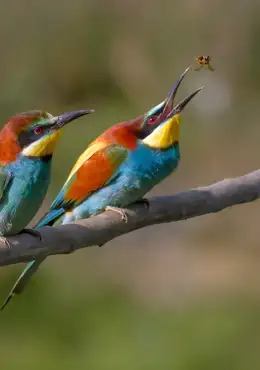
- European Bee-eater (Merops apiaster), a regular on the raña.
- European Roller (Coracias garrulus), in the few tree holes.
- Eurasian Hoopoe (Upupa epops), uses the «majanos» (heaps of loose stones that build up in farmland) to breed.
- Iberian Grey Shrike (Lanius excubitor), an abundant species.
- Woodchat Shrike (Lanius senator), an abundant species.
- Great Spotted Cuckoo (Clamator glandarius), a parasite of the nests of the Eurasian Magpie (Pica Pica) and a species of Ethiopian affinity present in the dehesas of the park.


In the south of the park there is a colony of the White Stork (Ciconia ciconia). Some species breed in its large, bulky nests, such as the Western Jackdaw (Coloeus monedula) and the House Sparrow (Passer domesticus).


In the trees of the dehesas you can find insect-eating species, such as the Eurasian Blue Tit.

In winter, most species are seed-eaters, such as the Common Wood Pigeon (Columba palumbus) and the Stock Dove (Columba oenas), and finches. There are also some species that eat small insects, such as the Meadow Pipit (Anthus pratensis).


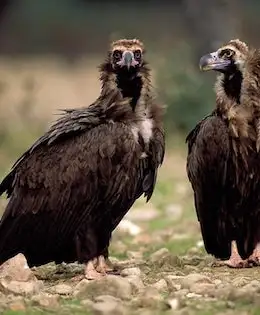
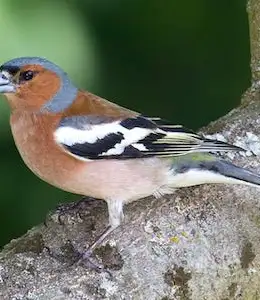
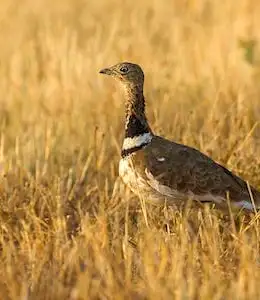
More birds of Cabañeros
Bibliography:
- Jiménez García Herrera, José. (1997). Avifauna. En Parque Nacional de Cabañeros (pp. 192-224). Madrid, España: Ecohábitat.