
Birds
Birds of the scrub
A short introduction to the scrub
Scrub arises as a result of the degradation of the woodland.
- Heath-and-rockrose scrub: the most characteristic and abundant vegetation of the Cabañeros mountains. Sometimes one element predominates, such as the tree heath (Erica arborea) or the gum rockrose (Cistus ladanifer).
- Rockrose scrub: scrub in which, because of the warmer conditions in some parts of the park, the rockrose dominates. Although it always grows alongside other species, there are areas where the rockrose covers almost all the vegetation, usually created by fire.
- Tamujo thickets: the tamujo dominates the scrub (Securinega tinctoria). Found near watercourses that are intermittent, dry out in summer and are very sunny.
- Trampales: made up of peaty wet spots and small peat bogs. Their species include shrubs such as Erica lusitanica –on the edges of the trampales–, Erica tetralix, Myrica gale, Brachypodium phonicoides, Dactylorrhixa incarnata, Drosera rotundifolia, Molinia caerulea subs. caerulea, Pinguicola lusitanica, etc.


The degradation of the woodland that gives rise to the different serial stages is the result of natural factors, such as fires started by lightning, and of human factors, which alter nature through activities such as grazing, clearing and so on.
| CAUSE | FACTORS | STAGES OF DEGRADATION |
|---|---|---|
| NATURAL | FIRE | Dense woodland |
| Sparse woodland | ||
| HUMAN-CAUSED | Cork extraction | Open woodland |
| HUMAN-CAUSED | Firewood extraction and charcoal-burning | Dense scrub |
| HUMAN-CAUSED | Overgrazing and high density of ungulates | Degraded scrub |
| HUMAN-CAUSED | Reforestation with non-native species | Grassland |
| HUMAN-CAUSED | Ploughing | Cropland |
Birds of the scrub
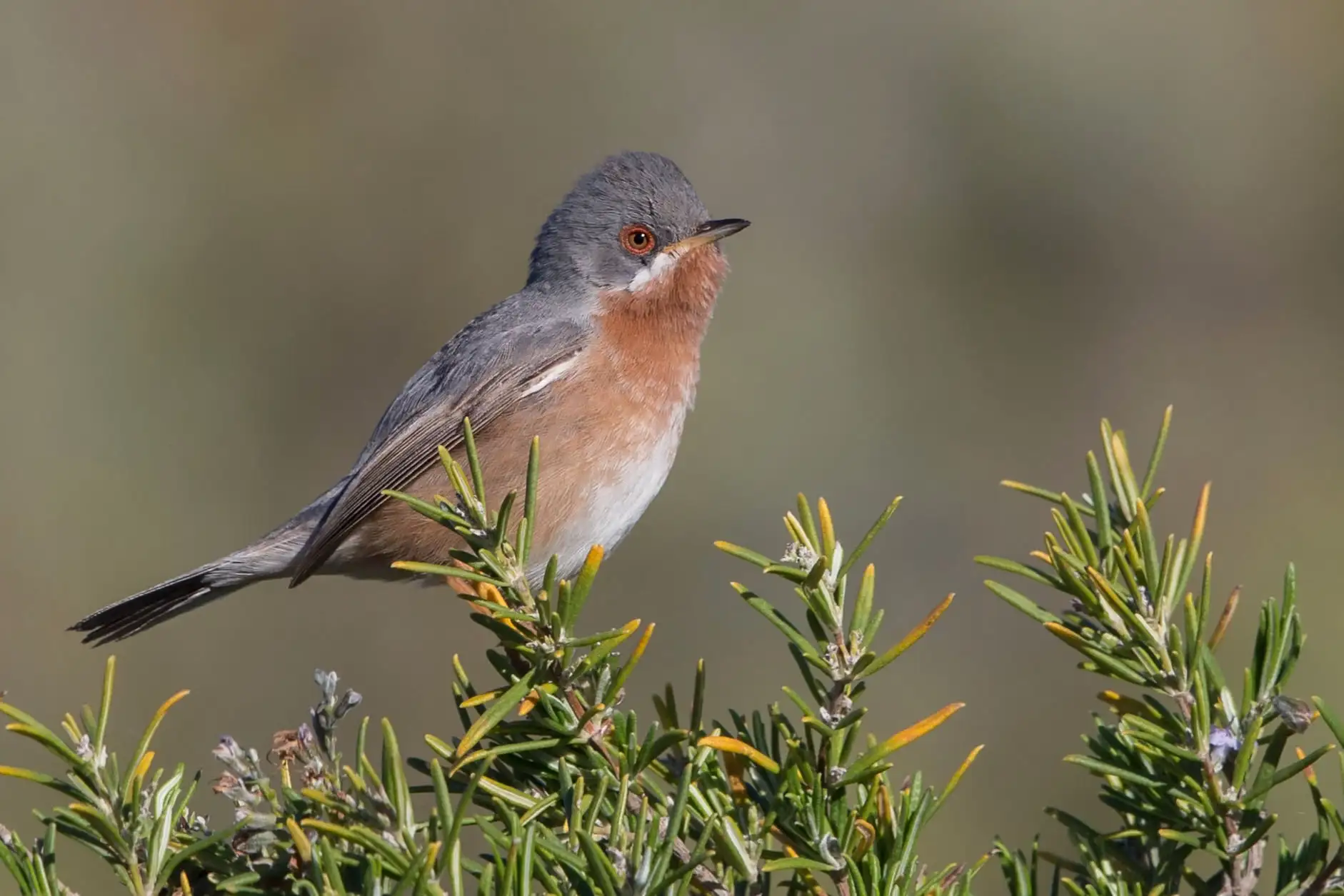
The bird family most present in the scrub is the warblers. In fact, just 3 species make up 80 per cent of the scrub community. They are the following:
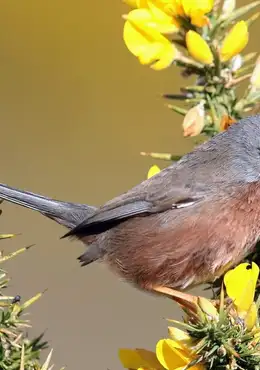
- Dartford Warbler (Sylvia undata)
- Western Subalpine Warbler (Sylvia cantillans)
- Sardinian Warbler (Sylvia melanocephala)


There are other, less abundant species such as:
- Eurasian Blue Tit (Cyanistes caeruleus)
- Long-tailed Tit (Aegithalos caudatus)
- Common Blackbird (Turdus merula)
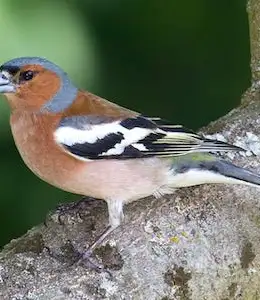
- Common Chaffinch (Fringilla coelebs)


There are also very characteristic species in the area associated with small clearings in the scrub:
- Red-legged Partridge (Alectoris rufa), always near tracks and firebreaks.
- Thekla’s Lark (Galerida theklae)
- Woodlark (Lullula arborea)


Naturally, the breeding community is less diverse in the serial zones than in the sclerophyllous woodland because of the difficulty of building a nest there. This community is made up of insect-eating species, most of them resident all year, which tend to feed in the low layers and even on the ground.
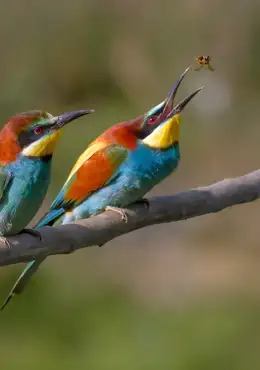
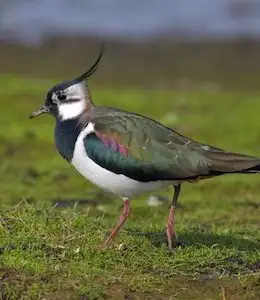
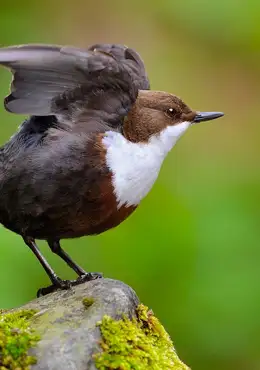
More birds of Cabañeros
Bibliography:
- Jiménez García Herrera, José. (1997). Avifauna. En Parque Nacional de Cabañeros (pp. 192-224). Madrid, España: Ecohábitat.