
Plants
Xeromesophytic communities
Characteristics of xeromesophytic communities
- They arise from the alteration of normal soil conditions that hold more moisture, replacing the therophyte communities.
- These communities are considered intermediate between therophyte communities (annual species displace perennials because of droughts) and mesophytic ones (water-loving ones that make up for the lack of water with groundwater moisture).
- They are made up of perennial and annual species.
- The intensity of human activity such as grazing determines the dominance of some species over others. The highest and most usual stocking rates favour perennial species, which reproduce vegetatively by stolons, bulbs and rhizomes.
- The input of organic matter, which produces greater moisture retention in the soil, together with the continuous selection of species by the teeth of livestock, causes new perennial herbs to be added to those already present.
Habitat and distribution of xeromesophytic communities
- They are found in places where livestock like to gather, where there is quite a lot of grazing, droppings accumulate and the soil is slightly compacted.
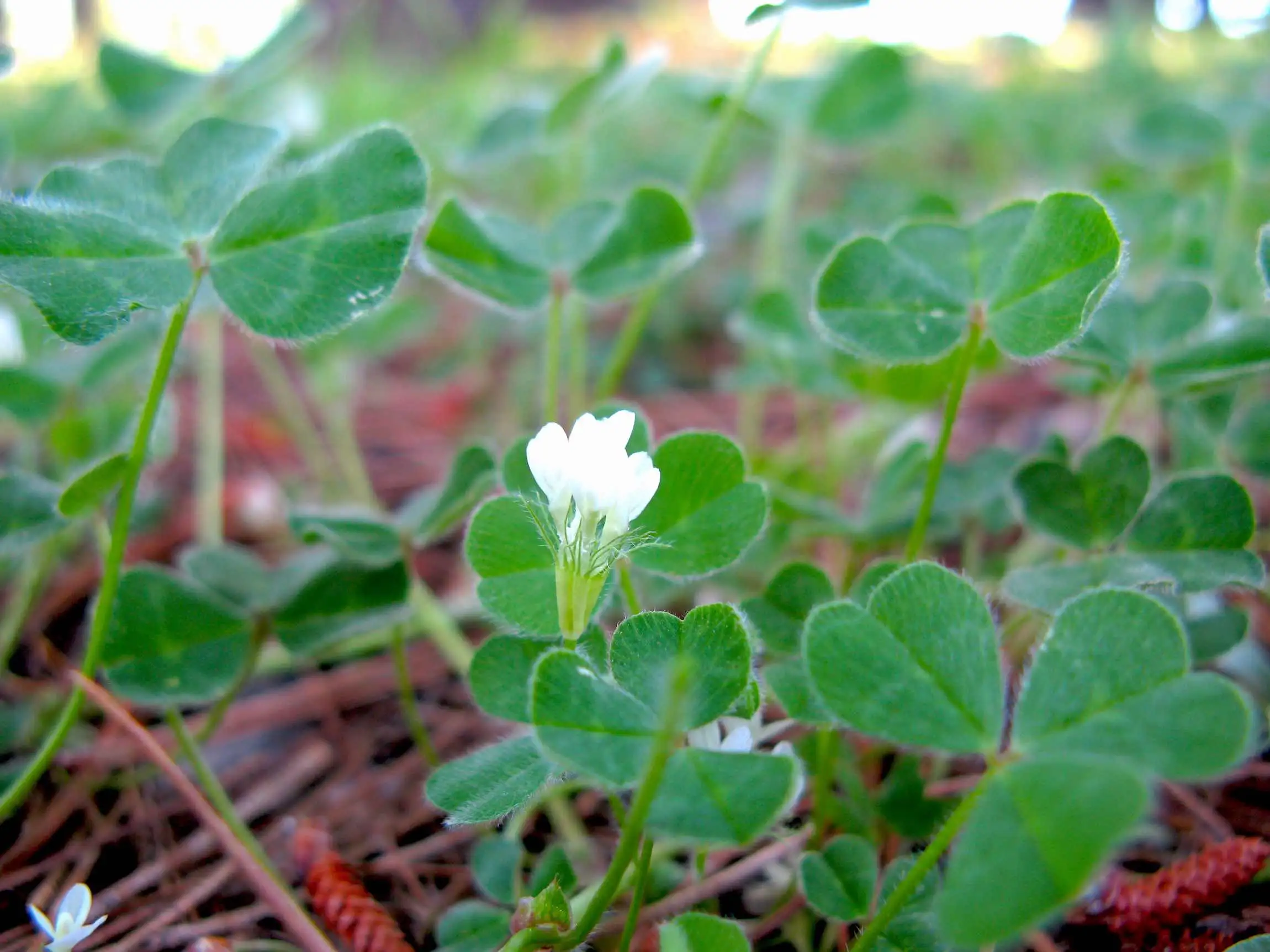
- Poa bulbosa and subterranean clover (Trifolium subterraneum) can be found near sheepfolds, resting places, drinking troughs, feeders, heavily grazed dehesas not subject to cultivation and farmhouses. They are usually accompanied by other species adapted to livestock pressure, through the phenomenon of the pastoral paradox. When herbivores disappear from the area nitrophilous species arise.
Species of xeromesophytic communities
- «Majadales»: are a direct consequence of intense grazing, which generates a dense carpet of small herbs that covers the soil completely.
- Poa bulbosa and Trifolium subterraneum
Large grasses such as the «berciales» and «vallicares»:
- The «berciales» are communities where giant feather grass dominates, Celtica gigantea (=Stipa gigantea). It is a tall perennial grass that arises on stony, oligotrophic soils of some depth, using the water that runs off the rocks. They are abundant near Cabañeros, on the granite boulder fields of the Toledo Crystalline Plateau, and in some patches of the quartzite rañas where there is grazing. They are also present in summit areas, that is, on mountain tops, where large rocks outcrop. Sometimes they are accompanied by other hemicryptophyte grasses such as Melica ciliata subsp. magnoli or Arrhenatherum elatius.
- The «vallicares» are water-loving communities that appear on soils with groundwater, sometimes also with temporary waterlogging, as in gullies, foothill areas or raña depressions. They are formed by late-phenology grasslands, since they dry out at the end of summer when therophytic grasslands are completely parched. The dominant species is the perennial grass Agrostis castellana, which forms dense communities of medium-high height and when it dries produces real fields of hay. They usually live alongside other species such as Dactylis glomerata, Trifolium campestre and, sometimes, more striking species of the genera Ranunculus or Scilla. The «vallicares» are generally the last replacement stage of Portuguese oak woods, Pyrenean oak woods and ash woods, and stand out for their extent in the depressions of the raña, almost always under Portuguese oaks.
- The «cerrillares» are communities dominated by another perennial grass: Hyparrhenia hirta. With a scarce representation in our geographical area, they share common characteristics with the «berciales». They settle in the warmest areas of the Montes de Toledo –the far south– and on little-developed, stony soils.
Herbaceous communities
 Mesophytic communities
 Xeromesophytic communities
 Therophyte communities
 Amphibious, hygropeat and aquatic communities
 Rock communities
 Dehesas
Bibliography
- Vicente García Canseco (Coor.) (1997). Parque Nacional de Cabañeros. Madrid, Spain: Ecohábitat.
- Perea García-Calvo, R., Perea Ruiz-Tapiador, D., Giménez Velasco, G.F. (2015). Vegetación y flora del Parque Nacional de Cabañeros. Volumen I. El paisaje vegetal: ecología, conservación y rutas de interés geobotánico. Madrid, Spain: Editorial Solitario