
Plants
Rock communities
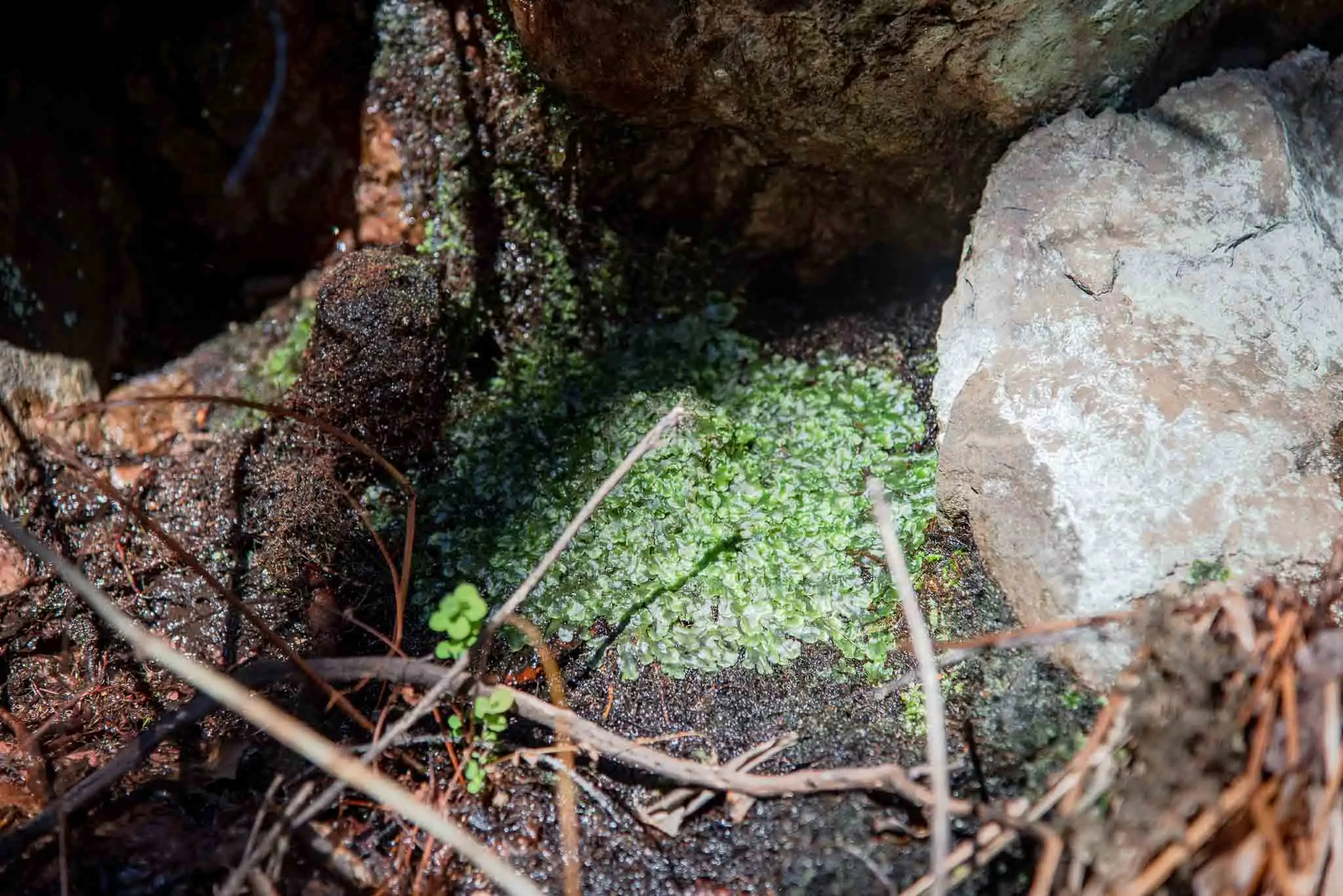
Characteristics of rupicolous communities

- They are made up of vegetation specialised in an unfavourable environment for plants, such as rocky outcrops. In many cases they are named after the situations where they settle, for example: fissure dwellers, of fissures; scree dwellers, of screes; species appear able to face up to the adverse situation of lack of substrate, using the gaps between stones, the fissures of rock walls or the cracks of rocks.
- Non-rupicolous species can arise that have been left isolated in these places where neither fire nor the teeth of herbivores or other competing species have managed to reach. This is the case of the juniper (Juniperus oxycedrus), the broom (Cytisus striatus) or the rockrose (Cistus ladanifer).


Habitat and distribution of birch woods in Cabañeros

- Frequent on all kinds of rocky outcrops: stonecrop (Sedum brevifolium), navelwort (Umbilicus rupestris), some ferns (Asplenium officinarum and Asplenium trichomanes).
- On the quartzite crests of the Montes de Toledo: wild pink (Dianthus lusitanus) and an endemic: the foxglove (Digitalis purpurea subsp. toletana).
- On slaty and quartzite outcrops: the dock (Rumex induratus), a very important stabiliser of slopes and pedrizas. These pedrizas, also known as «pedreras» or «canchales», are made up of extensive masses of stones and form a fundamental and inherent part of the landscape of the Montes de Toledo and of Cabañeros.

Photos of rupicolous communities in Cabañeros


Herbaceous communities
 Mesophytic communities
 Xeromesophytic communities
 Therophyte communities
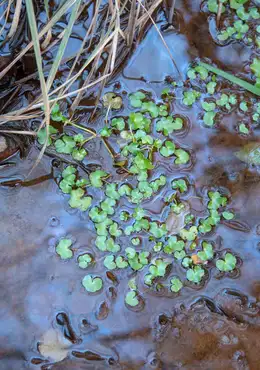 Amphibious, hygropeat and aquatic communities
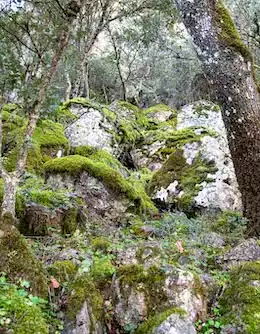 Rock communities
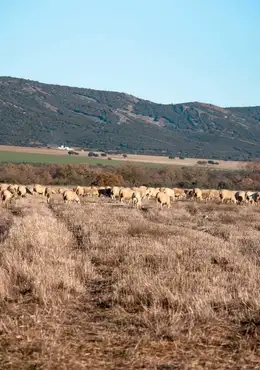 Dehesas
Bibliography
- Vicente García Canseco (Coor.) (1997). Parque Nacional de Cabañeros. Madrid, Spain: Ecohábitat.
- Perea García-Calvo, R., Perea Ruiz-Tapiador, D., Giménez Velasco, G.F. (2015). Vegetación y flora del Parque Nacional de Cabañeros. Volumen I. El paisaje vegetal: ecología, conservación y rutas de interés geobotánico. Madrid, Spain: Editorial Solitario