
Plants
Mesophytic communities
Characteristics of mesophytic communities
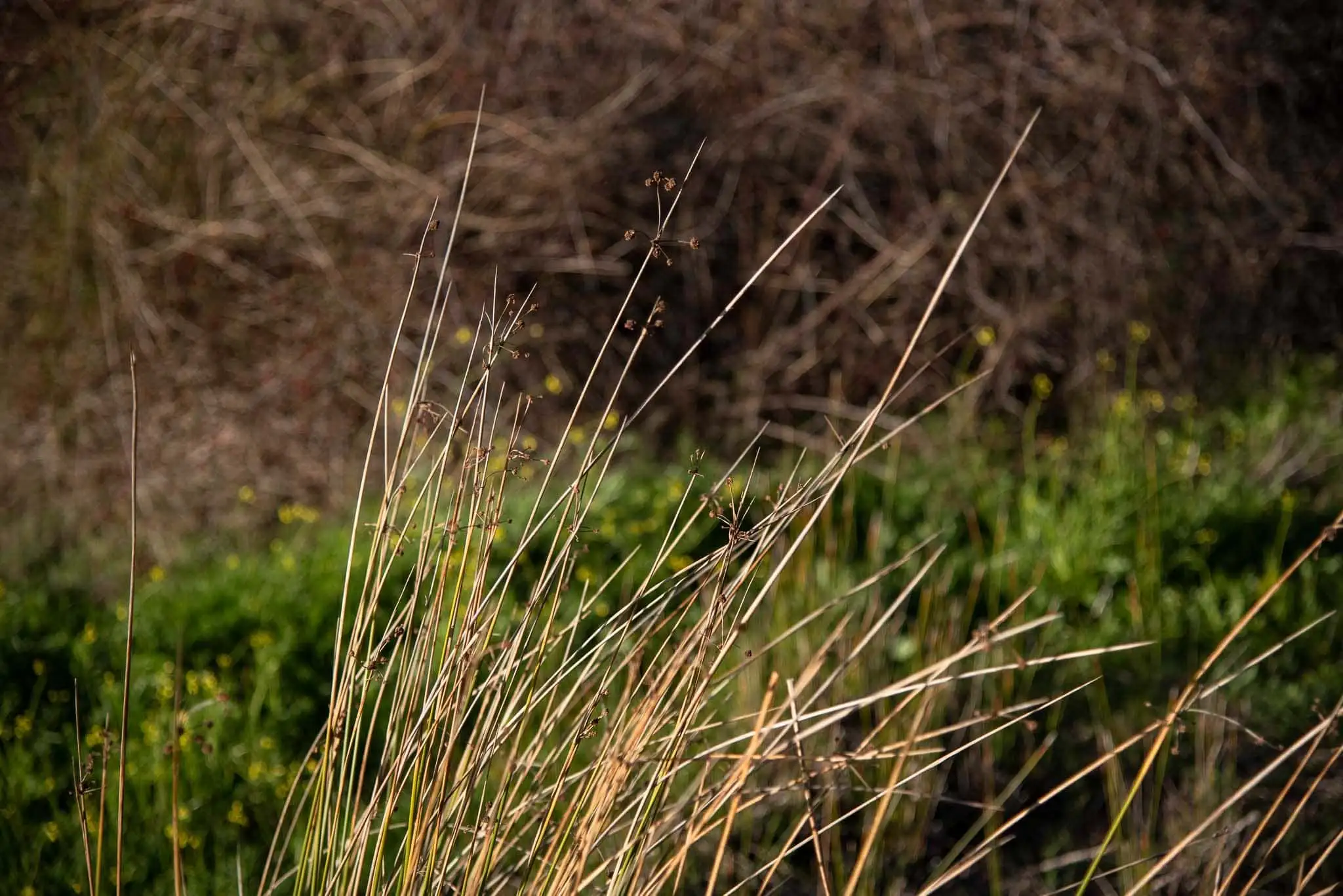
- Communities dominated by perennial herbaceous plants that are generally water-loving or only slightly xerophilous. Their extent within the park is minimal given the Mediterranean character of the area; they are found only in places with continuous soil moisture and sufficient drainage.
- They are made up of perennial water-loving herbs in areas near alder woods, ash woods and birch woods, which frequently turn out to be the replacement stage of these riverside woods.
- In completely nitrophilous environments that share the same environmental characteristics as the rush beds, you can find so-called «gramales» or «gramanales», communities dominated by a tufted grass: Bermuda grass (Cynodon dactylon). It is a species that easily stands trampling and stays green in summer thanks to its C4 metabolism. When people intervene and practise grazing in the area, the Bermuda-grass pastures displace the rush beds.
Habitat and distribution of birch woods in Cabañeros
- The commonest and most characteristic communities are the rush beds, formed by water-loving herbs that lie near streams in overflow areas and in groundwater places that allow soil moisture almost all year. The round-headed club-rush (Scirpoides holoschoenus), other hemicryptophyte grasses: Holcus lanatus or Lolium perenne, and other accompanying species such as: Mentha pulegium or Trifolium respinatum stand out.
- The Bermuda-grass pastures abound on soils degraded by compaction. Those of the middle basin of the Bullaque river are striking.

Species of the mesophytic communities
- Rush beds
- Bermuda-grass pastures: usually accompanied by strawberry clover (Trifolium fragiferum) and the docks of the genus Rumex, for example: Rumex congomeratus.
Photos of the mesophytic communities


Herbaceous communities
 Mesophytic communities
 Xeromesophytic communities
 Therophyte communities
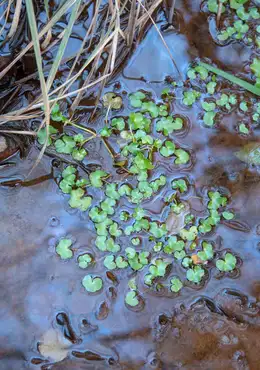 Amphibious, hygropeat and aquatic communities
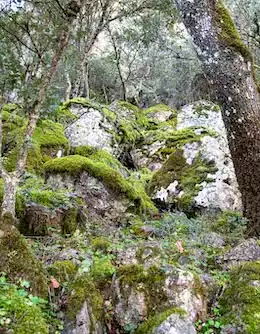 Rock communities
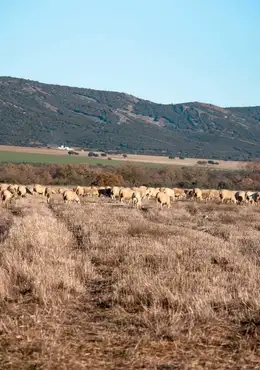 Dehesas
Bibliography
- Vicente García Canseco (Coor.) (1997). Parque Nacional de Cabañeros. Madrid, Spain: Ecohábitat.
- Perea García-Calvo, R., Perea Ruiz-Tapiador, D., Giménez Velasco, G.F. (2015). Vegetación y flora del Parque Nacional de Cabañeros. Volumen I. El paisaje vegetal: ecología, conservación y rutas de interés geobotánico. Madrid, Spain: Editorial Solitario