
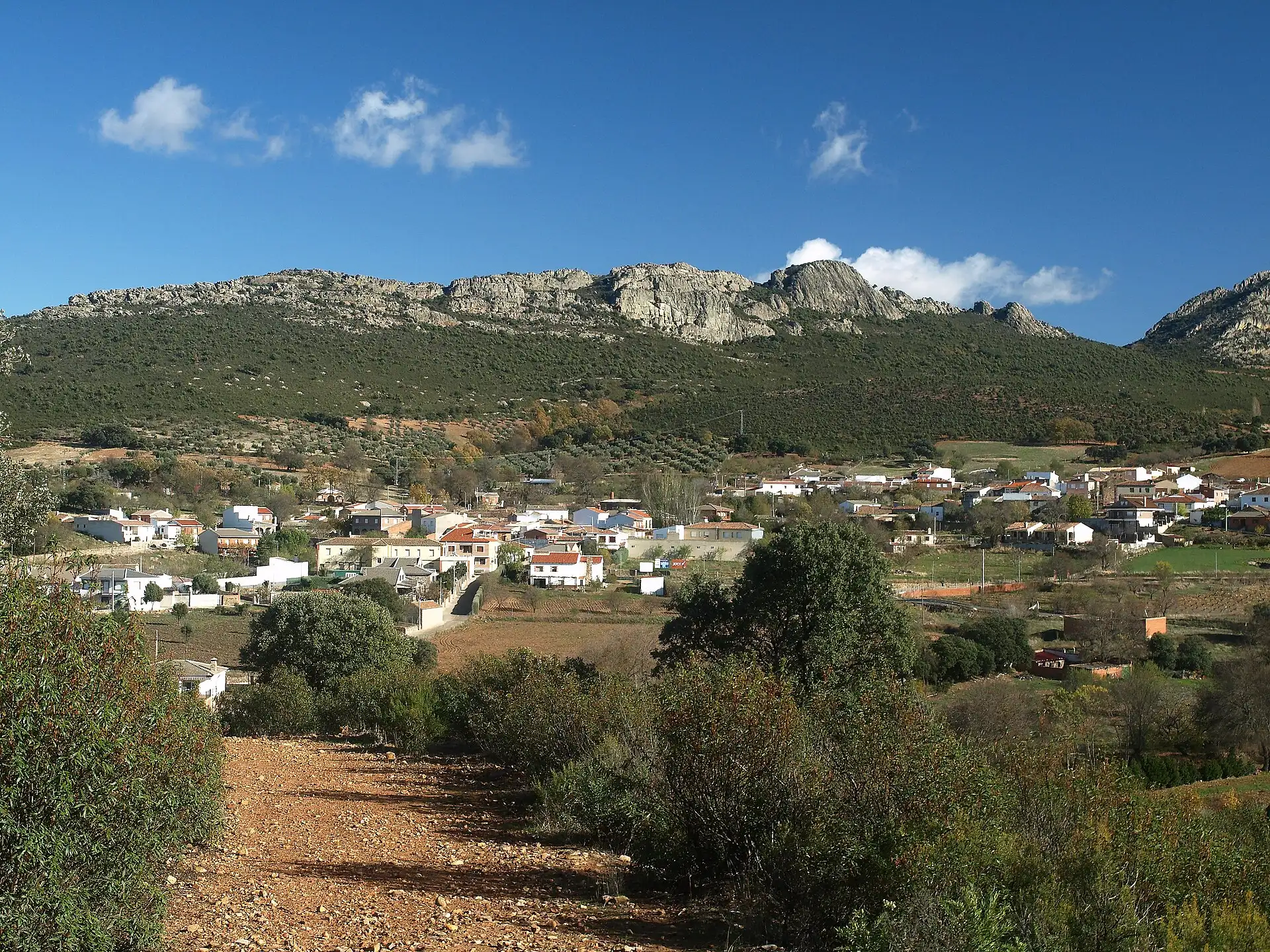
The village of springs
Hontanar means spring. In a 16th-century survey the villagers explained that the village was called that because it had four springs. It lies in a valley closed in by high mountains; the highest peak is the Corral de Cantos, at 1,419 metres.
Its origin is uncertain, probably the mid-14th century, and it is tied to Malamoneda: when that settlement was abandoned as unhealthy, its inhabitants moved to this valley, which was better supplied with water. Before the Civil War it had nearly four hundred households. Today it is the smallest municipality in the park, with more than 3,000 hectares inside Cabañeros.
What to see
- The Malamoneda site, a Site of Cultural Interest (the company Naturexplora runs visits), on a 6 km route. Among streams and crags remain a watchtower raised in the 14th century, the ruins of a castle and of a hermitage, remains of houses and a necropolis of more than a hundred tombs cut into the granite. There are Latin inscriptions from the early centuries AD, and it is debated whether the tombs are Roman or from the resettlement of the 12th and 13th centuries. The town council links to guided visits.
- Church of San Andrés, the patron saint.
- The murals. Since 2024 the village has been filling up with street art about Cabañeros: a lynx by Anna Repullo and an imperial eagle by Xolaka in calle Traviesa, and in 2025, with the Hontanart festival, murals on rural trades such as shepherding and beekeeping, by Anna Repullo, Cris2E and Tresky (one of them in calle Alegas).
- The astronomical viewpoint, new, next to the municipal swimming pool. Hontanar is also a Starlight Destination: the night sky of Cabañeros tells the story.
- The Porches route, among oaks, with pretty waterfalls.


