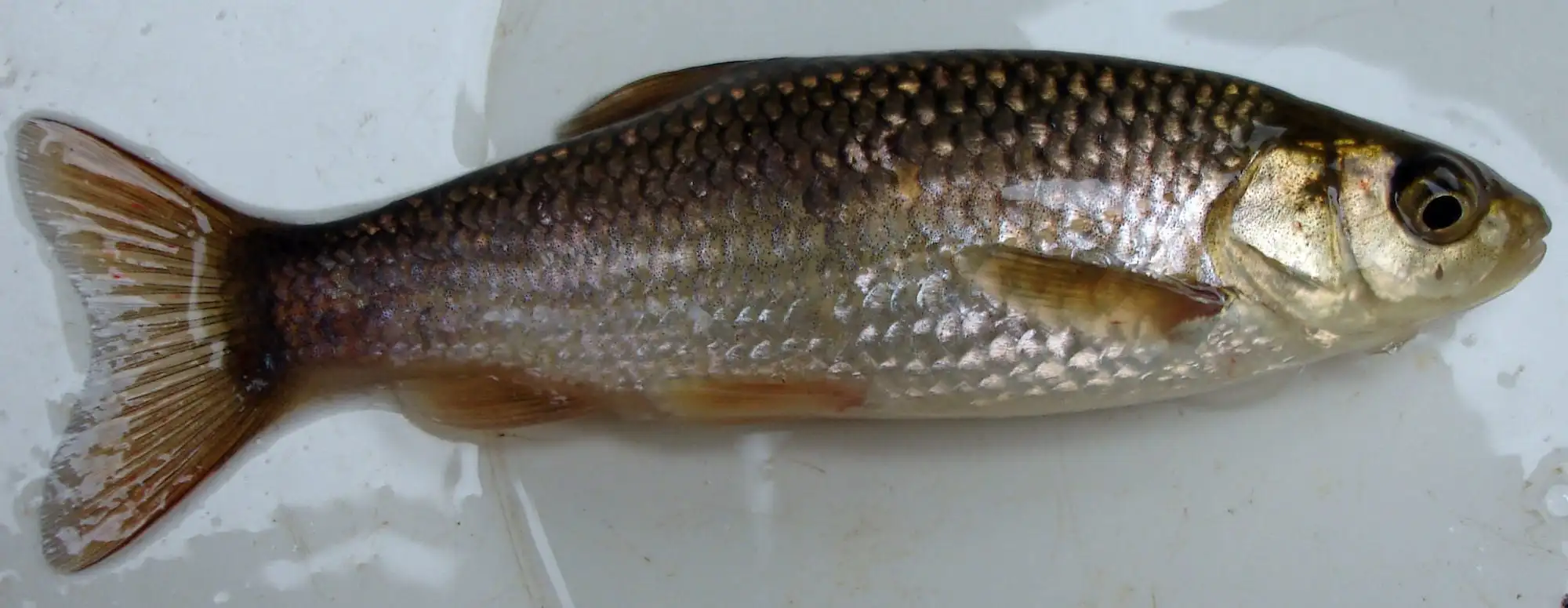
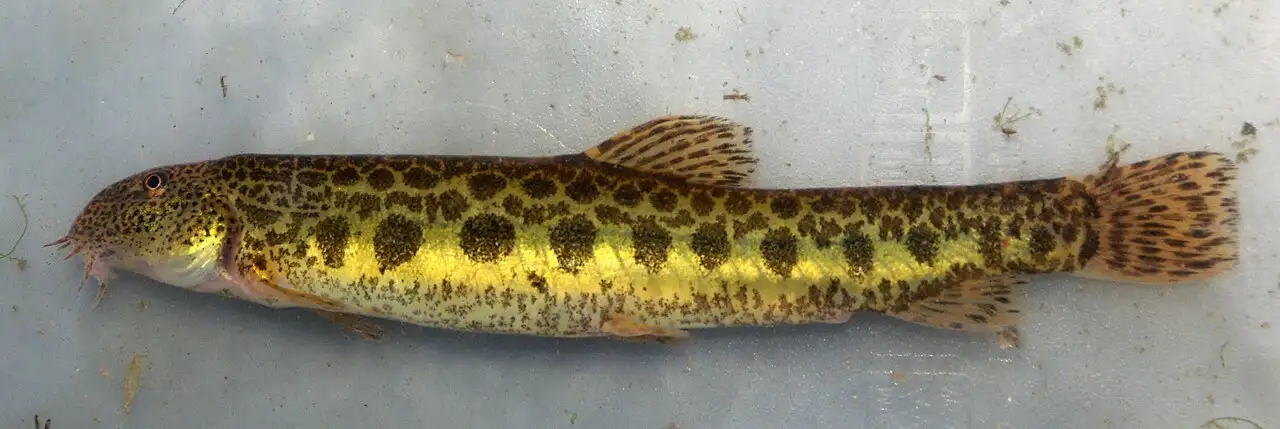
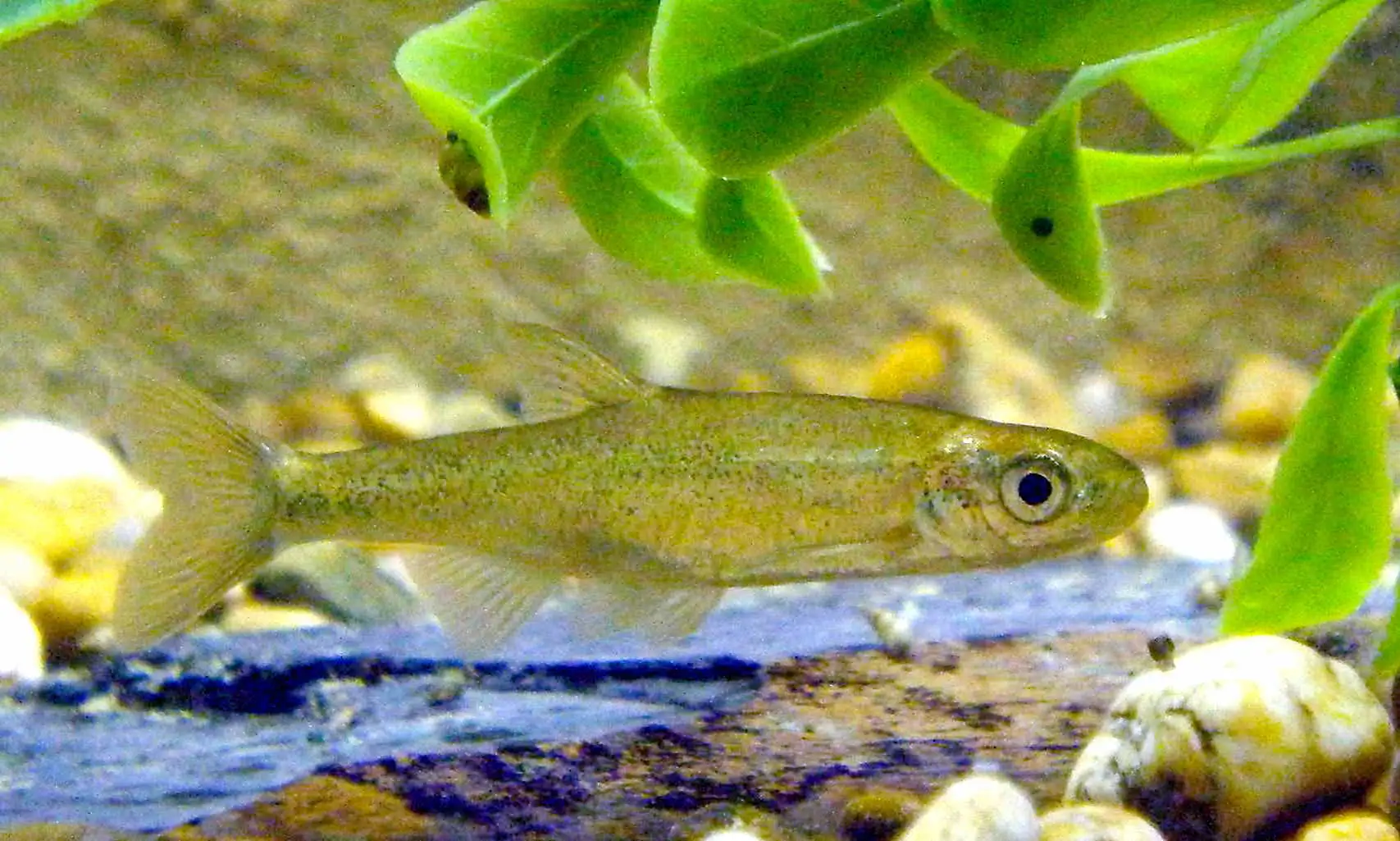
The commonest fish of the park's seasonal streams, according to the guide.
Photos of the Calandino
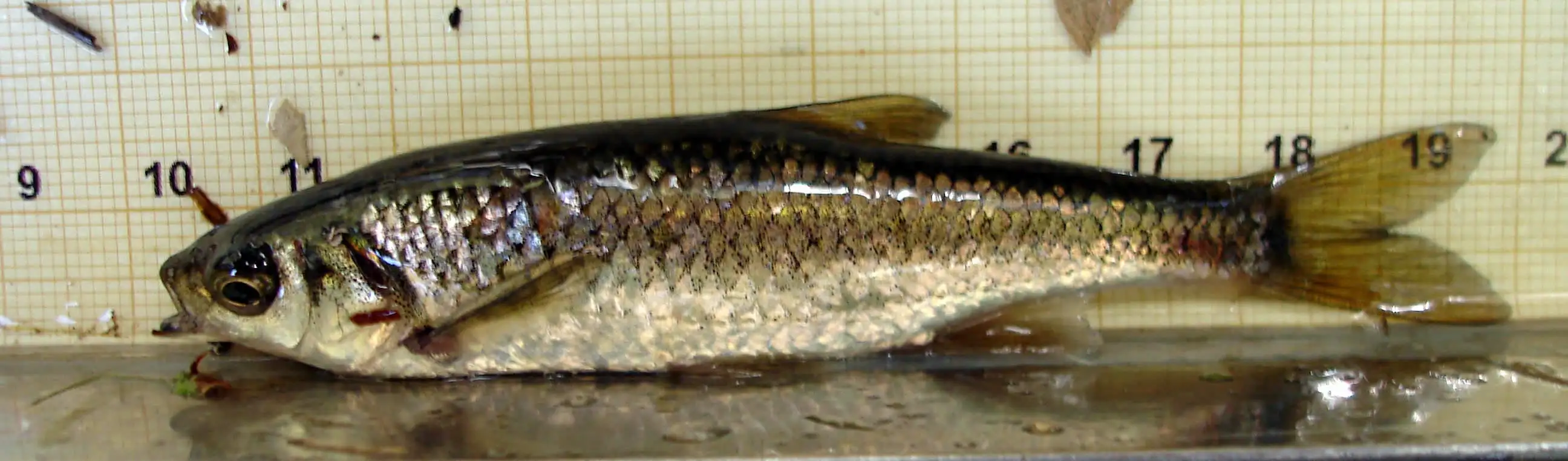
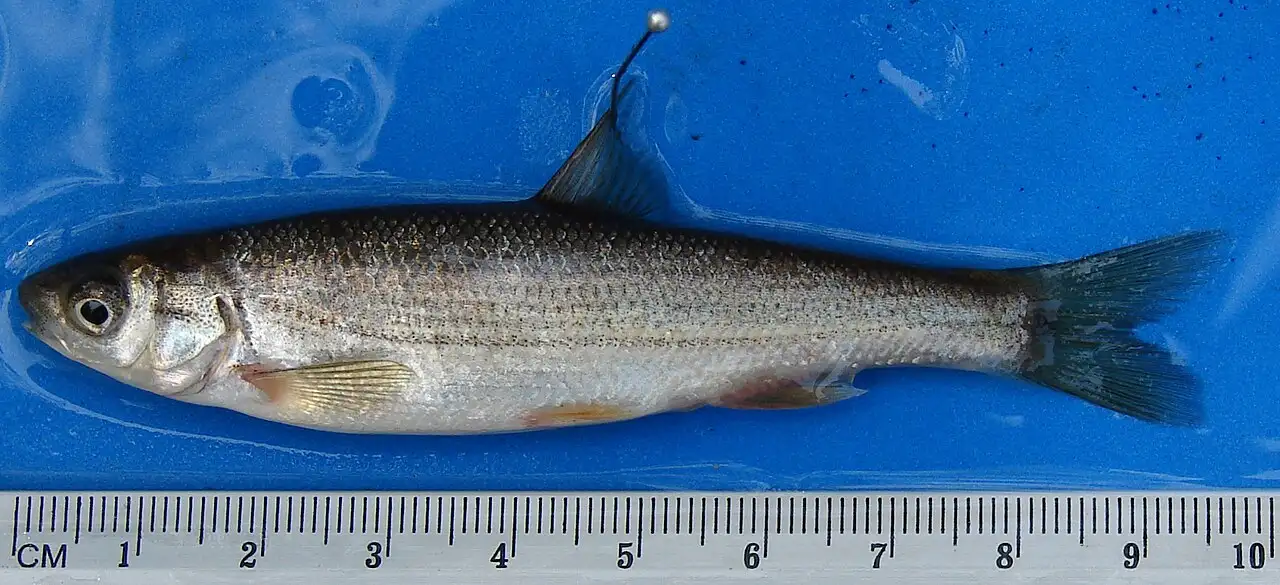
A Calandino, a small silvery fish, on graph paperPhoto: David Perez, CC BY 3.0Photo 1 of 1
1 / 1
Identification of the Calandino
It is a small, silvery fish that rarely reaches 13 centimetres. To the naked eye there is nothing special about it; its rarity lies in how it reproduces.
Habitat and distribution of the Calandino
Endemic to the peninsula: the Duero, Tagus, Sado, Guadiana, Odiel and Guadalquivir basins.
Breeding of the Calandino
It has a hybrid origin and almost all individuals are females with three sets of chromosomes. Their eggs keep only the maternal genome and are fertilised with sperm of the chub or of closely related species: the young are, in large part, copies of the mother.
The park guide explains that this strategy, hybridogenesis, works especially well in streams that dry up in summer, and that in their populations individuals with two, three and even four sets of chromosomes live together.
Diet of the Calandino
It eats mainly arthropods.
The Calandino in Cabañeros
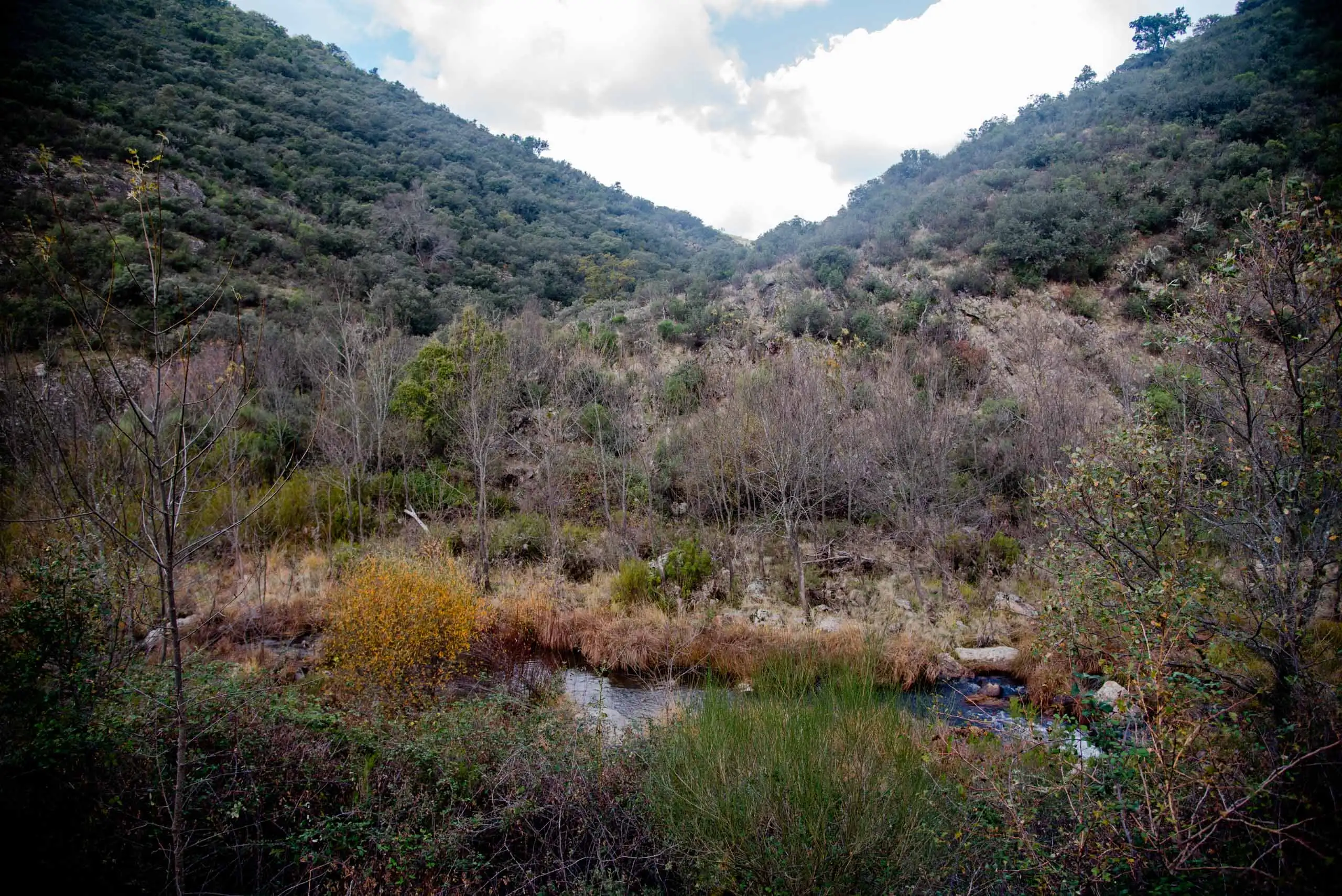
According to the guide, most of the streams that run between autumn and spring dry up in summer or are left as isolated pools, and among the fish of these waters the Calandino stands out for its abundance.
The Estena also holds a riddle: it is the only place where males and females have been found that could correspond to the other species that, with the chub, gave rise to the Calandino. See the chub page.
Can it be seen in Cabañeros?
In the stream pools in summer you sometimes see small silvery fish: many are Calandinos. Remember that swimming is not allowed in the rivers of the park.