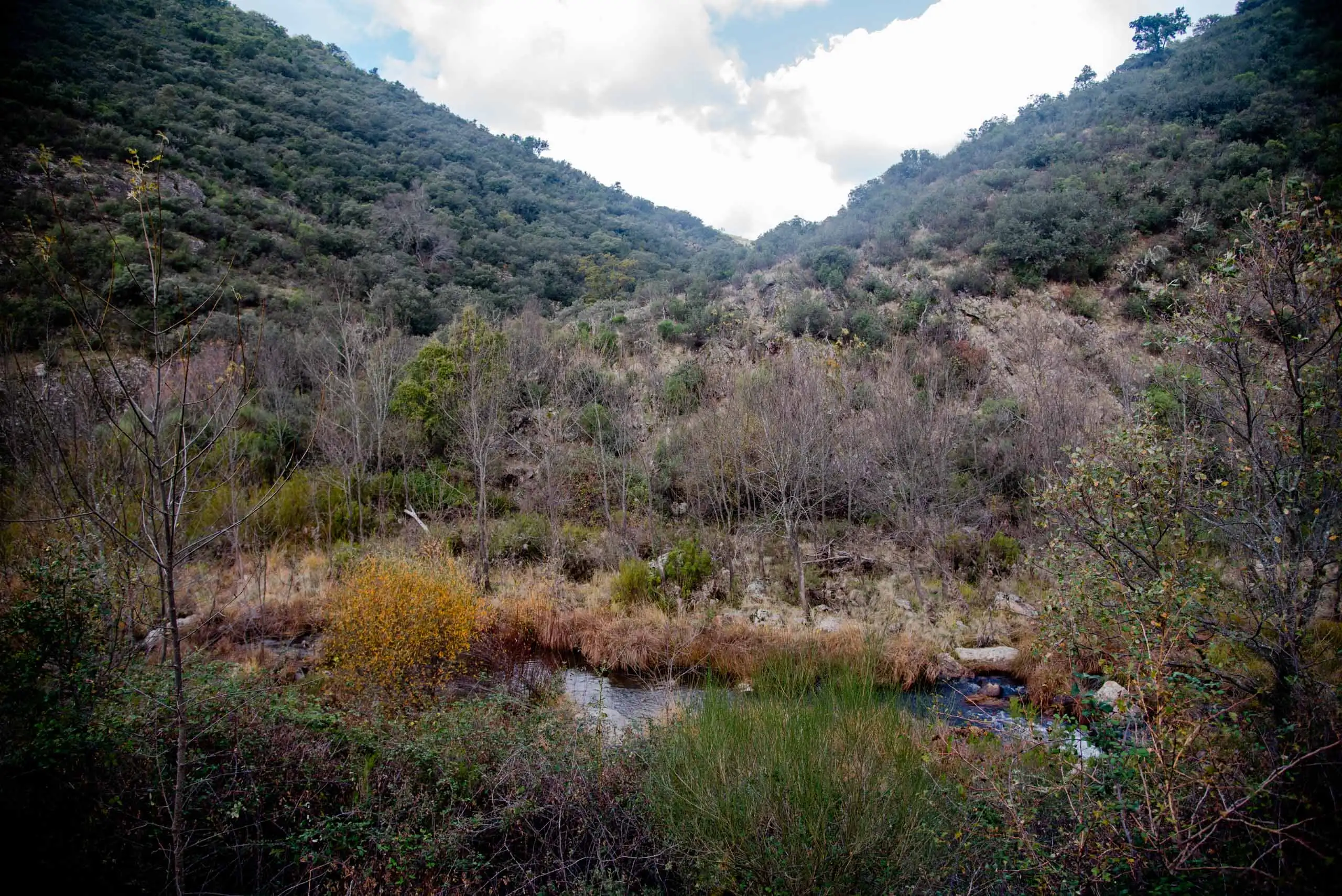
In the Estena river, according to the park guide; found only in the rivers of the Guadiana basin.
Months of the yearly cycle
J
F
M
A
M
J
J
A
S
O
N
D
Spawning
no
no
no
yes
yes
yes
no
no
no
no
no
no
Photos of the Small-headed Barbel
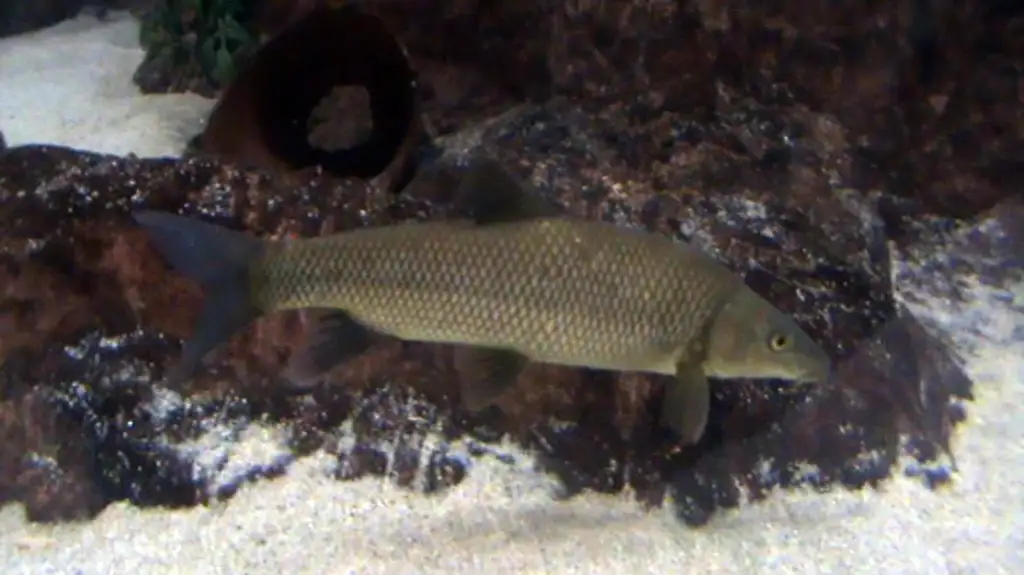
Adult Small-headed Barbel, with a greenish-brown back and large scales, swimming beside some rocksPhoto: Aleuze, Public domainPhoto 1 of 1
1 / 1
Identification of the Small-headed Barbel
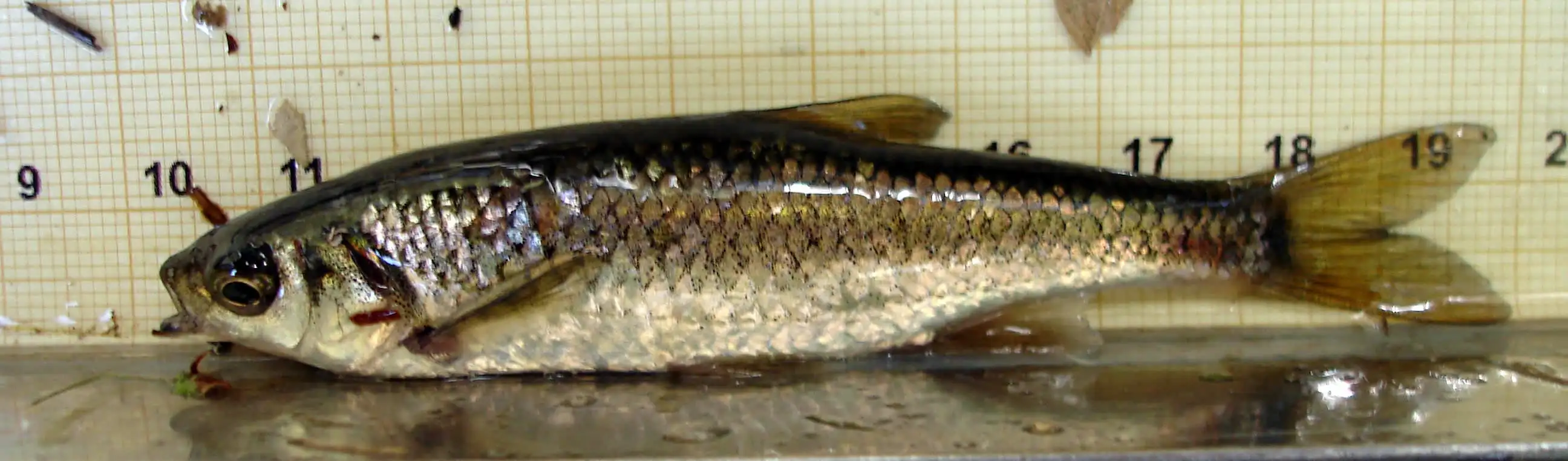
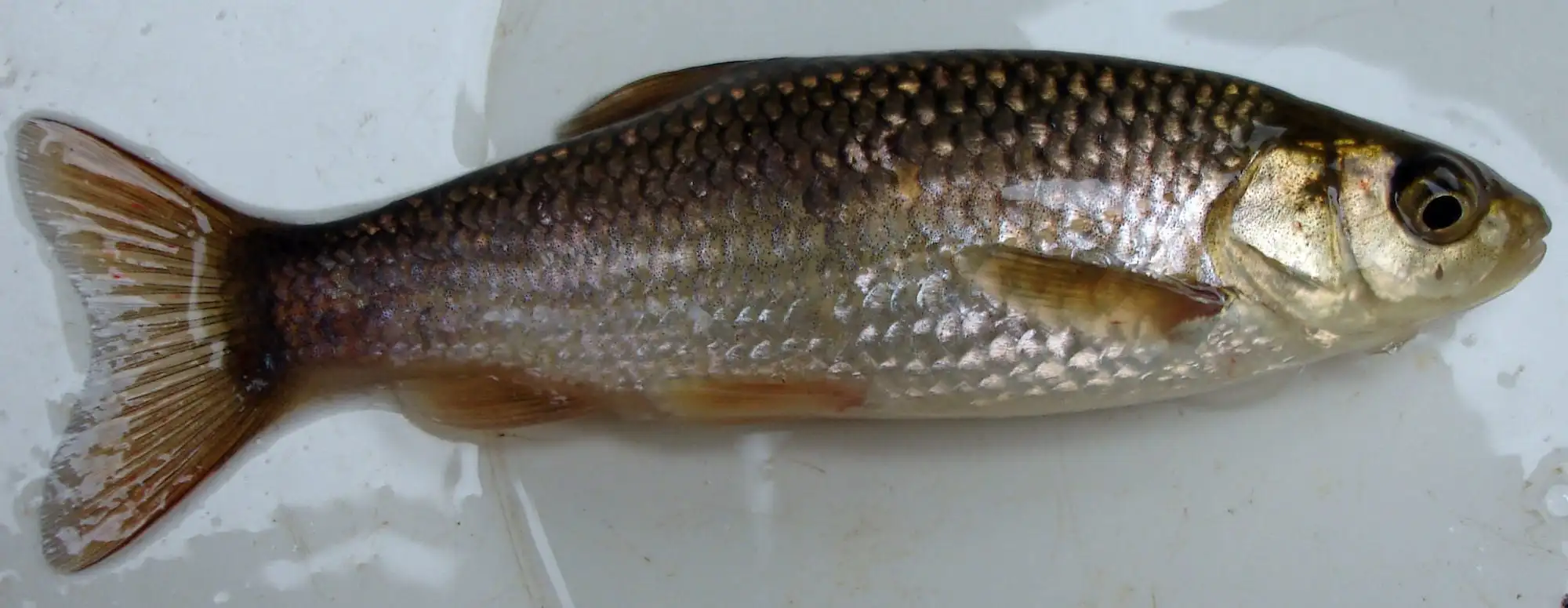
It looks like the Comizo Barbel, but is smaller and has a shorter head. Specimens under 18 centimetres are speckled with black.
Habitat and distribution of the Small-headed Barbel
A species endemic to the Guadiana basin.
Breeding of the Small-headed Barbel
Largely unknown. It swims upriver to shallow areas with a current and a gravel bed, where it spawns between April and June, and then returns to deeper water.
Diet of the Small-headed Barbel
Algae, dipteran larvae and sediment, and also caddisfly and mayfly larvae; with age, more algae and sediment.
The Small-headed Barbel in Cabañeros
The guide cites it among the native fish of the Estena, and the website stresses that, like the Spanish Minnowcarp, it is found only in the rivers of the Guadiana basin. During spawning it is hunted by the cormorant, the White Stork and the Grey Heron.
Can it be seen in Cabañeros?
It is hard to tell from other barbels from the bank. Remember that swimming is not allowed in the rivers of the park.
Morán López, R. (2017). Barbo cabecicorto – Luciobarbus microcephalus. En: Enciclopedia Virtual de los Vertebrados Españoles. Museo Nacional de Ciencias Naturales (CSIC). vertebradosibericos.org
OAPN (2011). Guía de visita del Parque Nacional de Cabañeros. PDF