Plankton and invertebrates in summer; also algae, plants and detritus
Social life
In groups
Lifespan
Up to three years
Conservation status
LC
NT
VU
EN
CR
EW
EX
Global (IUCN)
Endangered
Spain
Endangered (Spanish Catalogue)
When to see it
Fish · in Cabañeros
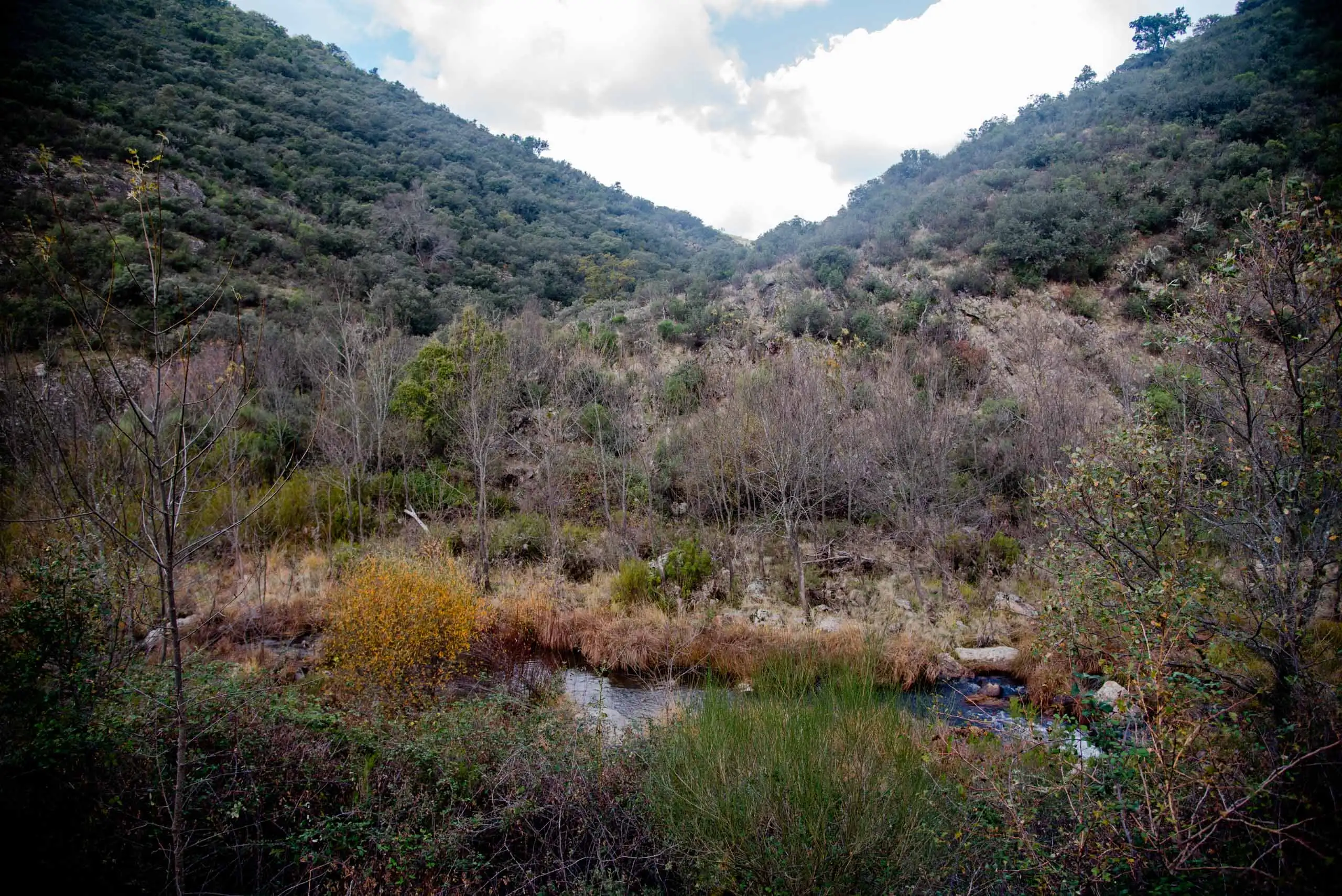
In the Estena river; it has disappeared from the Bullaque.
Photos of the Spanish Minnowcarp
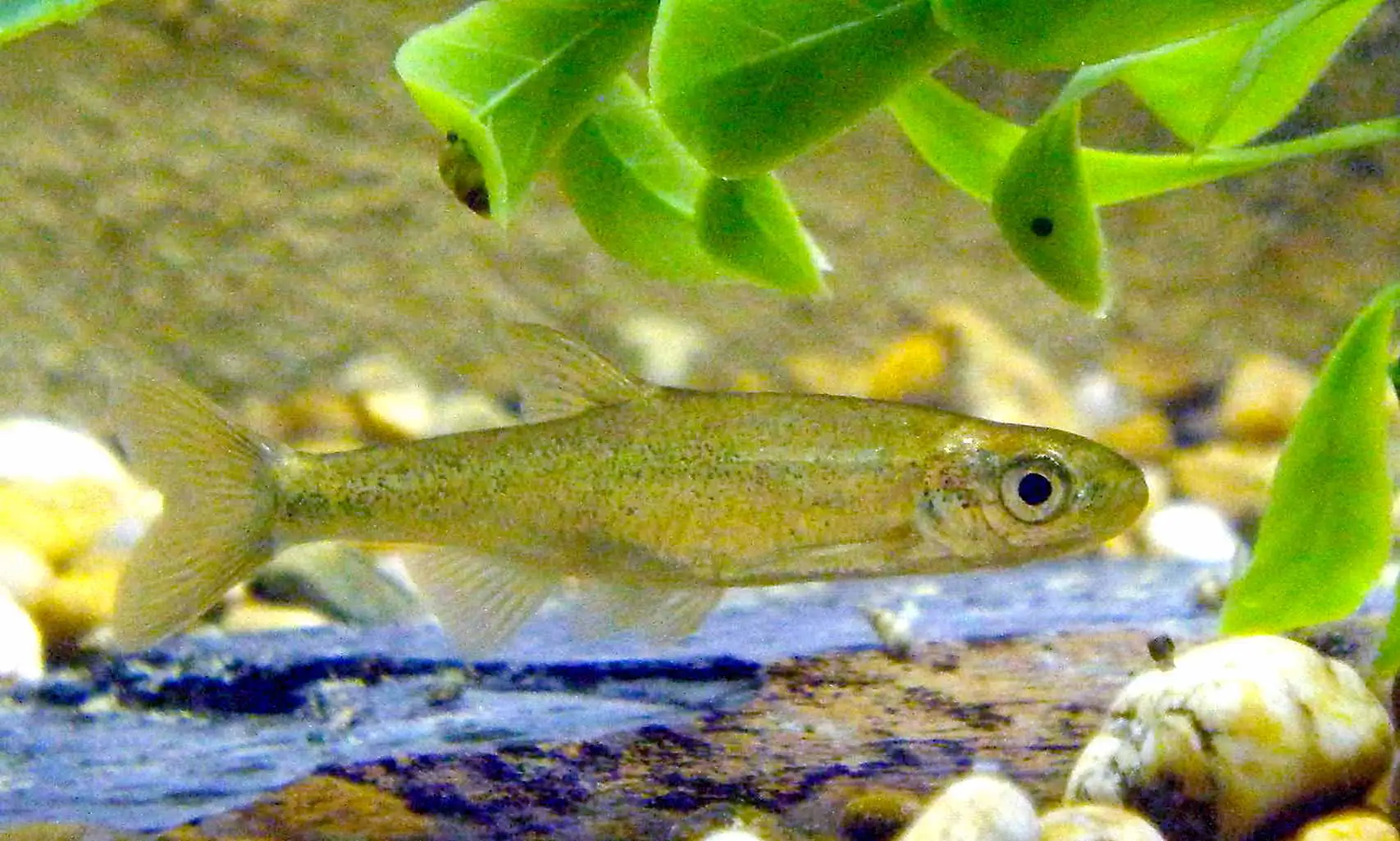
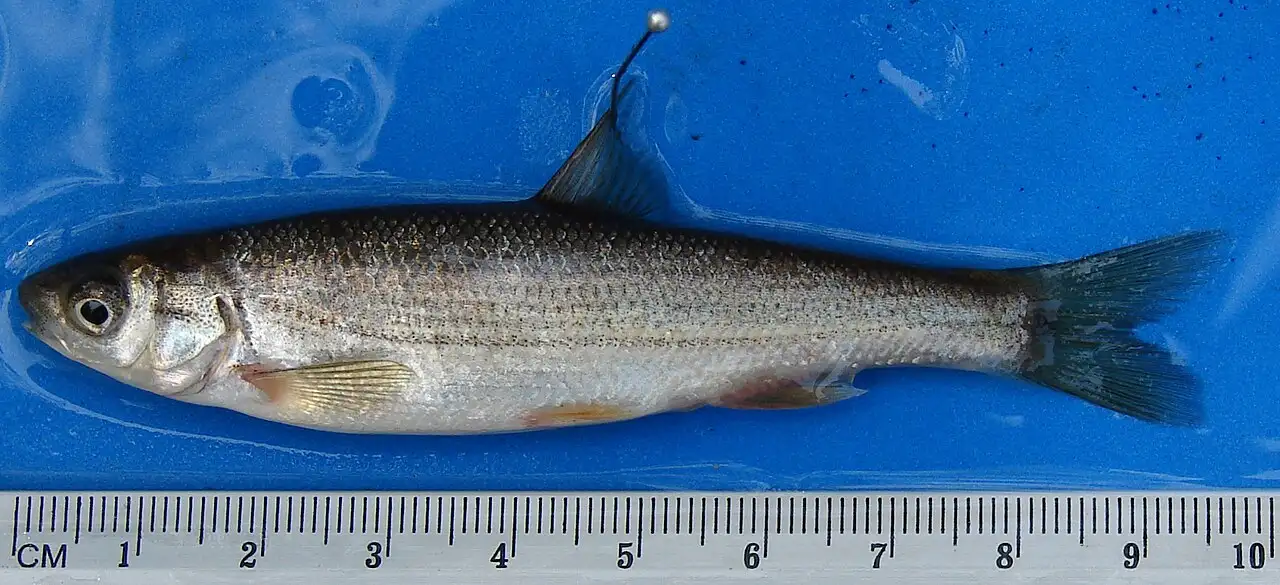
A Spanish Minnowcarp, a small silvery fish with a dark band along the bodyPhoto: Tiu Cancho, CC BY-SA 4.0Photo 1 of 1
1 / 1
Identification of the Spanish Minnowcarp
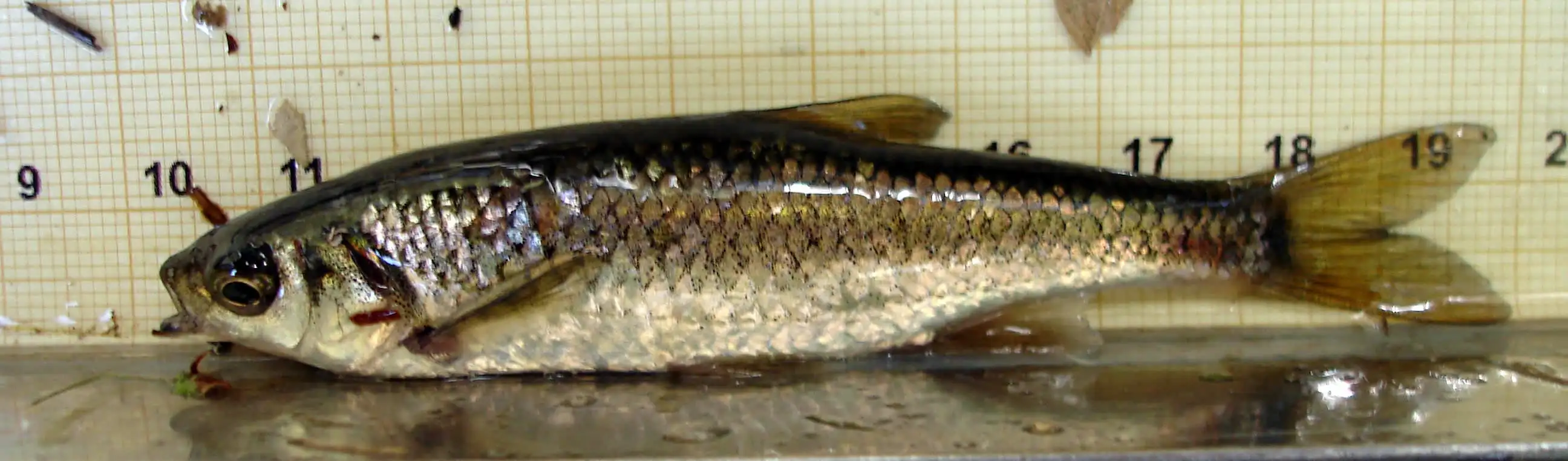
It is a tiny fish, 7.5 centimetres at most, with small scales and a blackish band along the body.
Habitat and distribution of the Spanish Minnowcarp
It lives only in rivers of the Guadiana basin, in shallow streams. It is not in the Guadiana itself and appears only occasionally in some of its large tributaries. Almost half of its populations have disappeared in the last fifteen years.
Breeding of the Spanish Minnowcarp
It matures very quickly, towards the end of its first year. Females lay once or twice in spring, with few eggs, and their life is short: up to three years.
Diet of the Spanish Minnowcarp
In summer it eats mainly planktonic and bottom invertebrates, and completes its diet with plants, detritus and algae.
The Spanish Minnowcarp in Cabañeros
It is the jewel of the park’s rivers. The guide stresses that the Estena, which rises on the Rocigalgo and runs almost forty kilometres inside the park in excellent condition, holds several endemic fish, among them the endangered Spanish Minnowcarp. In the Bullaque, by contrast, it disappeared with the arrival of exotic species.
Its threats, according to the CSIC, are exotic species, hydraulic infrastructure, water extraction for irrigation, pollution and the extraction of aggregates.
Can it be seen in Cabañeros?
It cannot and should not be looked for: it is tiny, lives in pools of the Estena and is endangered. The best thing a visitor can do for it is not to get into the river, which is also forbidden.
For more than twenty years the park has been carrying out selective electrofishing in the Estena to remove invasive fish such as the bleak, the pumpkinseed and the largemouth bass; the Spanish Minnowcarp is, according to the park newsletter, one of the jewels of the river (newsletters of September–October 2023 and 2024, all the newsletters).
Salvador, A. (2017). Jarabugo – Anaecypris hispanica. En: Enciclopedia Virtual de los Vertebrados Españoles. Museo Nacional de Ciencias Naturales (CSIC). vertebradosibericos.org
OAPN (2011). Guía de visita del Parque Nacional de Cabañeros. PDF
Real Decreto 139/2011, Catálogo Español de Especies Amenazadas. BOE