Wingspan compared with a person with arms outstretched.
Length
95–110 cm
Wingspan
1.8–2.18 m
Weight
2.3–4.5 kg
Social life
Often colonial; it pairs for life and breeds in groups, sometimes alongside herons and egrets
Lifespan
Record of 39 years in the wild
Conservation status
LC
NT
VU
EN
CR
EW
EX
Global (IUCN)
Least Concern
Spain
Included in the List of Wild Species under Special Protection; not in the Spanish Catalogue of Threatened Species
When to see it
Resident
Months of the year when it is present
J
F
M
A
M
J
J
A
S
O
N
D
In Iberia
yes
yes
yes
yes
yes
yes
yes
yes
yes
yes
yes
yes
Breeding season
no
no
yes
yes
no
no
no
no
no
no
no
no
Song or voice of the White Stork
It is a fairly silent bird: it has no voice of its own, only some harsh alarm sounds when excited or when a stranger approaches the nest. Its most characteristic sound is the «crotoreo» (bill-clattering), a loud clacking that it makes by banging its mandibles together, and which it uses above all as a greeting to its mate. This one is from a colony in the south of France.
Bill-clatteringWhite Stork
0:00 / 0:20
10 kHz5
The sonogram draws the sound: time runs from left to right, and the higher a trace sits, the higher the note.Recording by felix.blume, Wikimedia Commons (CC BY-SA 3.0).
Flight of the White Stork
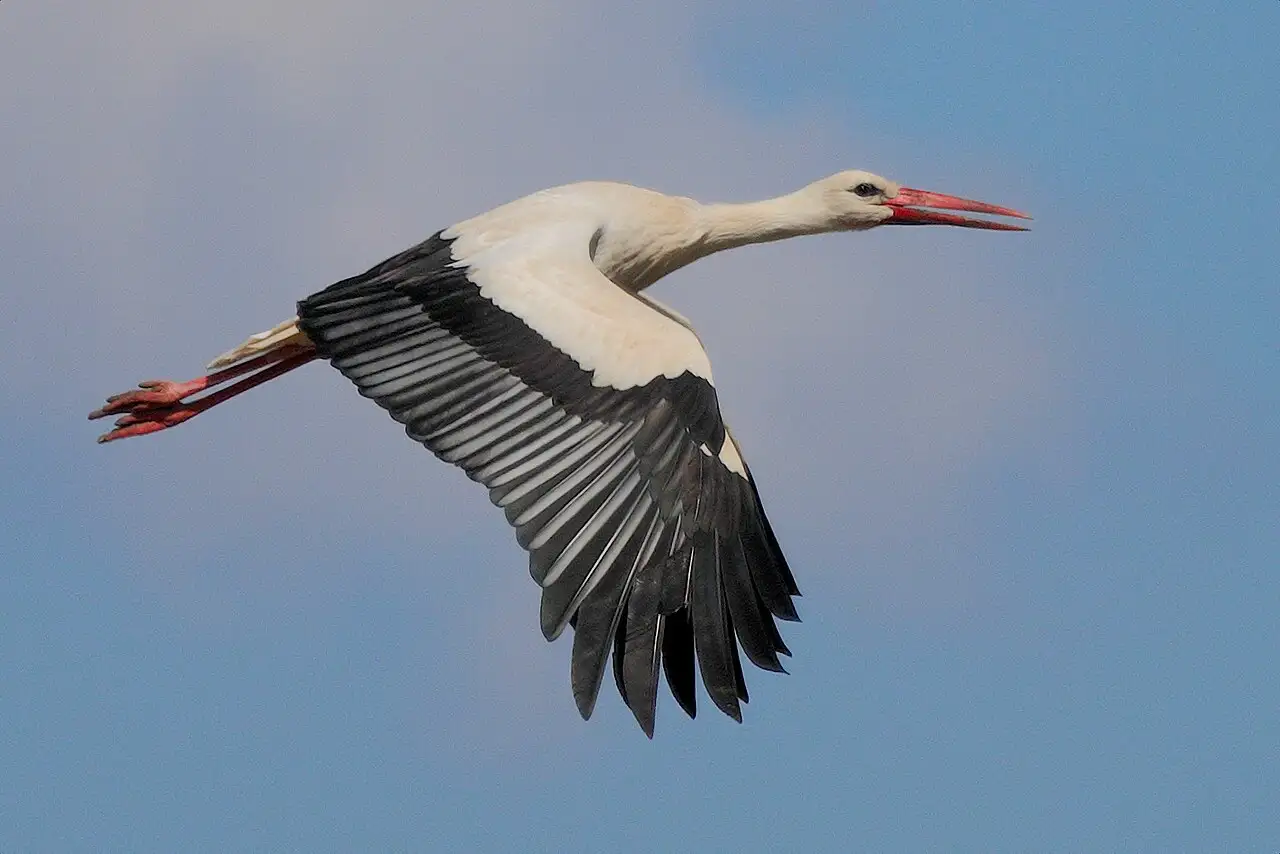
It flies in an unmistakable posture, with neck and legs stretched out. It uses thermals to climb in circles almost without flapping its wings and then glides in a straight line to the next one, which lets it cover thousands of kilometres on migration.
Flight typeGlider, with neck and legs stretched out
With wings wide open and neck stretched out, it circles on the warm air almost without flapping, until it reaches a great height.
From on high it glides in a straight line, with neck and legs stretched back, to the next thermal. The flocks pass one after another.
Photo gallery of the White Stork
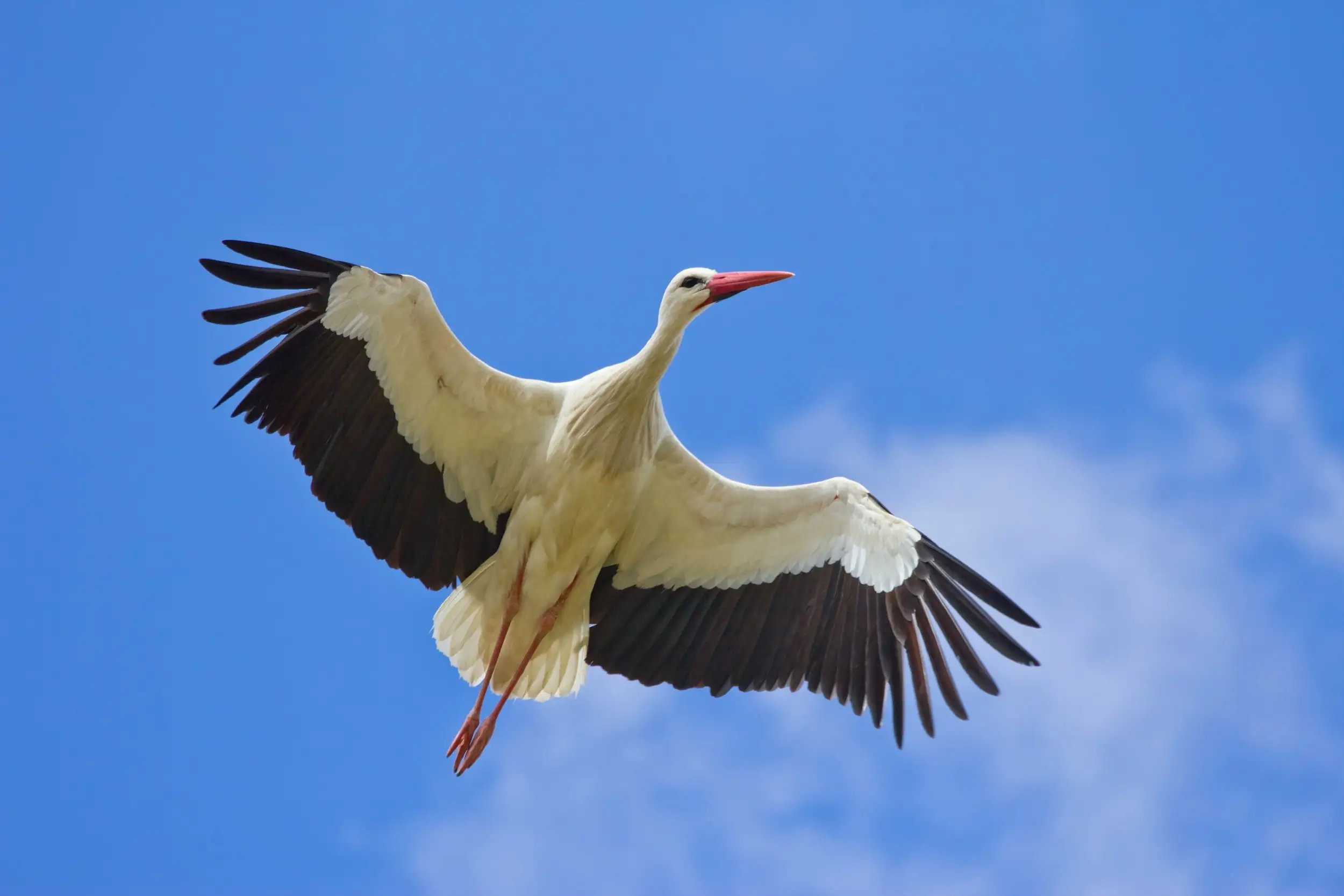
White Stork in flight seen from below: white plumage, black flight feathers and red bill and legsPhoto: Carlos Delgado, CC BY-SA 3.0Photo 1 of 4
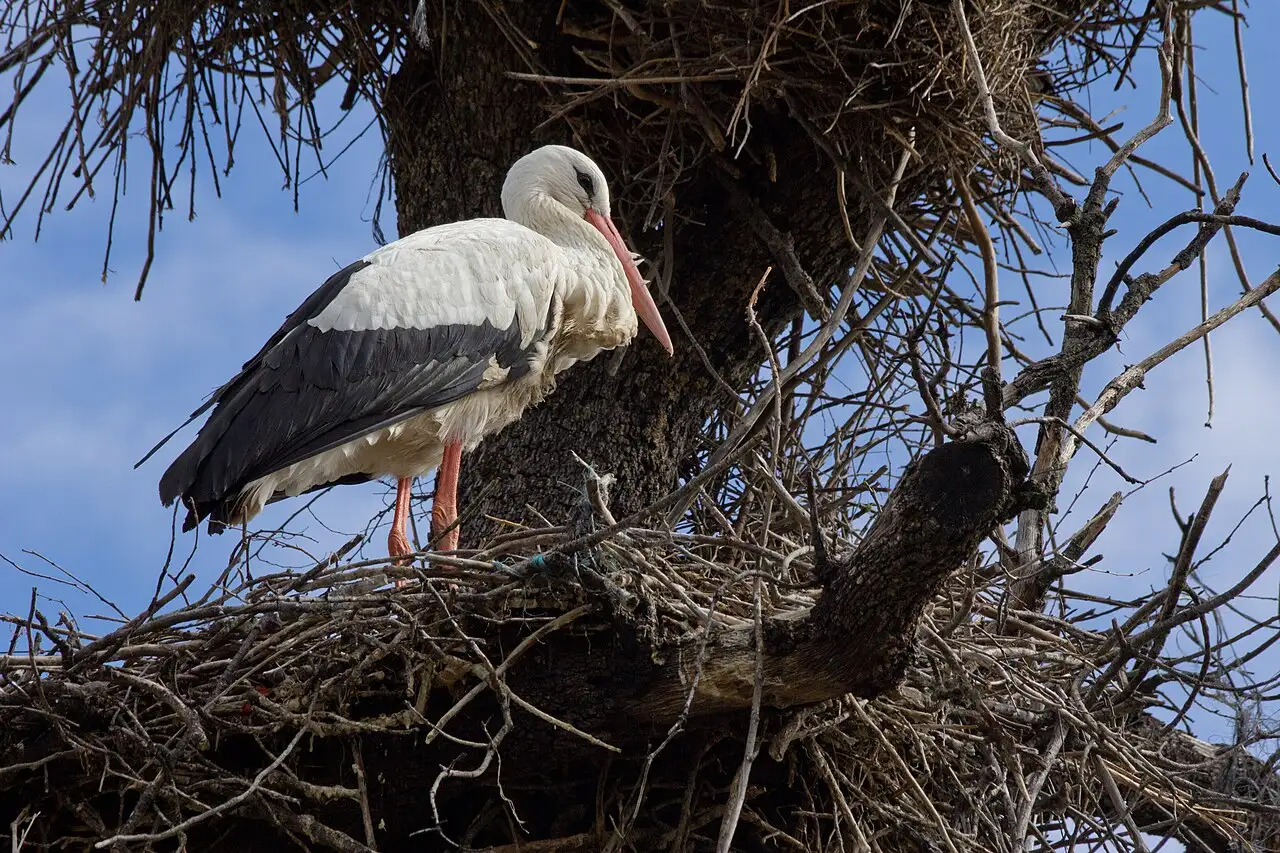
White Stork on its nest, a big platform of branches in a dry treePhoto: Carlos Delgado, CC BY-SA 3.0Photo 2 of 4
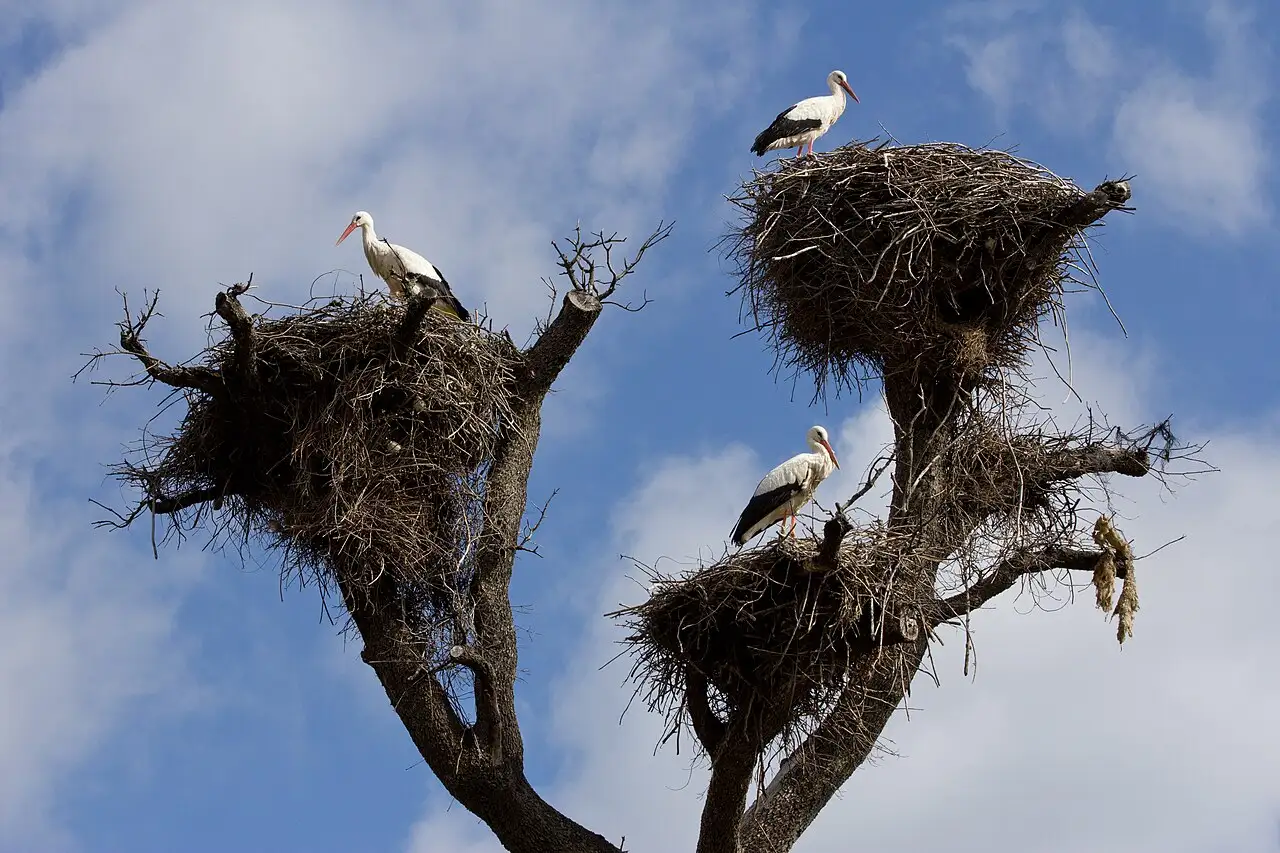
Three White Stork nests in the branches of a tree, with the birds perched on topPhoto: Carlos Delgado, CC BY-SA 3.0Photo 3 of 4
White Stork in flight, with neck and legs stretched out and red billPhoto: Thorsten Denhard, CC BY-SA 3.0Photo 4 of 4
1 / 4
Identification of the White Stork
It is unmistakable: a large bird of notable wingspan, with white plumage and black flight feathers. The bill is long and pointed, deep red or orange in adults, dirty red in young birds and almost black in chicks. The legs are a deep reddish orange in the adult and pink in the young bird. In flight it stretches out its neck and legs.
Adult
White, with black flight feathers.
Bill and legs a deep reddish orange.
Young bird
Dirty red bill and pink legs.
Habitat and distribution of the White Stork
It is distributed across North Africa, central, south-western and south-eastern Europe, some regions of central Asia and the far east of Asia. During winter, many go down to central and southern Africa and southern Asia. In Spain the subspecies «ciconia» lives.
It breeds mainly in the western half of the Peninsula, almost without a break from the Cantabrian range to Cádiz, and in the Ebro valley. It is a bird closely tied to people and their activities, and occupies mainly open, transformed habitats: dehesas, irrigated land, livestock pastures, dryland crops, wetlands and grasslands. It avoids forest areas and very mountainous ones. Until recently it was here only in the breeding season, but today many stay in winter, in the Guadalquivir marshes, the irrigated land of the Vegas Altas del Guadiana and rubbish tips, and the Peninsula is also a compulsory passage for central European storks, which cross the Strait of Gibraltar between late August and September.
Areas where it is regularly recorded since 2010Squares of about 25 km where it is recorded regularly (occasional passage records are left out). Data from GBIF.org (443,936 records, retrieved October 2026); outline from Natural Earth.
Etymology of the White Stork
«Ciconia» is the Latin name of the stork, and is repeated in the species: «ciconia ciconia». «Cigüeña» comes from that «ciconia». In German it is called «Klapperstorch», «clattering stork», from that sound.
Population of the White Stork
In Spain, the 2004 national census counted 33,217 pairs, almost 500 % more than the historic low of the early 1980s, and the 2014 one estimated 42,144 pairs, a figure to be taken with caution. The communities with the most pairs are Castilla y León and Extremadura. In Europe between 502,000 and 563,000 mature individuals are estimated, increasing. It is classed as Least Concern. In the last century, droughts in the African wintering areas, loss of feeding habitat, pesticides, illegal hunting, power lines and loss of nesting sites made it disappear from many regions, from which it is now recovering.
Nest of the White Stork
It is an enormous pile of branches, sticks and roots, with earth, dung, grasses and even plastic and paper, 40 to 100 cm high and 80 to 140 across, although it can exceed 2.5 m in height and weigh about two tonnes. Both build it, with more input from the male, and reuse it for many years. It places it on churches, silos, chimneys, electricity pylons, ruins and trees, and sparrows, jackdaws and starlings nest in its shelter.
Courtship and breeding of the White Stork
Laying is usually between March and April, of three or four white or yellowish eggs, which become speckled during incubation. This lasts 29 to 34 days and is done by both, although the female for longer, while her mate, to whom she is bound for life, feeds her. The chicks develop fully in 54 to 68 days and are independent after about three months. The greeting of the pair is often seen when one returns to the nest: both clatter their bills throwing their heads back.
Diet of the White Stork
It is relatively opportunistic: it eats mainly large arthropods, such as grasshoppers and beetles, and also worms, rodents, snakes, lizards, frogs, fish and even chicks of other birds, as well as some rubbish.
Curious facts about the White Stork
Until relatively recently we saw it here only in the breeding season; today a growing number do not cross the Strait and spend the winter on the Peninsula. And its nests, reused year after year and growing, can come to weigh about two tonnes.
The White Stork in Cabañeros
In the southern part of the park there is a colony of White Storks, and their big, bulky nests shelter other species, such as the Jackdaw and the House Sparrow. In 2025 18 stork chicks were ringed in the park, seven more than in 2024, according to the newsletter of September–October 2025 (in Spanish).
Where to see the White Stork in Cabañeros
In the southern part of the park, where the colony is, and in the surrounding villages.
When
All year. In spring, with the nests occupied, is when the bill-clattering is best seen.
What time
Mid-morning, when they leave the colonies to look for food and rise on the first thermals.
Where
On the nests of the southern colony and in the dehesas and pastures, where it looks for food.
What to look for
A large white bird, with black flight feathers and a red bill, which flies with neck and legs stretched out.
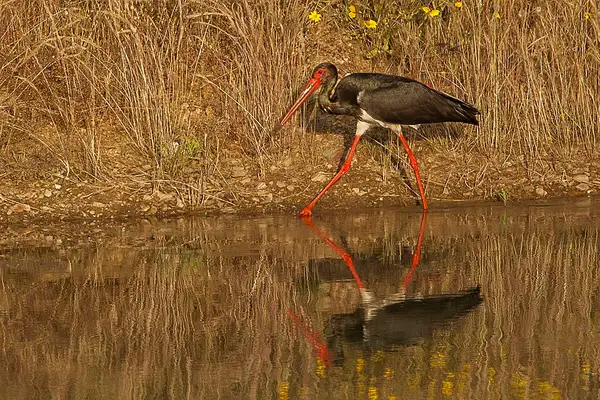
Black and shiny, with a white belly and red bill and legs. It is much scarcer, solitary and woodland-dwelling, and breeds on cliffs and in trees, not on buildings.
Photo: Francesco Veronesi from Italy, CC BY-SA 2.0



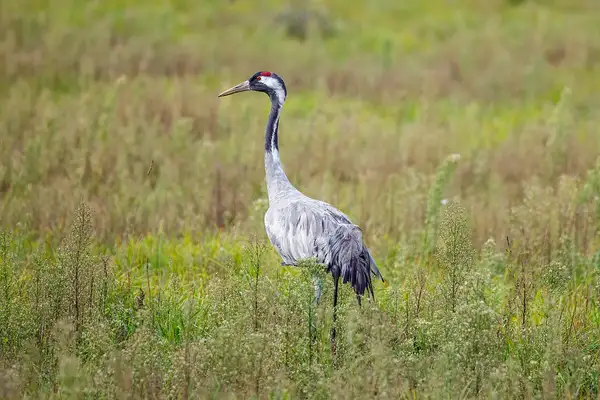
 Same family
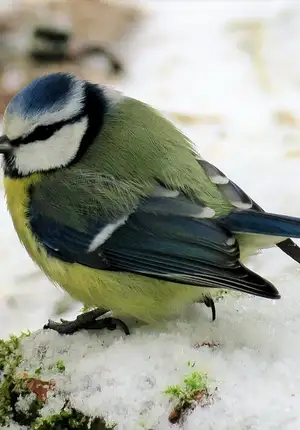 Also in dehesas (wood pasture)
 Also in wetlands
 Also in dehesas (wood pasture)
 Also in wetlands
 Also in dehesas (wood pasture)
 Also in wetlands
 Also in dehesas (wood pasture)






