Wingspan compared with a person with arms outstretched.
Length
44–51 cm
Wingspan
0.84–1 m
Weight
410–610 g
Social life
Alone or in pairs, although it is not unusual for it to gather in large flocks where food is abundant or at roosts
Lifespan
Record of 20 years and 10 months in the wild according to EURING (a bird ringed in Great Britain and Ireland); AnAge gives 19.2 years
Conservation status
LC
NT
VU
EN
CR
EW
EX
Global (IUCN)
Least Concern
Spain
Least Concern (LC) as a breeder in the Red List of Birds of Spain; not on the List of Wild Species under Special Protection or in the Spanish Catalogue of Threatened Species
When to see it
Resident
Months of the year when it is present
J
F
M
A
M
J
J
A
S
O
N
D
In Iberia
yes
yes
yes
yes
yes
yes
yes
yes
yes
yes
yes
yes
Breeding season
no
no
yes
yes
yes
no
no
no
no
no
no
no
Song or voice of the Carrion Crow
Like almost all corvids, it has a very wide range of sounds with which it conveys a lot of information, but the most characteristic is a hard, metallic «arr» or a deep «kraar». In flight it usually gives a more muted series: «klok-klok-klok».
Alarm callCarrion Crow
0:00 / 0:28
10 kHz5
The sonogram draws the sound: time runs from left to right, and the higher a trace sits, the higher the note.Recording by Marie-Lan Taÿ Pamart, xeno-canto XC484782 (Jardin des Plantes, París) (CC BY-SA 4.0).
Flight of the Carrion Crow
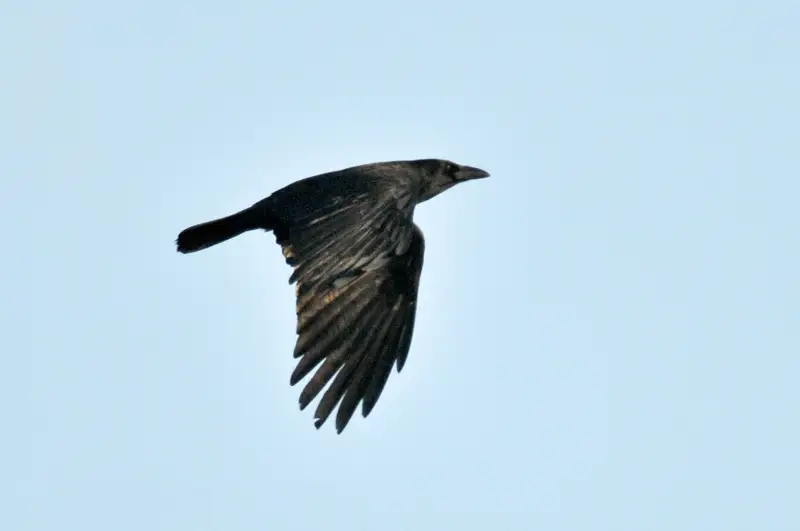
Its flight is different from the Raven’s, with which it can be confused from afar: slow, steady wingbeats predominate, and the wings are shorter, broader and more rounded, with a shorter tail with an almost straight edge.
Flight typeSlow, steady wingbeats
It depends on trees for nesting and on crops for feeding: it prefers open surroundings with some trees, crops, grassland and riverside groves.
Its flight differs from the Raven's: slow, steady wingbeats predominate, with shorter, rounder wings and a tail with an almost straight edge.
Opportunistic and omnivorous, it eats everything from invertebrates to fruit, seeds and small vertebrates, and makes use of all kinds of carrion.
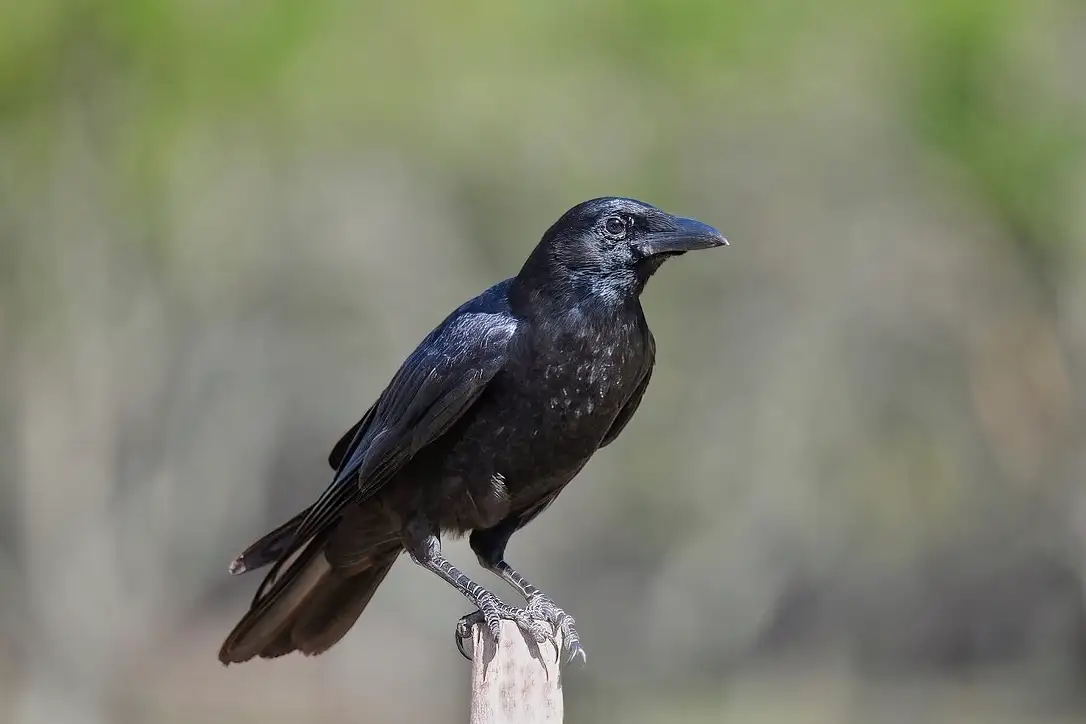
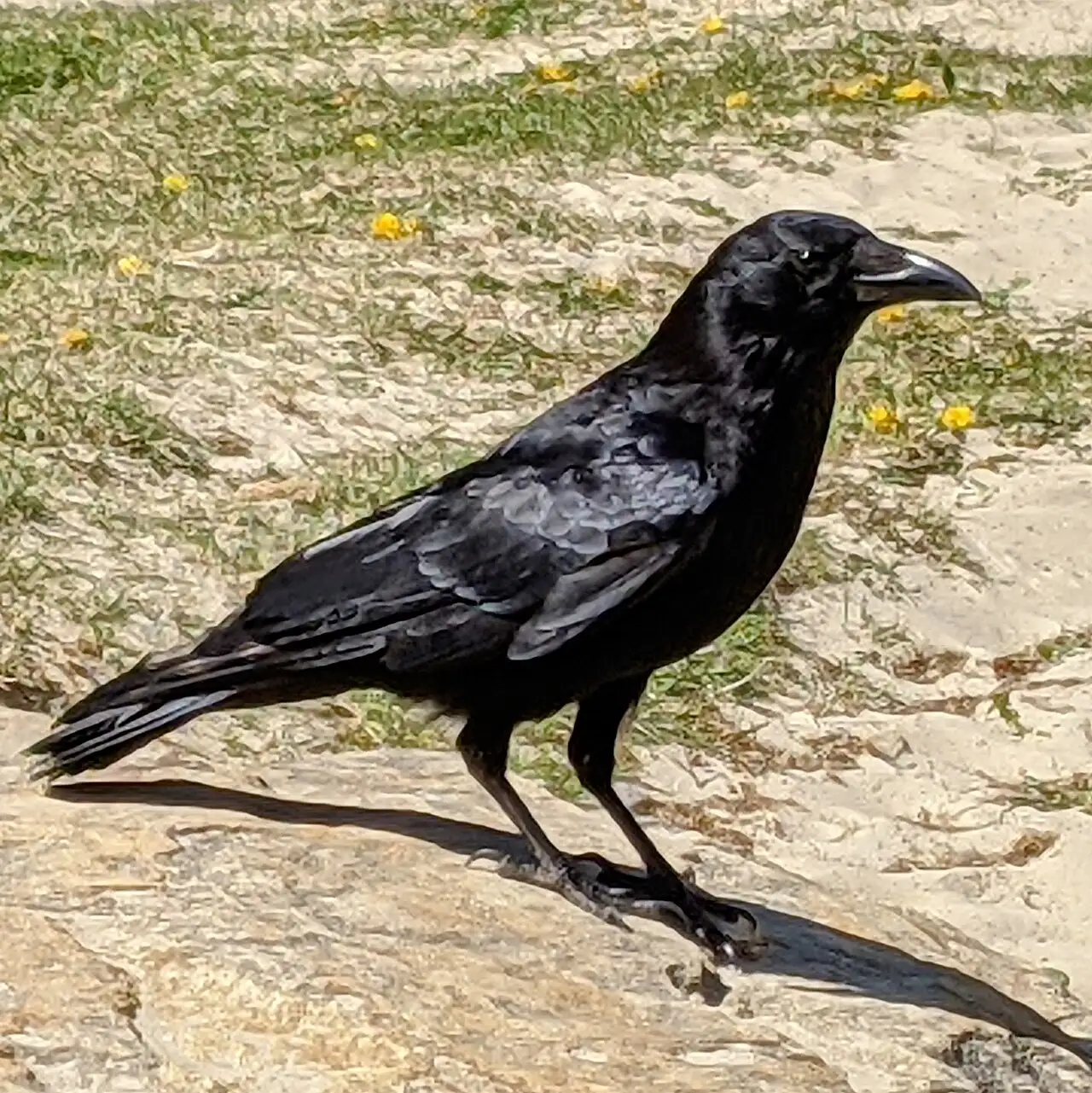
This corvid wears uniform black plumage, with some metallic sheen on the head, wings and back, and the legs and its sturdy bill are the same colour. From a distance it can be confused with the Raven, but it is smaller, with shorter, broader, rounder wings, a shorter tail with an almost straight edge and a different flight, of slow, steady wingbeats. By its size and pattern it also looks like young Rooks, although the Carrion Crow has a sturdier, blunter bill.
Adult
Uniform black with metallic sheen, black legs and bill.
Sturdy, blunt bill.
Tail with an almost straight edge.
Habitat and distribution of the Carrion Crow
In Europe it occupies only the western half of the continent; outside it, much of Asia, as far as Mongolia, China and Japan, although it avoids the most extreme regions of Siberia.
In Spain it spreads fairly evenly across the whole northern half of the peninsula, except the Catalan Mediterranean coast. In the southern half it is much scarcer and more localised: it is absent from the south-western quadrant and the rest of the Mediterranean coast, and its southernmost populations occupy mainly a strip running from southern Cuenca and Albacete to the sierras of Jaén, Granada, Almería and Murcia. It is not on the archipelagos or in Ceuta and Melilla.
It is very versatile and lives in very diverse environments, from the Cantabrian coasts to mountain passes of over 1,800 metres, including dense woods, moors and cultivated plains. It needs trees to nest in and crops to eat, so it prefers more or less open environments with some trees, crops, grassland and river groves. It is mainly resident and never makes long movements.
Areas where it is regularly recorded since 2010Squares of about 25 km where it is recorded regularly (occasional passage records are left out). Data from GBIF.org (549,095 records, retrieved October 2026); outline from Natural Earth.
Etymology of the Carrion Crow
According to Wikipedia, the scientific name joins the Latin «corvus», «raven», and the Greek «korōnē», «crow». Linnaeus described it in 1758 under the name it still keeps. In other languages it is called «cornella negra» in Catalan, «corvo común» in Galician, «belabeltza» in Basque and «carrion crow» in English1.
Population of the Carrion Crow
In the 2021 European Red List of Birds the European breeding population is estimated at between 16,200,000 and 27,500,000 mature individuals, with a stable trend. In Spain there are about 470,000 birds, more than a third in Castilla y León (35.33 %), with smaller but important cores in Aragón, Castilla-La Mancha, Catalonia and Galicia. The Spanish population has fallen 14.4 % since 1998.
Because of its great adaptability and eclectic habits, which let it tolerate human presence and changes in the environment, it has no conservation problems. In other times, however, it was heavily persecuted, accused of causing serious losses in agriculture and hunting.
Nest of the Carrion Crow
When the pair is established, they look together for where to set the nest, normally in the fork of a tree or even in a bush, at variable height; it is not unusual for them to occupy abandoned buildings or power-line pylons. It is a solid cup-shaped platform of branches and sticks, which they line carefully with soft materials, such as wool or moss, and with others that seem to have a decorative purpose, such as paper or plastic.
Courtship and breeding of the Carrion Crow
The breeding period begins in March. Between mid-April and early May the female lays three to six heavily spotted blue-green eggs, which she incubates alone for 18 or 19 days. Both adults tend the chicks, which spend 30–35 days in the nest before their first flights, although they still take a while to leave it completely. A family group then forms that stays together for a season. Carrion Crows start breeding at two or three years old and make only one clutch a year.
Diet of the Carrion Crow
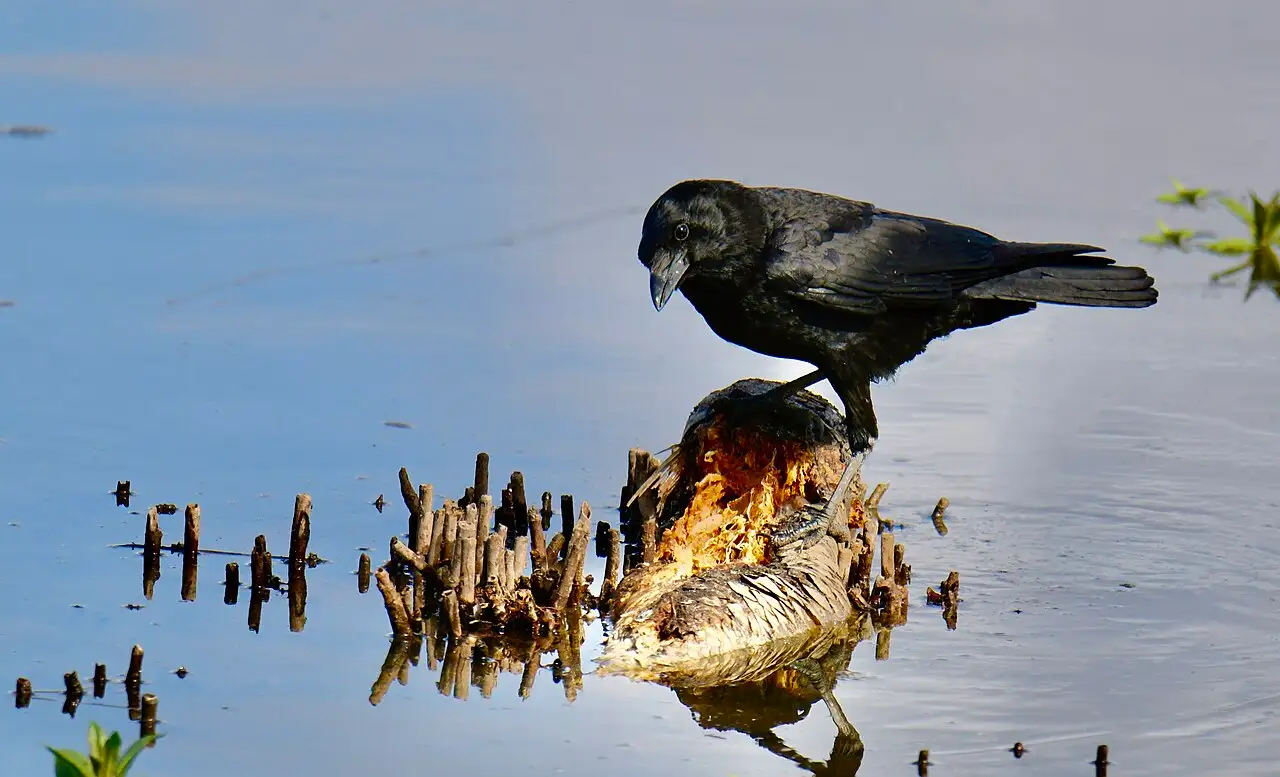
Like most corvids, it is opportunistic and omnivorous and adapts to what the environment offers it at each moment: it eats anything from invertebrates to fruit, seeds and small vertebrates, such as reptiles and mice. It very commonly uses all kinds of carrion and frequents rubbish tips, and now and then eats eggs and chicks of other birds.
Curious facts about the Carrion Crow
It drags along an unjustified bad reputation: for centuries it was accused of devouring crops and hunting game species, and for that it was persecuted, forgetting its beneficial role in controlling farm pests1. EURING lists a Carrion Crow ringed in Great Britain and Ireland that lived 20 years and 10 months.
The Carrion Crow in Cabañeros
The habitat pages of this website do not mention it, and we have not found any other published source on it in the Park. It is much scarcer and more localised in the southern half of the Peninsula1. GBIF.org records 33 observations of the Carrion Crow in Cabañeros and its surroundings.
Where to see the Carrion Crow in Cabañeros
In Cabañeros and its surroundings, all year, in open country with trees, crops and groves.
When
All year: it is resident, and breeds from March to May.
What time
By day, looking for food on the ground of crops and grassland.
Where
In open environments with some trees, crops, grassland and river groves.
What to look for
Look for the uniform black, the straight-edged tail and the flight of slow wingbeats; listen for its «kraar».
Videos of the Carrion Crow
Similar species
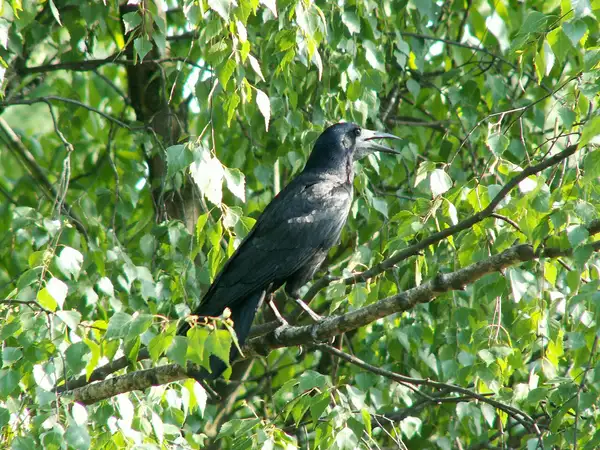
Rook
Corvus frugilegus
How to tell them apart
It is similar in song and physical appearance1: it looks above all like young Rooks, although the Carrion Crow has a sturdier, blunter bill.
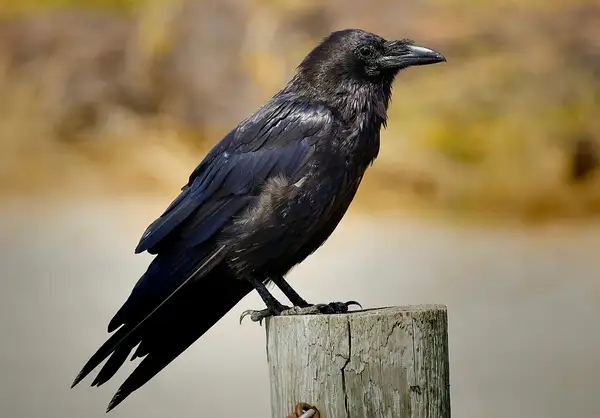
It appears as a similar species under the name «cuervo grande»1. The Raven is bigger, and the Carrion Crow has shorter, rounder wings and a tail with an almost straight edge.
Photo: Saiquaticlifeform, CC0
Other birds
Birds related to the Carrion Crow or sharing its habitats in Cabañeros.



 Same family
 Same family
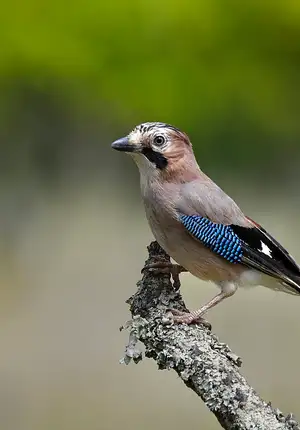 Same family
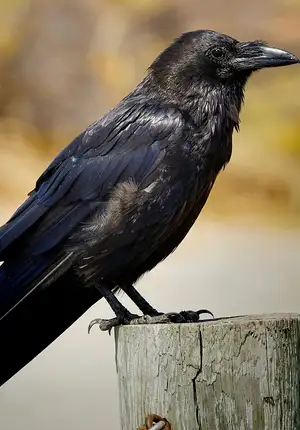 Same family
 Same order
 Same order
 Same order
 Same order






