Wingspan compared with a person with arms outstretched.
Length
32–35 cm
Wingspan
54–58 cm
Weight
144–189 g
Social life
Noisy and gregarious; after breeding, families often stay together in small flocks
Lifespan
Record of almost 18 years in the wild
Conservation status
LC
NT
VU
EN
CR
EW
EX
Global (IUCN)
Least Concern
Spain
Unlisted: not on the List of Wild Species under Special Protection or in the Spanish Catalogue of Threatened Species
When to see it
Resident
Months of the year when it is present
J
F
M
A
M
J
J
A
S
O
N
D
In Iberia
yes
yes
yes
yes
yes
yes
yes
yes
yes
yes
yes
yes
Breeding season
no
no
no
yes
yes
yes
no
no
no
no
no
no
Song or voice of the Eurasian Jay
When in a group it lets out a hoarse, harsh «kraack», which turns strident if there is an alarm. Sometimes it uses higher-pitched cries, imitating a buzzard or a goshawk: «kaiá-kaiá-kaiá». The courtship song, at the end of winter, is discreet compared with those calls: a varied rattling, at times like a warbler’s.
CallEurasian Jay
0:00 / 0:22
10 kHz5
The sonogram draws the sound: time runs from left to right, and the higher a trace sits, the higher the note.Recording by Alexander Kürthy, Wikimedia Commons (CC BY-SA 4.0).
Flight of the Eurasian Jay
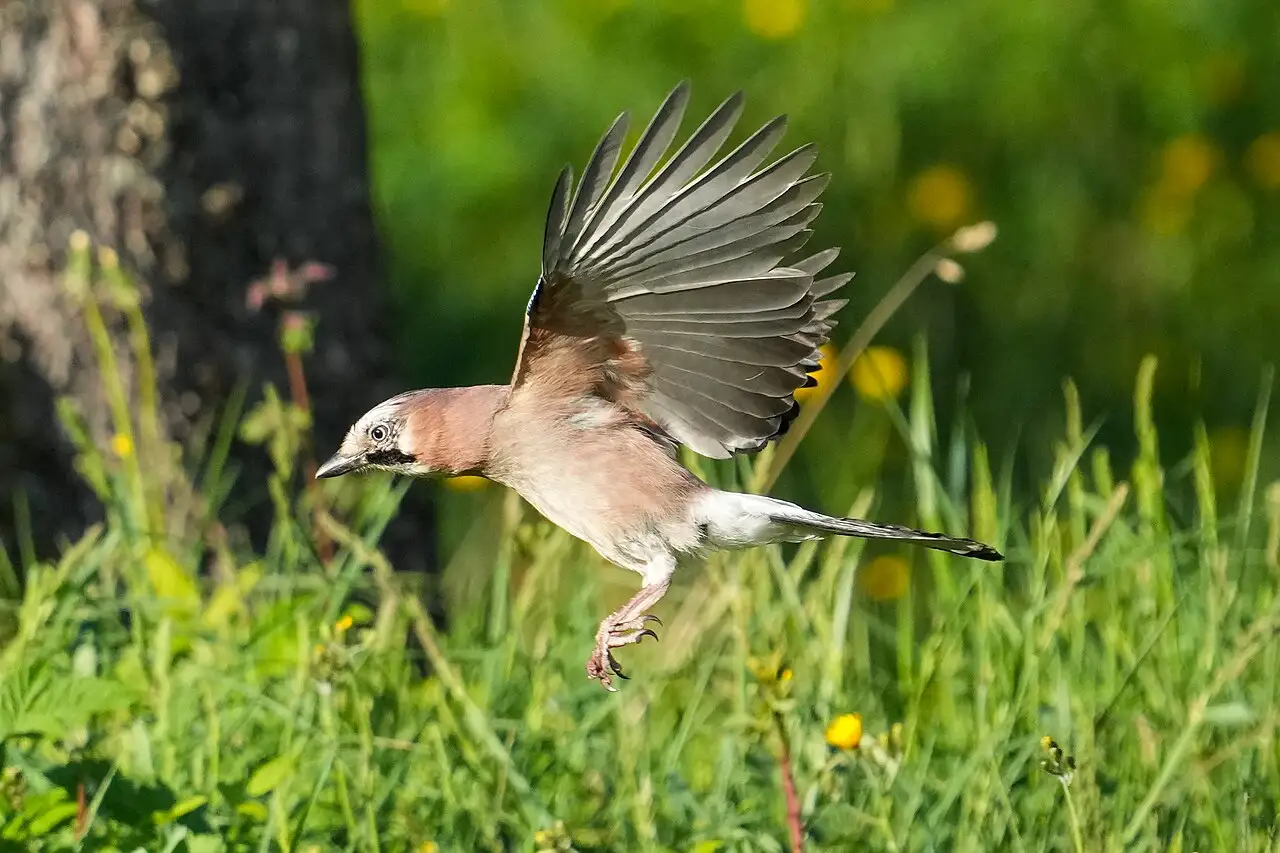
It has a weak, heavy flight, with slow wingbeats on broad, rounded wings, tracing waves between one tree and another. In the air two signals show up at once: the white rump, which contrasts with the black tail, and the white wing panel.
Flight typeUndulating, heavy and with slow wingbeats
It drops from the treetop with heavy flaps, with a hoarse croak that sounds like ripping cloth.
Weak, undulating flight, with slow wingbeats on broad, rounded wings. In the air the white of the rump and, from above, the blue of the wing can be seen.
It brakes by spreading its black tail and slips in among the branches, where it hides acorns for the winter.
Photo gallery of the Eurasian Jay
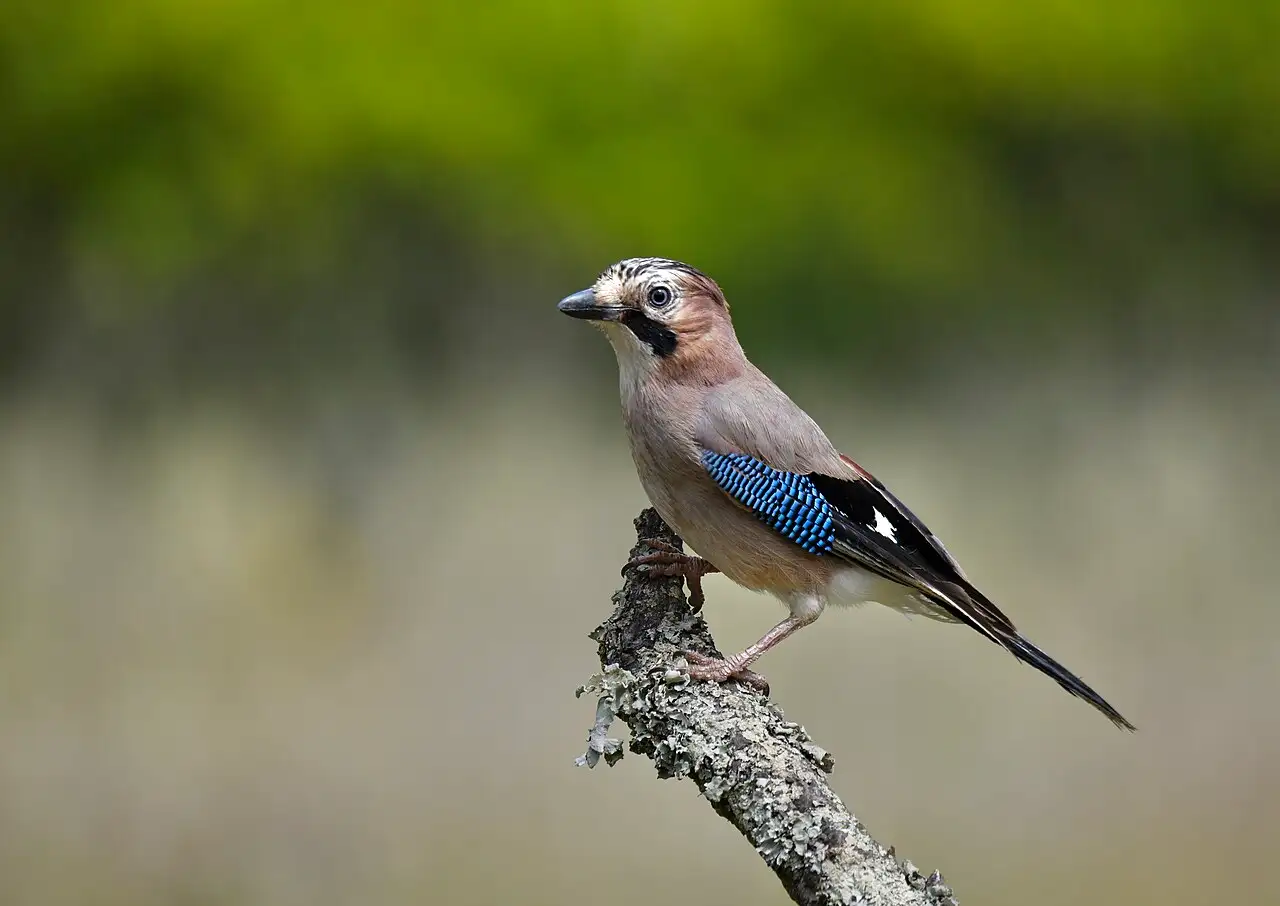
Eurasian Jay perched on a branch, in profile: black moustache, blue-and-white wing patch and pink bodyPhoto: Luiz Lapa from Oeiras, Portugal, CC BY 2.0Photo 1 of 4
Eurasian Jay in flight over the grass, with wings open and white rumpPhoto: Giles Laurent, CC BY-SA 4.0Photo 2 of 4
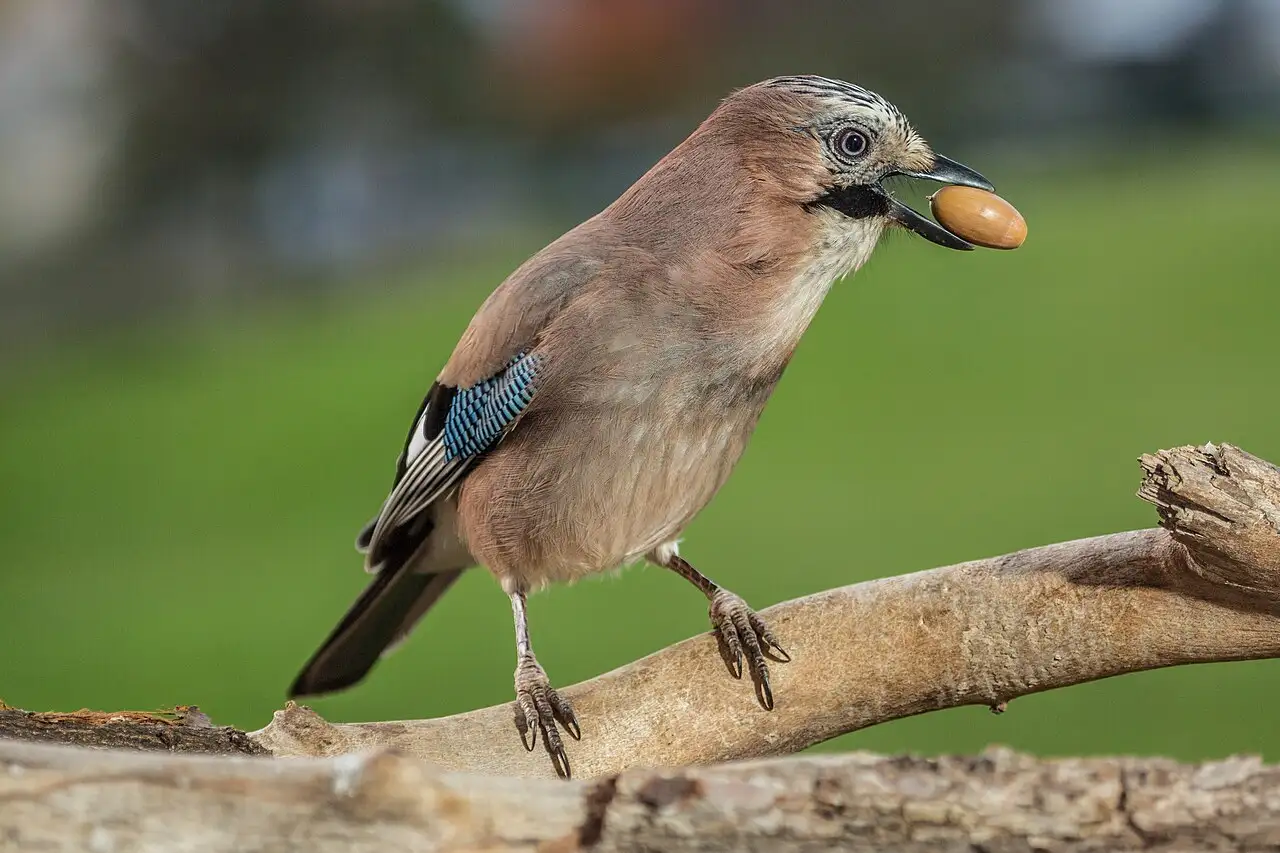
Eurasian Jay with an acorn in its bill, perched on a branchPhoto: Hwbund, CC BY-SA 4.0Photo 3 of 4
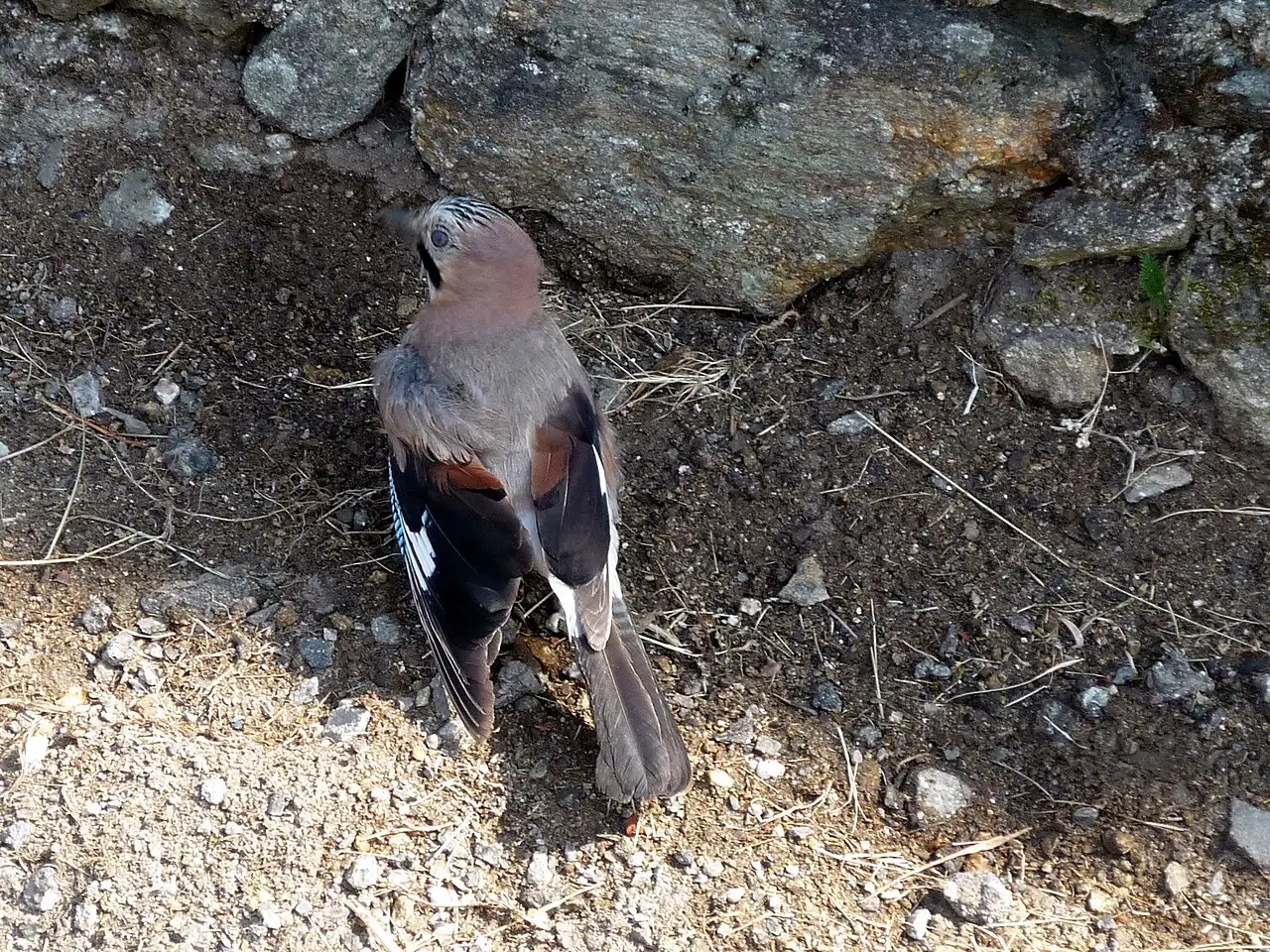
Eurasian Jay seen from behind, with white rump and pale wing panelPhoto: Certo Xornal, CC BY 2.0Photo 4 of 4
1 / 4
Identification of the Eurasian Jay
It is unmistakable and breaks away from the sombre image of corvids. Its plumage is ochre, with pink and grey tints that turn white towards the tail. The head is somewhat bulky, with a strong bill, a pale crown streaked with black that it can raise and a black moustache. Male and female are alike.
Adult
Turquoise-blue shoulder patch, barred with black and white, and another white panel on the wing.
White rump, contrasting with the black tail.
Black moustache and streaked crown.
Young bird
Similar in pattern to the adult, though somewhat browner and with duller colours.
Habitat and distribution of the Eurasian Jay
It spreads across the whole Palaearctic, from North Africa to Japan, and avoids the boreal north and the most arid regions of the south. There are several subspecies, and in Spain three live: «lusitanicus» in the west, «glandarius» in the north as far as the western Pyrenees and «fasciatus» on the Mediterranean strip and in central Spain.
In Spain it is mainly a woodland corvid, more widespread in the north and in the great mountain systems. It avoids the arid south-east, the Guadalquivir and Ebro valleys and the large farming areas of both plateaus and Extremadura. It occupies all kinds of woods, preferring deciduous and coniferous ones, above all in clearings and at the forest edge, and across much of the country also in holm oak and cork oak woods. It is resident throughout its range; only some populations in northern and eastern Europe become partly migratory in years of food shortage.
Areas where it is regularly recorded since 2010Squares of about 25 km where it is recorded regularly (occasional passage records are left out). Data from GBIF.org (279,102 records, retrieved October 2026); outline from Natural Earth.
Etymology of the Eurasian Jay
«Garrulus» is «chatterer», «garrulous» in Latin, from its noisiness, and «glandarius» comes from «glans», the acorn: «the one of the acorns». «Arrendajo», the Spanish name, comes from «arrendar», «to imitate», because it mimics other voices.
Population of the Eurasian Jay
About 1.92 million jays live in Spain, with the highest densities on the Cantabrian strip and in Catalonia, and important populations in Andalusia, Aragón and Galicia. The trend between 1998 and 2018 is moderately positive, probably because of the increase in forest area. In Europe between 12 and 23.1 million mature individuals are estimated, and rising. It is classed as Least Concern and has no relevant conservation problems, although locally it is affected by deforestation and fires.
Nest of the Eurasian Jay
Together they build an elaborate, cup-shaped nest in the fork of a tree.
Courtship and breeding of the Eurasian Jay
It starts breeding in mid-April. The female lays four to eight greenish eggs and incubates them for 16 to 18 days, so the chicks normally hatch at the end of May. Both parents care for them, although the female does most of the feeding. At 19 to 23 days the young leave the nest, but stay around for several weeks being fed. There are usually no second clutches, except replacement ones if the first fails.
Diet of the Eurasian Jay
It is opportunistic and omnivorous. In spring and summer it eats mainly insects, in great quantities of caterpillars, worms, grasshoppers and beetles, and supplements them with eggs and chicks of other birds and some fruit. In autumn and winter fruit increases: chestnuts, acorns and rose hips. And it is famous for burying acorns and other fruits to have them in the lean season, which helps woodland to spread.
Curious facts about the Eurasian Jay
Because it buries acorns everywhere and does not recover them all, it is one of the biggest sowers of holm oaks and oaks in the woods. And its racket is so varied that sometimes it imitates the call of a buzzard or a goshawk.
The Eurasian Jay in Cabañeros
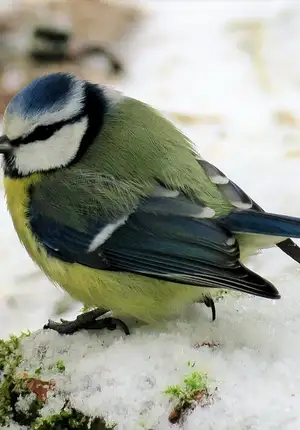
This website’s guide lists it among the birds of the deciduous woodland, at a lower density than the tits (Eurasian Blue Tit), the Common Chaffinch and the European Robin.
Where to see the Eurasian Jay in Cabañeros
In the deciduous woodland and in the holm oak and cork oak woods of the more wooded areas.
When
All year; in autumn, when it gathers acorns, it is more visible.
What time
In the morning and mid-afternoon, when it moves among the trees and buries acorns.
Where
On the branches of oaks, holm oaks and cork oaks and in forest clearings, where it comes down to the ground.
What to look for
A colourful corvid, with a pink body, blue wing and white rump, and a hoarse, harsh cry.
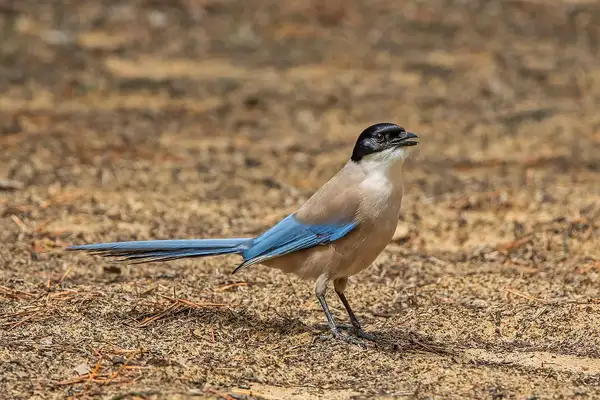
Another corvid of our woods, but slender, with a black cap, greyish-blue wings and tail and a very long tail. It almost always goes in flocks of many birds.
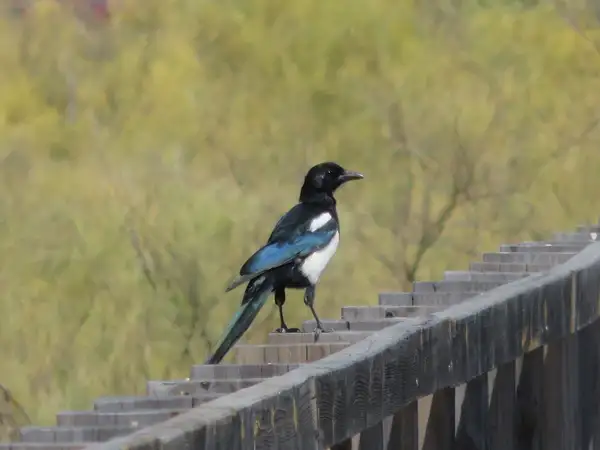
Black and white, with blue and green sheen on the wing and a long, graduated tail. It is noisier and much more frequent in open country and in villages.
Photo: Mpicado, CC BY-SA 4.0
Other birds
Birds related to the Eurasian Jay or sharing its habitats in Cabañeros.



 Same family
 Same family
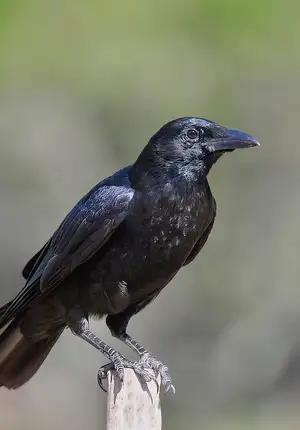 Same family
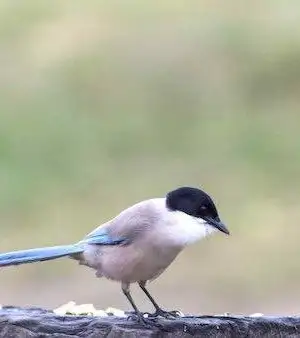 Same family
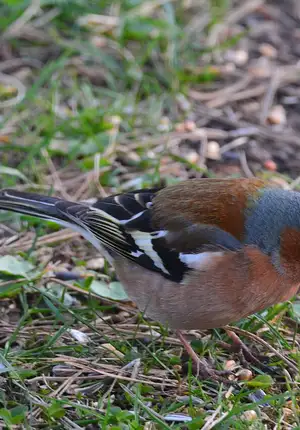 Also in deciduous woodland
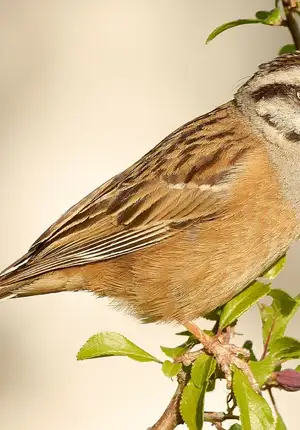 Also in deciduous woodland
 Also in deciduous woodland
 Also in deciduous woodland






