Solitary and territorial in the breeding season; in winter it can form small flocks
Lifespan
Record of about 7 years in the wild (a bird ringed in the United Kingdom)
Conservation status
LC
NT
VU
EN
CR
EW
EX
Global (IUCN)
Least Concern
Spain
Included in the List of Wild Species under Special Protection; not in the Spanish Catalogue of Threatened Species
When to see it
Resident
Months of the year when it is present
J
F
M
A
M
J
J
A
S
O
N
D
In Iberia
yes
yes
yes
yes
yes
yes
yes
yes
yes
yes
yes
yes
Breeding season
no
no
yes
yes
yes
yes
yes
no
no
no
no
no
Song or voice of the Woodlark
It is very characteristic: a long phrase that starts relatively slowly, «lu-lu-lu», and moves on quickly, speeding up and becoming lower and lower. It repeats it over and over, from a perch or in full flight, and that is why it has its onomatopoeic Spanish name, «totovía». This recording is of a Woodlark from Surrey, in England, but its song is the same as we hear here.
SongWoodlark
0:00 / 0:24
10 kHz5
The sonogram draws the sound: time runs from left to right, and the higher a trace sits, the higher the note.Recording by British Library, Wikimedia Commons (CC BY-SA 4.0).
Flight of the Woodlark
It has a fast flight, with strong wingbeats, with very marked climbs and descents that trace an undulating line. It has a short tail. It sings both in the air and perched on top of a bush.
Flight typeFast, with strong wingbeats and marked climbs and descents
It springs from the grassland with a «tsip» and some quick flaps. The usual sight is of it alone, perched on the ground or on a stone.
Alternates series of flaps with long, fast glides, with the wings closed, in which it loses height. It thus draws a line of low waves.
It drops, brakes with its tail spread, showing the white edges, and lands on the shore.
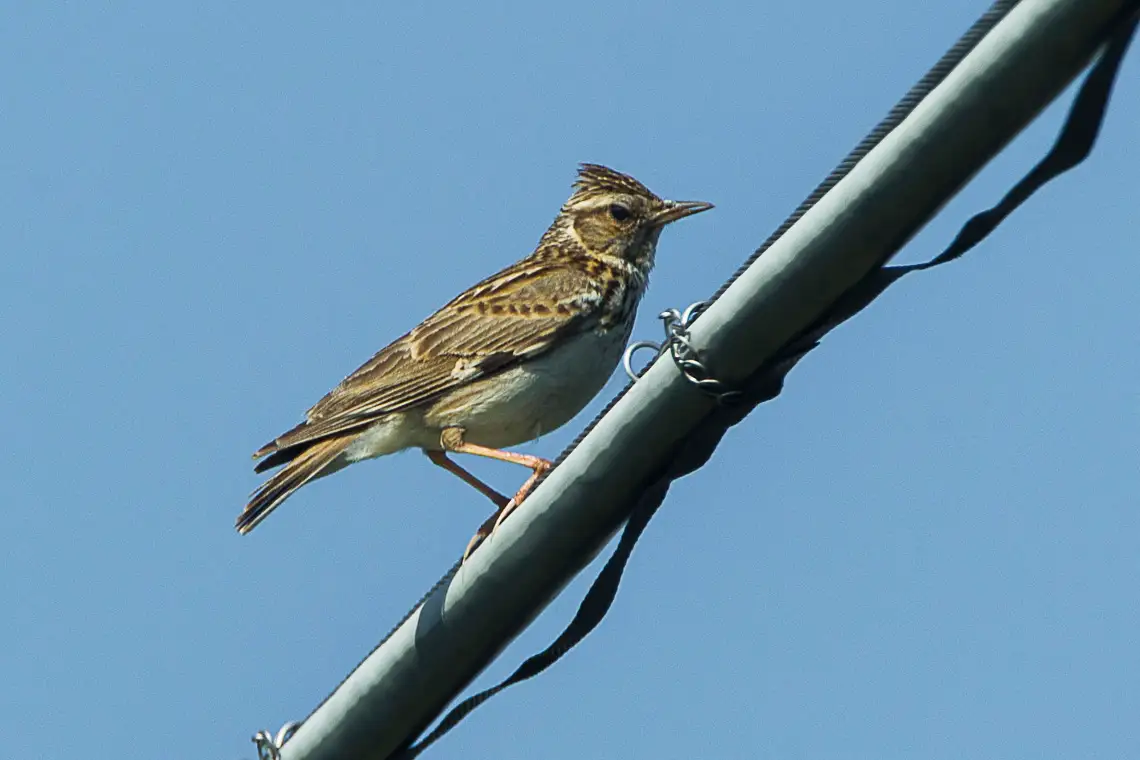
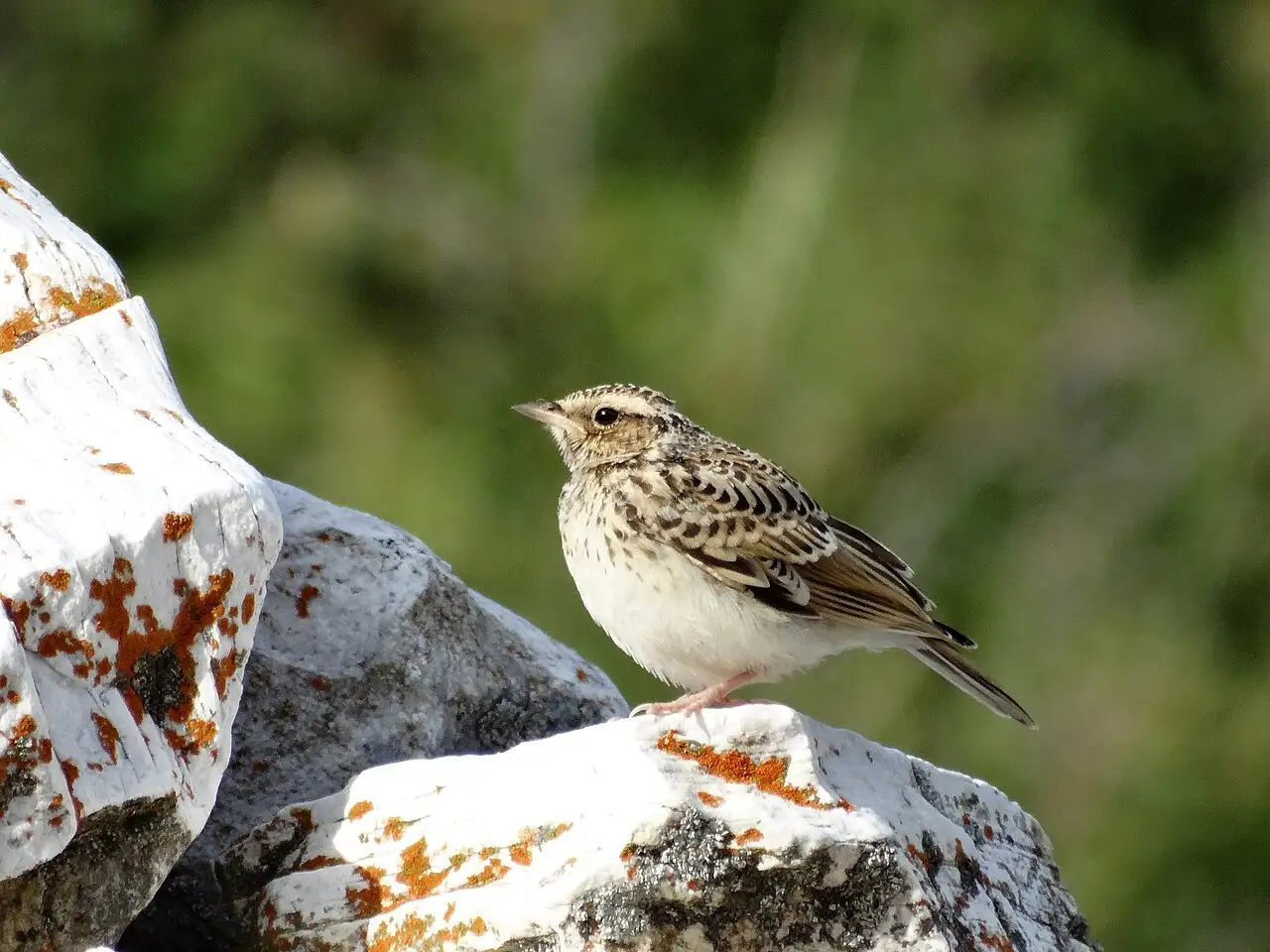
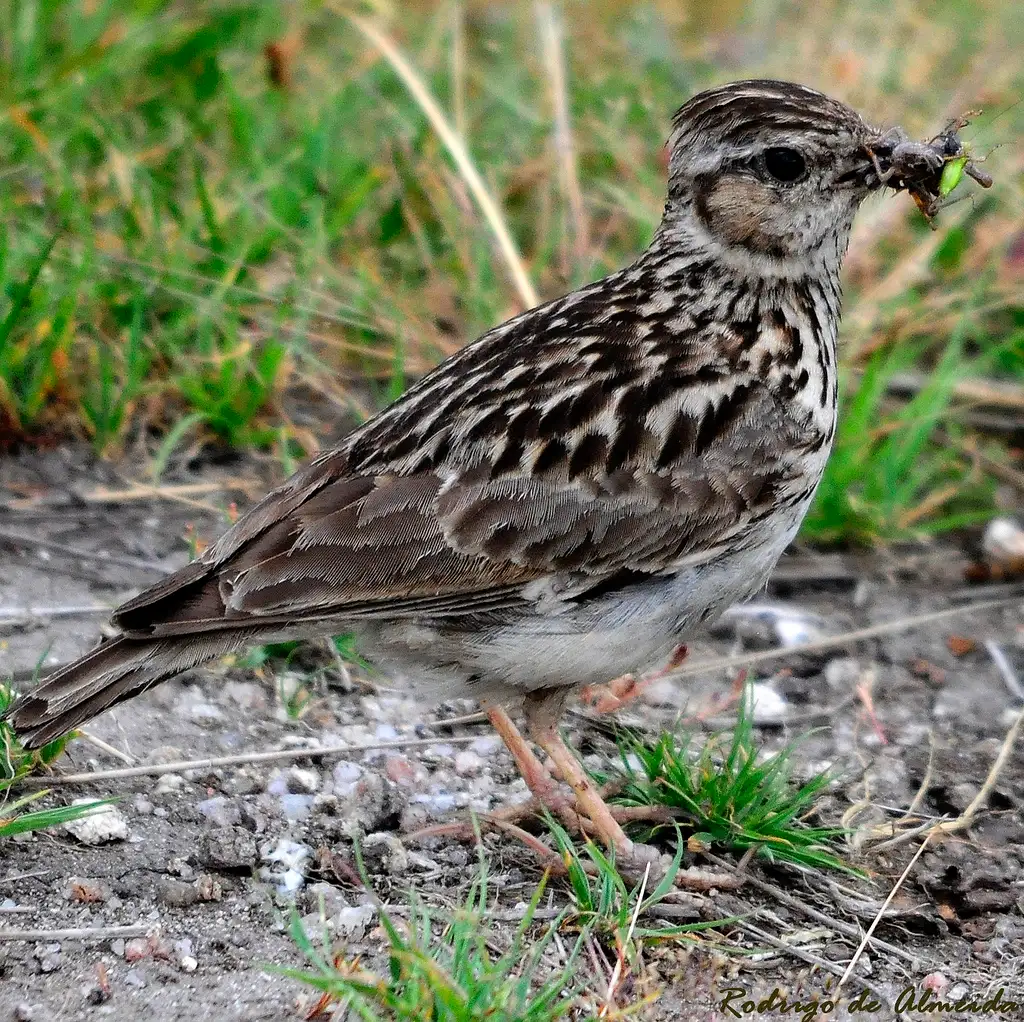
It has an appearance similar to other larks, with a colouring of cryptic brown tones. It is stocky, with a small crest, a short, dark tail and white outer tail feathers. Its facial pattern is very contrasting, and it has a black-and-white patch on the leading edge of the wing. On the ground, with the crest lowered, it blends in with the dry grass.
Adult
Streaked brown, with a pale eyebrow and marked cheeks.
Pale breast with dark streaks.
Short, dark tail.
Habitat and distribution of the Woodlark
It is a Palaearctic species, spread across the temperate zones of Europe, from the Peninsula to Russia, and also present in North Africa and the Near East. Two subspecies are recognised; in Spain «pallida» lives.
In Spain it is widely spread across the whole Peninsula, although absent or scarce in some very arid areas of the south-east, the Guadalquivir valley and the Cantabrian coast. It is not in the Balearics or the Canaries, and occupies a very wide altitude range, from sea level up to 2,200 metres in the eastern Pyrenees. It lives in open environments and woodland edges: grassland mosaics with scrub or scattered trees, or open woods, with good densities in dehesas and thinned woods. It is resident, although populations from central Europe, and perhaps part of those in the north of the Peninsula, migrate south in winter and reach the southern half of Spain and North Africa. The spring passage is noticeable in February and March, and the autumn one between October and November.
Areas where it is regularly recorded since 2010Squares of about 25 km where it is recorded regularly (occasional passage records are left out). Data from GBIF.org (153,907 records, retrieved October 2026); outline from Natural Earth.
Etymology of the Woodlark
«Lullula» imitates the Woodlark’s song, «lu-lu-lu», and «arborea» means «of the trees», because it usually sings perched in them. «Totovía», like «cotovía», is onomatopoeic.
Population of the Woodlark
In Spain there are around three million birds, with the largest populations in Castilla y León and Castilla-La Mancha and the scarcest in Cantabria, Asturias and the Basque Country. Unlike in Europe as a whole, the trend in Spain is positive. In Europe between 4.29 and 9.13 million mature individuals are estimated, with a decreasing trend. It is classed as Least Concern. It is affected by habitat change: it is helped by the thinning of woods and by fires, but harmed by agricultural intensification, the disappearance of traditional olive groves and vineyards and the abandonment of dehesas.
Nest of the Woodlark
It builds it on the ground, sheltered by a clump of grass or under a bush. It is a hollow in the ground that the adult digs and lines with grasses and feathers.
Courtship and breeding of the Woodlark
It breeds from March to July and can make two clutches a year. It is solitary and territorial. The clutch consists of two to six eggs, white to olive, speckled with reddish brown, which the female incubates for 12 to 15 days. The chicks fly at 10 or 13 days.
Diet of the Woodlark
In summer it eats mainly medium-sized invertebrates, chiefly insects and spiders. The rest of the year, its diet is almost all seeds.
Curious facts about the Woodlark
It sings both in the air and perched in a tree or bush, and its phrase, which speeds up and becomes lower, is among the easiest to recognise. And it is helped when woods are thinned or there are fires, because it needs clearings in the scrub.
The Woodlark in Cabañeros
The habitat pages of this website list it among the most characteristic species of the small clearings in the scrub, together with the Red-legged Partridge and the Thekla’s Lark.
Where to see the Woodlark in Cabañeros
In the scrub clearings and open dehesas of Cabañeros.
When
All year. It sings mostly from February to July.
What time
At dawn, when the song is most intense, and at dusk.
Where
In scrub clearings and open dehesas, on the ground or perched on top of a bush or post.
What to look for
A brown, stocky bird, with a small crest and a pale eyebrow, and a descending song that speeds up.
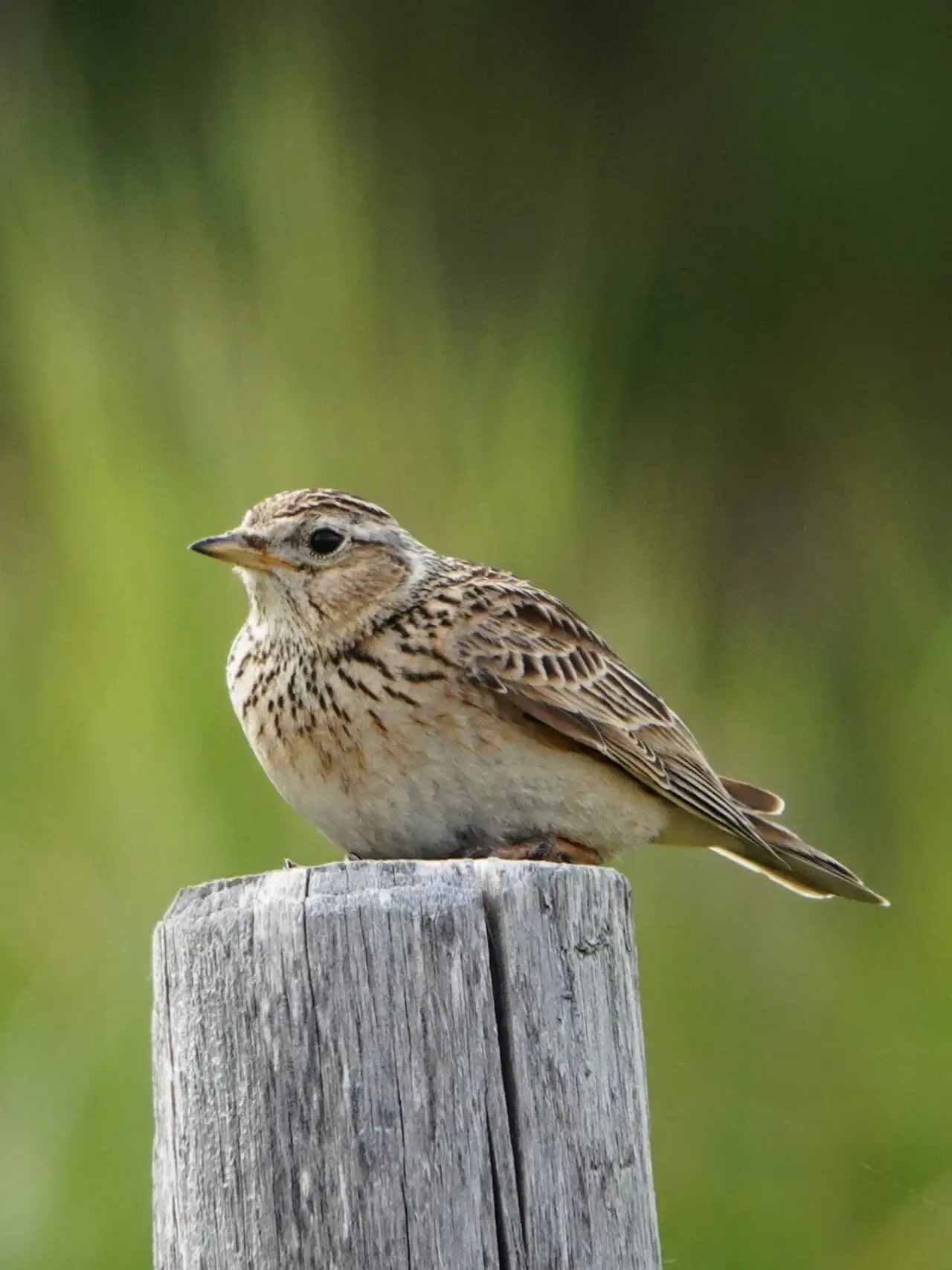
Somewhat bigger, with a longer tail, a white trailing edge on the wing and without the patch on the leading edge. It sings non-stop in the air, and lives in open fields.
Photo: Zeynel Cebeci, CC BY-SA 4.0
Other birds
Birds related to the Woodlark or sharing its habitats in Cabañeros.



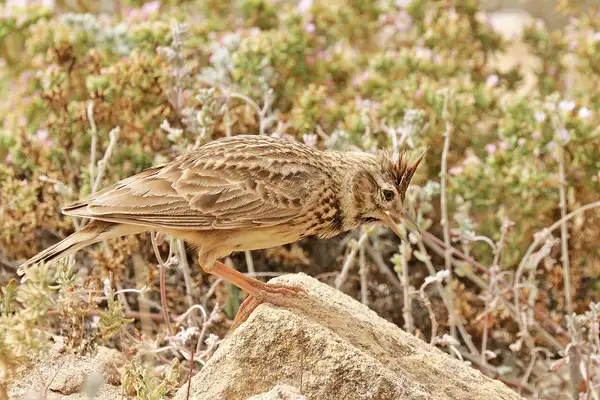
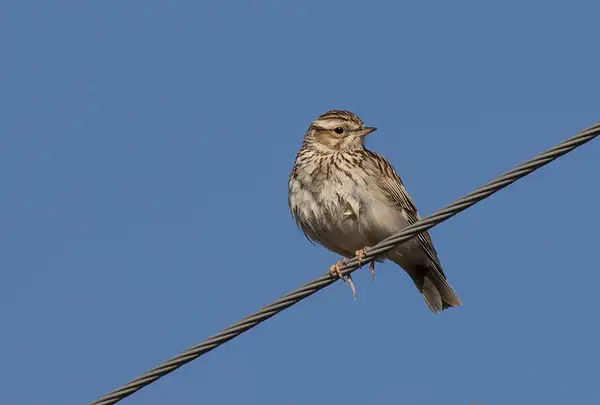
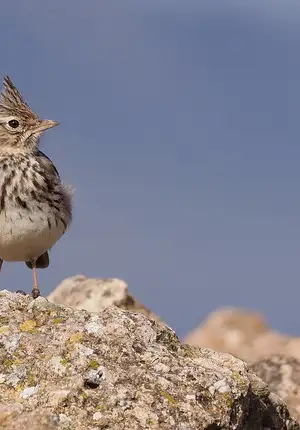 Same family
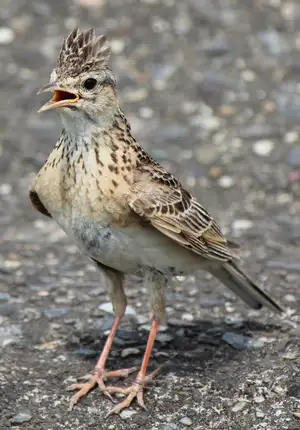 Same family
 Same family
 Same family
 Also in scrubland
 Also in scrubland
 Also in scrubland
 Also in scrubland






