Record of 10 years and 2 months in the wild (a bird ringed in Spain)
Conservation status
LC
NT
VU
EN
CR
EW
EX
Global (IUCN)
Least Concern
Spain
Near Threatened (NT) in the Red Book of the Birds of Spain; on the List of Wild Species under Special Protection and not in the Spanish Catalogue of Threatened Species
When to see it
Resident
Months of the year when it is present
J
F
M
A
M
J
J
A
S
O
N
D
In Iberia
yes
yes
yes
yes
yes
yes
yes
yes
yes
yes
yes
yes
Breeding season
no
no
no
yes
yes
yes
yes
yes
no
no
no
no
Song or voice of the Cirl Bunting
The usual contact call is a thin, high, somewhat melancholy «zitt»; it also gives a «tiuu» of the same character, though lower. The spring song is a quick sequence of repeated notes, lasting a little over a second, «sri-sri-sri-sri», which often changes pitch to a «sre-sre-sre». The recording, from the British Library, was made in Bridford (Devon, England).
SongCirl Bunting
0:00 / 0:25
10 kHz5
The sonogram draws the sound: time runs from left to right, and the higher a trace sits, the higher the note.Recording by British Library, Wikimedia Commons (CC BY-SA 4.0).
Flight of the Cirl Bunting
It is a sedentary bird of short movements: in summer it usually goes only a few hundred metres from the nest to feed.
Flight typeUndulating and short, from hedge to hedge
It leaves the grass, where it searches the ground for seeds, with a thin, high call, «zitt».
Short, undulating flight, with quick wingbeats and stretches with the wings folded, to a nearby shrub or tree.
It brakes and perches on a branch, from where the male may sing in spring his quick succession of repeated notes.
Photo gallery of the Cirl Bunting
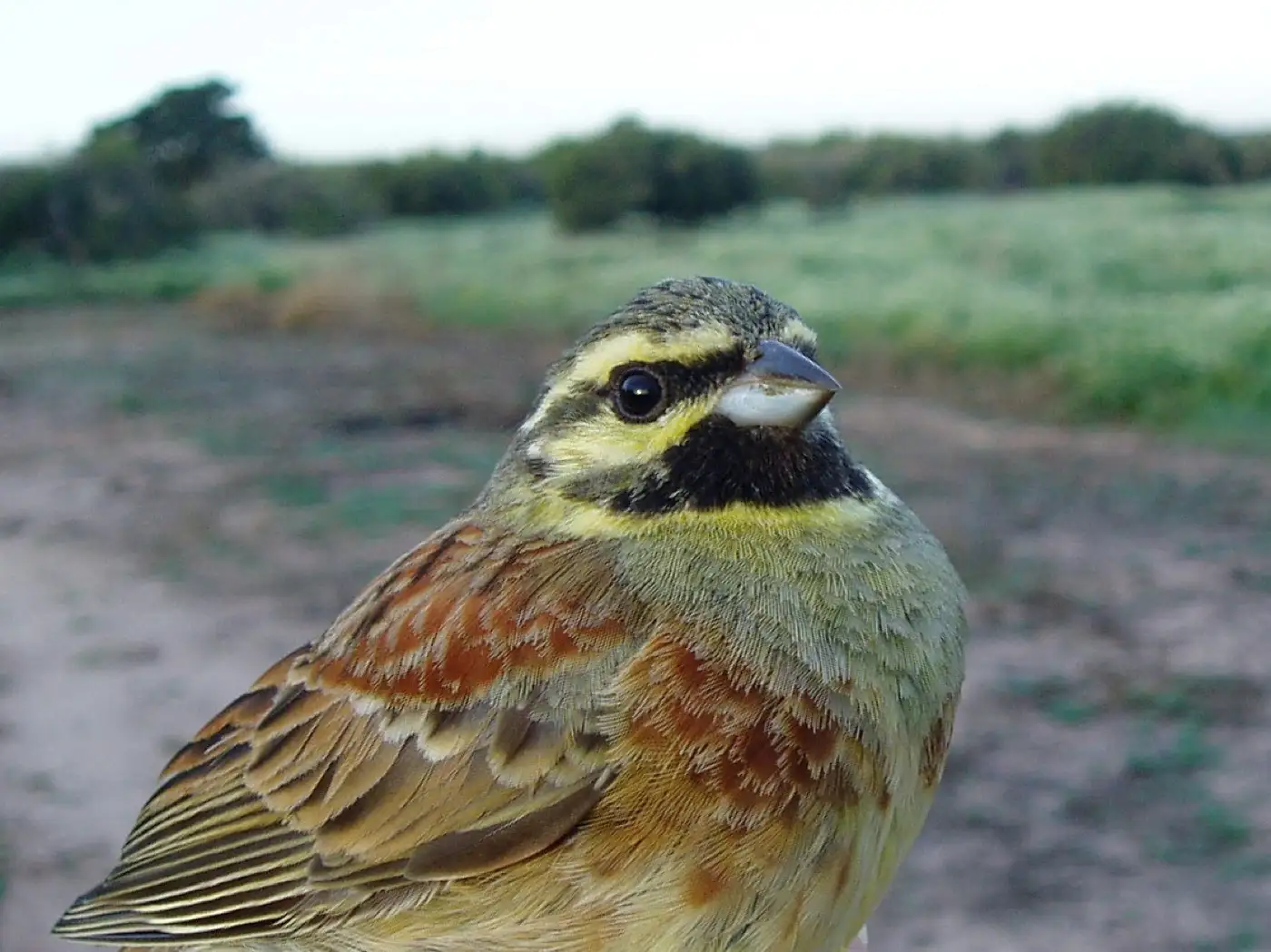
Close-up of a male Cirl Bunting, with yellow head, black mask and bib and olive-grey breast bandPhoto: Ximo, CC BY 3.0Photo 1 of 4
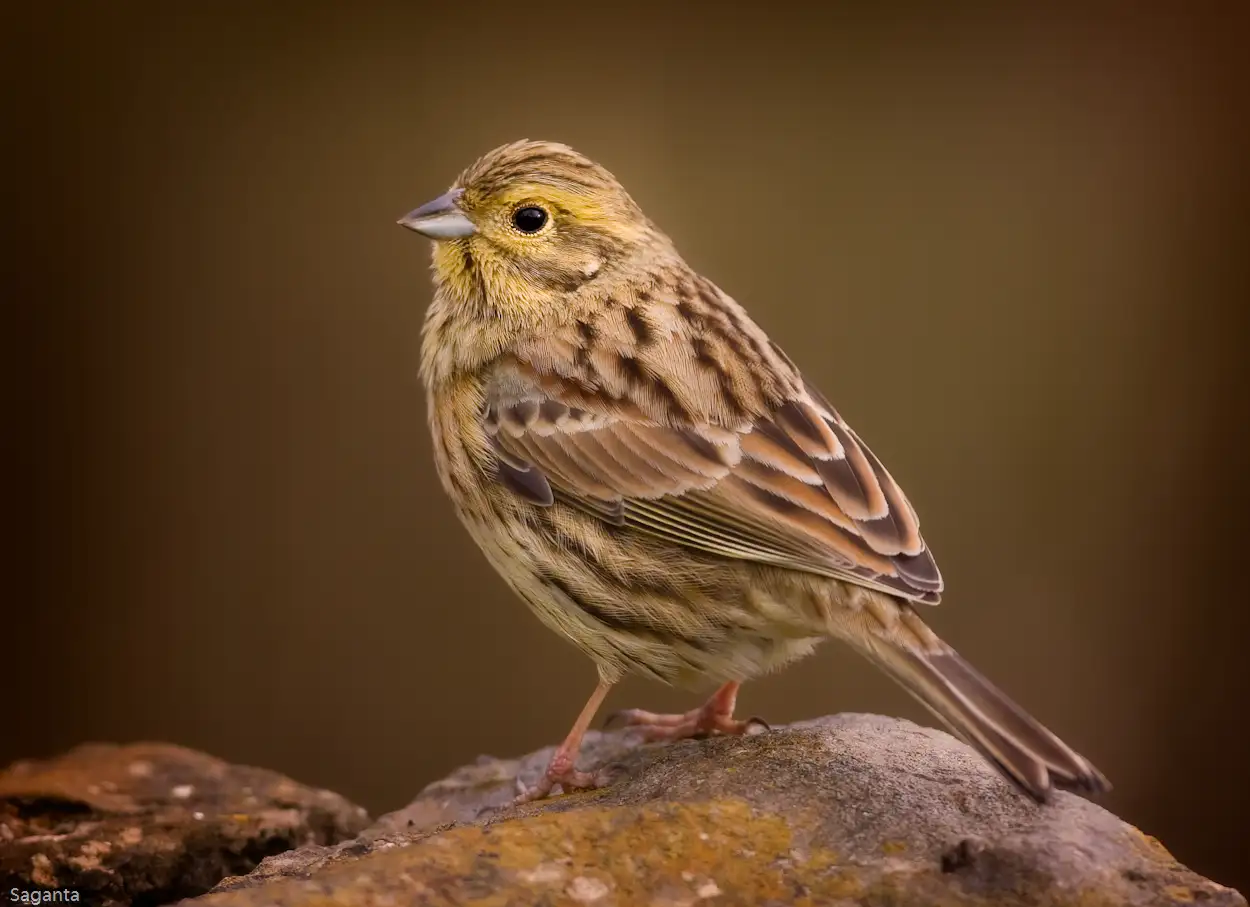
Somewhat smaller than the Yellowhammer, the Cirl Bunting is slightly shorter-tailed and has a more robust bill. The general colouring is like the Yellowhammer’s, above all in young birds and females. They differ in the colour of the rump, which is olive-grey in the Cirl Bunting, in the marked side bands of the face and, in general, in showing fewer yellowish areas in the plumage.
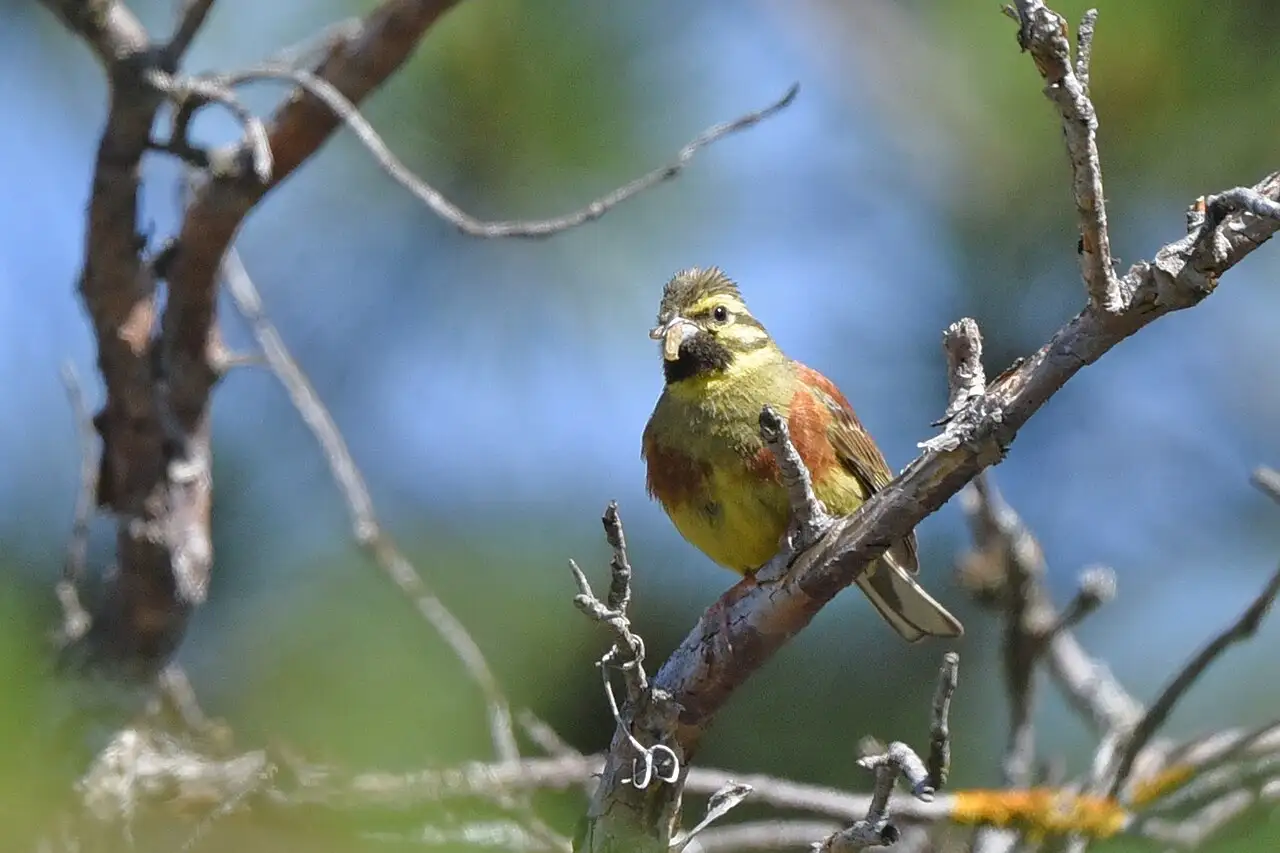
The male in the breeding season wears a broad olive-grey breast band, a striking black bib on the throat and a mask of the same colour. He also keeps all year round the crown and nape extensively coloured olive grey, with fine dark streaks.
Male
Black bib on the throat and black mask.
Broad olive-grey breast band and grey crown and nape, with fine dark streaks.
Female and young birds
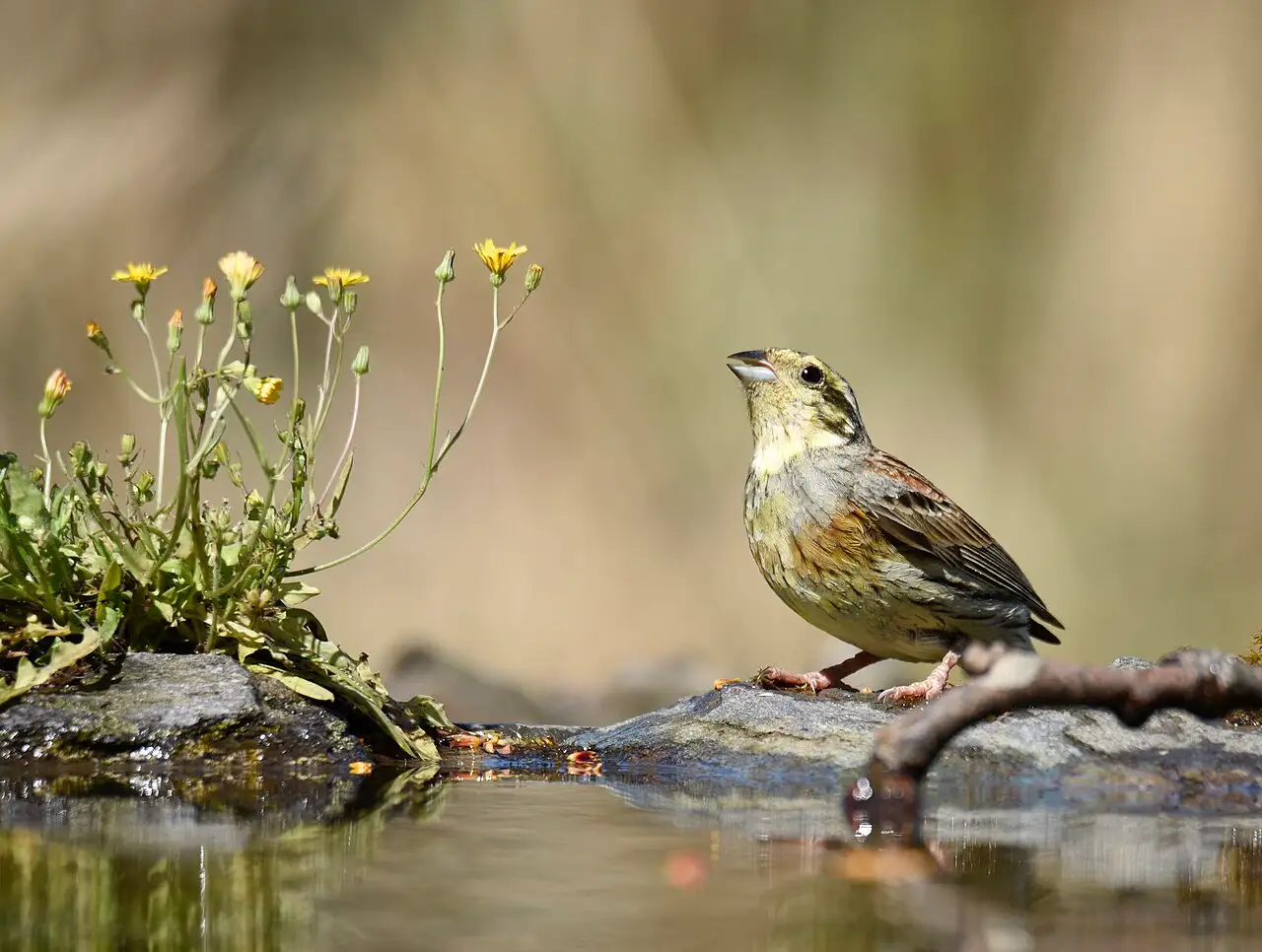
General colouring like the Yellowhammer’s, with marked side bands on the face.
Olive-grey rump.
Habitat and distribution of the Cirl Bunting
It is a species of typically circum-Mediterranean distribution, whose main population is concentrated in France, Italy, the Iberian and Balkan peninsulas and Turkey. Some isolated populations reach into inland Europe and the south of the Black Sea and reach, in the west, the south of the British Isles. Several subspecies are recognised, and in Spain the subspecies «cirlus» lives.
It is spread mainly across the Mediterranean zone, the Balearics (absent from Menorca) and the northern half of the Peninsula, although it is scarce in Asturias and Cantabria. It disappears from the high altitudes of the Pyrenees and the Cantabrian range and, locally, from Tierra de Campos, western Cantabria and the Ebro depression. It also has notable absences in La Mancha, Extremadura, the Guadalquivir basin, the lower Segura floodplain and the Murcian coast. It is also a resident bird in Ceuta, but is absent from the Canaries and Melilla.
It occupies a great diversity of habitats, among which, for the densities it reaches, stand out woodland with low tree cover (juniper woods, sabine juniper woods and oak woods) and farmland habitats with a high presence of woody species. It seems to have a special liking for environments with some moisture, such as riverbanks, meadows with scattered trees or shrubs and urban parks. It is fundamentally resident, although the more northerly populations usually make short movements in cold winters, normally under 100 kilometres, to return the following year around April.
Areas where it is regularly recorded since 2010Squares of about 25 km where it is recorded regularly (occasional passage records are left out). Data from GBIF.org (172,638 records, retrieved October 2026); outline from Natural Earth.
Etymology of the Cirl Bunting
«Emberiza» comes from Old High German «Embritz», the name of a bunting. «Cirlus» comes from «cirlo», the Italian name for a kind of bunting, which in turn comes from «zirlare», «to chirp».
Population of the Cirl Bunting
In the 2021 European Red List of Birds the European breeding population is estimated at between 4,910,000 and 9,150,000 mature individuals, with a stable trend. The Spanish population is estimated at around 2,000,000 birds, according to data obtained between 2008 and 2014. It seems to have a moderate decline, although that trend will have to be assessed later, because it could be due to natural fluctuations that rebound in the coming years. In the more northerly regions of its range there seems to be some decline, through habitat alteration and lower food availability. Agricultural intensification and the use of insecticides have become a serious threat to the European populations.
Nest of the Cirl Bunting
The nest is usually well hidden inside a shrub or small tree, generally a thorny one. As is usual in the genus, it is placed almost always near the ground and even on it, in a wall hidden by vegetation or among stones. It is a rather bulky and quite untidy structure, made of grasses, roots, thin sticks and other plant materials. The male may help in building it, but most of the work falls to the female.
Courtship and breeding of the Cirl Bunting
The breeding period begins in April and can last until August. The clutch consists of two to five white or bluish eggs, covered in spots and irregular streaks, which the female incubates for 11–14 days. The chicks are fed for 11–13 days by both parents, although in the final stage only the male feeds them if the female has begun incubating a second clutch, which is usually the case. The young will be independent one or two weeks after leaving the nest.
Diet of the Cirl Bunting
It eats mainly seeds, especially of grasses, which it obtains by searching the ground. In the breeding season it includes all kinds of invertebrates in its diet, which are the basis of the feeding of chicks and young birds in the first stages of their lives.
Curious facts about the Cirl Bunting
The colour of the rump, olive grey, is one of the clues that separate it from the Yellowhammer, which it closely resembles, above all in females and young birds. Although it is still a relatively common species, agricultural intensification and the use of insecticides have become a serious threat to its European populations.
The Cirl Bunting in Cabañeros
This website’s page on wetlands cites it in the «banes» of Cabañeros, wetlands with groundwater and a vegetation of bramble, willow and ash, where, together with the Cetti’s Warbler, it appears as a woodland bird in very treeless surroundings.
Where to see the Cirl Bunting in Cabañeros
In the banes of Cabañeros, among the brambles, willows and ash trees.
When
All year round: it is resident, and in spring the male sings.
What time
Throughout the day.
Where
On woodland edges, riverside groves, hedges and meadows with scattered trees, with some moisture.
What to look for
A yellow bunting with a black bib, or a streaked female with an olive-grey rump.
Videos of the Cirl Bunting
Similar species
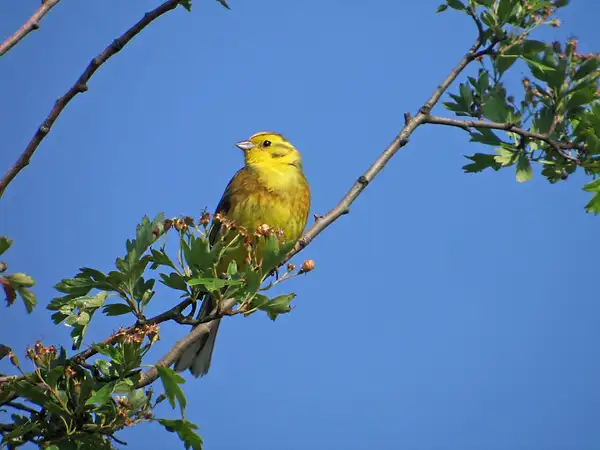
Yellowhammer
Emberiza citrinella
How to tell them apart
It is somewhat larger and longer-tailed, with a less robust bill, more yellowish areas in the plumage and a rump of another colour: in the Cirl Bunting it is olive grey.
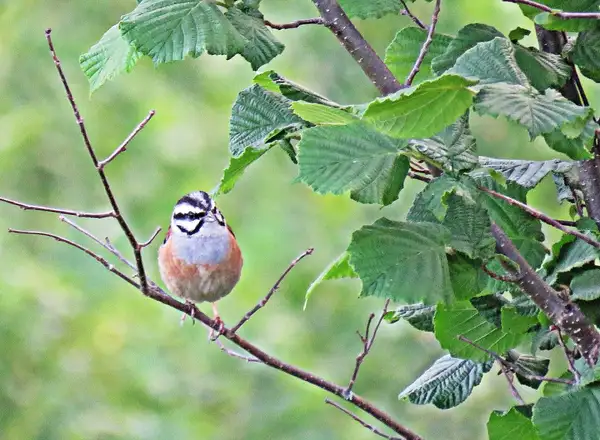
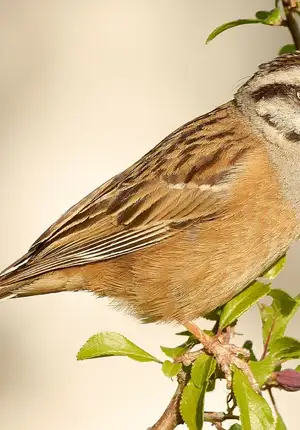
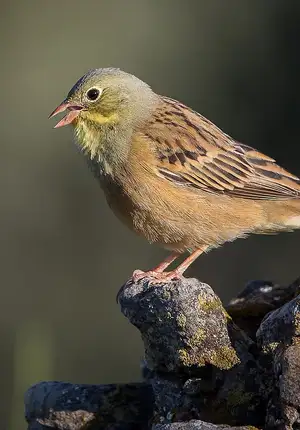
They are similar in appearance1. The Rock Bunting is larger and bulkier, long-tailed, with the head, neck and upper breast grey, three dark stripes on the head and the rest of the body brown or rufous, with orange tones in the breeding season.
Photo: Marcial Gijon, CC BY-SA 4.0
Other birds
Birds related to the Cirl Bunting or sharing its habitats in Cabañeros.



 Same family
 Same family
 Same family
 Also in wetlands
 Also in wetlands
 Also in wetlands
 Same order
 Same order






