It pairs up monogamously or polygynously (one male with two or more females)
Lifespan
Record of 10 years and 7 months in the wild (a bird ringed in Spain)
Conservation status
LC
NT
VU
EN
CR
EW
EX
Global (IUCN)
Least Concern
Spain
Least Concern (LC) in the Red Book of the Birds of Spain; included in the List of Wild Species under Special Protection and not in the Spanish Catalogue of Threatened Species
When to see it
Resident
Months of the year when it is present
J
F
M
A
M
J
J
A
S
O
N
D
In Iberia
yes
yes
yes
yes
yes
yes
yes
yes
yes
yes
yes
yes
Breeding season
no
no
yes
yes
yes
yes
yes
no
no
no
no
no
Song or voice of Cetti’s Warbler
It is a very characteristic song, powerful and easy to recognise, heard all year round, even on cold winter days. It is a sudden, explosive succession of two or three notes, which could be transcribed as «cuchí-cuchí-cuchí». The recording is from Isla Mayor (Seville).
SongCetti's Warbler
0:00 / 0:14
10 kHz5
The sonogram draws the sound: time runs from left to right, and the higher a trace sits, the higher the note.Recording by Joost van Bruggen, Wikimedia Commons (CC BY-SA 4.0).
Flight of Cetti’s Warbler
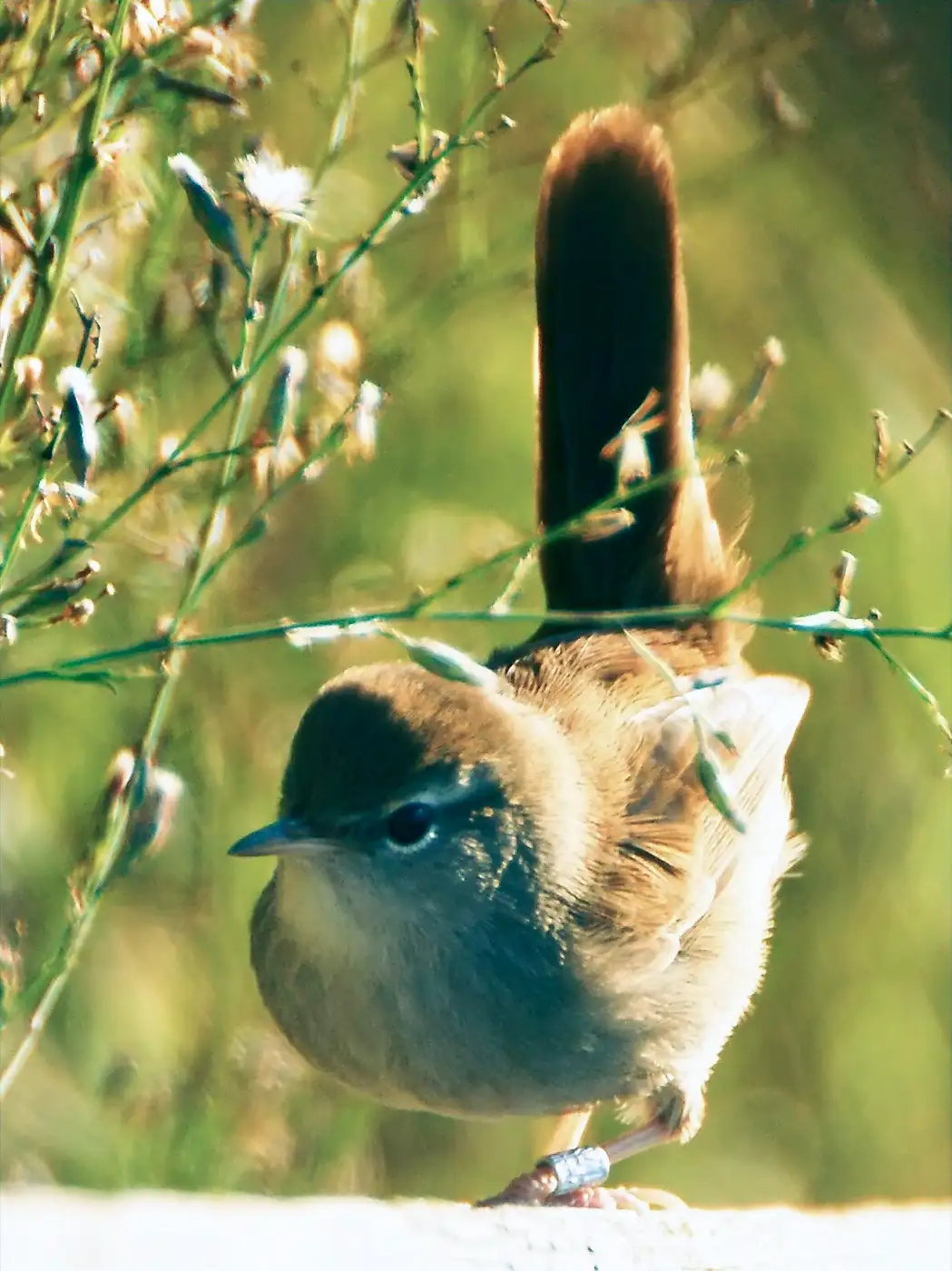
It is a bird with rounded wings and tail and secretive habits. When it moves among bushes, it often raises and spreads its tail.
Flight typeAmong vegetation, with rounded wings and tail
It leaves the bramble or the reedbed. It is rarely seen, but we will have heard it before.
It moves with rounded wings and tail from one bush to another. When it moves among the vegetation, it usually raises and spreads its tail.
It slips into the tangled vegetation of the shore, where it is lost from sight and, as soon as it calms down, sings again.
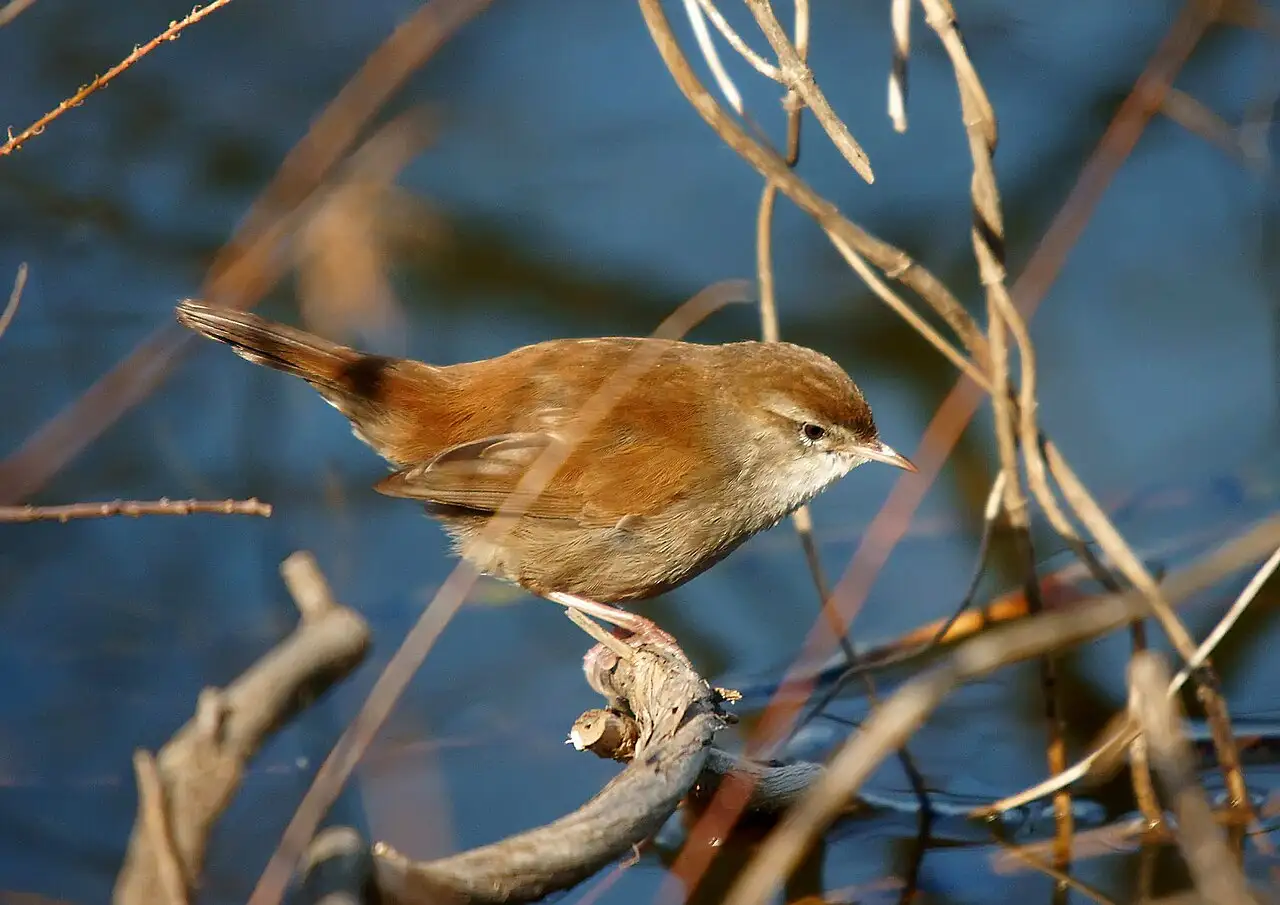
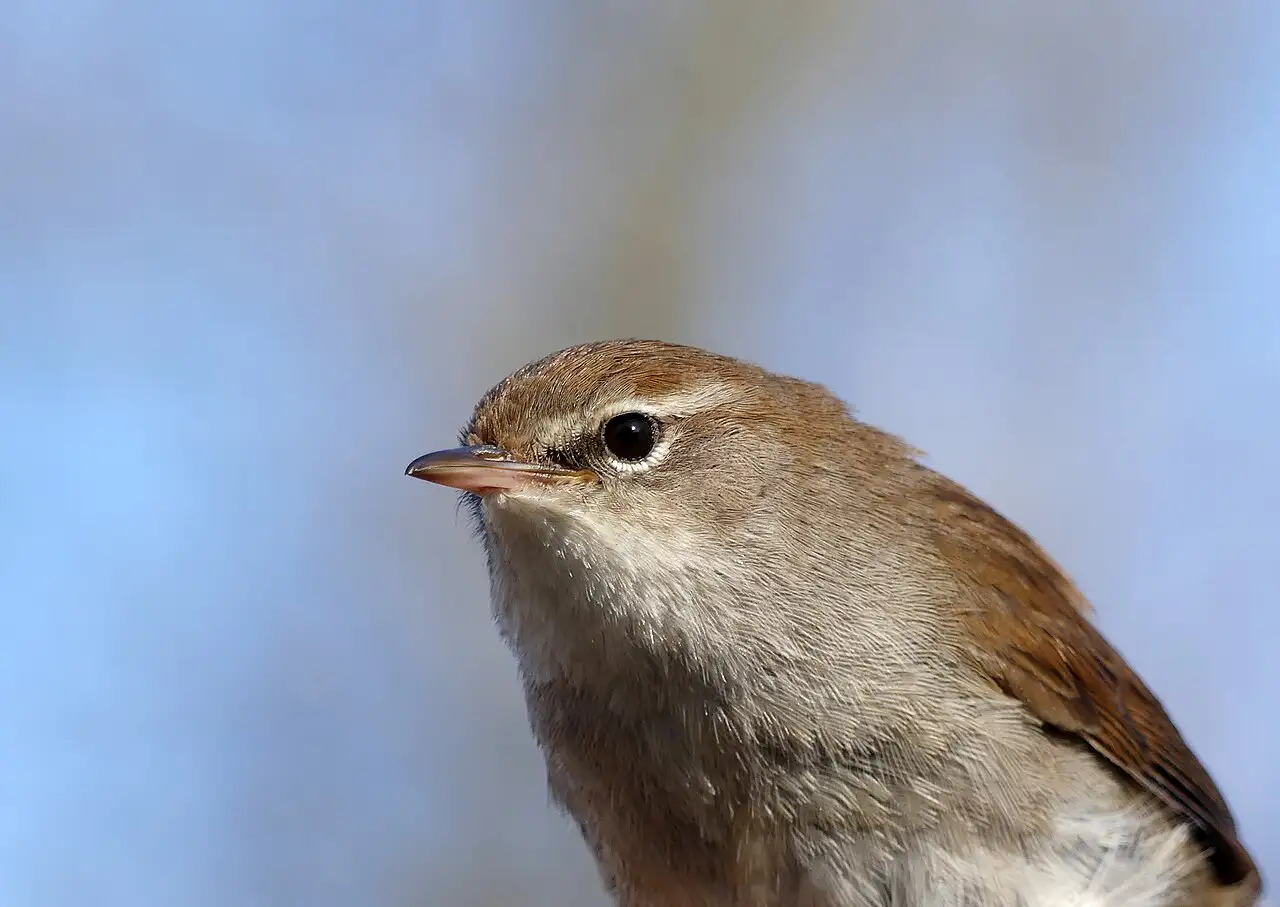
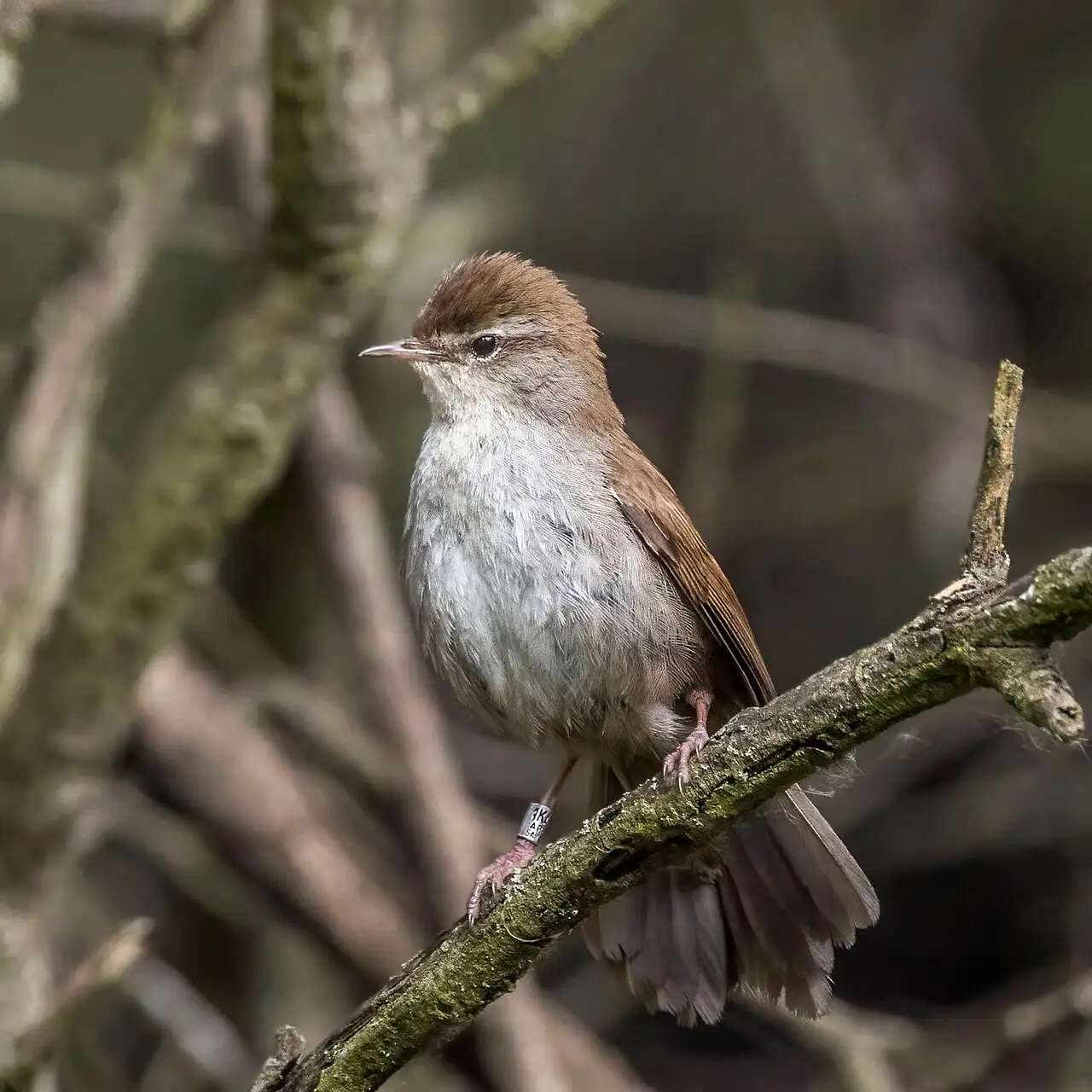
It is a small bird, of very discreet design and plump look, with rounded wings and tail. It has a dark reddish-brown back and greyish underparts, with pale flecks on the undertail coverts. It has a pale eyebrow, greyish ear-coverts and a very thin bill. Both sexes are alike in appearance and differ only in slight variations of size.
With secretive habits, it is hard to see, but very easy to detect in the thick riverside tangles it frequents by its unmistakable, ringing song. When it moves through vegetation, it often raises and spreads its tail.
Adult
Dark reddish-brown back and greyish underparts.
Pale eyebrow and very thin bill.
Habitat and distribution of Cetti’s Warbler
It has a circum-Mediterranean distribution, which includes southern Europe, north-west Africa and the Near East, and reaches western Asia (Afghanistan and Turkestan). Two subspecies are recognised.
In Spain it is widely and continuously distributed across the whole Iberian Peninsula and the Balearics, although scarce above 1,200 m altitude and across extensive sectors of Galicia, the southern Meseta and the south-east of the peninsula. It is absent from the Canaries, but present in Ceuta and Melilla. In our territory the subspecies «cetti» lives.
It is a very characteristic inhabitant of riverside areas, where it occupies groves and wetlands with plenty of plant cover and tangled vegetation, always near water, so it is a habitual tenant of all kinds of riparian thickets, including reedbeds. It can also frequent irrigated crops, hedges and other damp undergrowth. It is distributed from sea level up to 1,200 metres altitude (on the northern Meseta), although it usually avoids cold areas in winter. It is an eminently resident species, although it makes short-distance dispersive movements which, in autumn, may take it to warmer areas of the Peninsula; these are made mainly by females and young birds.
Areas where it is regularly recorded since 2010Squares of about 25 km where it is recorded regularly (occasional passage records are left out). Data from GBIF.org (551,000 records, retrieved October 2026); outline from Natural Earth.
Etymology of Cetti’s Warbler
«Cettia» and «cetti» recall Francesco Cetti, an 18th-century Italian zoologist, to whom the species is dedicated.
Population of Cetti’s Warbler
In the 2021 European Red List of Birds the European breeding population is estimated at between 4,080,000 and 6,550,000 mature individuals, with a stable trend. In Spain, the largest numbers occur in the great river valleys (Duero, Ebro, Guadalquivir…) and the population seems stable or slightly increasing in recent years; it is estimated at 2,529,041 individuals. Its main threats are the local loss or degradation of riverside vegetation (through clearing, channelling and dredging, felling or fires) and adverse weather conditions, especially harsh winters, which can greatly affect its populations, because it prefers mild, warm climates.
Nest of Cetti’s Warbler
The nest is built by the male: a small cup of twigs and leaves finely interwoven, lined with feathers. It is placed low, among the dense vegetation of reedbeds, bramble thickets or other riparian scrub.
Courtship and breeding of Cetti’s Warbler
The breeding period runs from March to July, and it can make up to two clutches a year. It may pair up monogamously or polygynously. The clutch consists of two to five reddish eggs, which the female incubates for 16 days. The chicks, tended almost exclusively by the mother, can fly at 14–16 days and are independent at 30 days.
Diet of Cetti’s Warbler
It feeds on a wide variety of invertebrates, preferably insects, many of them aquatic.
Curious facts about Cetti’s Warbler
It is a bird that rarely lets itself be seen, but often lets its insistent song be heard, even on cold winter days. It prefers mild climates, and harsh winters can greatly affect its populations. The ringed bird in Spain that lived longest reached 10 years and 7 months.
Cetti’s Warbler in Cabañeros
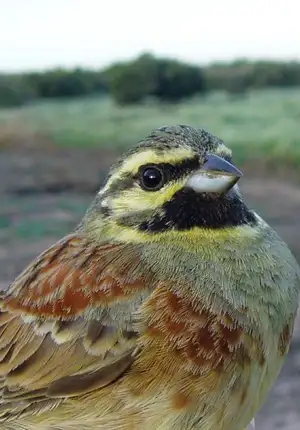
The habitat pages of this website list it, under the name «ruiseñor bastardo», among the birds that stand out in the communities of breeding passerines of the sclerophyllous woodland, in mature scrub. It also appears in the «banes», wetlands with groundwater and a vegetation of bramble, willow and ash, where, together with the Cirl Bunting, it is a woodland bird in very treeless environments.
Where to see Cetti’s Warbler in Cabañeros
In the «banes» and in the mature scrub of Cabañeros, among brambles and tangled vegetation.
When
All year: it is resident and sings even in winter.
What time
Throughout the day; it is heard from the thicket.
Where
In groves, reedbeds, bramble thickets and other thickets by the water.
What to look for
Easier to hear than to see: a burst of notes from the undergrowth and a raised tail among the branches.
Videos of Cetti’s Warbler
Similar species
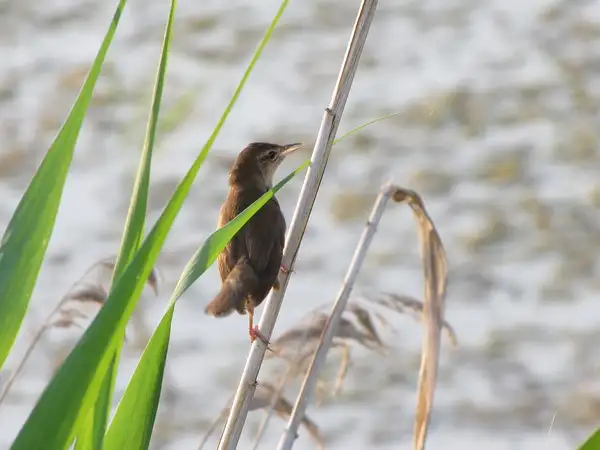
Savi's Warbler
Locustella luscinioides
How to tell them apart
It shares the shores and also raises its tail, but it has a relatively long tail, ochre belly and a different song: a vibrant, sustained buzz, like a cicada’s chirr.
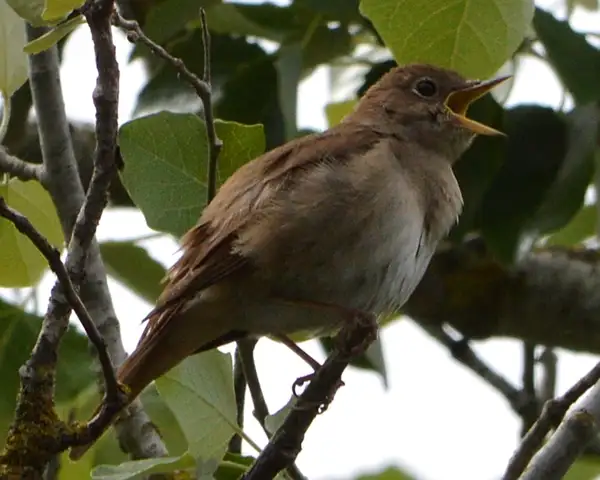
It also lives in the undergrowth of river banks, but has a reddish tail and lacks the pale eyebrow of Cetti’s Warbler, which is also plumper and has rounded wings and tail.
Photo: Ryan Hodnett, CC BY-SA 4.0
Other birds
Birds related to the Cetti's Warbler or sharing its habitats in Cabañeros.



 Also in sclerophyllous woodland
 Also in sclerophyllous woodland
 Also in sclerophyllous woodland
 Also in sclerophyllous woodland
 Also in sclerophyllous woodland
 Also in sclerophyllous woodland
 Also in sclerophyllous woodland
 Also in wetlands






