Solitary, territorial and monogamous in the breeding season; resident
Lifespan
Record of 10 years and 5 months in the wild (a bird ringed in Spain)
Conservation status
LC
NT
VU
EN
CR
EW
EX
Global (IUCN)
Least Concern
Spain
Near Threatened (NT) in the Red Book of the Birds of Spain; included in the List of Wild Species under Special Protection and not in the Spanish Catalogue of Threatened Species
When to see it
Resident
Months of the year when it is present
J
F
M
A
M
J
J
A
S
O
N
D
In Iberia
yes
yes
yes
yes
yes
yes
yes
yes
yes
yes
yes
yes
Breeding season
no
yes
yes
yes
yes
yes
no
no
no
no
no
no
Song or voice of the Thekla’s Lark
Its song is very like the Crested Lark’s and, for that reason, quite hard to tell apart: a fluty melody alternating whistles, trills and single notes, sometimes with imitations of other birds. It has less repertoire than the Crested, but is more melodious. The call, on the other hand, is very distinctive. The recording is from the AviCanto channel.
SongThekla's Lark
0:00 / 0:32
10 kHz5
The sonogram draws the sound: time runs from left to right, and the higher a trace sits, the higher the note.Recording by AviCanto, Wikimedia Commons (Vídeo de YouTube, con atribución).
Flight of the Thekla’s Lark
In flight it shows an orange-brown rump, which contrasts with the whitish back and underside of the wings. It often perches on bushes and trees, something the Crested Lark rarely does, but it walks mostly on the ground.
Flight typeUndulating and low, over open scrub
It comes out from among the low bushes on the ground, where it walks and looks for seeds and insects, with a very characteristic call.
Undulating, low flight, with quick wingbeats, over open scrub. The orange-brown rump can be seen, which contrasts with the whitish underside of the wings.
Unlike the Crested Lark, it often perches on shrubs and trees.
Photo gallery of the Thekla’s Lark
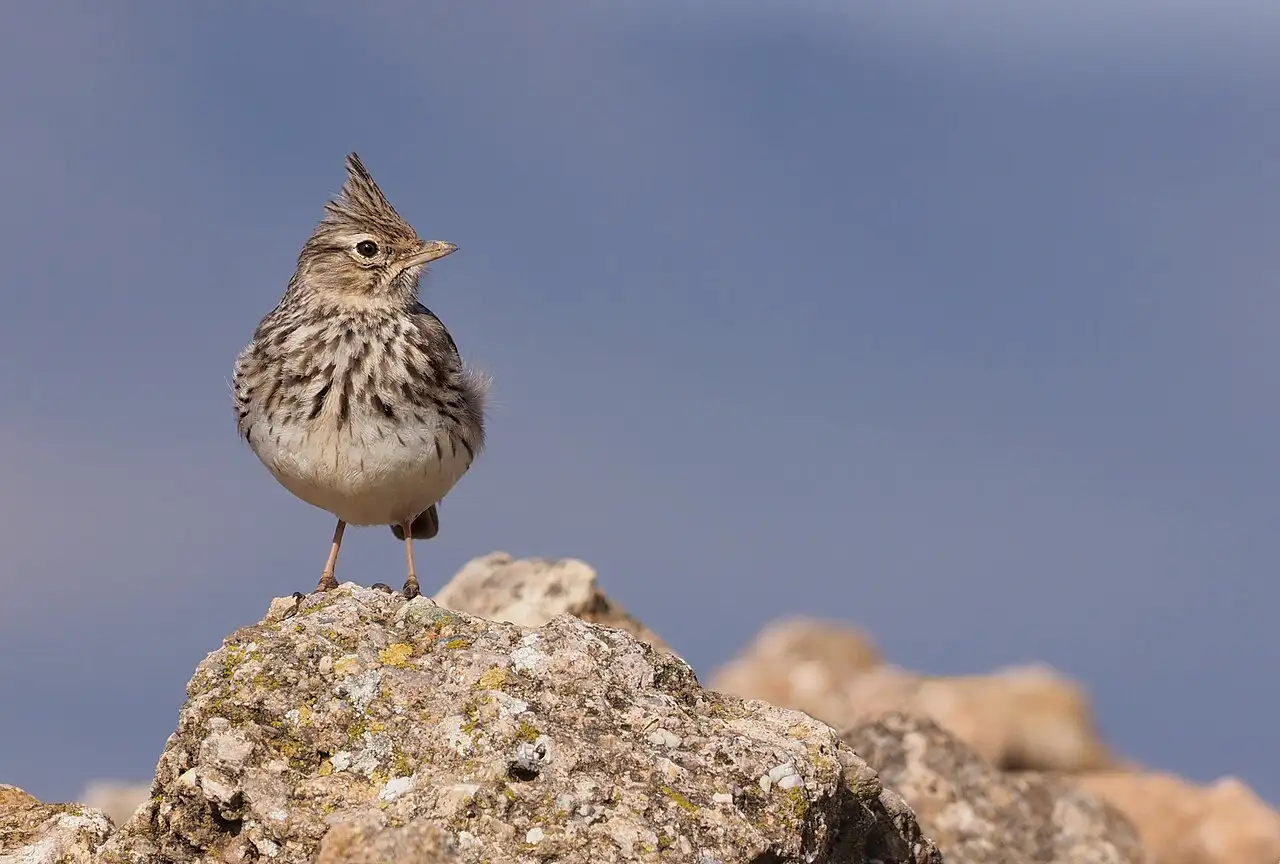
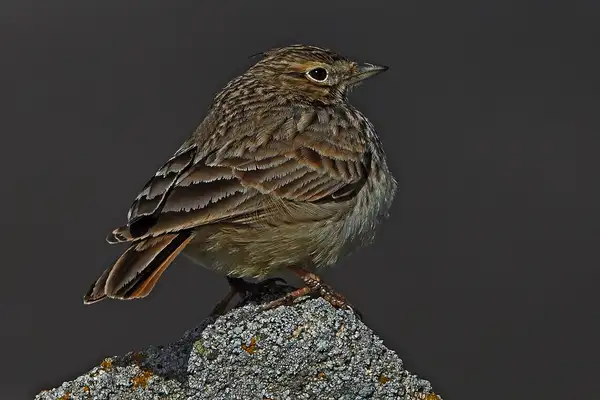
Thekla's Lark perched on the stony ground of the Hoya de Guadix, in profile, with raised crest and spotted breastPhoto: Frank Vassen from Brussels, Belgium, CC BY 2.0Photo 1 of 4
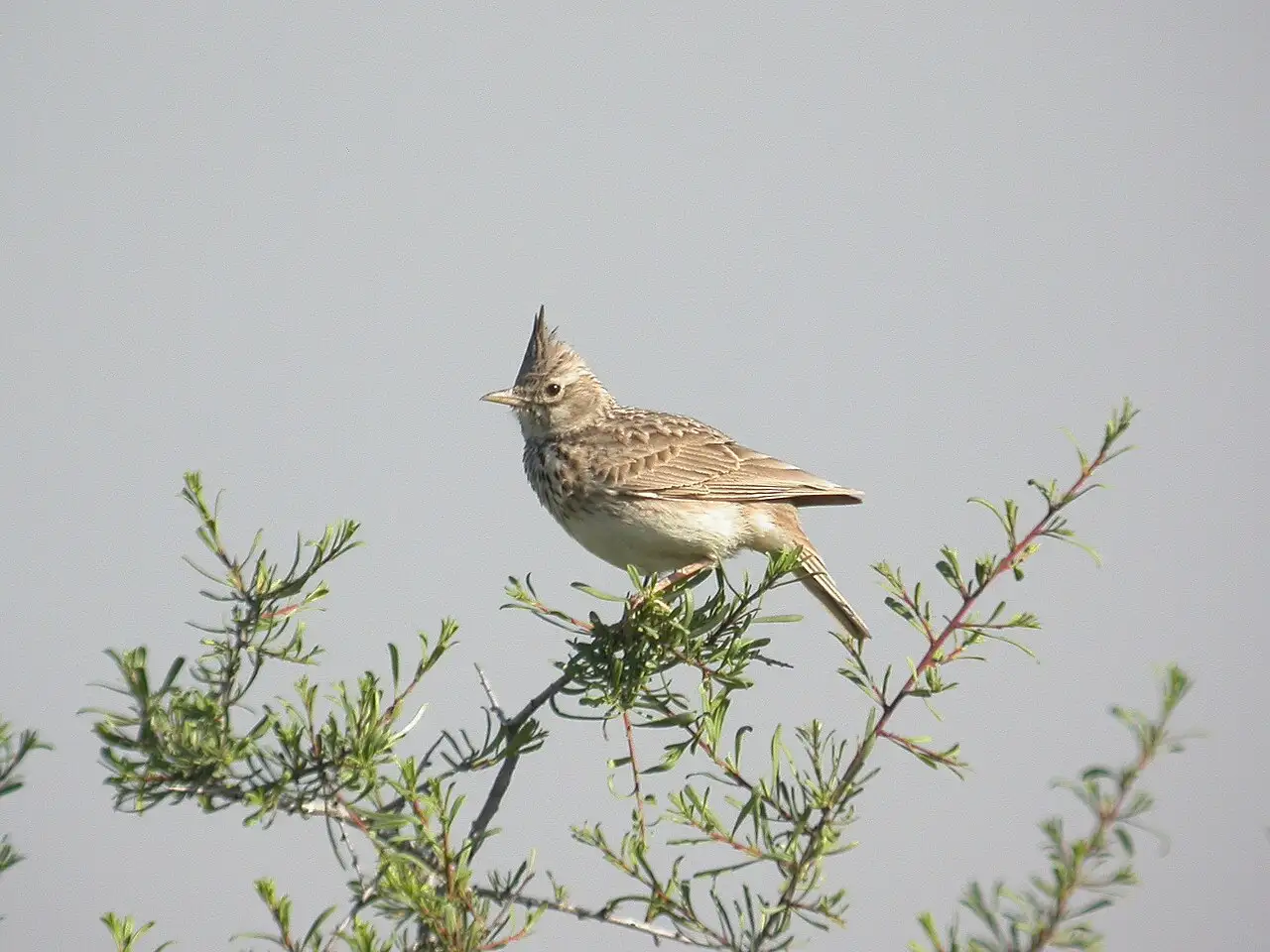
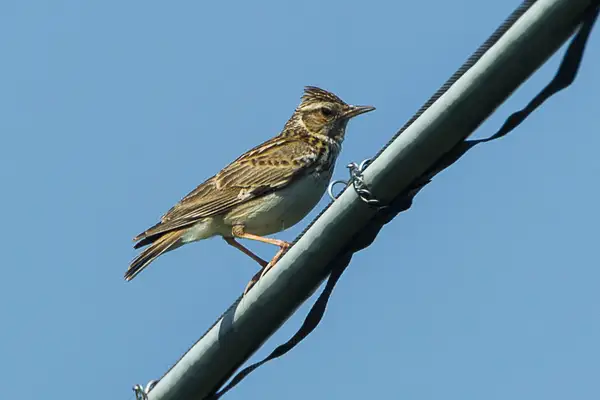
Thekla's Lark perched on top of a bush, with raised crest and bill openPhoto: Adrian198cm, Public domainPhoto 2 of 4
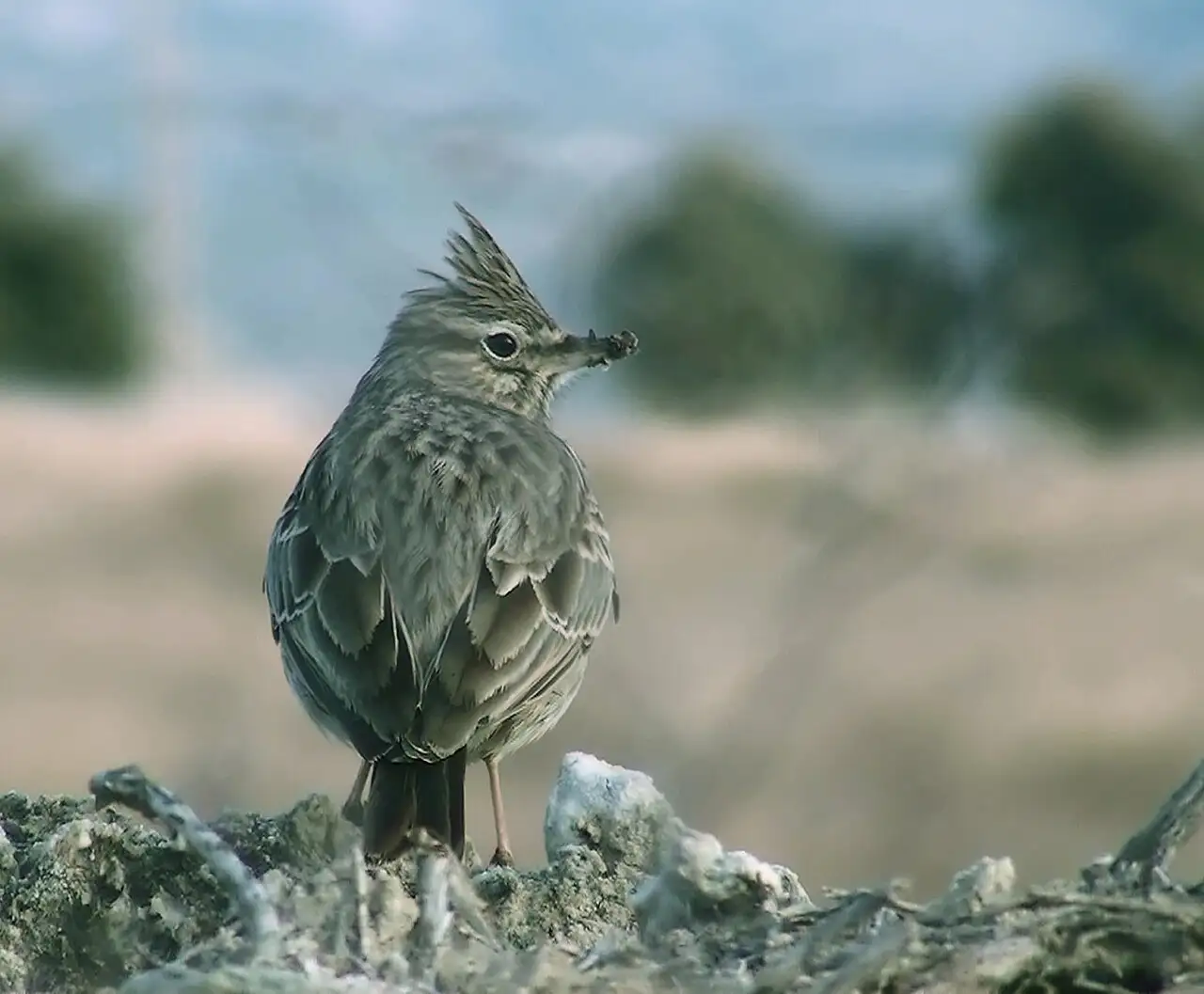
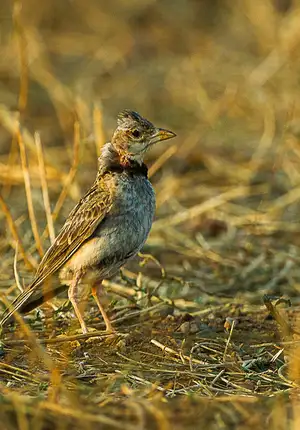
Thekla's Lark seen from behind on a pile of stones in the Montsec, with crest and greyish backPhoto: BirdingInSpain, CC BY-SA 3.0Photo 3 of 4
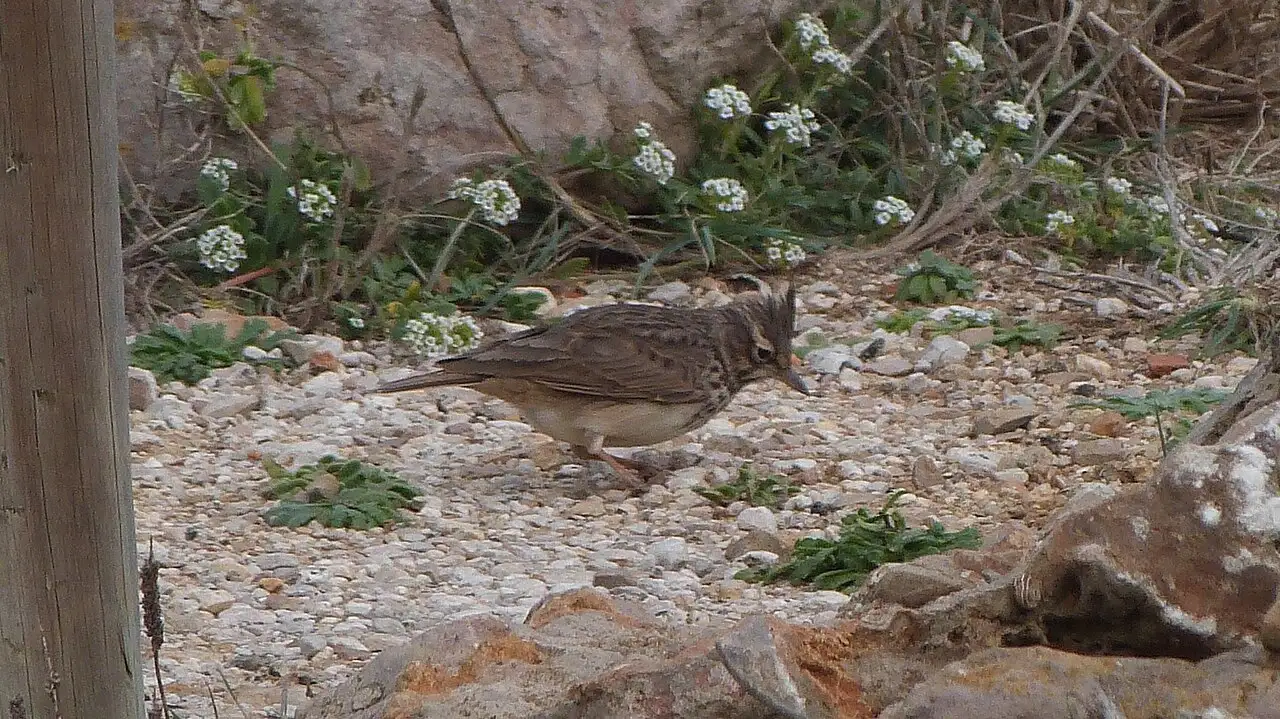
Thekla's Lark among the gravel and stones of a track, in the Algarve, with crest raisedPhoto: Peter Broster, CC BY 2.0Photo 4 of 4
1 / 4
Identification of the Thekla’s Lark
It is a medium-sized, plump bird with a small crest, very like the Crested Lark and hard to tell from it. It differs by its more slender, greyish look, its somewhat shorter bill and crest and, above all, by the spotting of the breast, more marked and sharp. In flight it shows the orange-brown rump, which contrasts with the back and underside of the wings, whitish in the Thekla’s and ochre in the Crested.
Adult
Greyish brown, with a small crest and heavily spotted breast.
Bill and crest somewhat shorter than the Crested Lark’s.
Habitat and distribution of the Thekla’s Lark
It is distributed across the Iberian Peninsula, the Balearics, North Africa and the whole Sahel, and very locally in the south of France. Six subspecies are recognised in the Palaearctic. In Europe it is found only on the Peninsula, the Balearics and some points of France.
In Spain the subspecies «theklae» lives, spread across the Mediterranean region and the Balearics; it is absent from the Cantabrian, Galician and Pyrenean zones, Sierra Morena, the Guadalquivir valley, south-west Extremadura and the Canaries. It prefers warm areas and is a species of open environments, such as moors and steppes, with shrubby ground (rockrose scrub, retama thickets, kermes oak scrub, esparto grassland) and clear woods, and avoids crops. The highest concentrations are in dehesas, shrub steppes and garrigue formations, from sea level to 1,500 metres altitude, and up to 2,200 metres in Sierra Nevada. It is resident, with local movements of little extent.
Areas where it is regularly recorded since 2010Squares of about 25 km where it is recorded regularly (occasional passage records are left out). Data from GBIF.org (55,997 records, retrieved October 2026); outline from Natural Earth.
Etymology of the Thekla’s Lark
«Galerida» comes from the Latin «galerum», «cap», from the crest it carries on its head, and «theklae» is a dedication to a woman named Thekla, the name with which Brehm described it in 1858.
Population of the Thekla’s Lark
In the 2021 European Red List of Birds, the European breeding population is estimated at between 3.5 and 5.69 million mature individuals, with an increasing trend. In Spain it is a common species, with the highest densities in the south and south-east, specifically in Almería, the interior areas of Granada and Málaga and the Betic ranges, and a population of 3,980,000 birds is estimated, with moderate growth. It is classed as Least Concern worldwide and as Near Threatened in the Red Book of the Birds of Spain. Its populations seem stable or slightly growing, and the main threats are the transformation of steppe areas into irrigated land and forest plantations and degradation of the environment.
Nest of the Thekla’s Lark
It places it on the ground, sheltered by low bushes and, occasionally, by stones. Many nests are lost to predation.
Courtship and breeding of the Thekla’s Lark
The breeding season runs from February to June, and it can make two clutches a year. It is solitary, territorial and monogamous. The clutch consists of two to seven whitish or greyish eggs, speckled with reddish brown. The female does most of the incubation, which lasts 12 days, and the chicks spend about 11 days in the nest.
Diet of the Thekla’s Lark
Its diet is based on seeds and small invertebrates: beetles, ants, spiders, bugs, grasshoppers, caterpillars, snails and others.
Curious facts about the Thekla’s Lark
In Europe it lives only on the Iberian Peninsula, in the Balearics and at some points in France. And its song, though of less repertoire, is more melodious than that of its relative the Crested Lark, sometimes with imitations of other birds.
The Thekla’s Lark in Cabañeros
The habitat pages of this website list it among the nesting birds of the grasslands of Cabañeros, of Mediterranean affinity, together with the Western Black-eared Wheatear, and among the species of the small clearings in the scrub, with the Red-legged Partridge and the Woodlark.
Where to see the Thekla’s Lark in Cabañeros
On the rañas and grasslands and in the small scrub clearings of Cabañeros.
When
All year; it is resident.
What time
First thing in the morning, when it sings.
Where
In scrub clearings and in grasslands, often perched on a bush or shrub.
What to look for
A greyish-brown bird with a short crest and a heavily spotted breast.
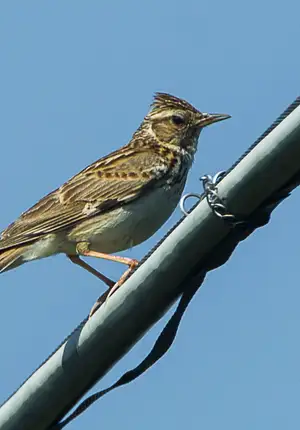
Very similar, in brown tones with dark streaking, with a long bill and longer crest. It has a less spotted breast and ochre back and underside of the wings, and rarely perches on bushes and trees. Its call, «tuui-tii-tuu», rises and falls in pitch.
With a small crest, a short, dark tail with white outer feathers, a very contrasting facial pattern and a black-and-white patch on the leading edge of the wing. Its song is a long phrase that speeds up and becomes lower.
Photo: Francesco Veronesi, CC BY-SA 2.0
Other birds
Birds related to the Thekla's Lark or sharing its habitats in Cabañeros.



 Same family
 Same family
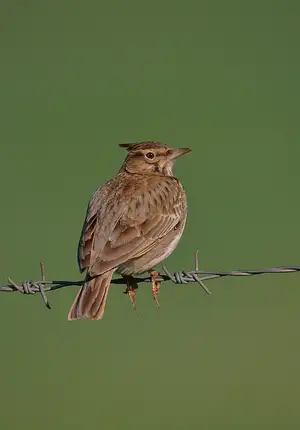 Same family
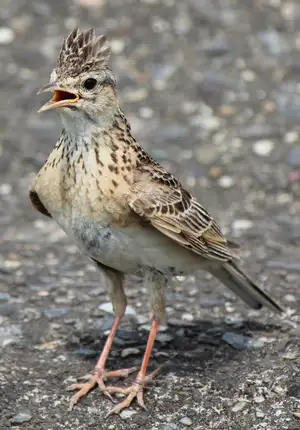 Same family
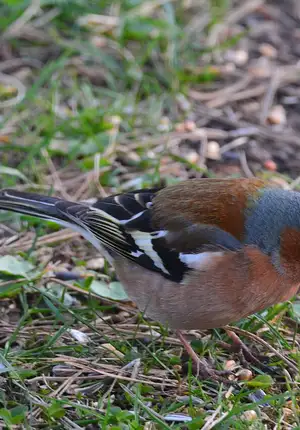 Also in scrubland
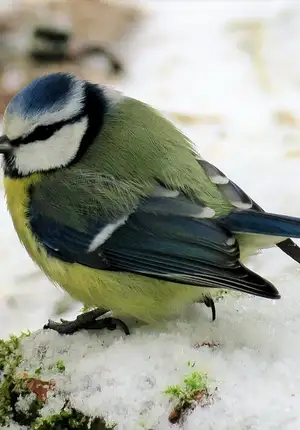 Also in scrubland
 Also in grasslands and rañas
 Also in scrubland






