Wingspan compared with a person with arms outstretched.
Length
40–42 cm
Wingspan
75–80 cm
Weight
300–615 g
Social life
In pairs in the breeding season; in winter, in flocks that can be enormous
Lifespan
Record of almost 18 years in the wild
Conservation status
LC
NT
VU
EN
CR
EW
EX
Global (IUCN)
Least Concern
Spain
Not listed: it is not on the special-protection list nor on that of threatened species; it is a game species
When to see it
Resident
Months of the year when it is present
J
F
M
A
M
J
J
A
S
O
N
D
In Iberia
yes
yes
yes
yes
yes
yes
yes
yes
yes
yes
yes
yes
Breeding season
no
no
yes
yes
yes
yes
yes
yes
yes
no
no
no
Song or voice of the Common Wood Pigeon
A deep, powerful coo, generally made up of two or three series of five syllables: «gu-guuu-gu, gu-gu». It is one of the songs most heard in the woods at dawn and at dusk, and we almost always hear it without seeing the bird.
CooingCommon Wood Pigeon
0:00 / 0:09
10 kHz5
The sonogram draws the sound: time runs from left to right, and the higher a trace sits, the higher the note.Recording by Jens Kraglund (Sleepytomcat), Wikimedia Commons (Dominio público).
Flight of the Common Wood Pigeon
It is a powerful, fast, direct flight, with strong wingbeats, in which the white wing bands stand out. When it takes off all at once it sounds like a clap, and those wingbeats warn the rest of the flock. It rarely glides; it only does so when landing.
Flight typeDirect, fast and powerful
It takes off all at once, with a strong beating of wings that sounds like a clap and serves as an alarm for the whole flock.
It crosses with strong, quick wingbeats, in an almost straight line, and shows the white wing bands. They gather in flocks that in winter become enormous.
It glides with wings open and tail spread and grips a branch, from where it hardly moves.
Photo gallery of the Common Wood Pigeon
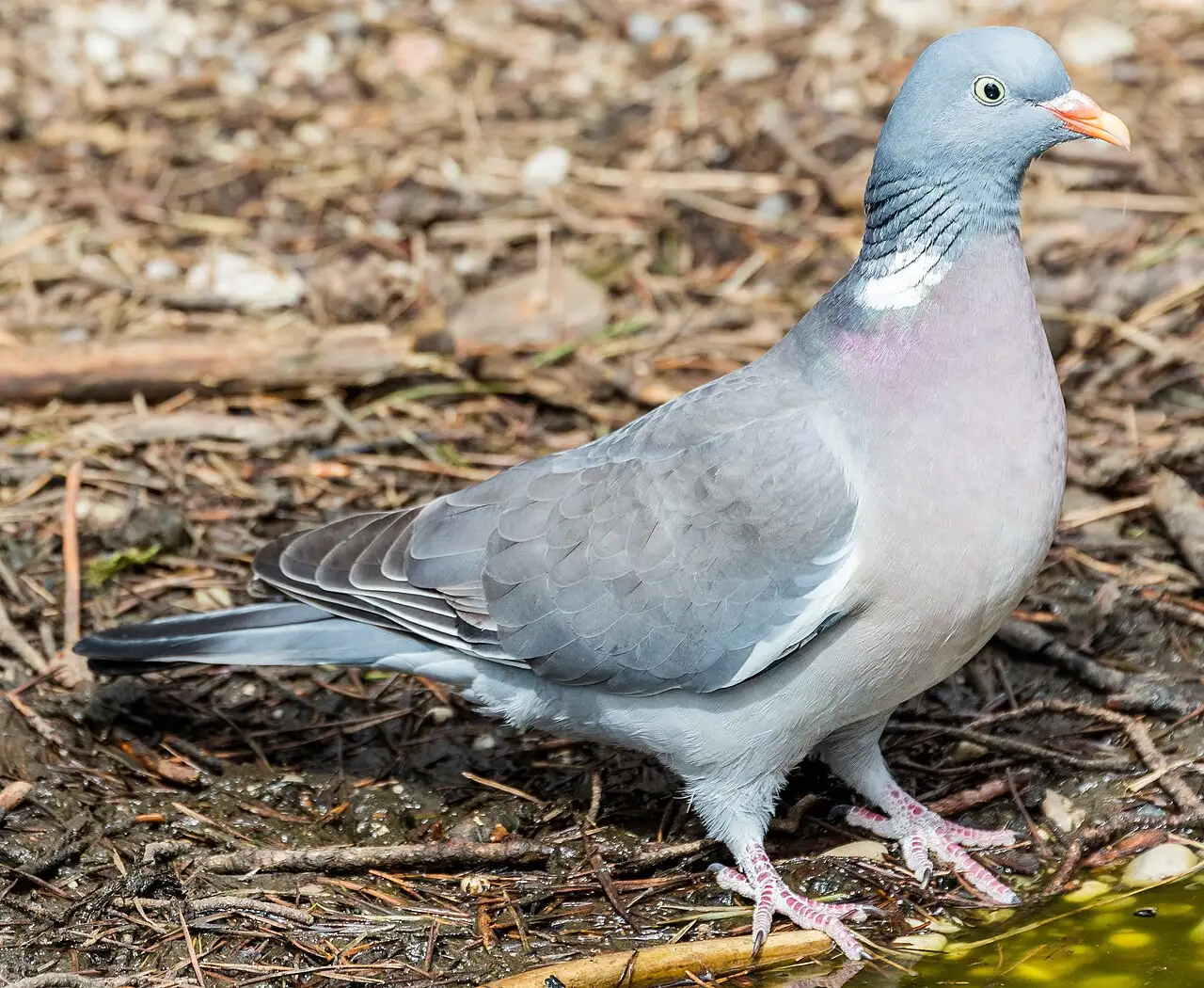
Common Wood Pigeon perched on the ground, in profile: white neck patch, pink breast and orange billPhoto: Diego Delso, CC BY-SA 4.0Photo 1 of 4
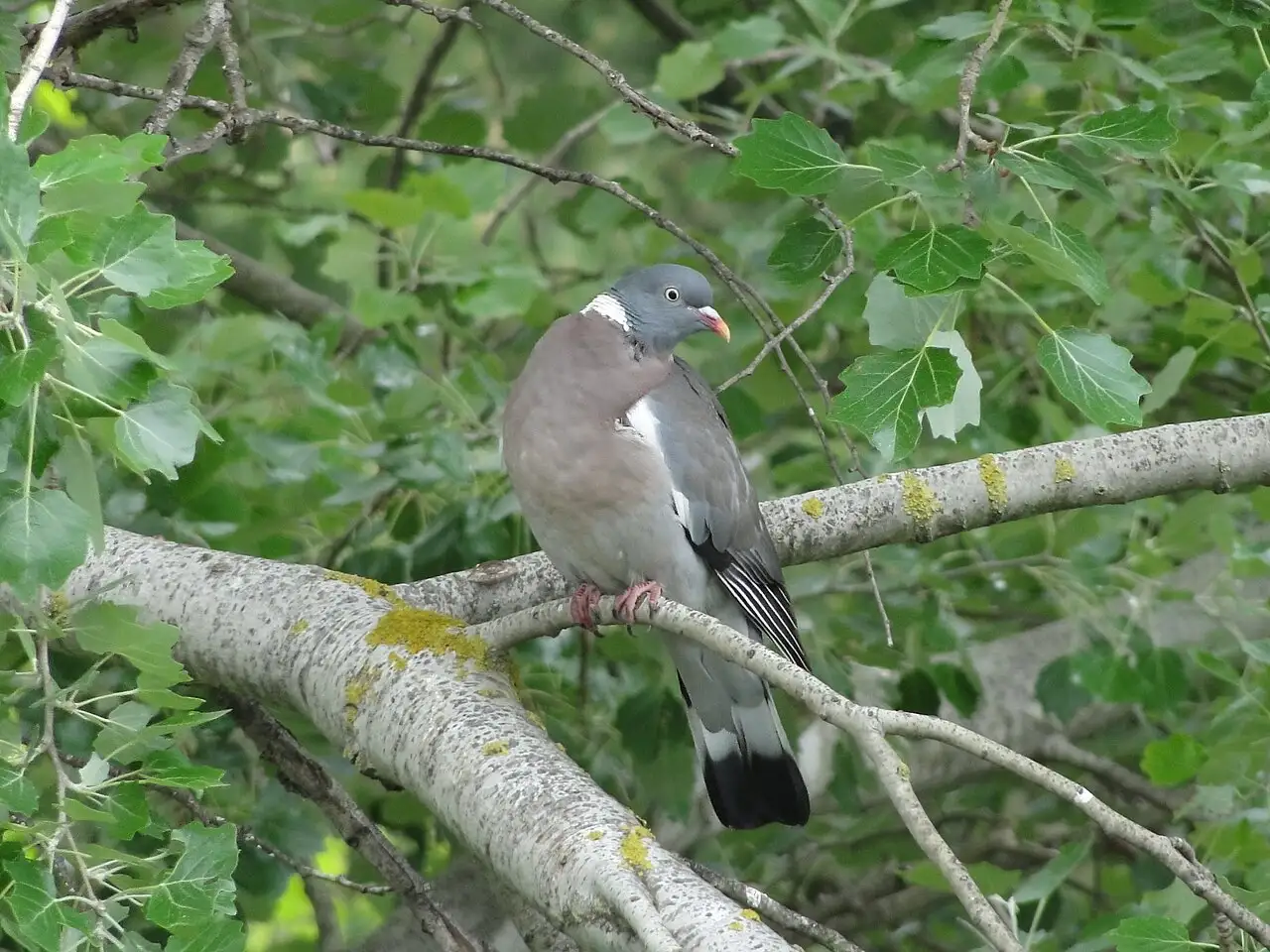
Common Wood Pigeon perched on a branch, with the white wing patch and the dark band of the tailPhoto: Almaffi, Public domainPhoto 2 of 4
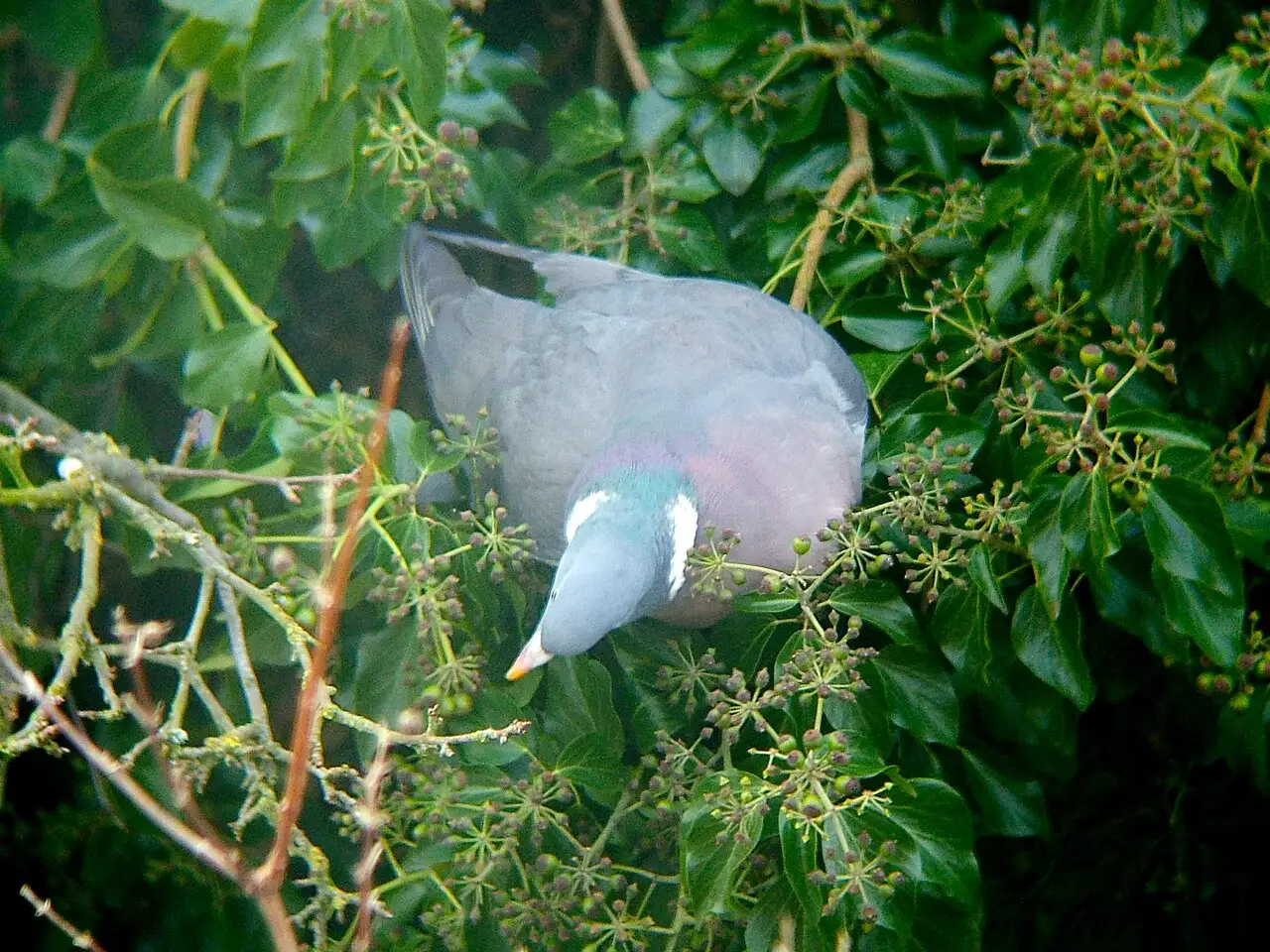
Common Wood Pigeon eating ivy berries: hanging, it shows the pink breast and the white patchPhoto: MPF, CC BY-SA 4.0Photo 3 of 4
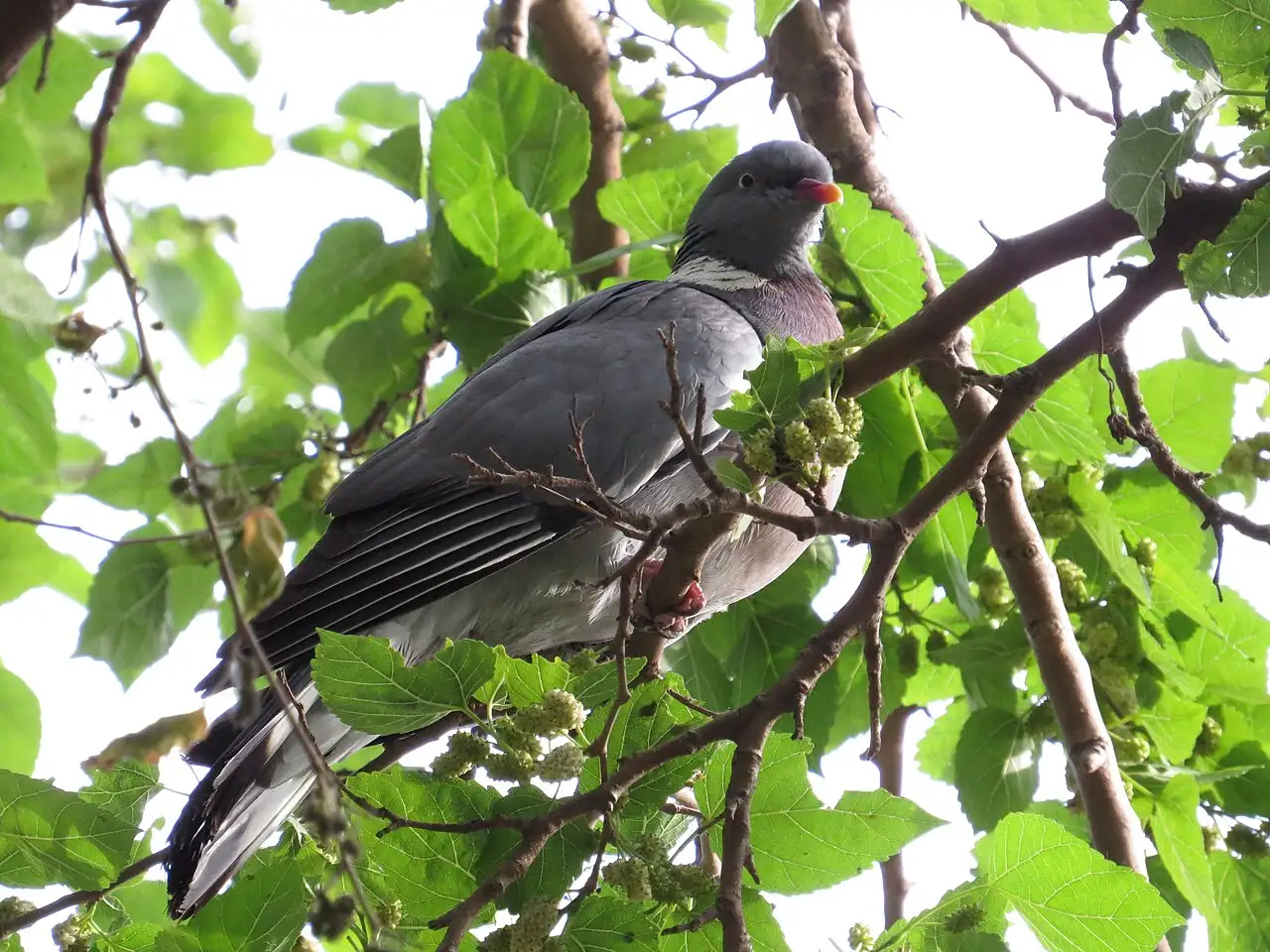
It is a robust, powerful pigeon, with greyish body, prominent pink breast and proportionally small head. Its white patches on the neck and wings make it easy to recognise, even from afar, and there are no clear differences between the sexes.
Adult
Grey plumage, with pink breast.
A white patch on each side of the neck and a white band on the wings.
Orange bill with pink base.
Young bird
Without the white neck patch, which only appears with the months.
Plumage browner and duller.
Habitat and distribution of the Common Wood Pigeon
It is spread across the whole Palearctic: the whole of Europe, North Africa and central Asia. It has two recognised subspecies, one of which lives only on the Azores.
In Spain it is very common and well distributed across the whole country, except the Canaries. It occupies a great variety of environments, with a preference for broadleaf woods and, to a lesser extent, conifers, scrub and crops with scattered trees. In spring the highest densities are found in the Mediterranean holm oak and cork oak woods of the centre of the Peninsula, and in winter the wintering population is concentrated in the dehesas of the south-western quadrant. Iberian populations are sedentary, with dispersive movements in winter, and the Peninsula is the main wintering area for the populations of central and northern Europe: the autumn passage is concentrated over the west of the Pyrenees between October and November, and the spring one, more easterly, in February and March.
Areas where it is regularly recorded since 2010Squares of about 25 km where it is recorded regularly (occasional passage records are left out). Data from GBIF.org (875,501 records, retrieved October 2026); outline from Natural Earth.
Etymology of the Common Wood Pigeon
«Columba» is the Latin name for the pigeon, and «palumbus» that of the wood pigeon. Spanish «torcaz» probably comes from Latin «torquatus», «the one with a collar», for the white patch that surrounds its neck.
Population of the Common Wood Pigeon
In Spain a population of some 7.3 million individuals breeds, with a tendency to increase in recent decades, and the Peninsula also receives a large contingent of European winter visitors. In Europe between 41.4 and 57.6 million mature individuals are estimated, and growing. It is classified as Least Concern, and urban and suburban populations have increased greatly. Its main limiting factor is the high hunting pressure, which could be affecting the contingent that migrates over the Pyrenees.
Nest of the Common Wood Pigeon
It makes the nest in a tree or a shrub: a simple structure of branches, lined with leaves and grasses.
Courtship and breeding of the Common Wood Pigeon
It makes one or two clutches a year, between March and September, with a peak from April to July. Each consists of one or two white eggs, which both parents incubate for 18 days. The chicks take flight between 20 and 35 days. During the first two or three days they are fed with a secretion from the crop, «pigeon milk», which only the Columbiformes have.
Diet of the Common Wood Pigeon
It eats mainly seeds, such as acorns and beechnuts, as well as leaves of dicotyledonous plants and crops. It drinks like other pigeons, sucking, without tilting its head back.
Curious facts about the Common Wood Pigeon
Every winter a contingent of millions of wood pigeons from central and northern Europe arrives on the Peninsula, and they concentrate above all in the dehesas of the south-west. And those that stay have learned to live in our cities: urban and suburban populations have increased greatly in recent decades.
The Common Wood Pigeon in Cabañeros
In the dehesas, during the winter, most species are seed-eaters, like the Common Wood Pigeon and the Stock Dove, and finches. Holm oak acorns, which do not lack in Cabañeros, are their main food.
Where to see the Common Wood Pigeon in Cabañeros
In the dehesas and holm oak woods, above all in winter, when flocks feed on the ground under the holm oaks.
When
All year round. In winter, when those from the north arrive, they are far more numerous and form large flocks.
What time
At dawn and dusk, when they coo and when they move between feeding sites and roosts.
Where
On the high branches of holm oaks and cork oaks and on the ground of the dehesas, under the holm oaks, where they look for acorns.
What to look for
A large grey pigeon, with a white neck patch and white bands on the wings, which flies off with a great noise of flapping.



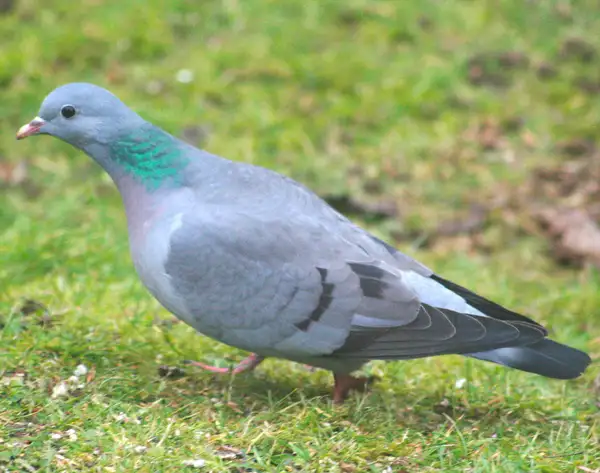
 Same family
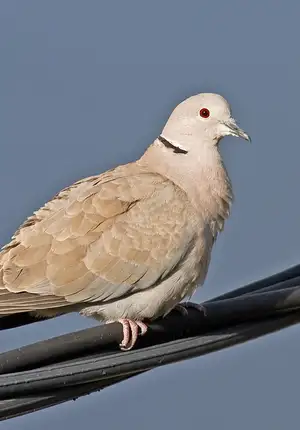 Same family
 Same family
 Also in dehesas (wood pasture)
 Also in dehesas (wood pasture)
 Also in dehesas (wood pasture)
 Also in dehesas (wood pasture)
 Also in dehesas (wood pasture)






