Gregarious all year: it lives in colonies and flocks, always near people
Lifespan
Record of 12 years in the wild (a bird ringed in the United Kingdom)
Conservation status
LC
NT
VU
EN
CR
EW
EX
Global (IUCN)
Least Concern
Spain
Unlisted: not on the List of Wild Species under Special Protection or in the Spanish Catalogue of Threatened Species
When to see it
Resident
Months of the year when it is present
J
F
M
A
M
J
J
A
S
O
N
D
In Iberia
yes
yes
yes
yes
yes
yes
yes
yes
yes
yes
yes
yes
Breeding season
no
no
no
yes
yes
yes
yes
yes
no
no
no
no
Song or voice of the House Sparrow
It is a boisterous bird, above all when it gets nervous or joins large groups. It repeats endlessly a «chip, chip» or a «chirr-r-r», and the male’s breeding song is no more than a repeated series of those same sounds: «chip-chiu, chuurp, chelp…». Simple, but unmistakable: it is the background sound of any village square.
Breeding songHouse Sparrow
0:00 / 0:24
10 kHz5
The sonogram draws the sound: time runs from left to right, and the higher a trace sits, the higher the note.Recording by Benoît Van Hecke, Wikimedia Commons (CC BY-SA 4.0).
Flight of the House Sparrow
It flies with quick, continuous wingbeats, over short stretches and low down, with a light rocking and the odd brief glide with the wings folded. It is almost never alone: when one takes off, the whole flock takes off with it.
Flight typeFast, in bursts and in a flock
It takes off with a noise of little wings and a warning «chip». It is rarely alone: the whole flock rises with it.
Quick, continuous wingbeats, with a short rocking and a brief glide with the wings folded, at low height.
It brakes, spreads its tail and drops to the ground or to a roof, where the rest of the flock lands beside it.
Photo gallery of the House Sparrow
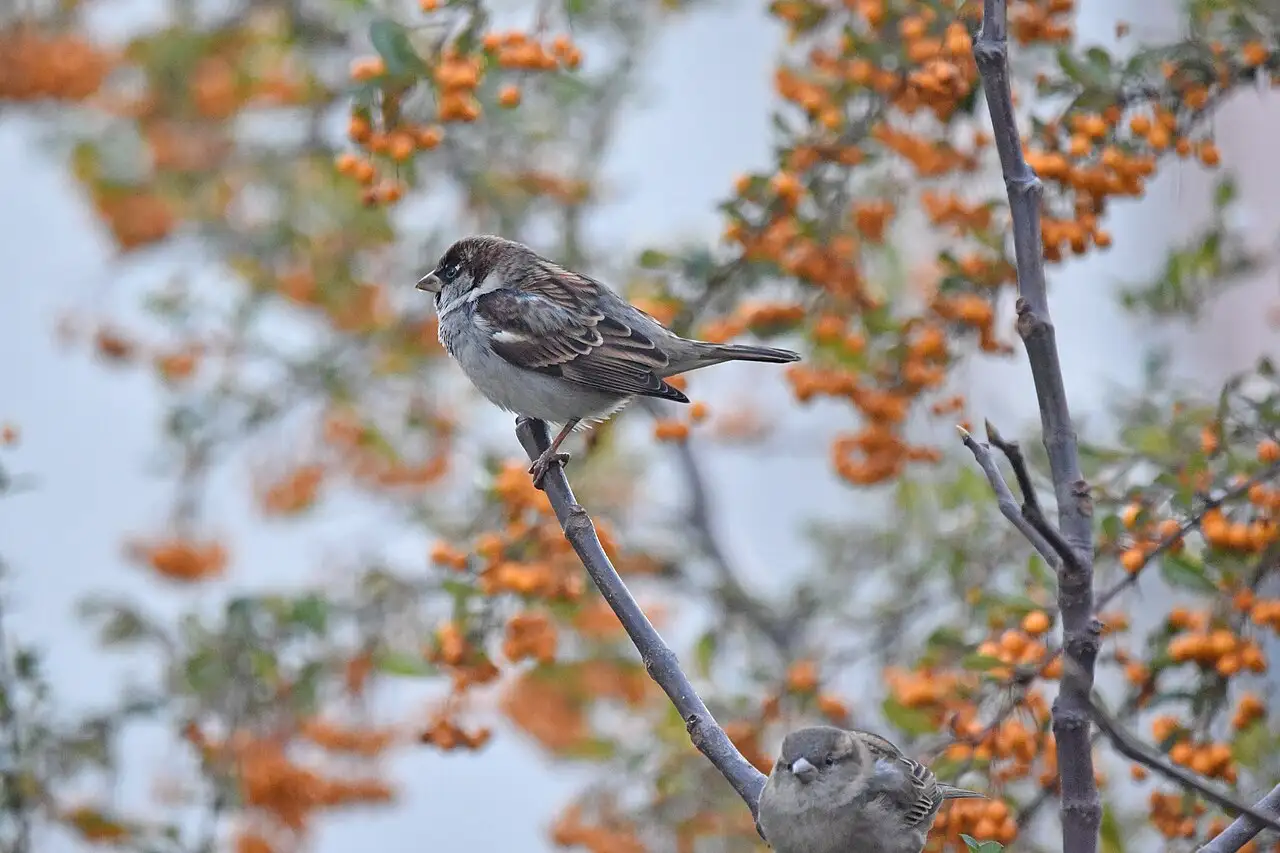
Male House Sparrow perched on a branch with orange fruits: black bib, grey crown and pale cheekPhoto: Pierre-Marie Epiney, CC BY-SA 2.0Photo 1 of 4
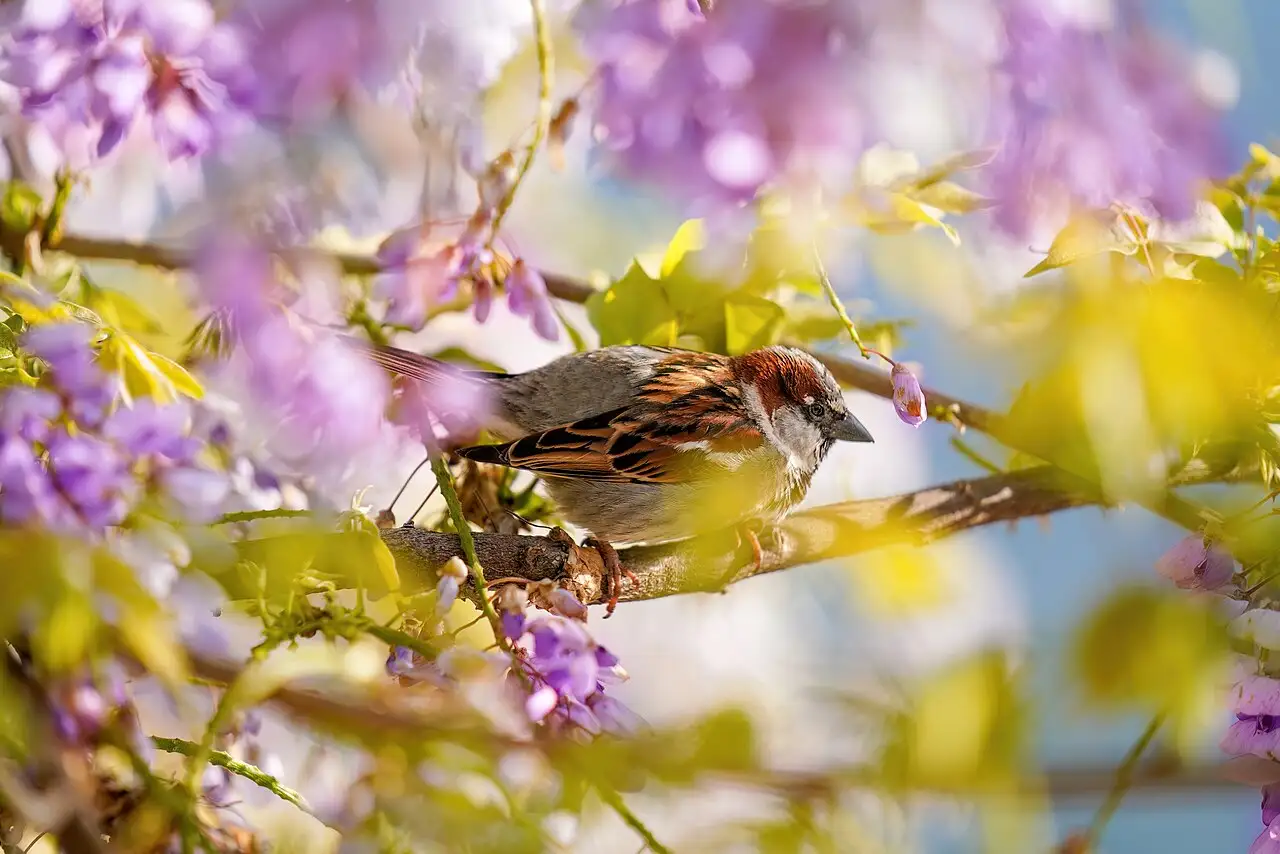
Male House Sparrow among the flowers of a wisteria, with streaked brown backPhoto: Giles Laurent, CC BY-SA 4.0Photo 2 of 4
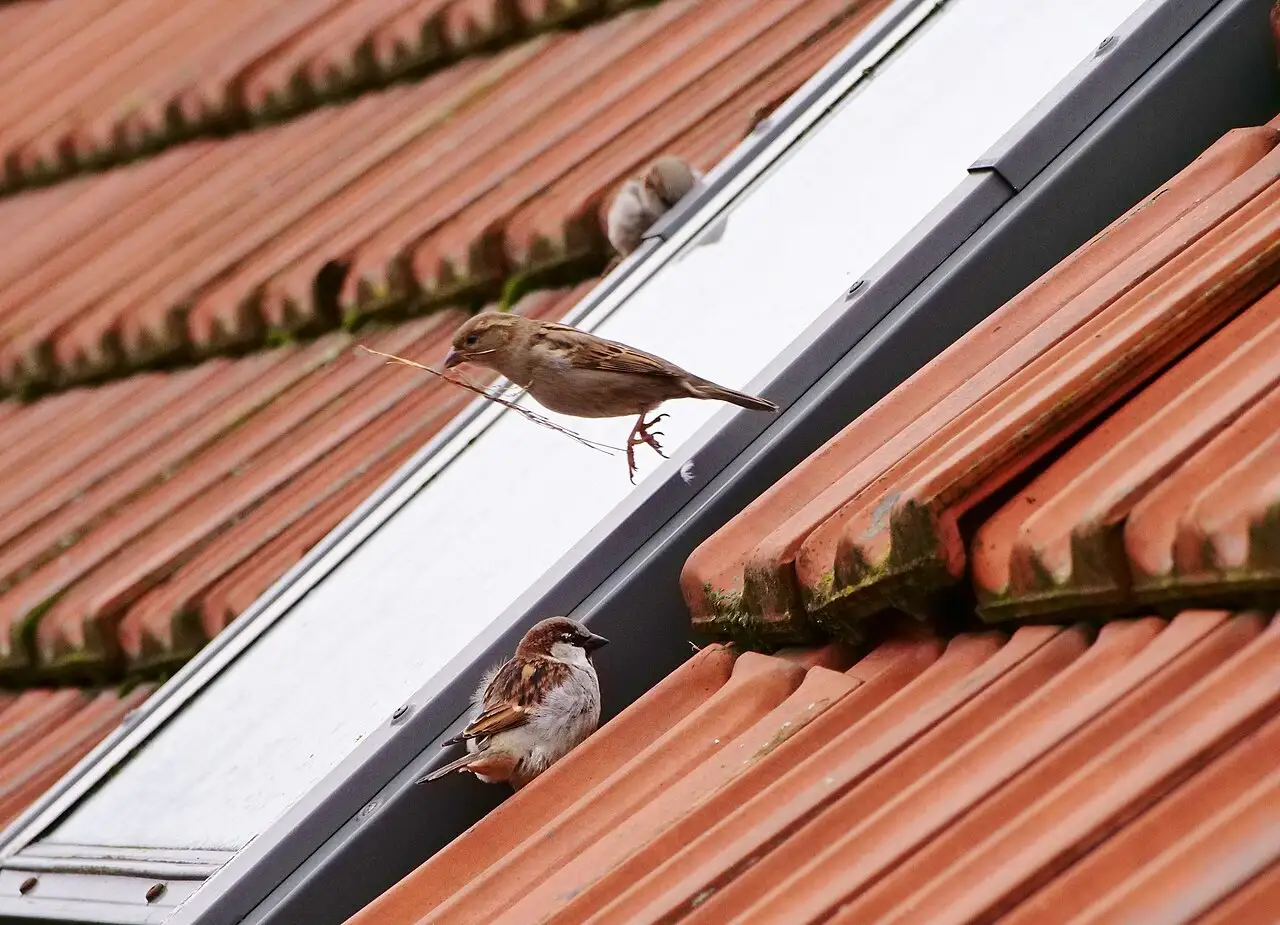
House Sparrows on a tiled roof, a typical place where they nestPhoto: Elke Brüser, CC BY-SA 4.0Photo 4 of 4
1 / 4
Identification of the House Sparrow
It is a bird of robust, bulky appearance, with a strong bill and plumage dominated by the browns of the back, with black streaks, and the greys of the rump, breast and belly. Male and female can be told apart all year round.
Male
Grey crown and a chestnut band running down from the eye.
Black bib, more extensive and darker in the breeding season.
Black bill in the breeding season; very reddish back.
Female and young bird
Brown crown and a pale line behind the eye.
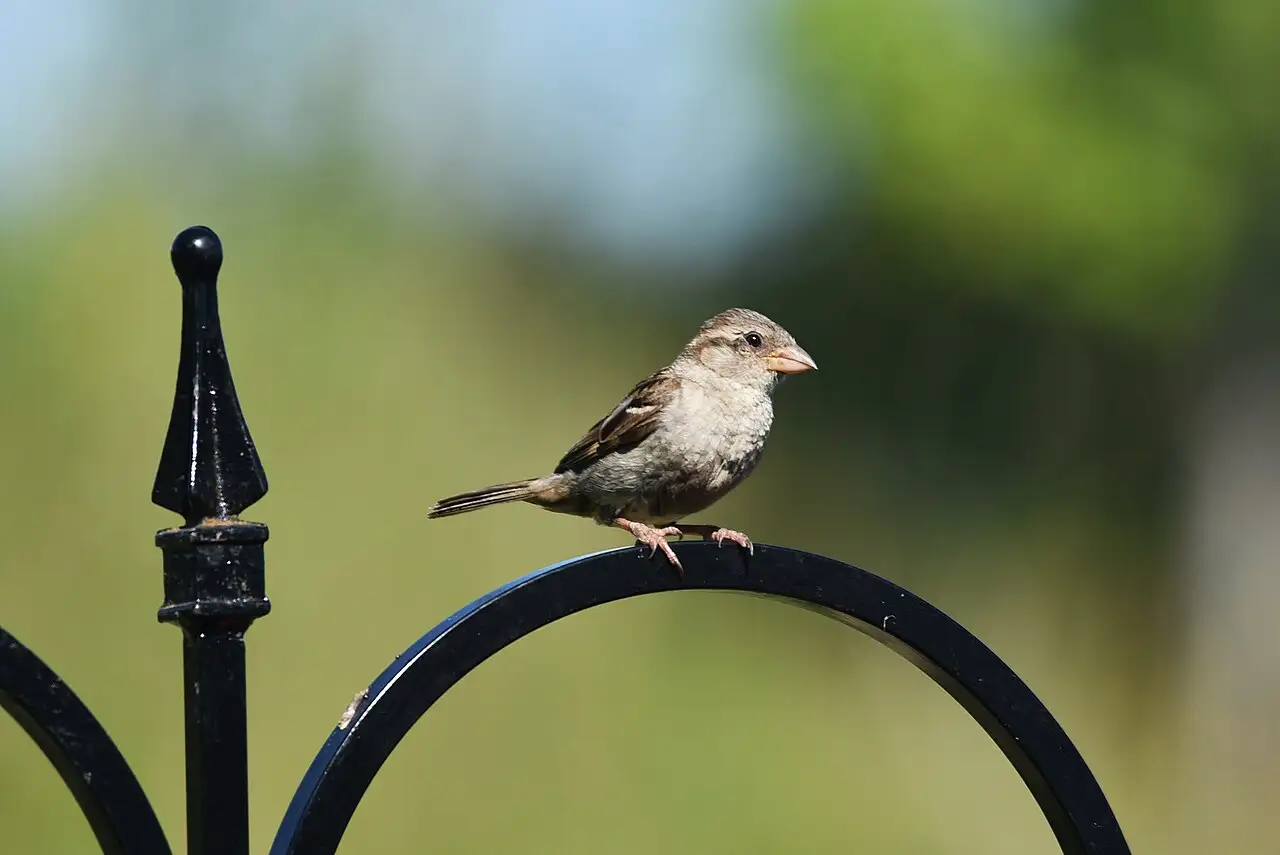
No bib; bill grey towards the tip and yellowish at the base.
Young males are the same as females until the moult in late summer.
Habitat and distribution of the House Sparrow
It is possibly the most widespread passerine on the planet: it lives on every continent and on many oceanic islands, where it arrived carried unwittingly by people. It is scarce in high mountain ranges, tropical zones and deserts. Twelve subspecies are recognised; in the Mediterranean region, Spain included, the subspecies «balearoibericus» lives.
In Spain it is fairly evenly spread across the whole Peninsula, the Balearics, Ceuta and Melilla, and has recently colonised Gran Canaria, surely on some ship. It is so tied to human activity that it almost does not exist where there are no villages, in closed forest areas or at the highest altitudes. It prefers rural or urban surroundings close to farmland and open areas. It is resident all year: it depends on the resources people give it, which are continuous.
Areas where it is regularly recorded since 2010Squares of about 25 km where it is recorded regularly (occasional passage records are left out). Data from GBIF.org (1,378,907 records, retrieved October 2026); outline from Natural Earth.
Etymology of the House Sparrow
«Passer» is the Latin name for the sparrow, and «domesticus» means «of the house», «domestic», for living beside people.
Population of the House Sparrow
In Spain some 31 million sparrows are estimated. Even so, between 1998 and 2018 the species lost around 18 %, and SEO/BirdLife’s SACRE programme recorded a 21 % fall between 2008 and 2018, which would mean some 30 million fewer in a decade. In Europe between 270 and 378 million mature individuals are estimated, with a decreasing trend. In London, Glasgow or Edinburgh it has fallen by 95 %, and in Brussels, Antwerp or Prague it has almost disappeared. The causes are several: new buildings without holes to nest in, pollution, excess light and noise and fewer insects because of pesticides, which are the basis of the chicks’ diet. It is classified as Least Concern.
Nest of the House Sparrow
It nests in the holes and cracks of every kind of construction: roofs, statues, street lamps, signs. Sometimes it places it inside another, bigger nest, such as a raptor’s or a stork’s. It is a closed, untidy structure of grasses, straw and twigs, with the cup lined with feathers, hair or rags.
Courtship and breeding of the House Sparrow
It breeds between April and August and each pair raises two or three clutches a year, of two to seven white or greenish, heavily speckled eggs. Both incubate them, though the male less, for 11 to 14 days. The chicks spend 12 to 16 days in the nest, and both parents feed them with equal dedication. When they leave, they take a week to find their own food and go on begging from their parents for another week.
Diet of the House Sparrow
It is almost omnivorous, although basically a seed-eater: seeds, fruit and berries, and often insects, which it picks from the ground, from plants or in flight. In cities it lives on food scraps, fruit from park shrubs and pet food. It feeds the chicks with larvae, grasshoppers, crickets and beetles, which give them the protein they need.
Curious facts about the House Sparrow
No wild bird spends so much time by our side, and that is why what happens to it matters: if a village is abandoned, the sparrows vanish after their unwitting benefactors. Its decline in cities can warn us of something that affects people too.
The House Sparrow in Cabañeros
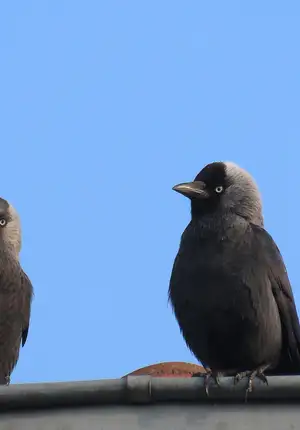
In the south of the park there is a colony of White Storks, and their large, bulky nests shelter other species, such as the Western Jackdaw and the House Sparrow.
Where to see the House Sparrow in Cabañeros
In the villages and hamlets around the park; inside it, in the White Stork colonies of the south.
When
All year round, and at all hours of the day.
What time
First thing in the morning, when the flocks are most active and sing from the rooftops.
Where
In villages, vegetable plots, farmyards and field edges; in the park, in the stork colonies.
What to look for
A brown and grey, robust bird, which goes in a flock and takes off all at once; the male with his black bib.
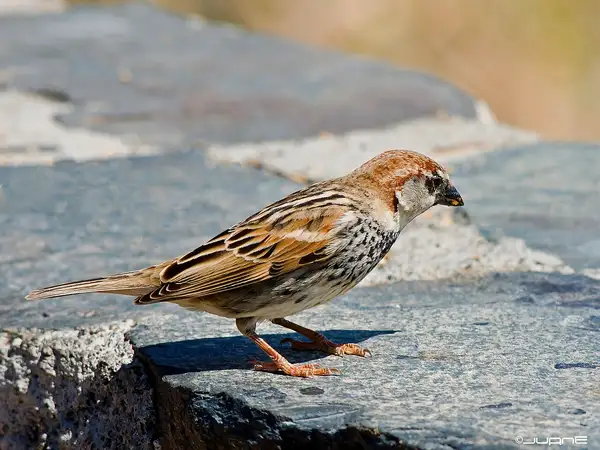
The male has a chestnut crown, the bib running down in streaks over the flanks and white cheeks. It nests in colonies, often in stork or raptor nests. It is on the rañas and ploughed areas of Cabañeros.
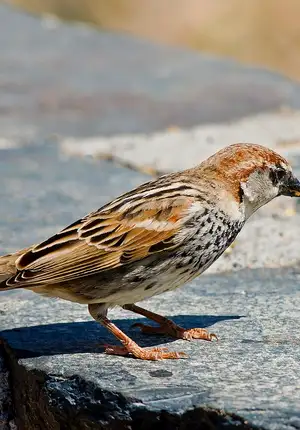
Photo: Juan Emilio from Las Palmas de Gran Canaria, Spain, CC BY-SA 2.0



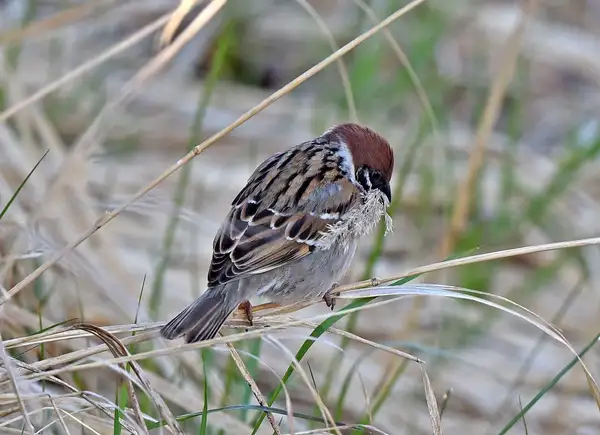
 Same family
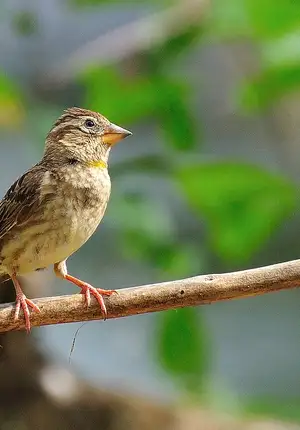 Same family
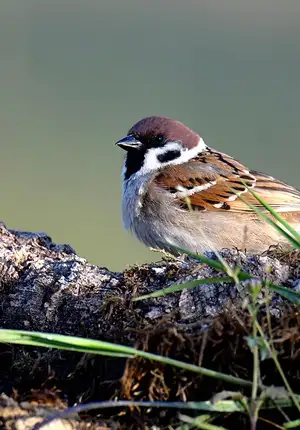 Same family
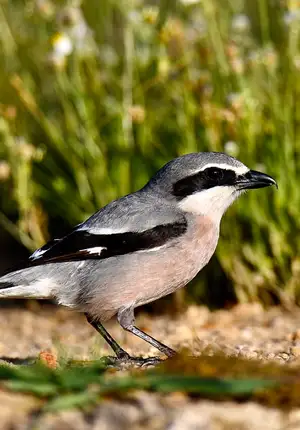 Also in dehesas (wood pasture)
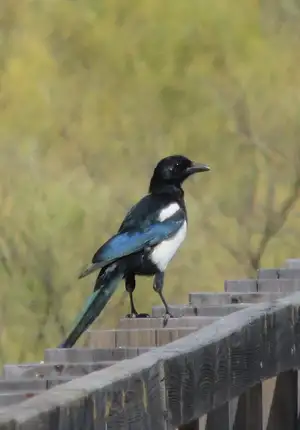 Also in dehesas (wood pasture)
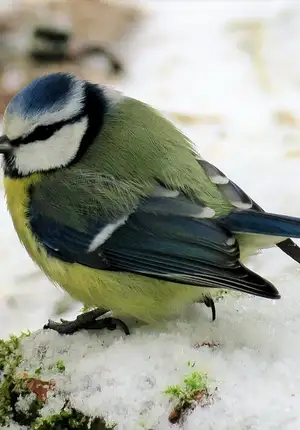 Also in dehesas (wood pasture)
 Also in dehesas (wood pasture)
 Also in dehesas (wood pasture)






