Very gregarious: it breeds in colonies and moves in noisy flocks, of dozens or hundreds of birds
Lifespan
Record of 11 years in the wild
Conservation status
LC
NT
VU
EN
CR
EW
EX
Global (IUCN)
Least Concern
Spain
Unlisted: not on the List of Wild Species under Special Protection or in the Spanish Catalogue of Threatened Species
When to see it
Resident
Months of the year when it is present
J
F
M
A
M
J
J
A
S
O
N
D
In Iberia
yes
yes
yes
yes
yes
yes
yes
yes
yes
yes
yes
yes
Breeding season
no
no
no
yes
yes
yes
yes
yes
no
no
no
no
Song or voice of the Spanish Sparrow
It is like the House Sparrow’s, though somewhat louder and more metallic. It often calls in large, vociferous flocks, audible hundreds of metres away, and the male’s song includes quick, monotonous sequences, like a «chilí, chilí, chilí». The recording (call and song) is by Esperanza Poveda and was made in the Aljarafe (near Villamanrique de la Condesa), Seville, Andalusia (xeno-canto XC1071351, quality A). It lasts 9 seconds and is a trimmed section of the original, without repeating or lengthening, from which we have removed the bass below 300 Hz, reduced the background noise and adjusted the volume; neither pitch nor speed has been changed.
It flies like the House Sparrow, with quick, continuous wingbeats, over short stretches and low down, and almost always in a flock. When one takes off, the rest of the colony follows it.
Flight typeFast, in bursts and in a flock
It takes off with a noise of little wings and a warning «chip». It is rarely alone: the whole flock rises with it.
Quick, continuous wingbeats, with a short rocking and a brief glide with the wings folded, at low height.
It brakes, spreads its tail and drops to the ground or to a roof, where the rest of the flock lands beside it.
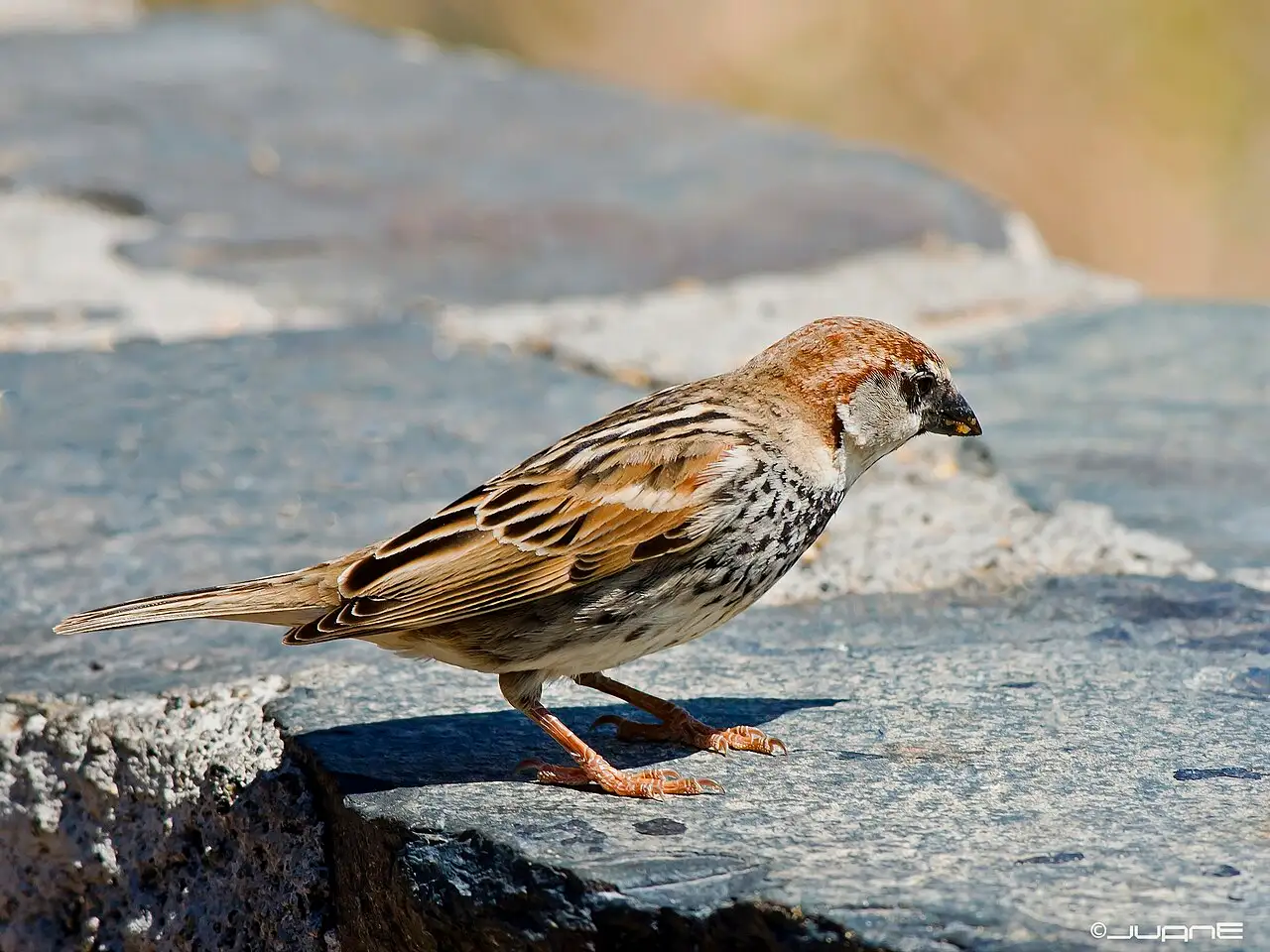
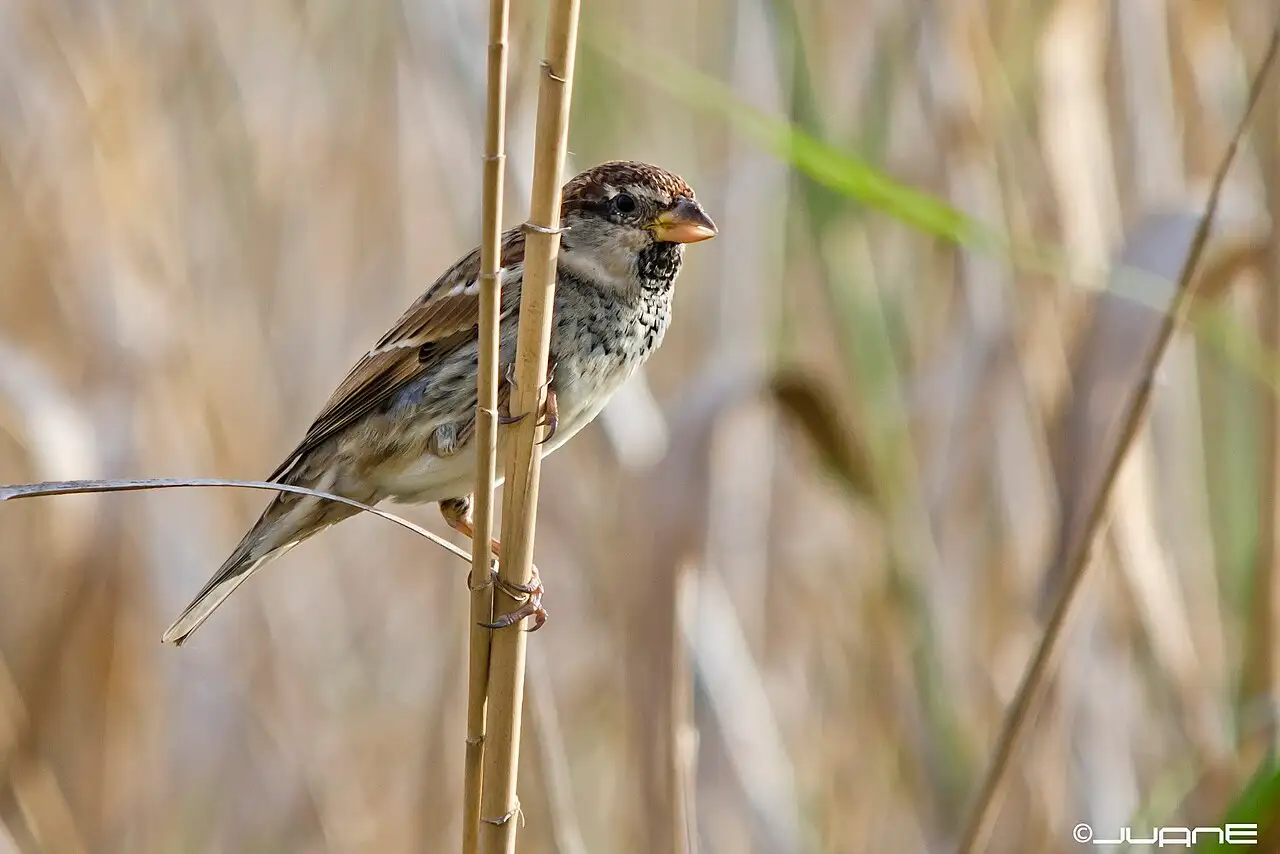
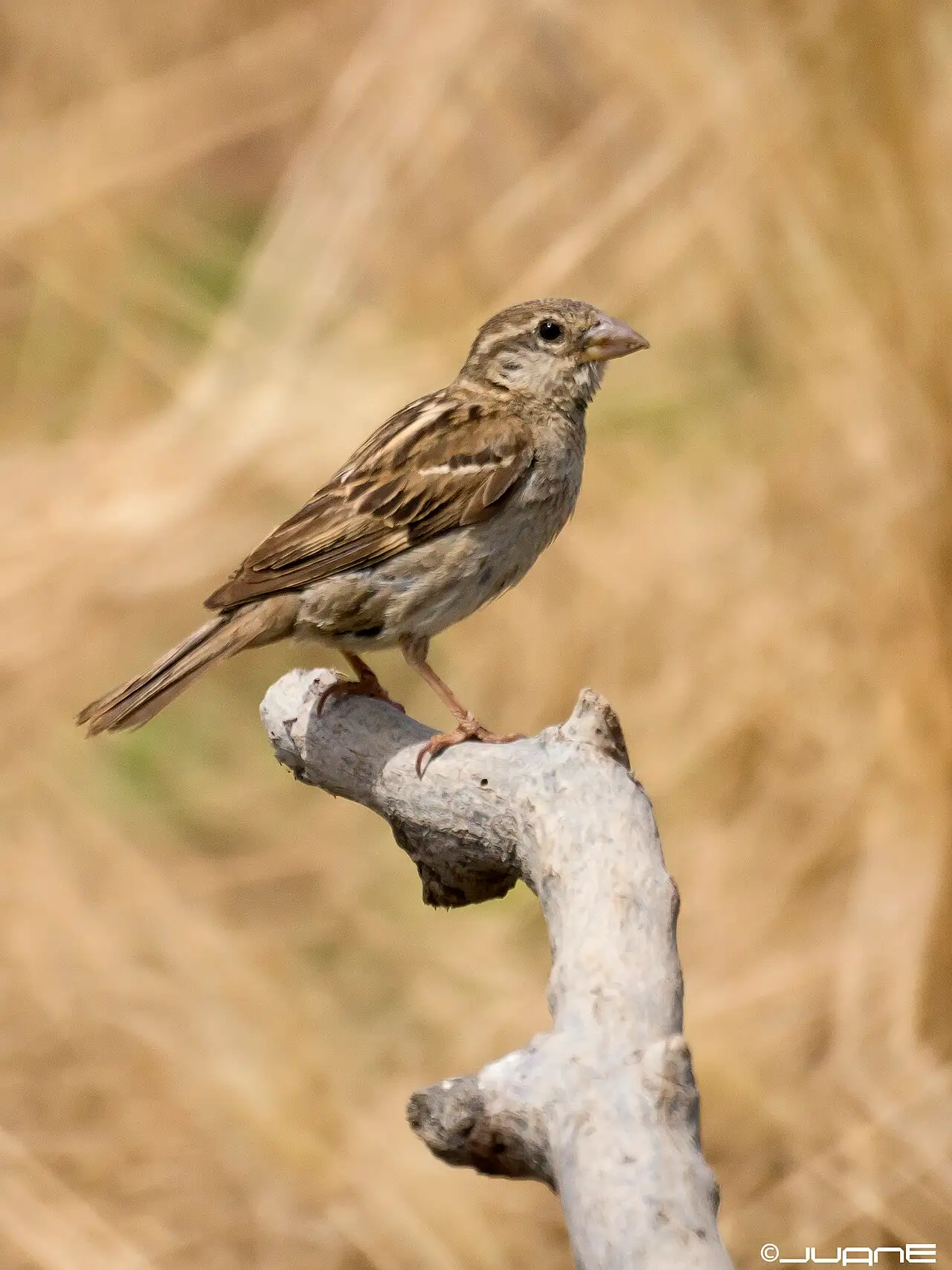
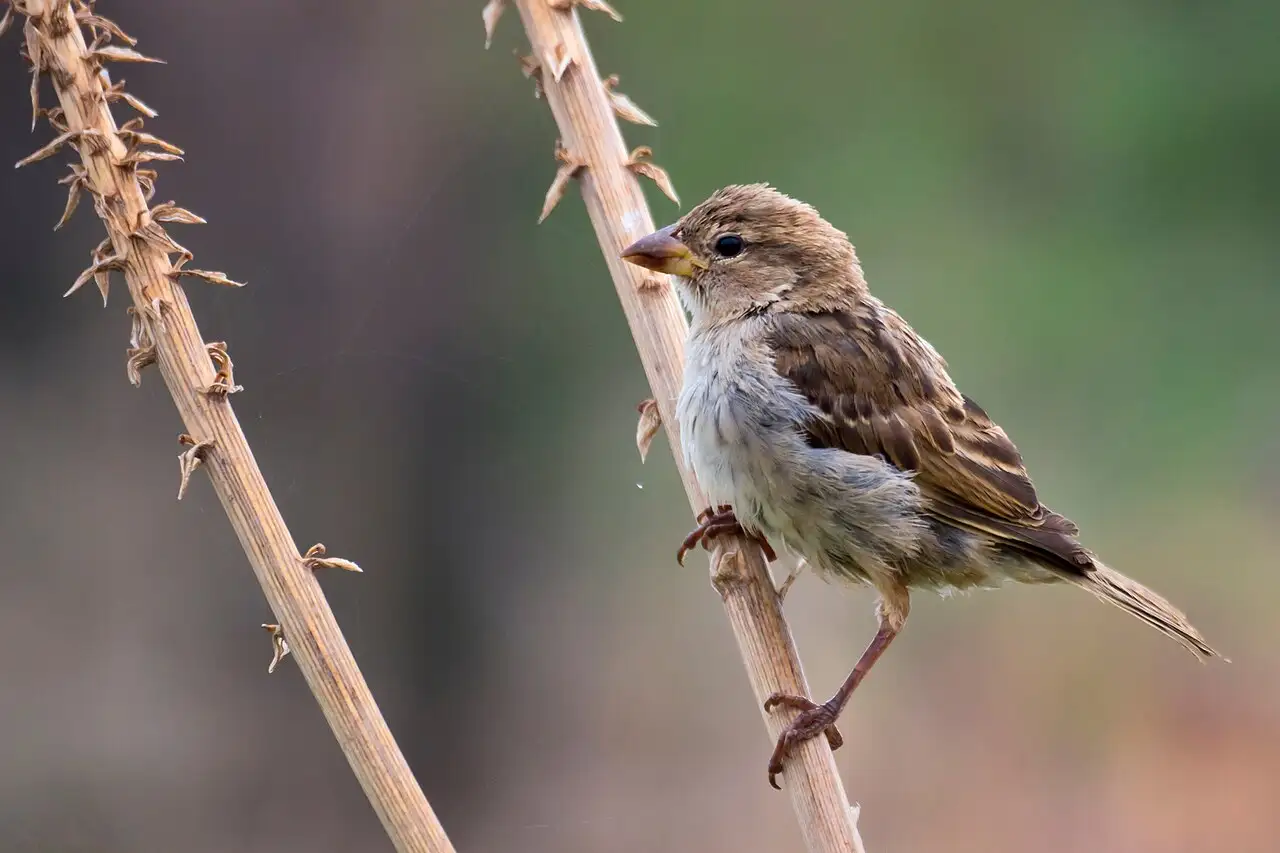
It is the same size as the House Sparrow and has similar plumage. Females are hard to tell from their relatives in the field: they differ barely in the slightly bigger bill and in a faint streaking on the breast that House Sparrow females lack. Males, by contrast, are unmistakable in spring and summer.
Male
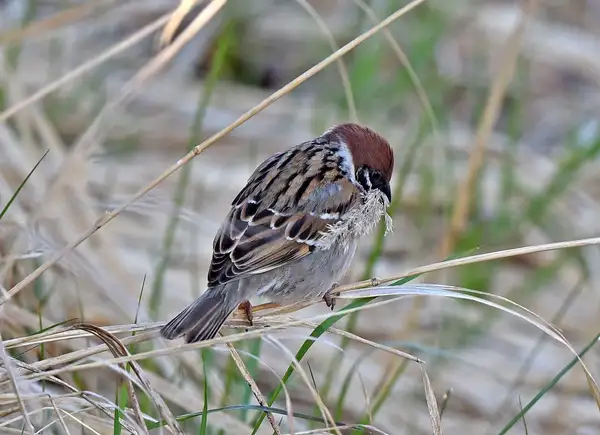
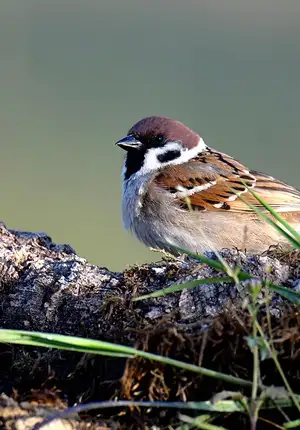
Crown completely reddish brown.
Cheeks snowy white, black mask and white eyebrows, often split.
An extensive black bib with a striking black barring on the back, breast and flanks.
Female and young bird
Brown, without a bib.
Young birds, somewhat browner below, until they moult in late summer.
Habitat and distribution of the Spanish Sparrow
Its distribution is basically circum-Mediterranean: from Madeira, the Canaries and Cape Verde to the Balkans, and also in central Asia, as far as China, and the Near East and North Africa. It is absent from countries such as France or peninsular Italy. In Europe the subspecies «hispaniolensis» lives.
In Spain it occupies mainly the south-western quadrant of the Peninsula, and is local and scarce across almost all of Castilla y León, in Navarre and in Lleida. It is spread across the Tagus basin, from Guadalajara, and the Guadiana, with most of the population in Extremadura and western Andalusia. A good part of the Spanish population lives in the Canaries, where it arrived at the beginning of the 20th century. It prefers open areas of crops or scrub with wooded boundaries or isolated woods of holm oaks, cork oaks, pines, olives or riverside trees. In Extremadura it is closely tied to irrigated land, and is also common on riverbanks and in dehesas. It is sedentary on the Peninsula and receives no wintering birds.
Areas where it is regularly recorded since 2010Squares of about 25 km where it is recorded regularly (occasional passage records are left out). Data from GBIF.org (144,884 records, retrieved October 2026); outline from Natural Earth.
Etymology of the Spanish Sparrow
«Passer» is the Latin name for the sparrow, and «hispaniolensis» is «of Hispania», that is, of the Iberian Peninsula, where it was described from. «Moruno» means «Moorish» and comes from the fact that it also lives in North Africa.
Population of the Spanish Sparrow
In Spain there are some 3 million individuals, spread mainly between Extremadura, Castilla-La Mancha, Andalusia, Castilla y León and the Canaries, and the trend is clearly expansive: it has colonised the Canaries and spread widely across the Peninsula in recent decades. In Europe between 7.56 and 20 million mature individuals are estimated. It is classified as Least Concern. It has grown so much in the Guadiana basin that on the irrigated land of Extremadura it is considered a pest, and occasional culls are made and colonies are prevented from settling near crops.
Nest of the Spanish Sparrow
Although it is gregarious in breeding too, each nest is an independent, spherical, untidy structure, with a small entrance hole. They build it together with twigs, stems, dry grass and rootlets outside and feathers, hair and fine fibres inside. They often place it in trees, in trunk holes or forks, and also on abandoned buildings, poles and repeaters, or in the shelter of larger nests, of storks, corvids or raptors.
Courtship and breeding of the Spanish Sparrow
It breeds from April to August and each pair usually makes up to three clutches per season, of two to eight heavily speckled white or greenish eggs. Incubation lasts 11 to 14 days and is carried out mainly by the female, although the male often relieves her. The chicks need 12 to 15 days to complete their development, and after leaving the nest they beg food from the parents for about five days more and stay in the colony.
Diet of the Spanish Sparrow
It eats mainly seeds, wild and cultivated, especially of cereals, and also fruit and buds, which it picks from the ground. It often takes insects and spiders, from the ground or from vegetation. Chicks and young birds eat mostly animals, and little by little move on to an almost herbivorous diet.
Curious facts about the Spanish Sparrow
It is a gregarious, noisy species that bases its whole life strategy on the group, the colony, the flock, and does so well that its range keeps expanding. In some regions, for that very reason, it is considered a pest.
The Spanish Sparrow in Cabañeros
The habitat pages of this website cite it among the nesting birds of the dehesas, where it keeps several colonies on the holm oaks, ash trees and Lusitanian oaks, and among those that take advantage of the ploughed areas of the rañas.
Where to see the Spanish Sparrow in Cabañeros
In the dehesas and rañas, where colonies breed in the crowns of holm oaks, ash trees and Lusitanian oaks.
When
All year round. In spring and summer the male wears the most contrasting plumage.
What time
In the morning, when the flocks go to feed on the ground and can be heard hundreds of metres away.
Where
In the holm oaks, ash trees and Lusitanian oaks of the dehesas with colonies, and in the ploughed areas of the rañas.
What to look for
A sparrow with a chestnut crown and a streaked black bib, always in a flock.
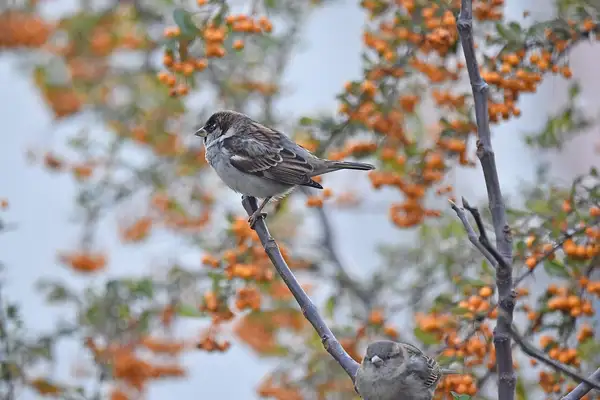
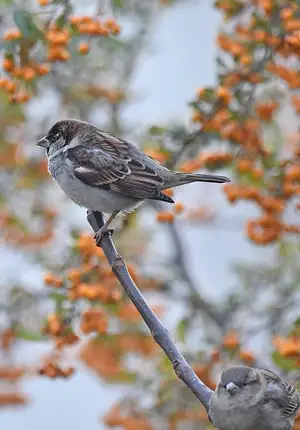
The male has a grey crown and a black bib without streaks on the flanks; the females are almost identical to the Spanish Sparrow’s. It prefers villages and towns.



 Same family
 Same family
 Same family
 Also in dehesas (wood pasture)
 Also in dehesas (wood pasture)
 Also in dehesas (wood pasture)
 Also in grasslands and rañas
 Also in grasslands and rañas





