Record of 20 years and 10 months in the wild (a bird ringed in Denmark)
Conservation status
LC
NT
VU
EN
CR
EW
EX
Global (IUCN)
Least Concern
Spain
Least Concern (LC) in the Red Book of the Birds of Spain; not on the List of Wild Species under Special Protection or in the Spanish Catalogue of Threatened Species
When to see it
Winter visitor
Months of the year when it is present
J
F
M
A
M
J
J
A
S
O
N
D
In Iberia
yes
yes
yes
yes
yes
yes
yes
yes
yes
yes
yes
yes
Song or voice of the Dunnock
The alarm call is a high whistle, «siit». In flight it gives a similar sound, but repeated and sustained. The song is a series of high warbles. The recording is from Val-Saint-Lambert (Belgium).
SongDunnock
0:00 / 0:24
10 kHz5
The sonogram draws the sound: time runs from left to right, and the higher a trace sits, the higher the note.Recording by Dengis Chantal, Wikimedia Commons (CC BY-SA 3.0).
Flight of the Dunnock
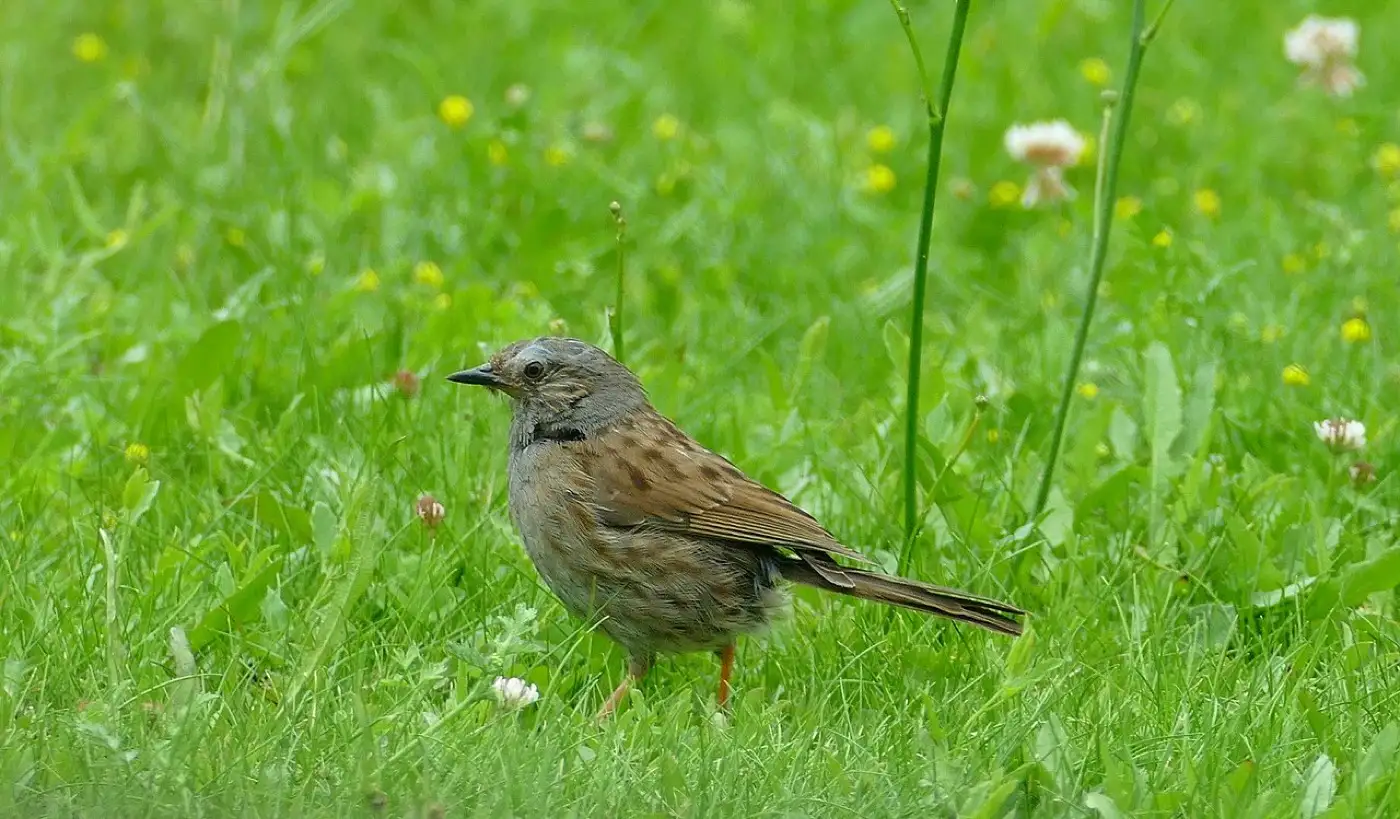
Elusive in behaviour, it likes to move among low vegetation and walk on the ground.
Flight typeLow and short among the vegetation
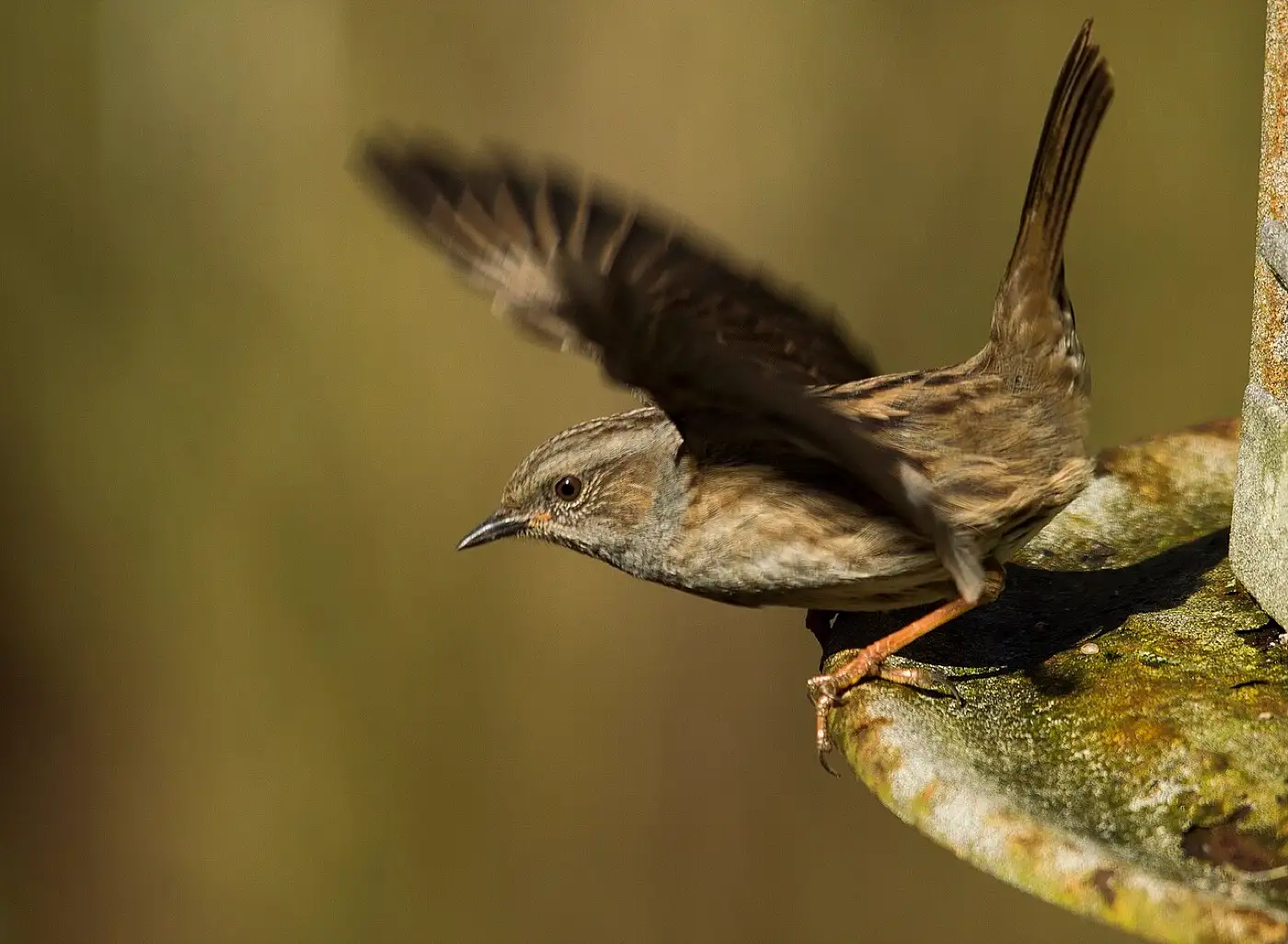
Elusive in behaviour, it moves among low vegetation and walks on the ground, and takes off with a sharp whistle, «siit».
Low, short flight between bushes, sometimes repeating a sound like the alarm call, but sustained.
It lands in the undergrowth and goes back to walking on the ground, where it catches insects, spiders and other invertebrates.
Photo gallery of the Dunnock
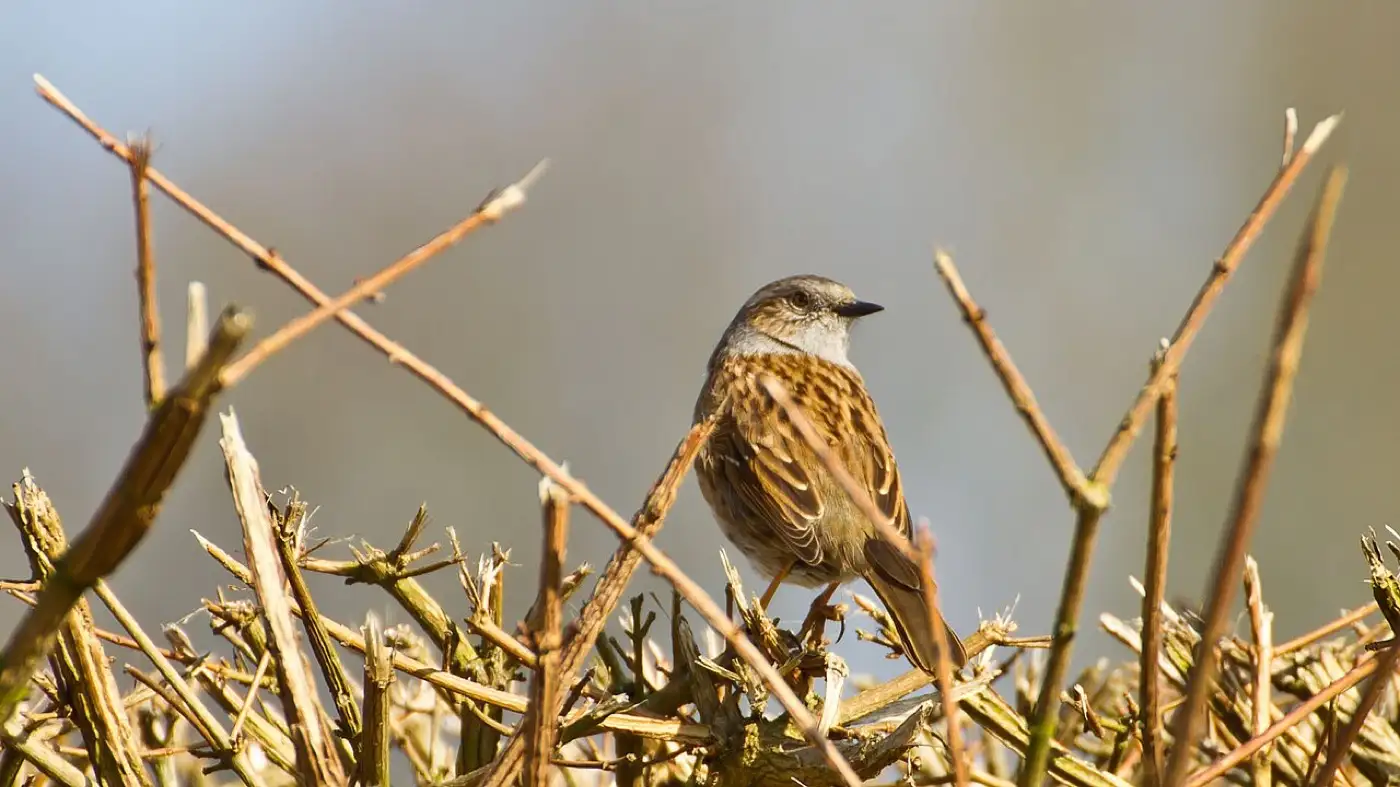
Dunnock on a dry hedge, in profile, with the scaly brown back and grey head and breastPhoto: Michael Palmer, CC BY-SA 4.0Photo 1 of 4
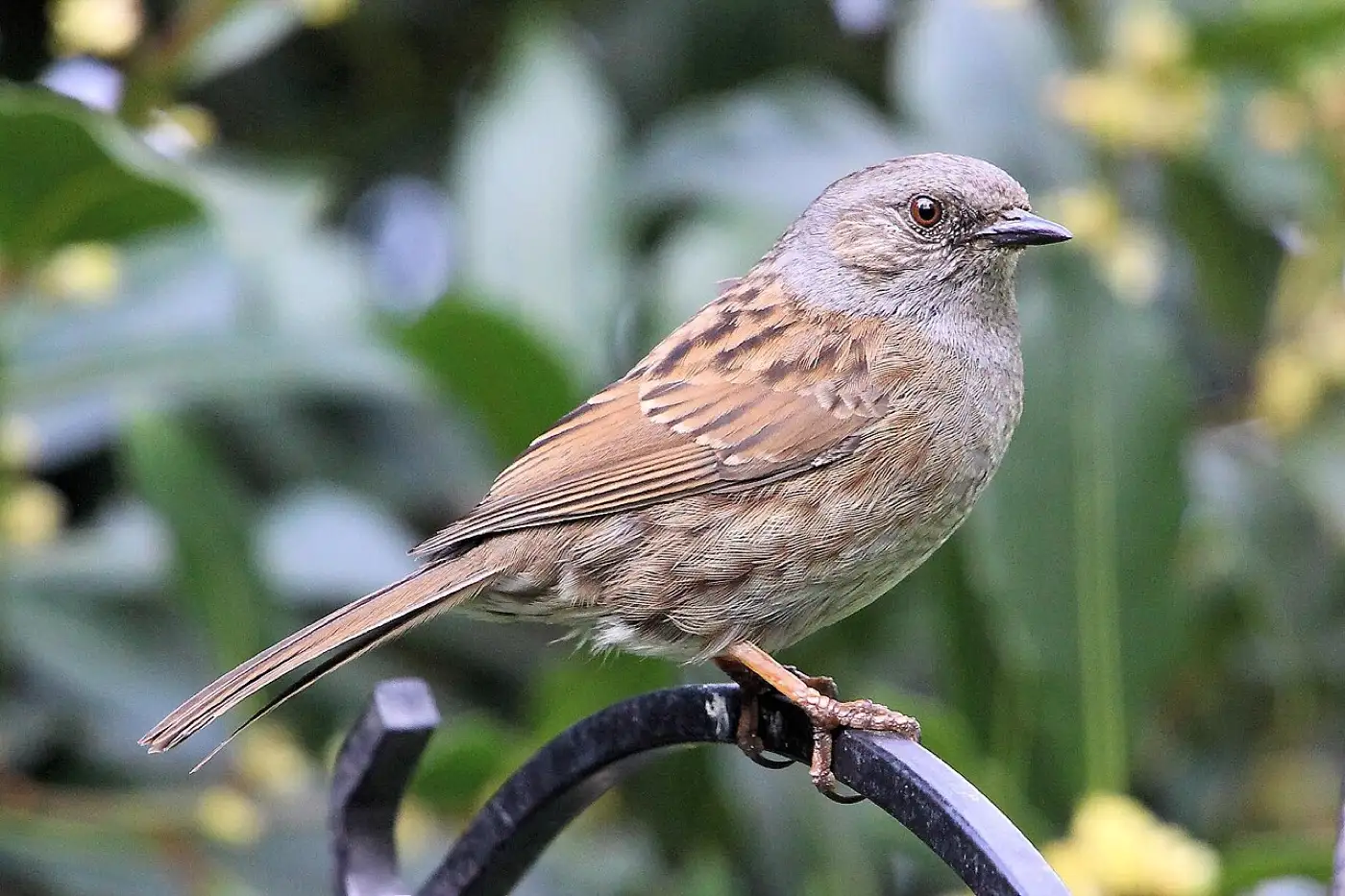
The Dunnock is a sparrow-sized bird with a thin, pointed bill and strong, reddish legs. Elusive in behaviour, it likes to move among low vegetation and walk on the ground. The upperparts are brown with dark brown scaling, like the back of a House Sparrow. The head, throat and breast are leaden grey, stronger in males, with brown ear-coverts and crown. The rear underparts are a paler grey, with brown flanks.
Young birds have a chestnut head and throat instead of grey, and all the plumage heavily streaked with dark brown. The base of the bill is yellowish orange, while adults have an entirely black bill.
Adult
Brown back with dark brown scaling; head, throat and breast leaden grey.
Thin black bill, reddish legs and brown flanks.
Young bird
Chestnut head and throat, heavily streaked plumage and yellowish-orange bill base.
Habitat and distribution of the Dunnock
It is a species with an almost entirely European distribution, widespread and abundant in the north and centre of the continent, and more patchy in the south, where it keeps to mountain areas or to the winter months. Several subspecies are recognised.
As a breeding bird it is abundant and continuously distributed in Spain across the northern third of the peninsula, the Iberian System and the Central System, and appears very locally in other ranges, such as Sierra Nevada, the Maestrazgo and Las Villuercas. In winter birds arrive from the rest of Europe, covering practically the whole peninsula, as well as the Balearics and, occasionally, Ceuta and Melilla; it is absent from the Canaries. In Spain the subspecies «mabotti» breeds and the subspecies «modularis» winters.
It occupies all kinds of scrub and shrubby environments in mid and high mountain areas: it is common in gorse, heathland, broom and retama thickets and woods with plenty of undergrowth. At southern latitudes it lives in mountain scrub above 1,000 metres, such as broom thickets and creeping juniper; in Las Villuercas (Cáceres) it prefers riverside groves or cool areas with plenty of scrub. In winter it can appear in almost any plant formation that includes some undergrowth, shrubs or riverside vegetation.
Northern European populations are migratory, central ones partly migratory, and southern ones may be resident or make small altitudinal movements. Autumn migration takes place in September–October and spring migration in March.
Areas where it is regularly recorded since 2010Squares of about 25 km where it is recorded regularly (occasional passage records are left out). Data from GBIF.org (113,497 records, retrieved October 2026); outline from Natural Earth.
Etymology of the Dunnock
«Modularis» is Latin for «that modulates», «that sings». «Prunella» comes from the German «Braunelle», «accentor», a diminutive of «braun», «brown». «Acentor», the Spanish name, comes from post-classical Latin and means «the one that sings with another». In English «dunnock» is the «little brown bird», from «dun», dull brown.
Population of the Dunnock
In the 2021 European Red List of Birds the European breeding population is estimated at between 22,100,000 and 37,000,000 mature individuals, with a decreasing trend. In Spain the population is estimated at a little over 2,000,000 individuals, and the largest populations are in Castilla y León and Galicia, which together hold more than half. According to the SACRE programme for 1998–2018, the trend is stable, although with a moderate decline in the northern Mediterranean region.
Nest of the Dunnock
It usually places the nest in shrubs or trees, low down. Sometimes it also sets it among ground vegetation, in a hollow of a bank or in old nests of other birds, always well hidden. It builds a cup of various plant materials, lined with wool, hair and feathers. The female builds it alone.
Courtship and breeding of the Dunnock
The breeding season begins in April and can run to August if there are second or third clutches. The clutch varies between 3 and 7 eggs, although when the female mates with two males she can lay up to 12. Incubation, also done by the female, lasts 12–13 days. After hatching, both parents feed the chicks for 11–12 days, and they become independent a few days later.
Diet of the Dunnock
It is mainly insectivorous: it catches all kinds of insects, spiders and other invertebrates on the ground. It can also eat seeds, pine nuts and fruit, especially in winter, when insects are scarce.
Curious facts about the Dunnock
Spain is home to a resident population, joined in winter by European Dunnocks of another subspecies. It is frequent in mountain areas with scrub and undergrowth.
The Dunnock in Cabañeros
This website’s page on sclerophyllous woodland lists it among the most abundant species of the sclerophyllous woods of Cabañeros, alongside the European Robin, the Eurasian Blackbird, the Common Chaffinch, the European Serin, the Common Linnet, the warblers and the tits.
Where to see the Dunnock in Cabañeros
In the sclerophyllous woodland of Cabañeros, in the undergrowth.
When
In winter, when birds arrive from the rest of Europe; in the south it is mainly a winter visitor.
What time
Throughout the day, on the ground or among low vegetation.
Where
In scrub and woods with undergrowth; in winter, in almost any formation with shrubs.
What to look for
A small grey-and-brown bird that walks discreetly on the ground and slips away among the bushes.
Videos of the Dunnock
Similar species
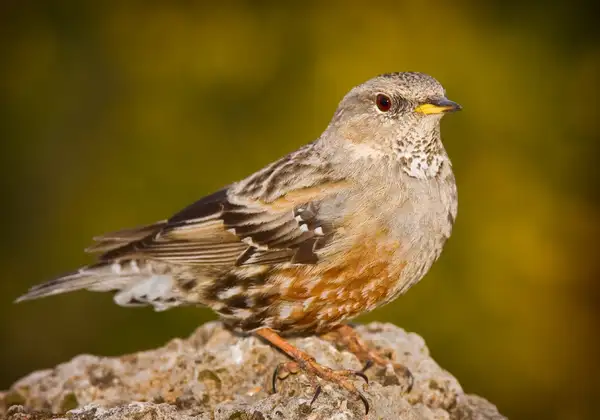
Alpine Accentor
Prunella collaris
How to tell them apart
They are similar in appearance1. It is robust and compact, a high-mountain bird and larger than the Dunnock, with slate-grey head and breast and reddish flanks and belly with whitish streaks.
Photo: Paco Gómez from Castellón, Spain, CC BY-SA 2.0
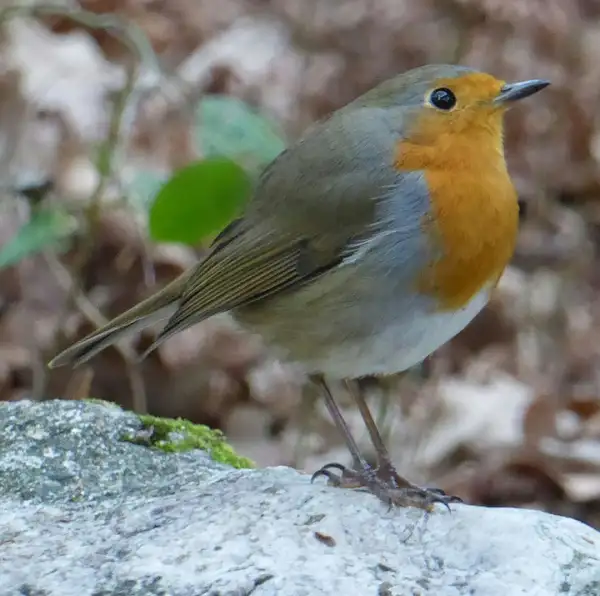
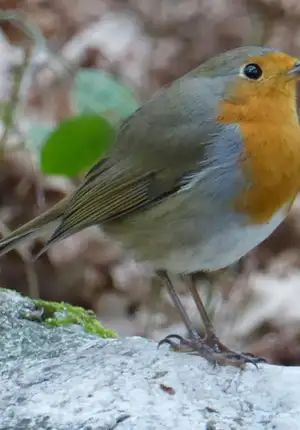
They are similar in appearance and in song1. The European Robin has an orange face and breast, and lacks the leaden-grey head and scaly back of the Dunnock.
Photo: Joxemai, CC BY-SA 4.0
Other birds
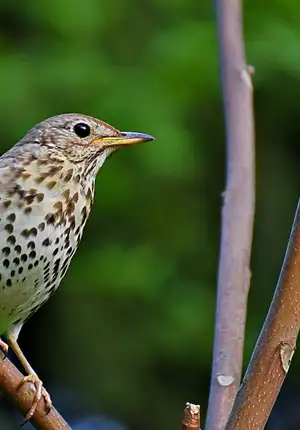
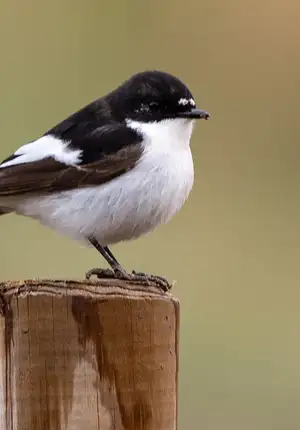
Birds related to the Dunnock or sharing its habitats in Cabañeros.



 Also in sclerophyllous woodland
 Also in sclerophyllous woodland
 Also in sclerophyllous woodland
 Also in sclerophyllous woodland
 Also in sclerophyllous woodland
 Also in sclerophyllous woodland
 Also in sclerophyllous woodland
 Also in sclerophyllous woodland






