Gregarious in winter, when it forms flocks and mixes with other seed-eating finches
Lifespan
Record of 11 years and 5 months in the wild (a bird ringed in Spain)
Conservation status
LC
NT
VU
EN
CR
EW
EX
Global (IUCN)
Least Concern
Spain
Unlisted: not on the List of Wild Species under Special Protection or in the Spanish Catalogue of Threatened Species
When to see it
Resident
Months of the year when it is present
J
F
M
A
M
J
J
A
S
O
N
D
In Iberia
yes
yes
yes
yes
yes
yes
yes
yes
yes
yes
yes
yes
Breeding season
no
no
yes
yes
yes
yes
yes
no
no
no
no
no
Song or voice of the European Serin
In flight it gives short calls, «triiulit-lit-lit», that give it away without the need to see its colour. The song of males in breeding condition is a very fast, prolonged, strident warble of several verses. It sings both perched and in flight, gliding and beating its wings very slowly, like the gliding flight of the large bats.
SongEuropean Serin
0:00 / 0:24
10 kHz5
The sonogram draws the sound: time runs from left to right, and the higher a trace sits, the higher the note.Recording by Marie-Lan Taÿ Pamart, Wikimedia Commons (CC BY-SA 4.0).
Flight of the European Serin
It has an undulating flight, with quick wingbeats and drops with the wings folded, in which the greenish-yellow rump is seen. In breeding condition, the male flies slowly, gliding and beating his wings very slowly over his territory while he sings.
Flight typeUndulating and in flocks, with a slow courtship flight
It leaves the branch with quick wingbeats and a short call, «triiulit-lit-lit», that gives it away even though we do not see its colour.
Undulating flight: it beats its wings and drops with them folded, and the greenish-yellow rump is seen. In breeding condition, the male also flies slowly, gliding.
It brakes with its notched tail spread and grips a branch, often of an olive or citrus tree.
Photo gallery of the European Serin
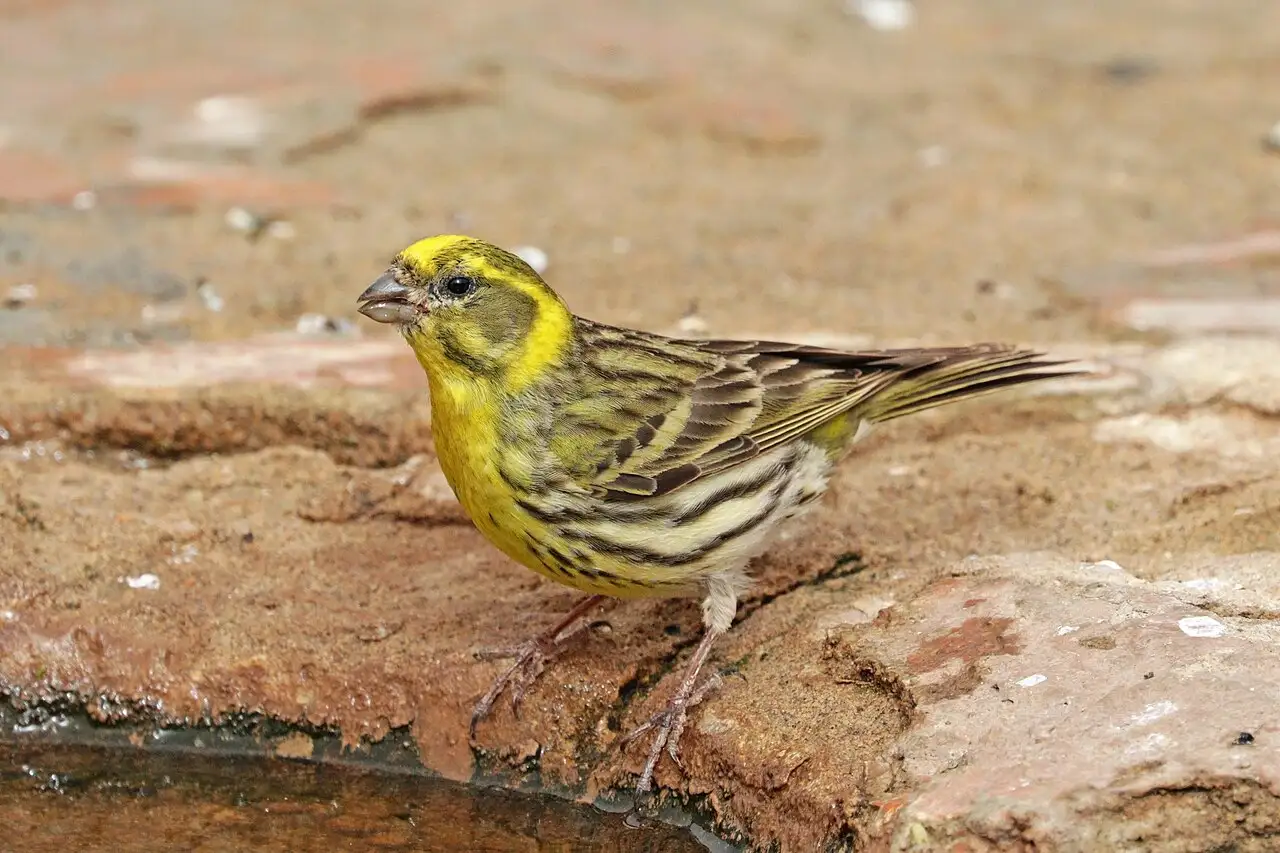
Male European Serin on a rock beside the water, with the forehead and throat a deep yellow and the streaked breastPhoto: Charles J. Sharp, CC BY-SA 4.0Photo 1 of 4
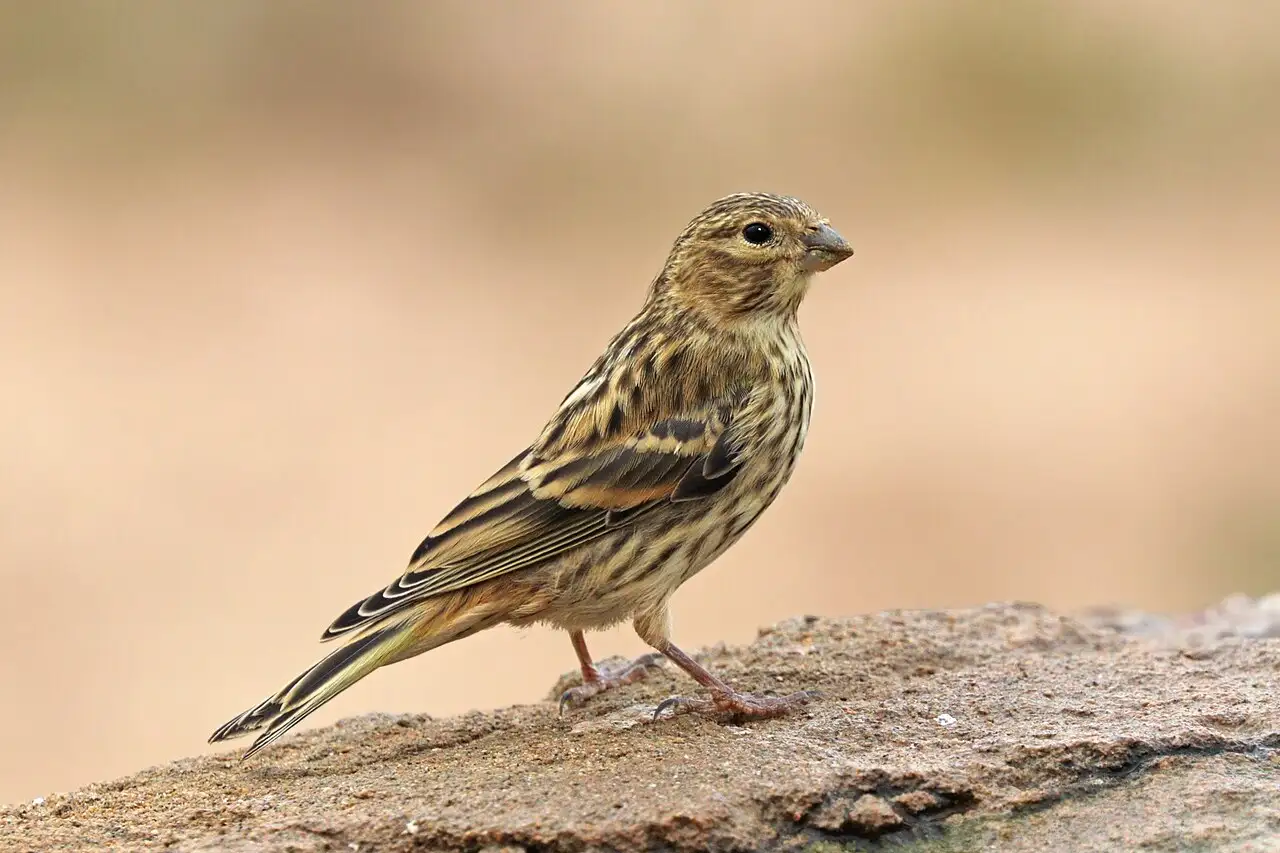
Female European Serin on a rock, with streaked brown plumage and without the male's deep yellowPhoto: Charles J. Sharp, CC BY-SA 4.0Photo 2 of 4
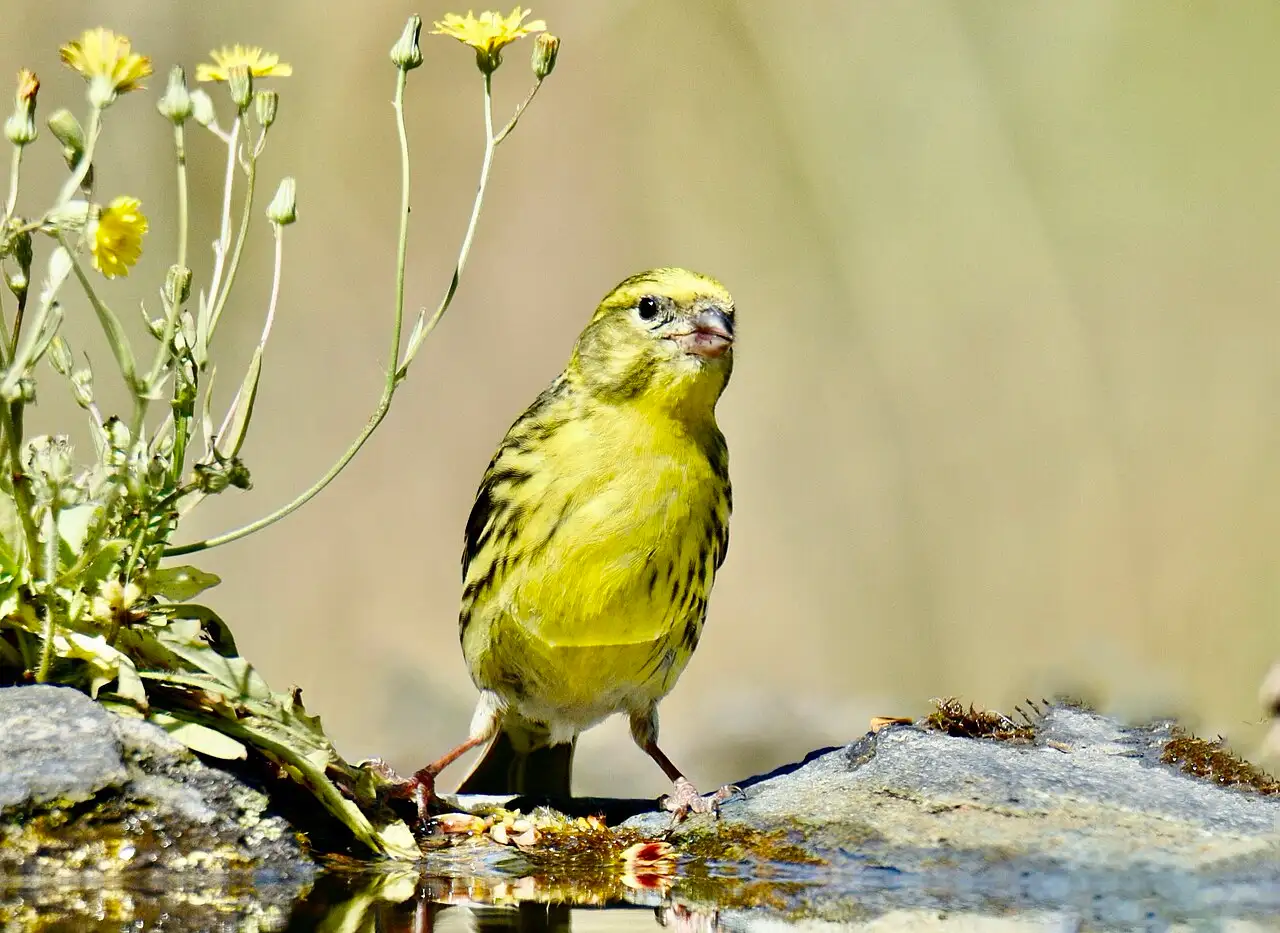
Male European Serin head-on, beside some yellow flowers, with the breast and forehead a deep yellowPhoto: Luiz Lapa from Oeiras, Portugal, CC BY 2.0Photo 3 of 4
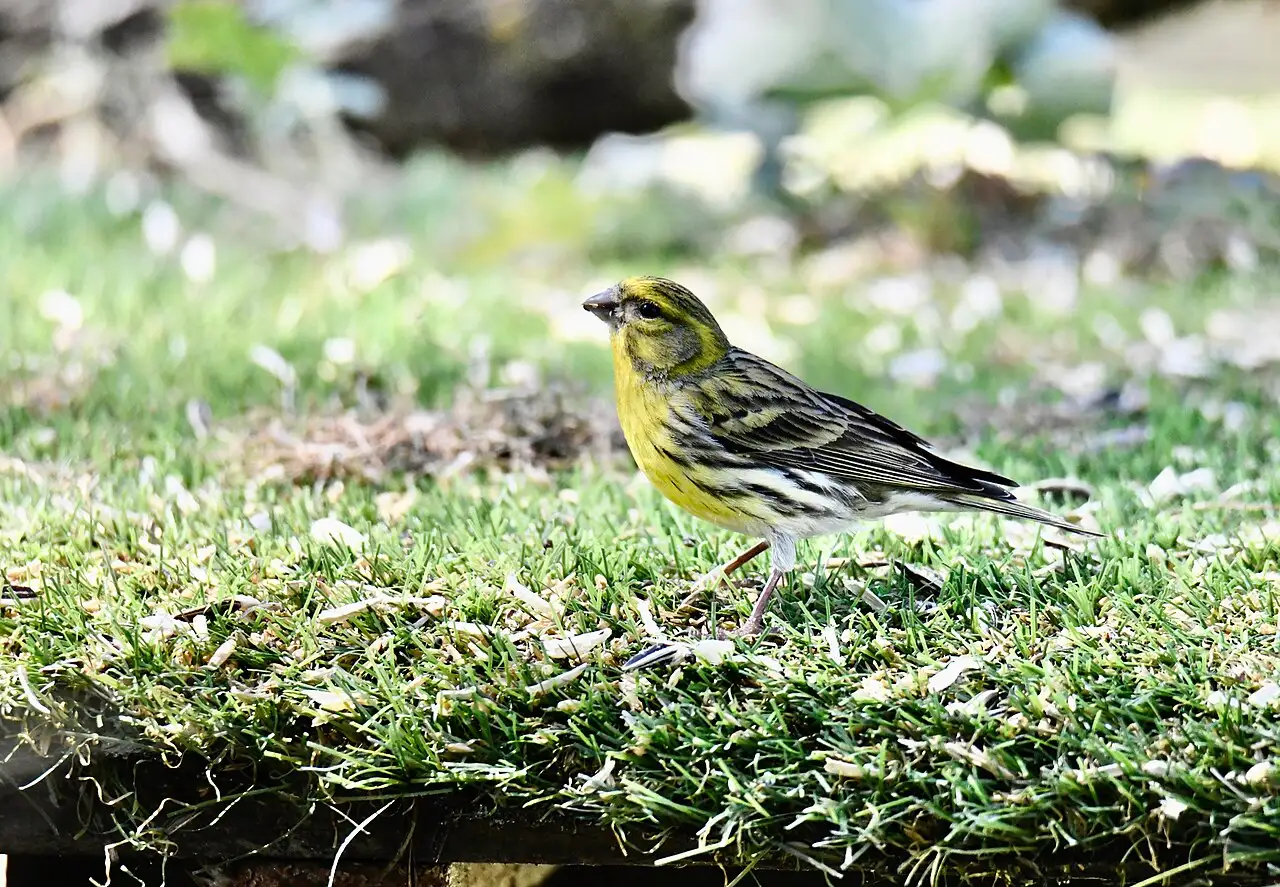
Male European Serin on the grass, in profile, with the short, broad bill and the streaked yellow breastPhoto: Luiz Lapa from Oeiras, Portugal, CC BY 2.0Photo 4 of 4
1 / 4
Identification of the European Serin
It is a small bird, with a broad but very short bill and a tail with a marked notch at the tip. Males and females have a very visible greenish-yellow rump and the breast and belly yellowish white, with spots or short vertical streaks. Males, above all in spring, show the forehead, throat and breast tinted a deep yellow. It looks like the siskins, though it has a shorter, less pointed bill and lacks the yellowish-green bands easily seen in the Siskin. It could also be confused with the Citril Finch, but this has a grey head and lives at the upper edge of the woods.
Male
Forehead, throat and breast a deep yellow, above all in spring.
Female
Duller, with the breast and belly yellowish white and streaked.
Habitat and distribution of the European Serin
It is distributed across north-west Africa and the whole of Europe, except much of Scandinavia. In the last two centuries its range has grown greatly on the continent: starting from the Mediterranean, it has been colonising central, northern and eastern Europe. It has no subspecies.
In Spain it lives in almost the whole territory, including the Balearics and the Canaries, and only thins out in high-mountain places and in totally deforested areas in the breeding season. It prefers warm environments to cold or mountain ones, with a clear liking for wooded habitats with non-dense formations. To breed it chooses above all citrus and olive plantations, and it is very frequent in open woods, somewhat more abundant in evergreen ones; it also breeds or looks for food in orchards and urban parks. In autumn and winter it widens its habitats and it is usual to see flocks in farmland with few trees. European and Iberian serins are partial migrants: most of those from northern, central and eastern Europe migrate at the end of summer to the Mediterranean region and return between February and May.
Areas where it is regularly recorded since 2010Squares of about 25 km where it is recorded regularly (occasional passage records are left out). Data from GBIF.org (862,762 records, retrieved October 2026); outline from Natural Earth.
Etymology of the European Serin
«Serinus» is the name of the genus, the same as that of the canary, and «serinus» that of the species. The Spanish «verdecillo» is a diminutive of «verde» («green»), for the greenish-yellow tone of its plumage.
Population of the European Serin
In Spain it is a very common species, with more than 15 million individuals, spread mainly across Andalusia, Castilla y León, Castilla-La Mancha, Aragón and Extremadura. According to the SACRE programme, there is a moderate decline. In Europe between 35.2 and 55.9 million mature individuals are estimated, with a decreasing trend. It is listed as Least Concern. Given its abundance and its ability to adapt to human-altered landscapes it seems not to be threatened, but it suffers from the overuse of pesticides and herbicides in olive groves and other crops, and from illegal or tolerated trapping, which every year kills or cages thousands of birds.
Nest of the European Serin
The female builds a small, compact nest for each clutch, with herbaceous stems, very fine roots, moss and lichens, and lines it inside with hair, feathers and the downy parts of plants.
Courtship and breeding of the European Serin
It breeds two or three times a year, from March to July depending on the territory: pairs in the south and the Levante may start as early as February, and those in the north and the interior usually wait until April or May. The female lays two to five bluish-white eggs, with the broad end speckled dark red, and incubates them for 13 days. Afterwards, the male helps to feed the chicks and even tends them once they fly, while the female starts the next clutch.
Diet of the European Serin
Its diet is made up mostly of seeds of ephemeral or biennial plants. It also eats, secondarily, insects and pecks at the pulp of fleshy fruits.
Curious facts about the European Serin
Males are among the birds that announce spring earliest with their songs. And in the last couple of centuries it has extended its range notably, so that today it breeds in places in Europe where it was not before.
The European Serin in Cabañeros
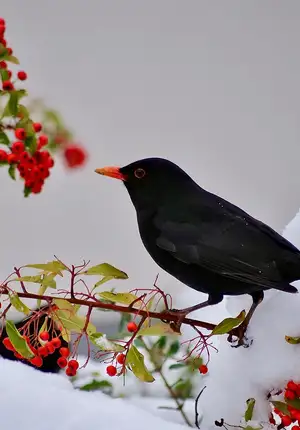
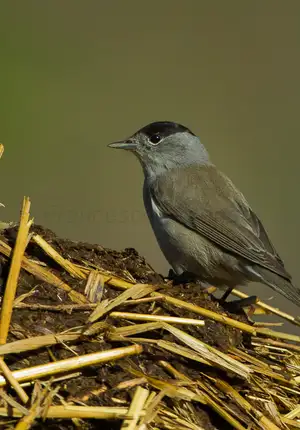
The habitat pages of this website cite it among the most abundant species of the sclerophyllous woodland, together with the robin, the blackbird, the Common Chaffinch, the Dunnock and the Common Linnet.
Where to see the European Serin in Cabañeros
In the sclerophyllous woodland and the dehesas, and in the orchards and olive groves of the surrounding villages.
When
All year; males sing from the end of winter and in spring.
What time
In the morning, when the male sings from the top of a tree or in flight.
Where
In open trees and the edges of the woods, and in winter, in flocks in fields with few trees.
What to look for
A tiny short-billed bird, with yellow forehead and breast, that sings with a strident warble.
Videos of the European Serin
Similar species to the European Serin
Citril Finch
Carduelis citrinella
How to tell them apart
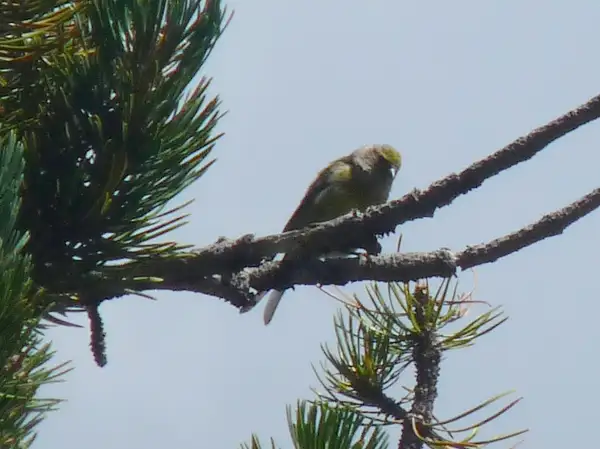
Somewhat bigger, with a grey head and the face and breast greenish or yellowish, without streaking. It lives at the upper altitudinal limit of the woods, where the Serin is very scarce.



 Same family
 Same family
 Same family
 Same family
 Also in sclerophyllous woodland
 Also in sclerophyllous woodland
 Also in sclerophyllous woodland
 Also in sclerophyllous woodland






