Restless and skulking; it can make two clutches, and the father can take charge of the fledglings while the female incubates the second
Lifespan
Record of 8 years and 10 months in the wild for the subalpine warbler group (a bird ringed in Italy)
Conservation status
LC
NT
VU
EN
CR
EW
EX
Global (IUCN)
Least Concern
Spain
Least Concern (LC) in the Red Book of the Birds of Spain; included in the List of Wild Species under Special Protection and not in the Spanish Catalogue of Threatened Species
When to see it
Summer visitor
Months of the year when it is present
J
F
M
A
M
J
J
A
S
O
N
D
In Iberia
no
no
yes
yes
yes
yes
yes
yes
yes
yes
no
no
Breeding season
no
no
no
yes
yes
yes
yes
no
no
no
no
no
Song or voice of the Western Subalpine Warbler
Very similar to that of other warblers typical of Mediterranean areas, though longer, the song consists of a succession of somewhat scratchy phrases, which follow one another quickly. The call, insistent, is the repetition of a dry, short «tec-tec-tec».
SongWestern Subalpine Warbler
0:00 / 0:26
10 kHz5
The sonogram draws the sound: time runs from left to right, and the higher a trace sits, the higher the note.Recording by AviCanto, Wikimedia Commons (Vídeo de YouTube, con atribución).
Flight of the Western Subalpine Warbler
It is very active and restless by temperament, and at the same time very skulking and hard to see: it moves under the cover of dense Mediterranean scrub. It is a long-distance trans-Saharan migrant.
Flight typeShort flights between shrubs, with the long tail
It leaves the rockrose, heather or kermes oak with a dry, short, insistent «tec-tec-tec».
Short flight among the shrubs, with the long tail and the white outer feathers. Very active and restless, it is hard to see.
It lands on a shrub and sings a succession of scratchy phrases that follow one another quickly.
Photo gallery of the Western Subalpine Warbler
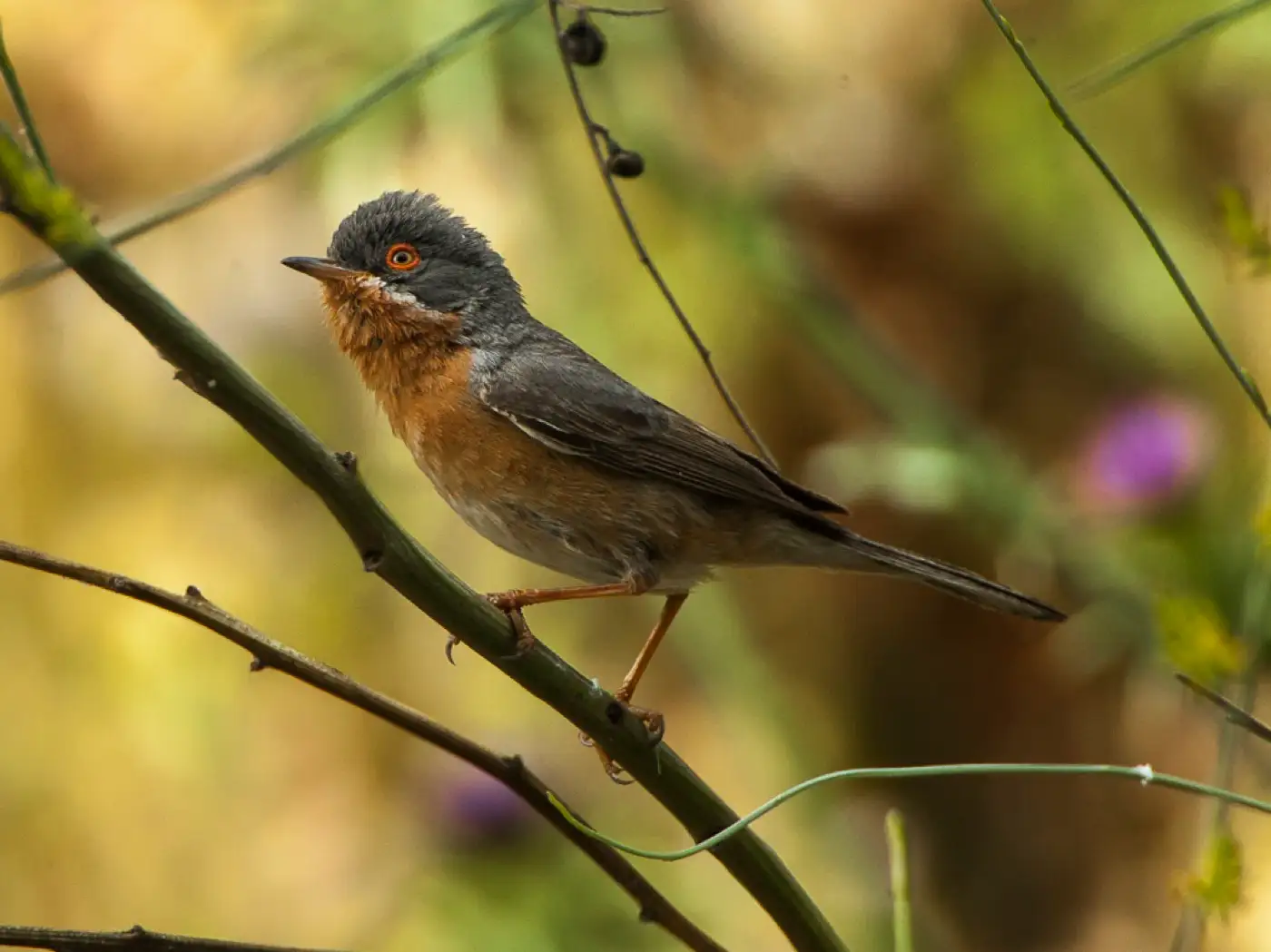
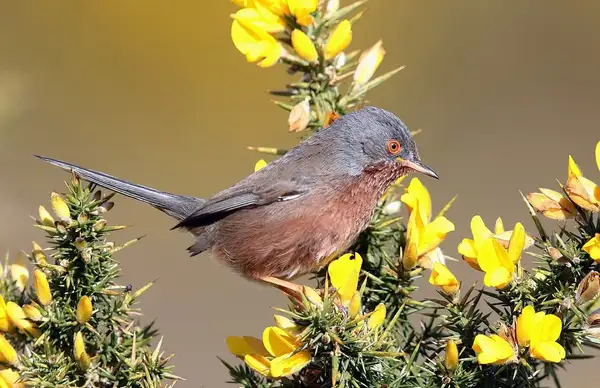
Male Western Subalpine Warbler on a branch in Monfragüe, with grey head, red eye-ring and rufous underpartsPhoto: Francesco Veronesi from Italy, CC BY-SA 2.0Photo 1 of 4
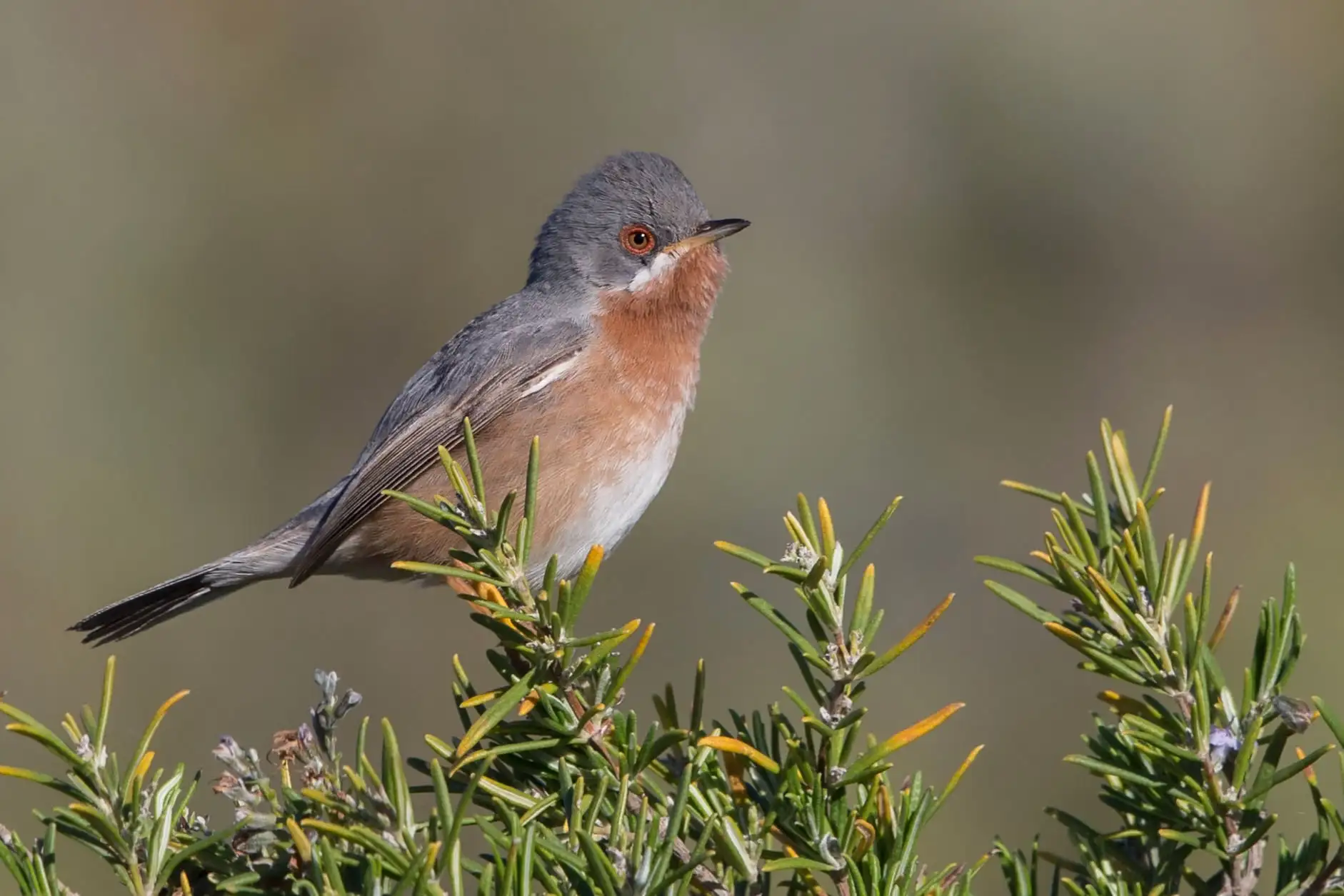
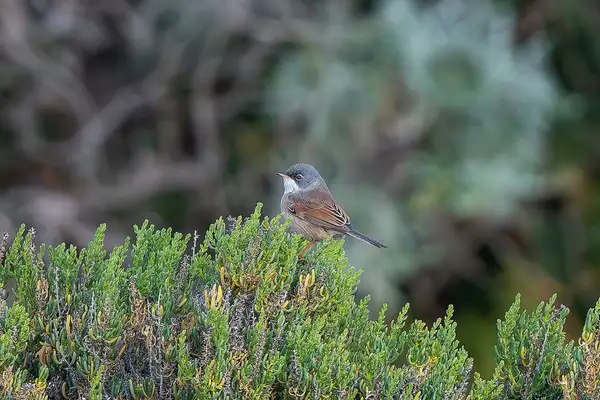
Male Western Subalpine Warbler on a rosemary bush, with slate-grey back, white moustache and rufous breastPhoto: Kookaburra 81, CC BY-SA 4.0Photo 2 of 4
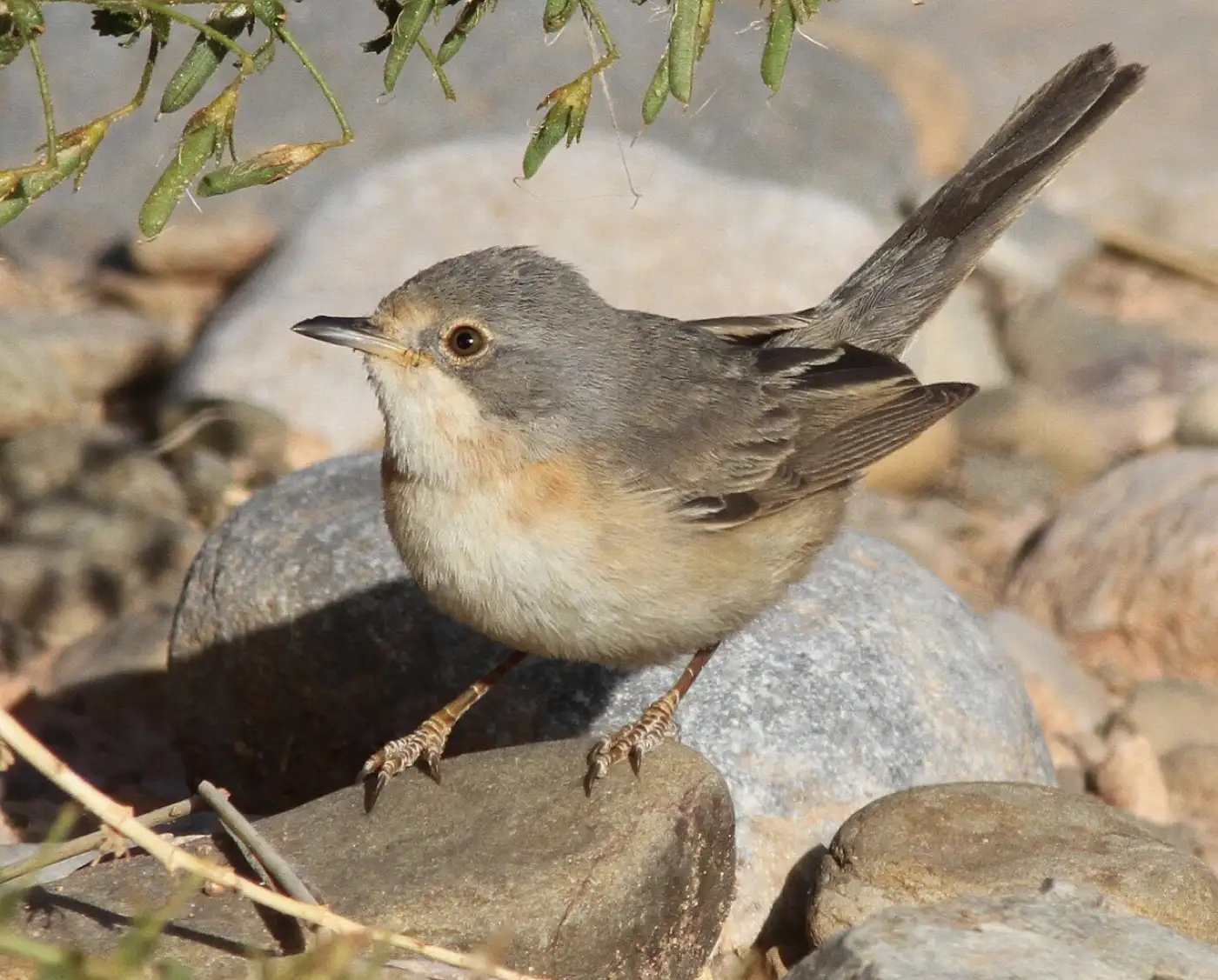
Female Western Subalpine Warbler, in brown and pink tones, among stones, with the long tail raisedPhoto: Gary L. Clark, CC BY-SA 4.0Photo 4 of 4
1 / 4
Identification of the Western Subalpine Warbler
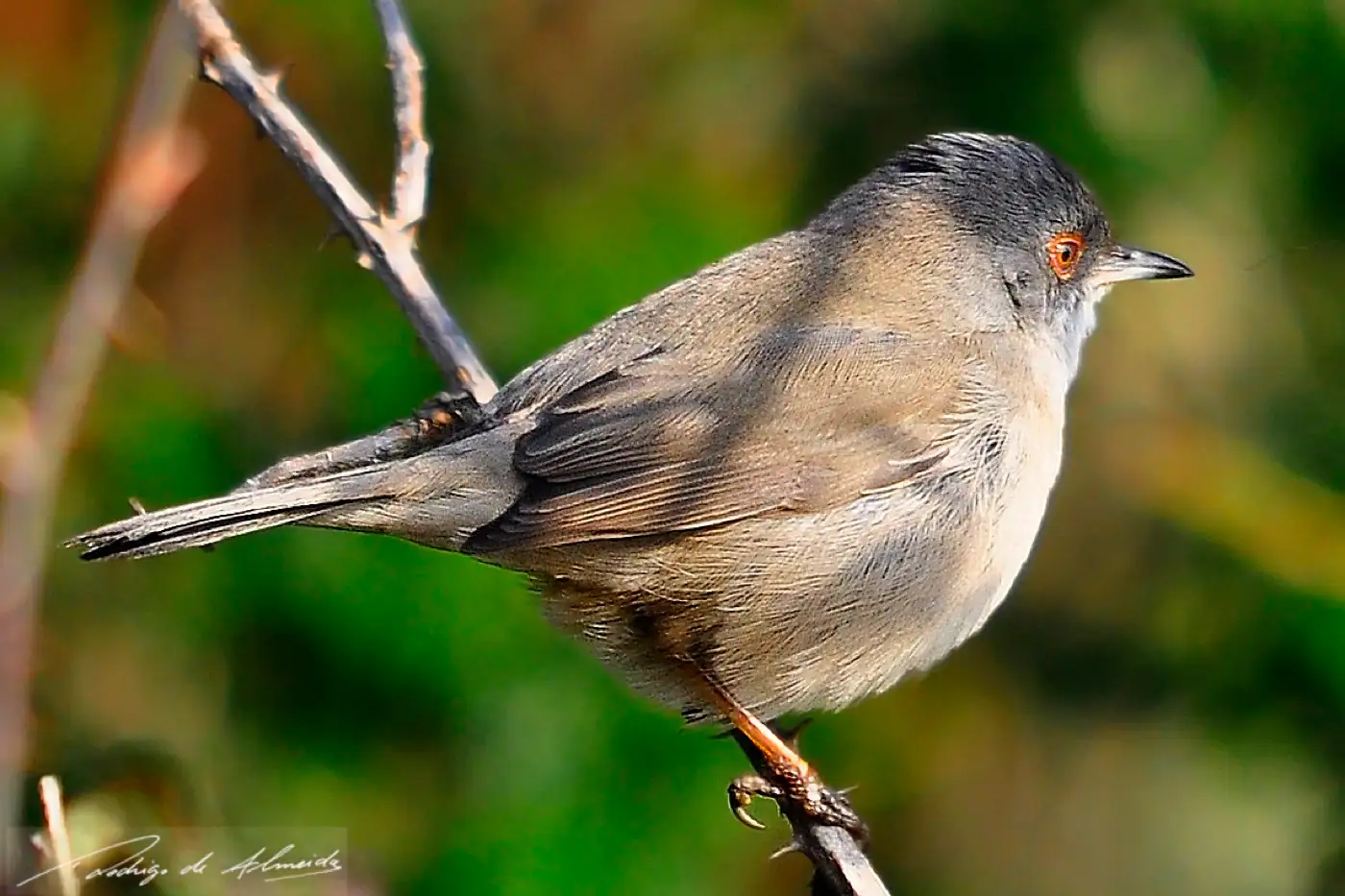
The Western Subalpine Warbler is small and graceful in appearance. Males have slate-grey upperparts, which contrast with the white moustache and the rufous underparts. Females show a similar overall pattern, but in more subdued tones, with brown upperparts and pink underparts. Both have a red eye-ring, pale legs and white outer tail feathers.
Very active and restless by temperament, it is at the same time a very skulking, hard-to-see bird, which moves under the cover of dense Mediterranean scrub, its ideal habitat.
Male
Slate-grey upperparts, white moustache and rufous underparts.
Red eye-ring, pale legs and white outer tail feathers.
Female
Similar pattern, in more subdued tones: brown back and pink underparts.
Habitat and distribution of the Western Subalpine Warbler
As a breeder it ranges around the Mediterranean basin: the circum-Mediterranean European countries as far as western Turkey, the Mediterranean islands and north-west Africa (Morocco, Algeria, Tunisia). As a winter visitor it occupies the southern edge of the Sahara, from Senegal to Egypt. Three subspecies are recognised.
In Spain it is widely distributed across the whole Peninsula, and is absent as a breeder in the Canaries, the Balearics, most of the Cantabrian strip and other wide inland areas of the Peninsula (La Mancha, southern Extremadura, western Andalusia) and the Levante; it is very scarce in Galicia. It is now named «Curruca iberiae», «Western Subalpine Warbler»1.
It shows a clear preference for the first stages of degradation of Mediterranean woodland, in which scrub formations dominate (rockrose scrub, broom thickets, heaths, kermes oak thickets). It also lives in dehesas, pine woods and juniper woods, as long as they have abundant shrubby undergrowth. It is found from sea level to 1,900 metres (Sierra Nevada), although it is more abundant between 600 and 1,000.
It is a long-distance migrant, with winter quarters south of the Sahara, in tropical Africa. The pre-breeding passage is detected from February to May, with peaks in late March, and the post-breeding one between August and October, with peaks in late September.
Areas where it is regularly recorded since 2010Squares of about 25 km where it is recorded regularly (occasional passage records are left out). Data from GBIF.org (33,219 records, retrieved October 2026); outline from Natural Earth.
Etymology of the Western Subalpine Warbler
«Iberiae» is the Latin genitive of «Iberia»: «of Iberia», the peninsula where the western species lives. It is also called «curruca carrasqueña occidental»1.
Population of the Western Subalpine Warbler
The 2021 European Red List of Birds does not give population data for this species for the continent. It is one of the most abundant warblers in Spain, with a population of 4,500,000 birds and the largest populations in the two Castiles and Aragon. The trend is moderately positive, according to the SACRE programme. It is not considered threatened, although the main dangers could come from the deterioration of its sub-Saharan wintering areas through drought and desertification.
Nest of the Western Subalpine Warbler
Both parents build the nest low down in dense vegetation, inside a shrub or small tree. It is a small cup of leaves and branches, lined with hair and feathers.
Courtship and breeding of the Western Subalpine Warbler
The breeding season runs from April to July, with the possibility of two clutches a year. The clutch consists of three to five eggs, white or pinkish, speckled to varying degrees with green, which both sexes incubate for 11 or 12 days. The chicks, which both parents care for and feed, can fly at 12 days. The father may take charge of the fledglings while the female incubates a second clutch.
Diet of the Western Subalpine Warbler
It feeds mainly on larvae and adults of insects (grasshoppers, bugs, Lepidoptera, ants, spiders), although it may eat fruit and seeds in summer and autumn (blackberries, figs, mastic berries).
Curious facts about the Western Subalpine Warbler
It is the most beautifully coloured of the warblers of the Mediterranean scrub and also one of the most abundant1. It is detected more by its scratchy song or its dry, brief call than by sight. In the Balearics a different subspecies lives.
The Western Subalpine Warbler in Cabañeros
This website’s pages cite it in three habitats of Cabañeros: among the species of the mature scrub of the sclerophyllous forest, in the dehesas and in the scrublands, where it is one of the three species of warblers, together with the Dartford Warbler and the Sardinian Warbler, that make up 80 % of the scrub bird community.
Where to see the Western Subalpine Warbler in Cabañeros
In the scrublands, dehesas and mature scrub of Cabañeros.
When
From March to October: it arrives in spring and leaves in autumn.
What time
Throughout the day; it is heard before it is seen.
Where
In Mediterranean scrub (rockrose scrub, broom thickets, heaths, kermes oak thickets) and in dehesas, pine woods and juniper woods with undergrowth.
What to look for
A small warbler with a rufous breast and white moustache, with a red eye.
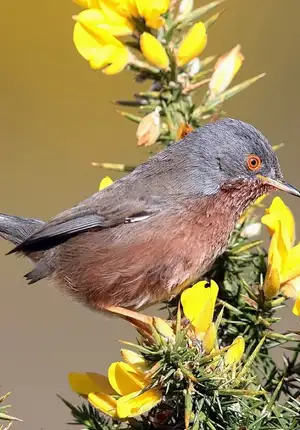
They are similar in song and appearance1. The Dartford Warbler is dark overall and has a long tail, which it often holds raised, with slaty-grey back, wine-coloured underparts and a reddish eye-ring.
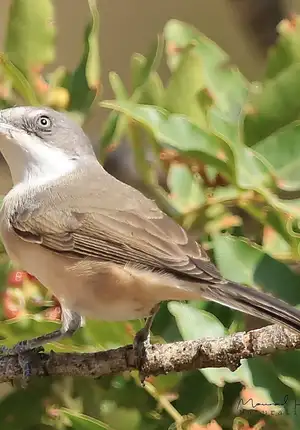
They are similar in song1. It is a small version of the Common Whitethroat, with redder, shorter wings and a contrasting grey head, with white throat and eye-ring.
Photo: Kevingambin, CC BY-SA 4.0
Other birds
Birds related to the Western Subalpine Warbler or sharing its habitats in Cabañeros.



 Same family
 Same family
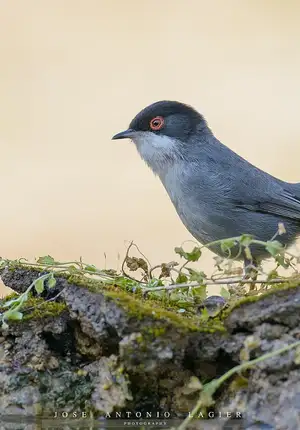 Same family
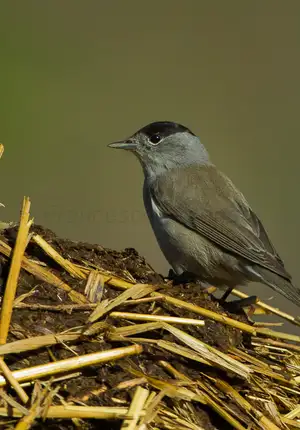 Same family
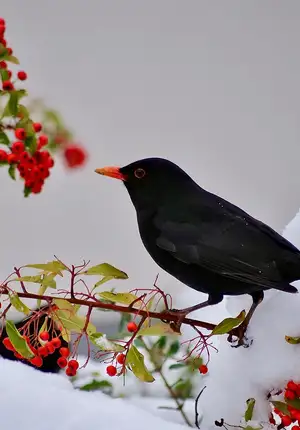 Also in sclerophyllous woodland
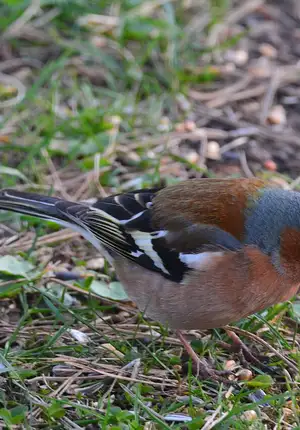 Also in sclerophyllous woodland
 Also in sclerophyllous woodland
 Also in sclerophyllous woodland






