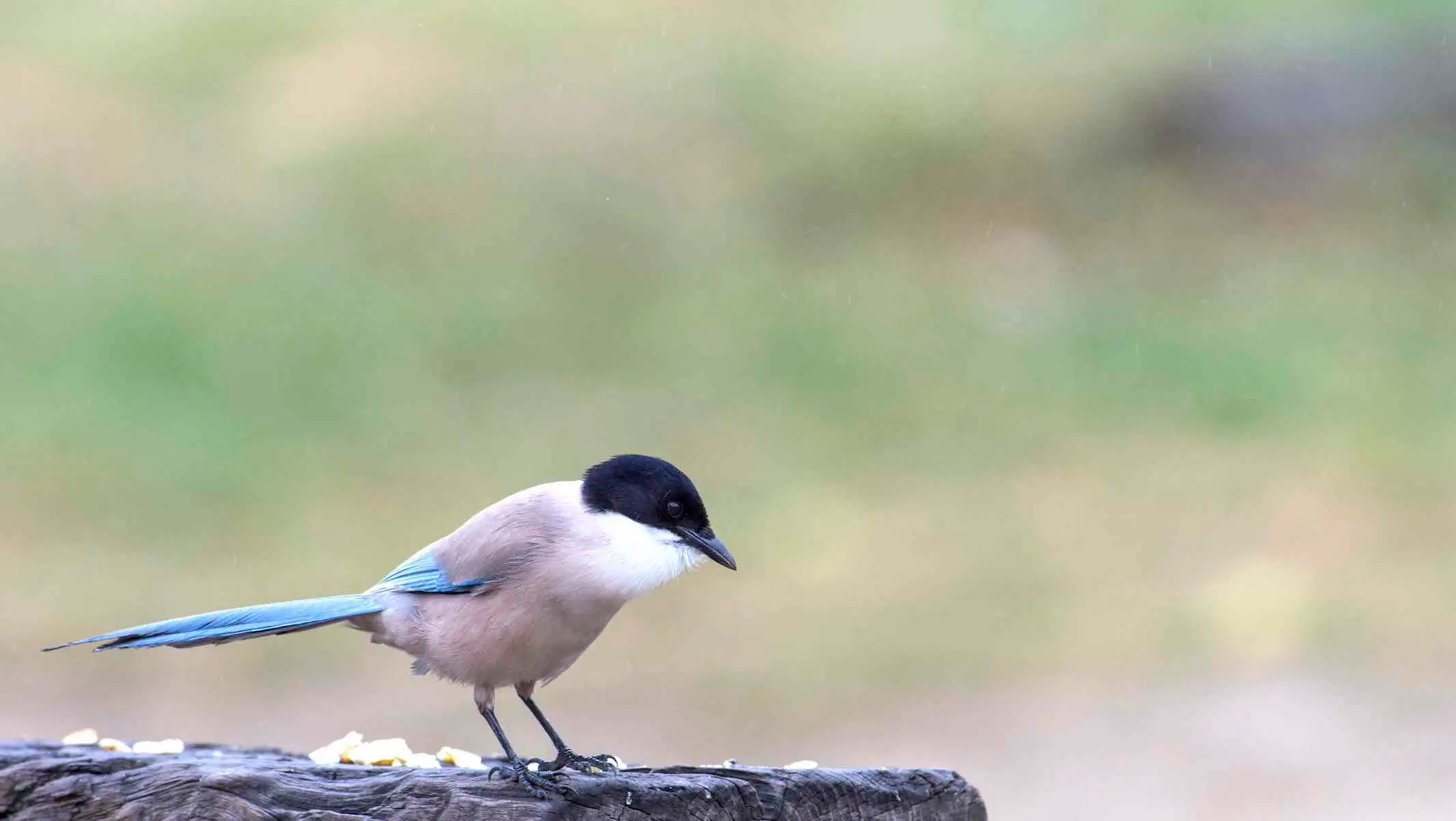
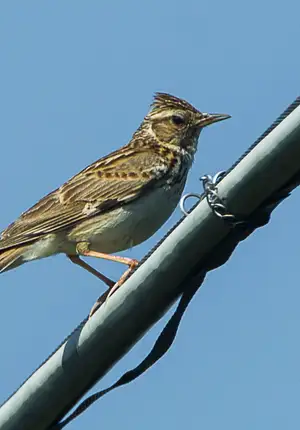
Perched on a branchPhoto: Mario Modesto Mata, CC BY-SA 2.0Photo 5 of 5
1 / 5
Identification of the Iberian Magpie
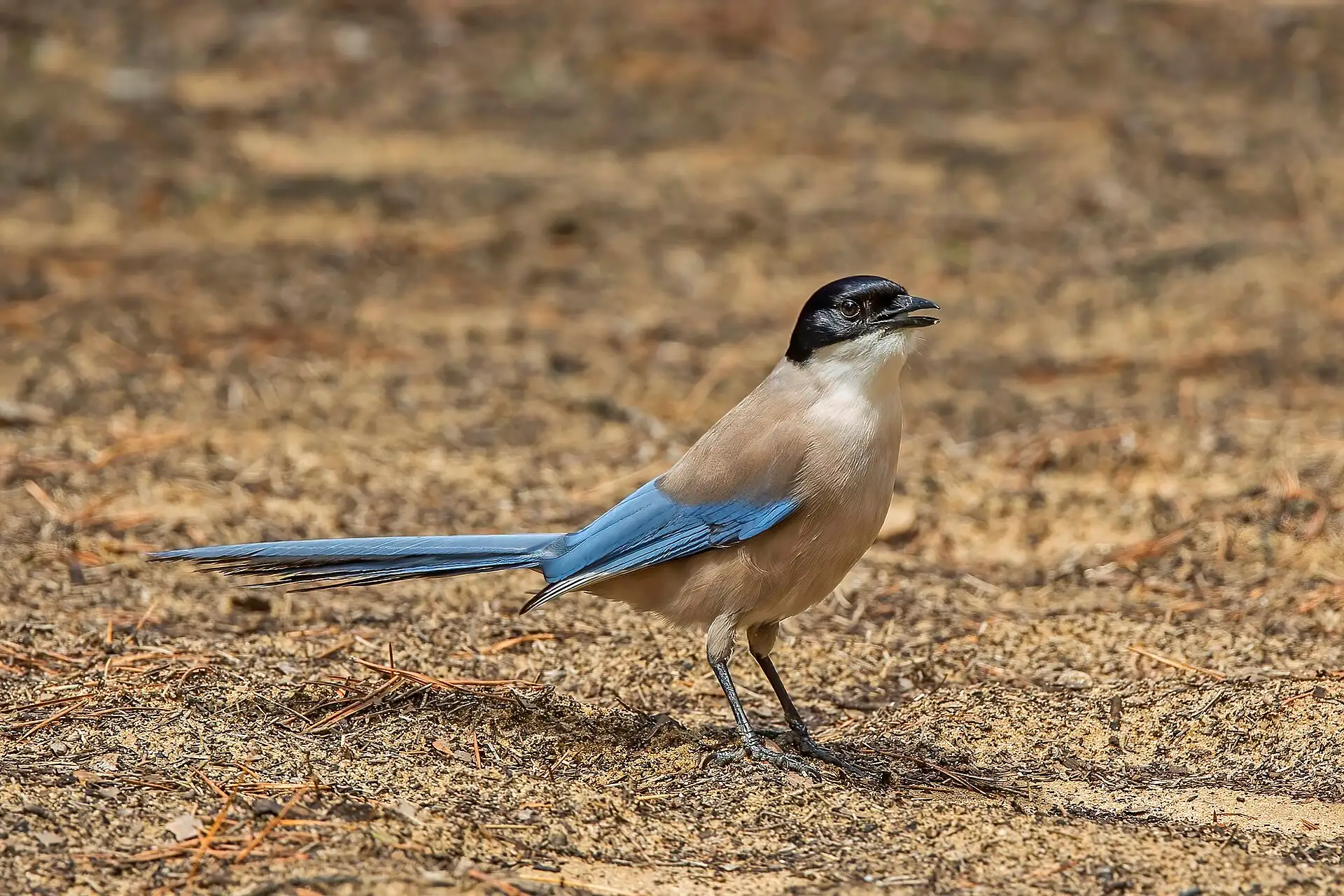
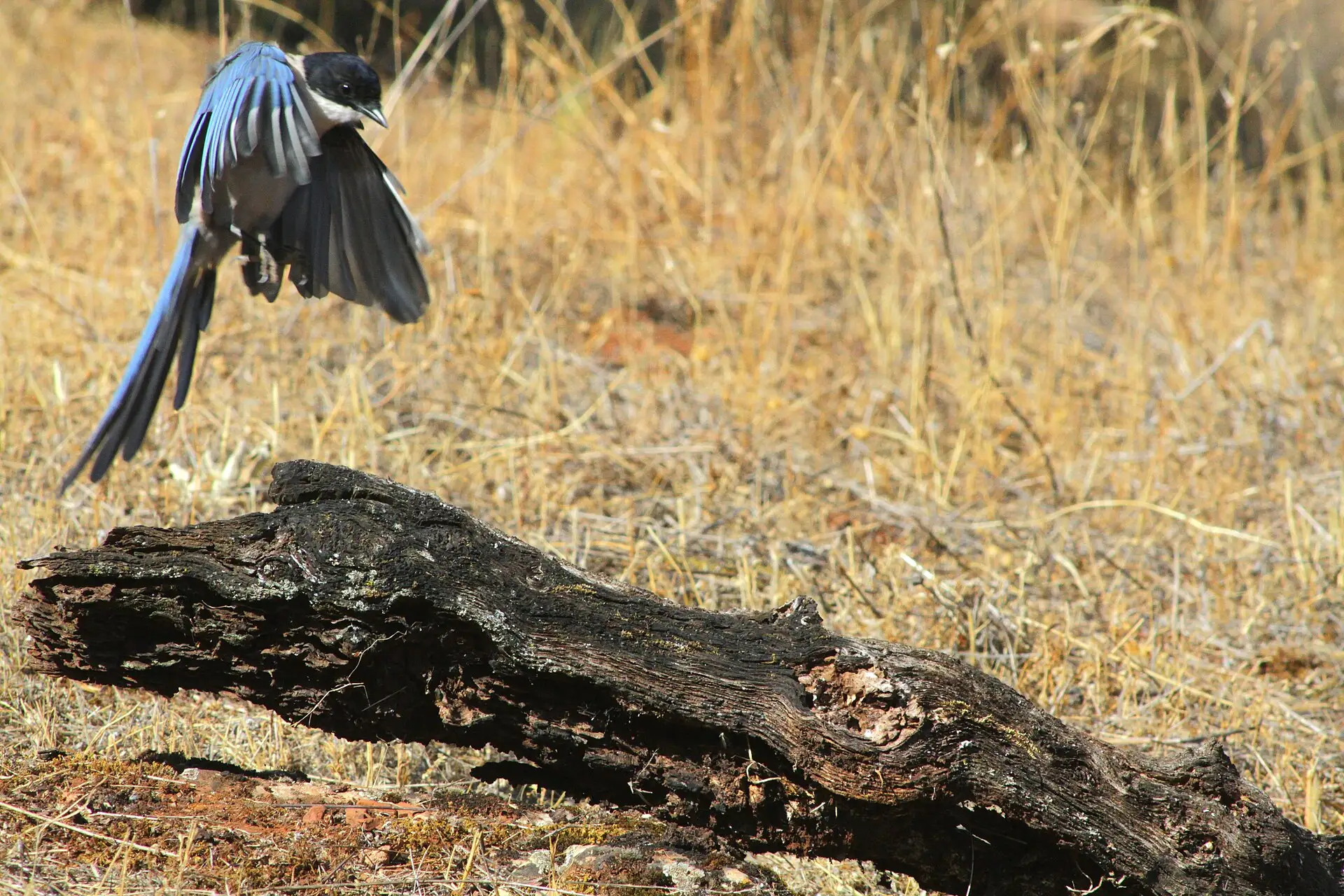
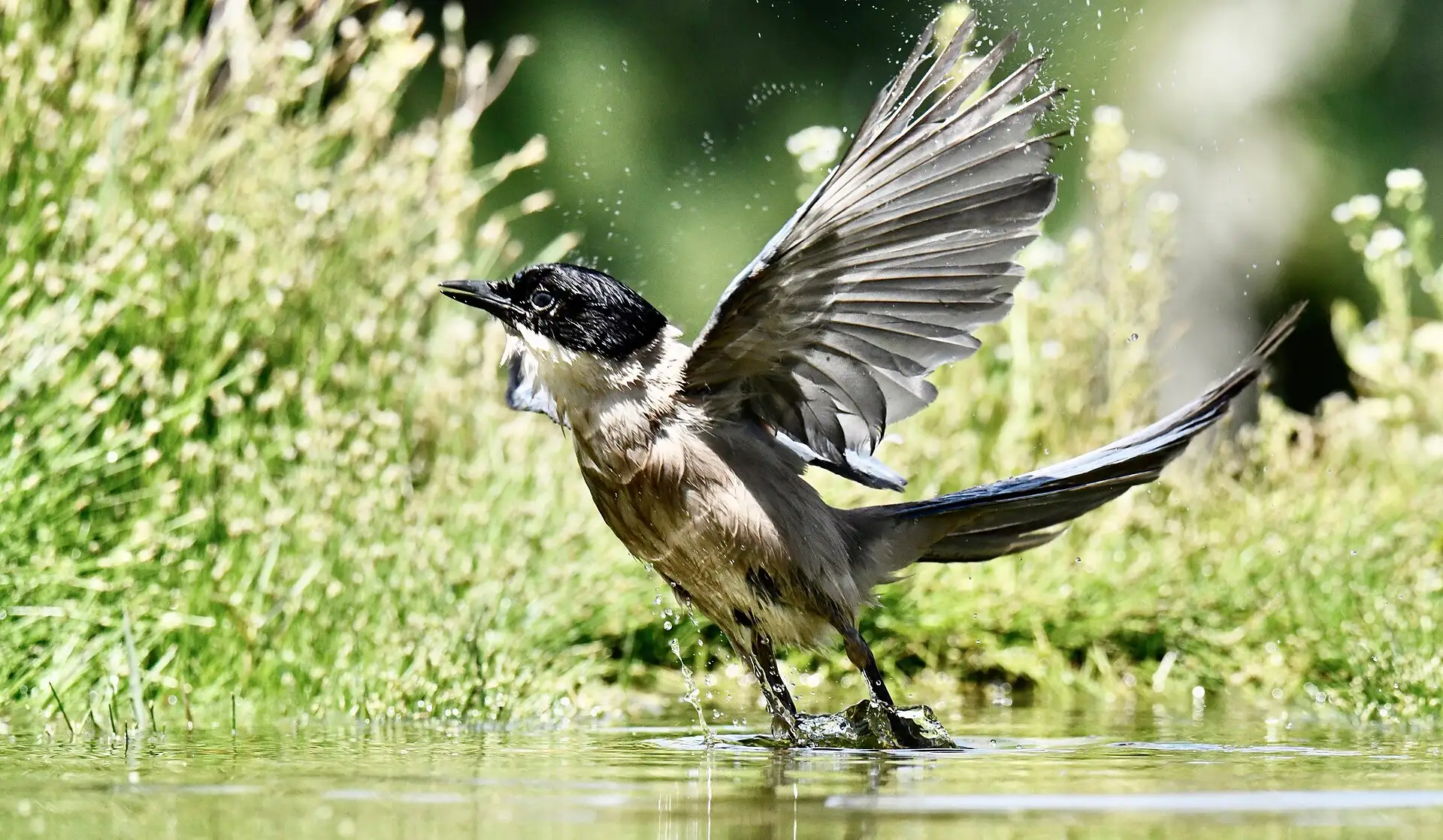
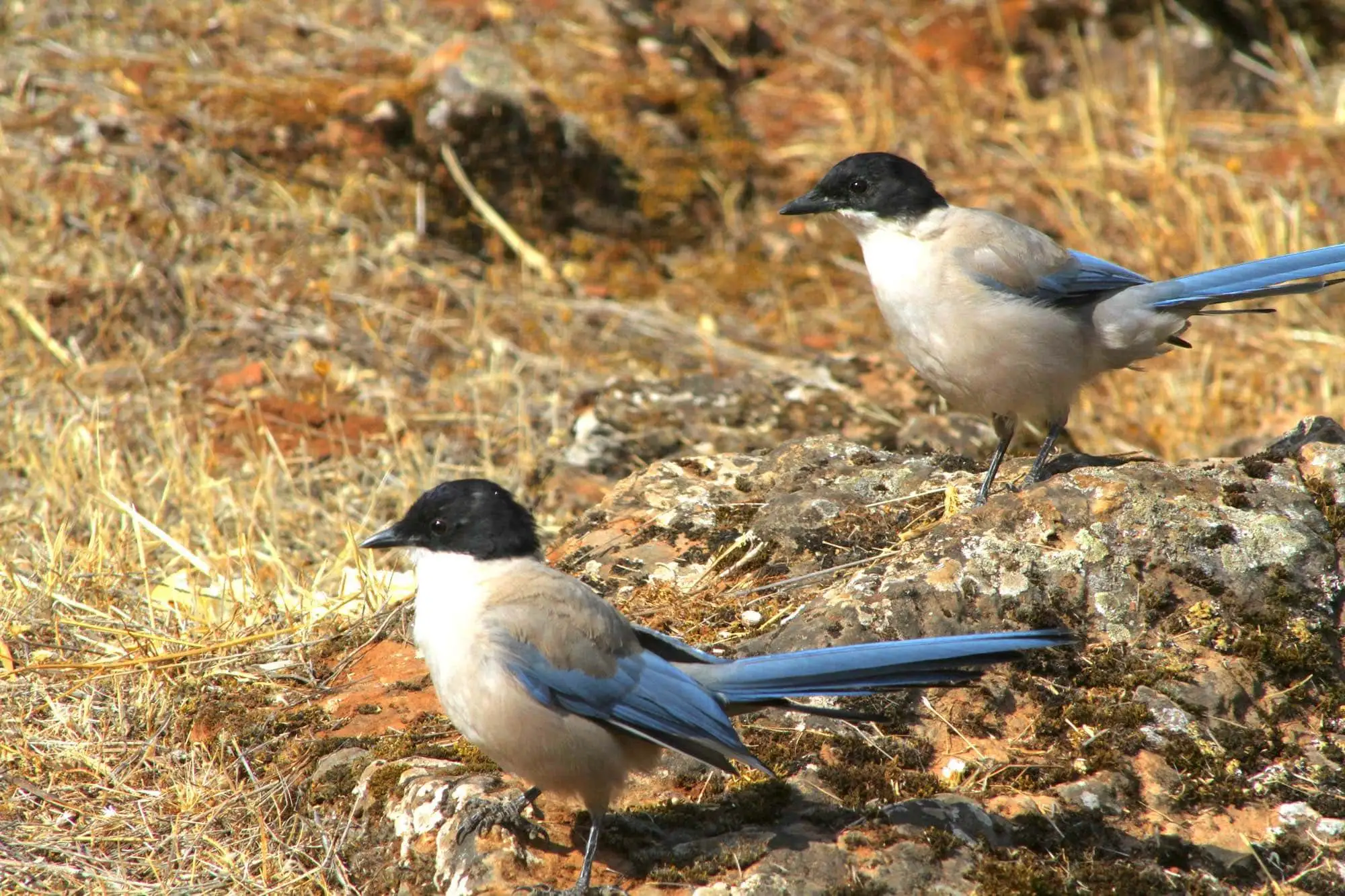
It is an elegant, showy bird, of similar morphology to the Eurasian Magpie, very slender compared with other species of the corvid family. Its body is elongated and upright, with short wings and a long tail. Its bill and legs are strong and robust.
Its crown is jet black and its throat whitish. The back is light buff, paler on the underparts. The wings and tail are a soft blue.
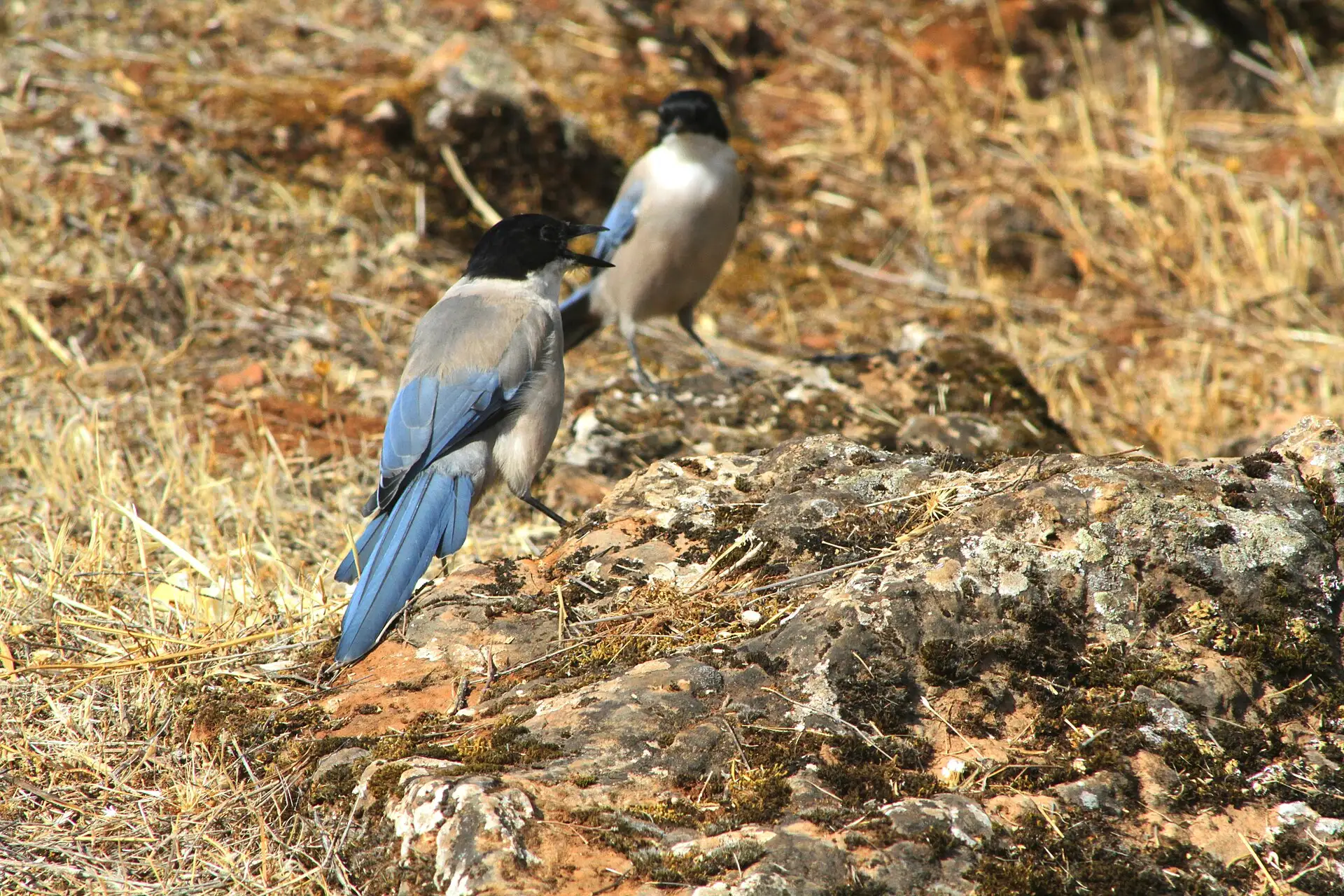
It is gregarious all year.
The birds we find on the Iberian Peninsula belong to the subspecies «cooki», which has recently been proposed as a separate species to tell it from its relatives in the Far East.
Chinese azure-winged magpies are told from those of the Peninsula by a white spot on the tail.
Habitat and distribution
The Iberian Magpie has an allopatric distribution. Worldwide, we find two cores of magpie population separated by thousands of kilometres: in the Far East and on the Iberian Peninsula. This raises doubts about whether the Iberian Magpie is native to Spain and Portugal. Today they are considered two distinct species: the Asian azure-winged magpie (Cyanopica cyanus) and ours, the Iberian Magpie (Cyanopica cooki), which lives only here.
The Iberian core is found in the south-western quadrant of the Peninsula, occupying mostly the regions of Extremadura, Castilla-La Mancha, Andalusia and southern Portugal. There are also populations spreading across the centre and north of the country, such as Madrid, Segovia and Burgos.
Areas where it is regularly recorded since 2010Squares of about 25 km where it is recorded regularly (occasional passage records are left out). Data from GBIF.org (199,830 records, retrieved October 2026); outline from Natural Earth.
The Iberian Magpie is considered a sedentary bird, although it sometimes moves, always without going too far from its breeding territory. They usually settle in wooded areas that are not very dense, for example, dehesas or holm oak woods.
Etymology
The species name comes from the combination of two terms. From Greek, κυανός (kyanos), meaning «dark blue»; and from Latin «pica», which refers to the magpie. Together it translates as «blue magpie».
Population
The Iberian Peninsula holds 250,000–360,000 breeding pairs, of which most live on Spanish territory. The most recent estimates, those of the III Atlas of Breeding Birds (2014–2018), speak of some 2.3 million birds in Spain alone1.
Nest of the Iberian Magpie
Once the pair is formed, they set the nest near some holm oak, Lusitanian oak, cork oak or oak. It is made of small branches and roots stuck together with mud and covered with plant fibres and moss.
Mating and breeding
Iberian Magpies are very gregarious birds in all their habits. They look for other nearby neighbours to form breeding colonies and so defend themselves better against predators. Laying takes place between mid-April and early May. They lay 4 or 5 cream-coloured eggs. The female incubates for 15 days, then both members of the pair care for the chicks.
The young take their first flights after two weeks, although they will still be fed by their parents for a few weeks more.
Diet of the Iberian Magpie
The Iberian Magpie’s diet is very diverse, it eats food of plant and animal origin, depending on the time of year. In general it feeds on large insects, mostly beetles. They also look for places where there may be scraps, such as landfills or vulture restaurants. Among its preferred fruits figs, grapes and cherries stand out. It does not usually attack small vertebrates.
Curious facts about the Iberian Magpie
The Iberian Magpie is a monogamous bird, and generally, in populations, there are fewer females than males. Therefore many of them fail to breed. And as kindness reigns over their sexual appetite, it turns their breeding needs into social self-sacrifice, acting as helpers to the pairs that do breed, becoming that family friend whom the young chicks call «uncle», who goes to Mass on Sundays and looks after them when the parents go for food, as a good Catholic, Apostolic and Roman.
The Iberian Magpie in Cabañeros
The species of magpie that lives in Cabañeros is, naturally, the subspecies Cyanopica cooki. It is a sedentary species, very common in this area of the Montes de Toledo. Gregarious all year, the Iberian Magpie sets its nesting colonies in wooded areas that are not very dense. Communal breeding is usual. We can see the chicks flying in mid-June. Although its diet is omnivorous, it often appears at carrion.
Where to see the Iberian Magpie in Cabañeros
It appears in the scrub–raña ecotone and in the dehesas of some density.
When
All year round, because it does not move away from here. In mid-June the young can already be seen flying with the flocks.
What time
First thing in the morning and at dusk, when it is most active and noisiest.
Where
In the scrub–raña ecotone and in the dehesas of some density, from holm oak to holm oak.
What to look for
A flock crossing the clearing one after another, showing the long tail and the blue of the wings. Before seeing them you will hear them: their nasal call, a harsh «grruií».
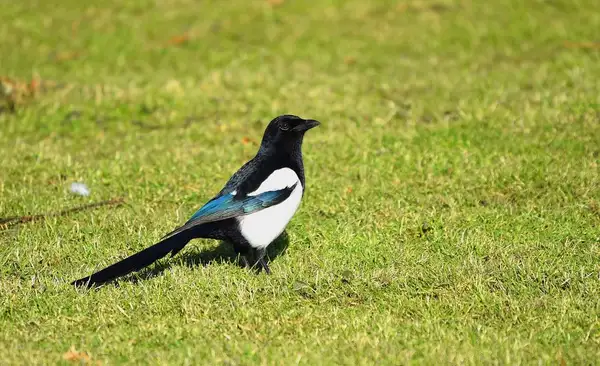
Quite a bit larger and black and white, with green and bluish sheen on the tail and wings. It flies more heavily and has no black cap over a light body.
It also has blue on the wing, but only in a small, barred patch. The body is pink, the tail black and short, and in flight it shows a very visible white rump. It lives in more closed woods.




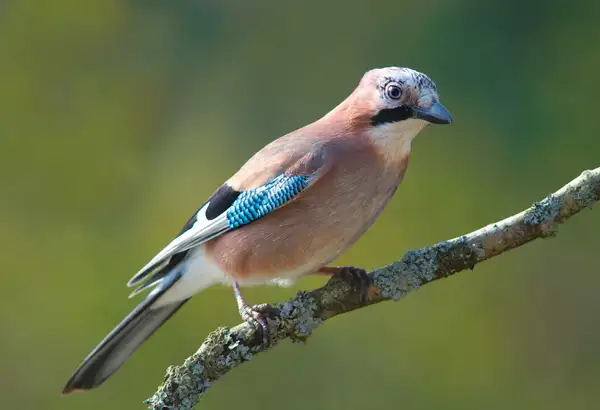
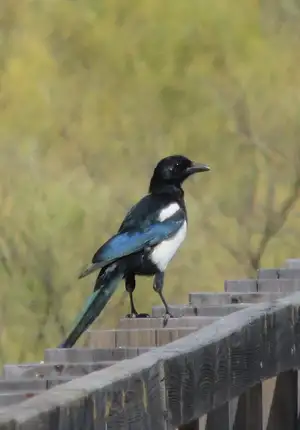 Same family
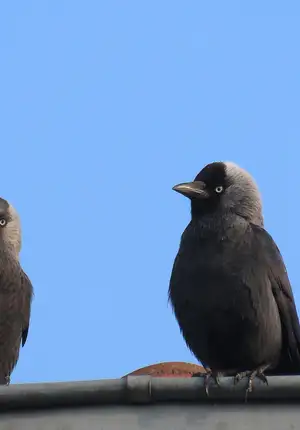 Same family
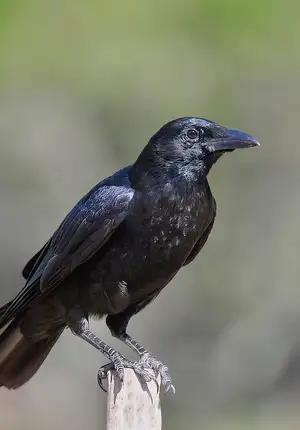 Same family
 Same family
 Same order
 Same order
 Same order
 Same order






