Gregarious: it moves in flocks, often mixed with other finches
Lifespan
Record of 17 years and 3 months according to EURING (a bird ringed in Slovenia and shot); AnAge gives up to 13.5 years
Conservation status
LC
NT
VU
EN
CR
EW
EX
Global (IUCN)
Least Concern
Spain
Near Threatened (NT) as a winter or passage visitor and Least Concern (LC) as a breeder in the Red Book of the Birds of Spain; on the List of Wild Species under Special Protection, but not in the Spanish Catalogue of Threatened Species
When to see it
Winter visitor
Months of the year when it is present
J
F
M
A
M
J
J
A
S
O
N
D
In Iberia
yes
yes
yes
yes
yes
yes
yes
yes
yes
yes
yes
yes
Song or voice of the Eurasian Siskin
The call is a peep («chiiia») like the Citril Finch’s; in a group, the calls combine with warbles. The males’ song is a mixture of short notes: «chui-chui-chui, tlui-tlui, chiririri…».
SongEurasian Siskin
0:00 / 0:10
10 kHz5
The sonogram draws the sound: time runs from left to right, and the higher a trace sits, the higher the note.Recording by Vladimir Yu. Arkhipov, Wikimedia Commons (región de Briansk, Rusia) (CC BY-SA 3.0).
Flight of the Eurasian Siskin
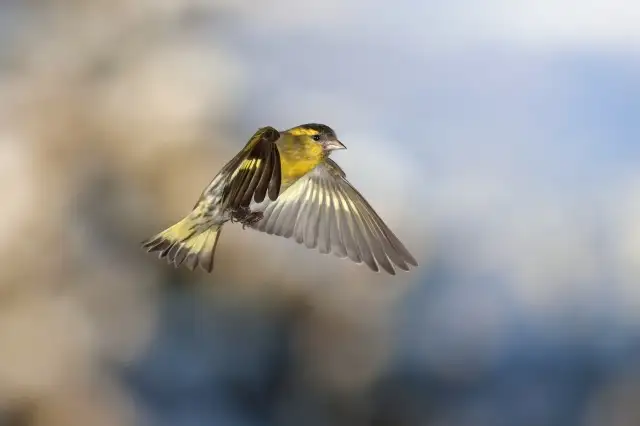
It moves in flocks, often mixed with other finches. In flight it shows the yellow patches on wings and tail.
Flight typeIn a flock, with the yellow patches on wings and tail
It is a gregarious species: it moves in flocks, often mixed with linnets, chaffinches, serins and other finches.
In flight it shows the yellow patches on wings and tail, which, together with the yellow bars on the wing «shoulders», set it apart from other finches.
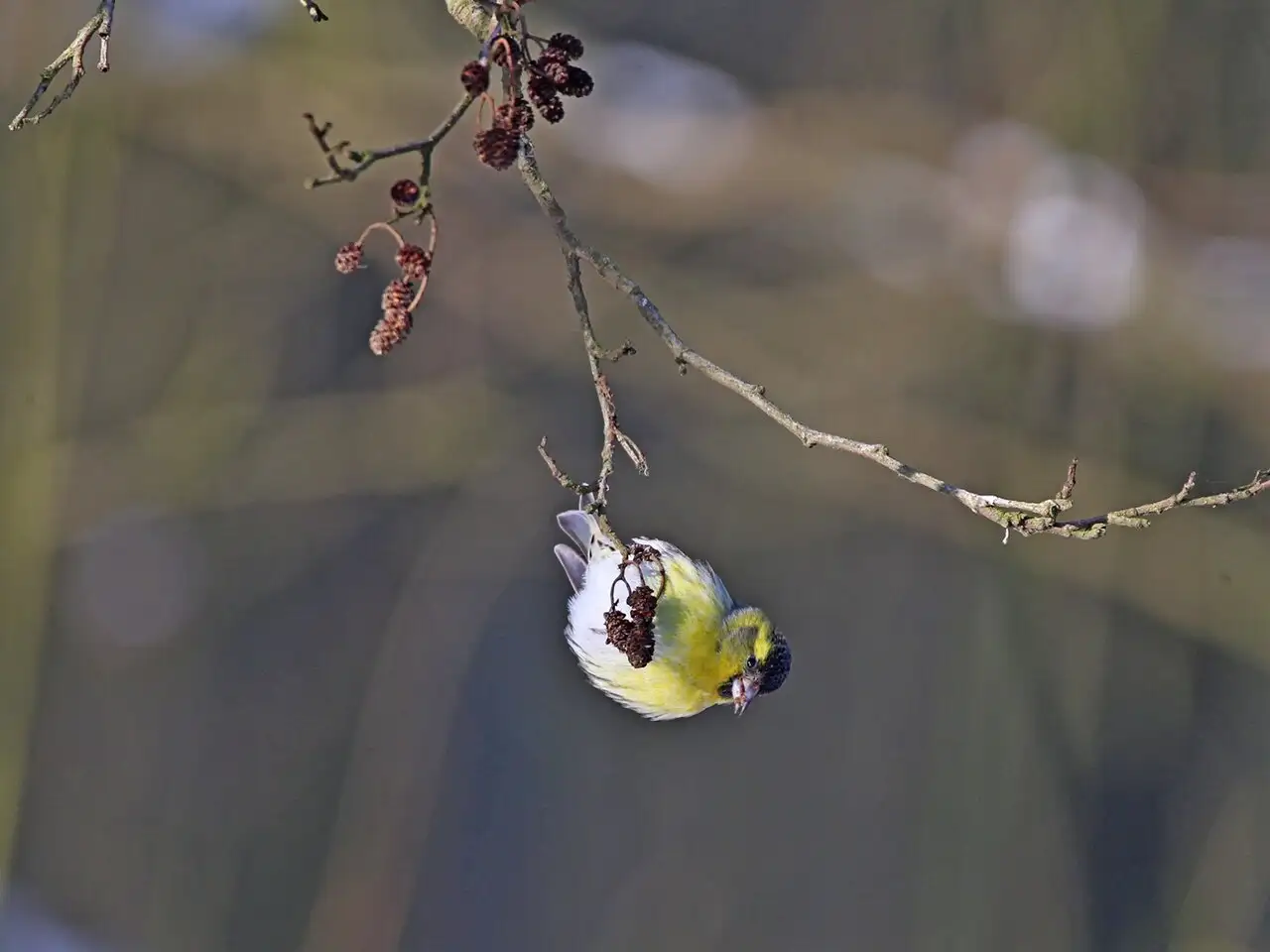
Unlike most finches, it also looks for food on the branches of riverside trees, such as alders, elms and birches.
Photo gallery of the Eurasian Siskin
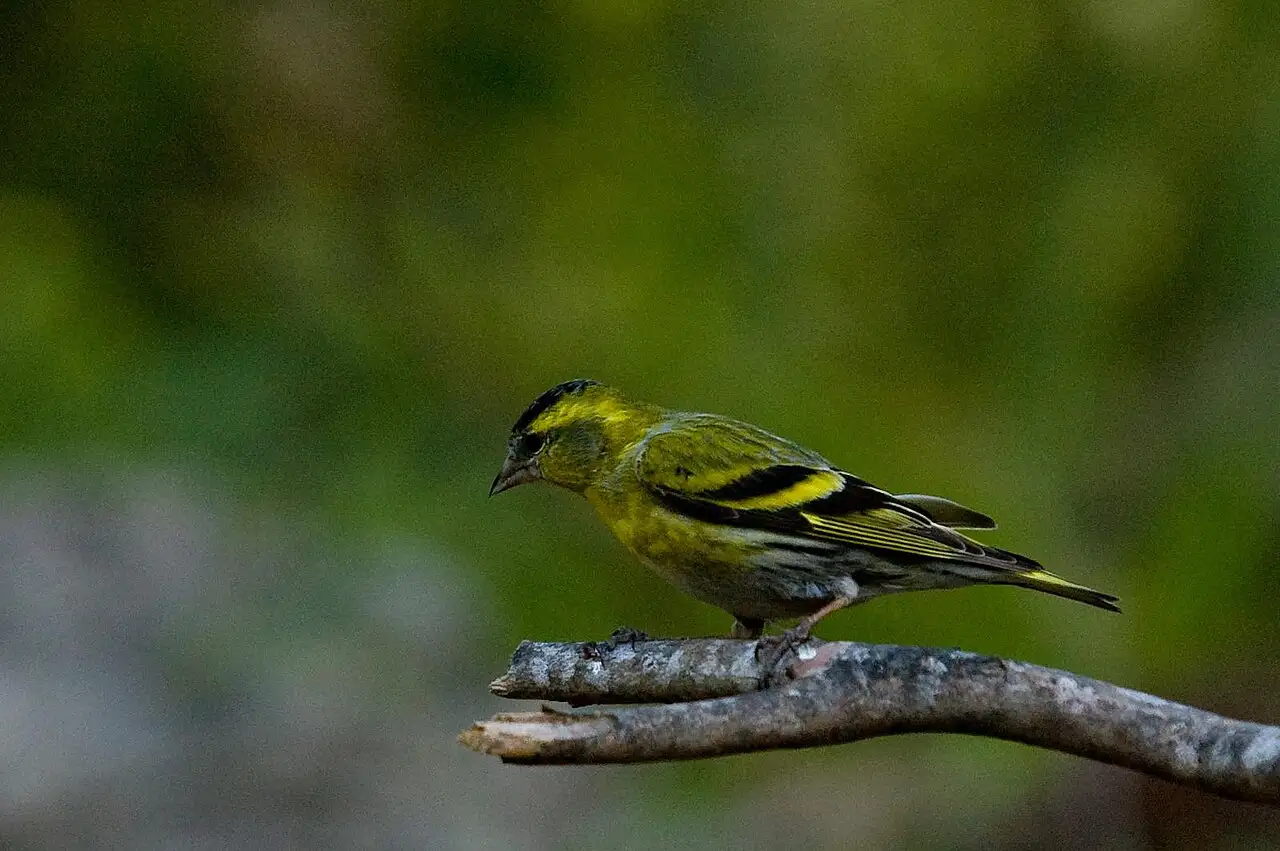
Male Eurasian Siskin perched on a branch, in profile, with black crown, greenish-yellow body and the yellow bars on the wingsPhoto: rjime31, CC BY-SA 2.0Photo 1 of 4
Eurasian Siskin hanging upside down from an alder branch with catkins, feedingPhoto: Frank Liebig, CC BY-SA 3.0 dePhoto 4 of 4
1 / 4
Identification of the Eurasian Siskin
The Eurasian Siskin is a small bird, with a short, thin bill, which shows a short, notched tail when closed. Its colouring may recall that of serins, greenfinches and citril finches, but siskins are well told apart by the combination of three features: their small size, the yellow patches on wings and tail and the yellow bars on the wing «shoulders».
Male
Cap and throat black.
Yellow patches on wings and tail and yellow bars on the shoulders.
Female
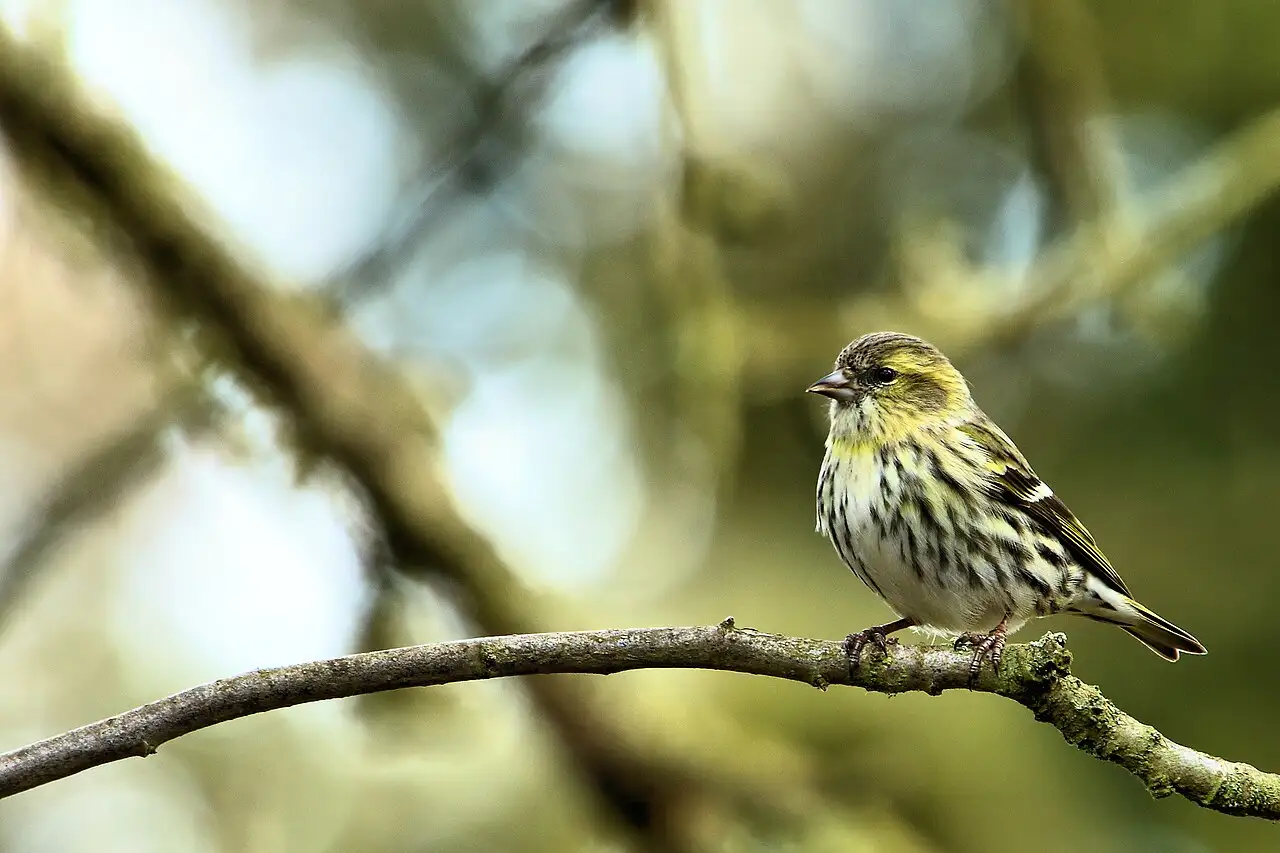
Crown greyish green and throat whitish, both with more or less diffuse streaks.
Yellow patches on wings and tail, like the male’s.
Habitat and distribution of the Eurasian Siskin
It occupies western Europe, from the British Isles to Russia and from Scandinavia to the Mediterranean countries, including northern Morocco and Egypt. It also appears in the northern half of eastern China in spring and in Indochina in winter. It is a monotypic species, with no described subspecies.
In Spain it is present over practically the whole territory during autumn and winter, although the highest densities are recorded in the Atlantic zone of Galicia and in the Mediterranean strip that runs from the Alicante Levante to the Catalan Pyrenees. In spring it is found only scarcely but regularly in the Pyrenees and, more sporadically, in other mountain systems of the northern half. It breeds in montane woodland dominated by pines, firs and beeches, above all in the Pyrenees and with great variability between years. In winter, besides in those woods, it is seen in riverside stands with alders or elms, in farmland and in open farming areas, including fallows and track edges.
Its migratory behaviour varies across its range. The populations around the Baltic and in Russia move in winter towards central and southern Europe, and every two to five years, depending on the fruiting of the Norway spruce in northern Europe, great irruptions of siskins occur that sometimes reach the Peninsula. The siskins that reach Spain in autumn and winter come from almost all of Europe, according to recaptures of ringed birds, and some of them show great philopatry: they winter year after year at the same locality.
Areas where it is regularly recorded since 2010Squares of about 25 km where it is recorded regularly (occasional passage records are left out). Data from GBIF.org (111,678 records, retrieved October 2026); outline from Natural Earth.
Etymology of the Eurasian Siskin
According to Wikipedia, «Spinus» comes from ancient Greek «spinos», the name of a bird impossible to identify today. In other languages it is called «lluer» in Catalan, «úbalo común» in Galician, «tarina» in Basque and «Eurasian siskin» in English1.
Population of the Eurasian Siskin
In the 2021 European Red List of Birds the European breeding population is estimated at between 13,700,000 and 25,800,000 mature individuals, with a stable trend. On the Peninsula it is only easily detected in the breeding season when a prior year of high breeding success in central and northern Europe coincides with a following year of great pine-nut production in the montane Iberian pine woods. Because of that fluctuation it has not been possible to fix figures for the siskins that winter in Spain or the species’ trend. The main threats are intensive agriculture, the use of pesticides and hunting with nets or birdlime, which still continues in some areas.
Nest of the Eurasian Siskin
It usually places the nest on high branches of conifers. It uses lichens, moss and wool to build a cup, which it lines with fine roots, hair, wool, feathers and hairy parts of plants.
Courtship and breeding of the Eurasian Siskin
Breeding in Spain depends on the numbers that arrived the previous autumn–winter and on pine-nut production in the non-serotinous pine woods from winter. In the pre-spring period it may breed opportunistically if conditions are favourable. Regularly it begins breeding in April and may have two broods; if the seed crop is generous, it may begin the first clutch in late winter, and if it is scarce, it begins in May and makes only one clutch. The female lays three to five very pale blue eggs with ochre, pink, reddish or purple spots. Incubation lasts 11 to 14 days. The male feeds the chicks during the first seven days and both parents for a week more.
Diet of the Eurasian Siskin
It feeds on seeds of pines, alders, birches, elms and various herbaceous plants, and in the breeding period completes its diet with insects. Unlike most finches, it also looks for food on the branches of riverside trees, and it is common to see it in alders, elms and birches.
Curious facts about the Eurasian Siskin
Every two to five years, depending on the fruiting of the Norway spruce in northern Europe, great irruptions of siskins occur in the centre of the continent, which sometimes reach the Peninsula1. EURING lists a bird ringed in Slovenia that lived 17 years and 3 months, a figure out of line with AnAge’s 13.5 years.
The Eurasian Siskin in Cabañeros
The habitat pages of this website do not mention it. GBIF.org records 91 observations of the Eurasian Siskin in Cabañeros and its surroundings.
Where to see the Eurasian Siskin in Cabañeros
In Cabañeros and its surroundings, mostly in autumn and winter.
When
In autumn and winter; in Spain it is mainly a winter visitor, and some winters more birds arrive.
What time
In good light, in flocks that move from branch to branch.
Where
In alder groves and other riverside stands, and in farmland, fallows and track edges.
What to look for
Look for the small size and the yellow patches on wings and tail; listen for the «chiiia» call.
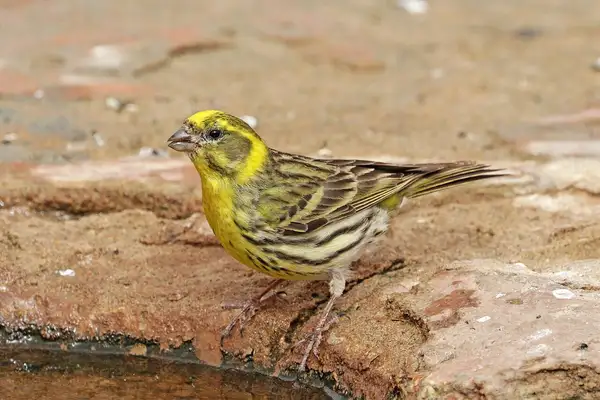
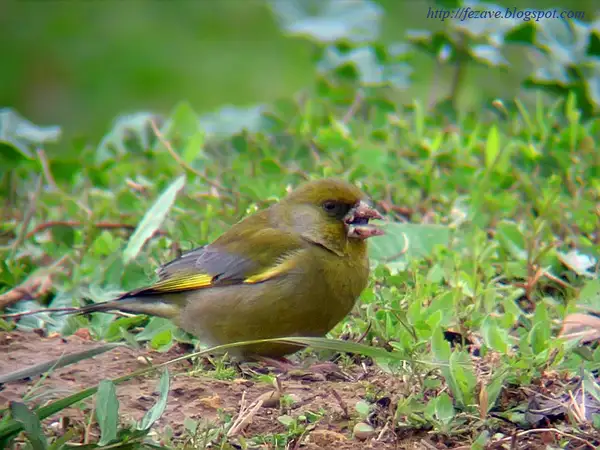
It is similar in voice and appearance1. The siskin is told apart by its small size, the yellow patches on wings and tail and the yellow bars on the wing «shoulders».
It is similar in appearance1. The siskin is told apart by its small size, the yellow patches on wings and tail and the yellow bars on the wing «shoulders».
Photo: Fernando Zamora, public domain
Citril Finch
Carduelis citrinella
How to tell them apart
It is similar in voice and appearance1: the siskin’s call is like its own.
Photo: Birdwatching Barcelona, CC BY-SA 2.0
Other birds
Birds related to the Eurasian Siskin or sharing its habitats in Cabañeros.



 Same family
 Same family
 Same family
 Same family
 Same order
 Same order
 Same order
 Same order






