Near Threatened (Red Book of the birds of Spain) and under special protection
When to see it
Winter visitor in Cabañeros
Months of the year when it is present
J
F
M
A
M
J
J
A
S
O
N
D
In Iberia
yes
yes
yes
yes
yes
yes
yes
yes
yes
yes
yes
yes
In Cabañeros
yes
yes
yes
no
no
no
no
no
no
yes
yes
yes
Breeding season
no
no
no
no
yes
yes
yes
yes
no
no
no
no
Song or voice of the Water Pipit
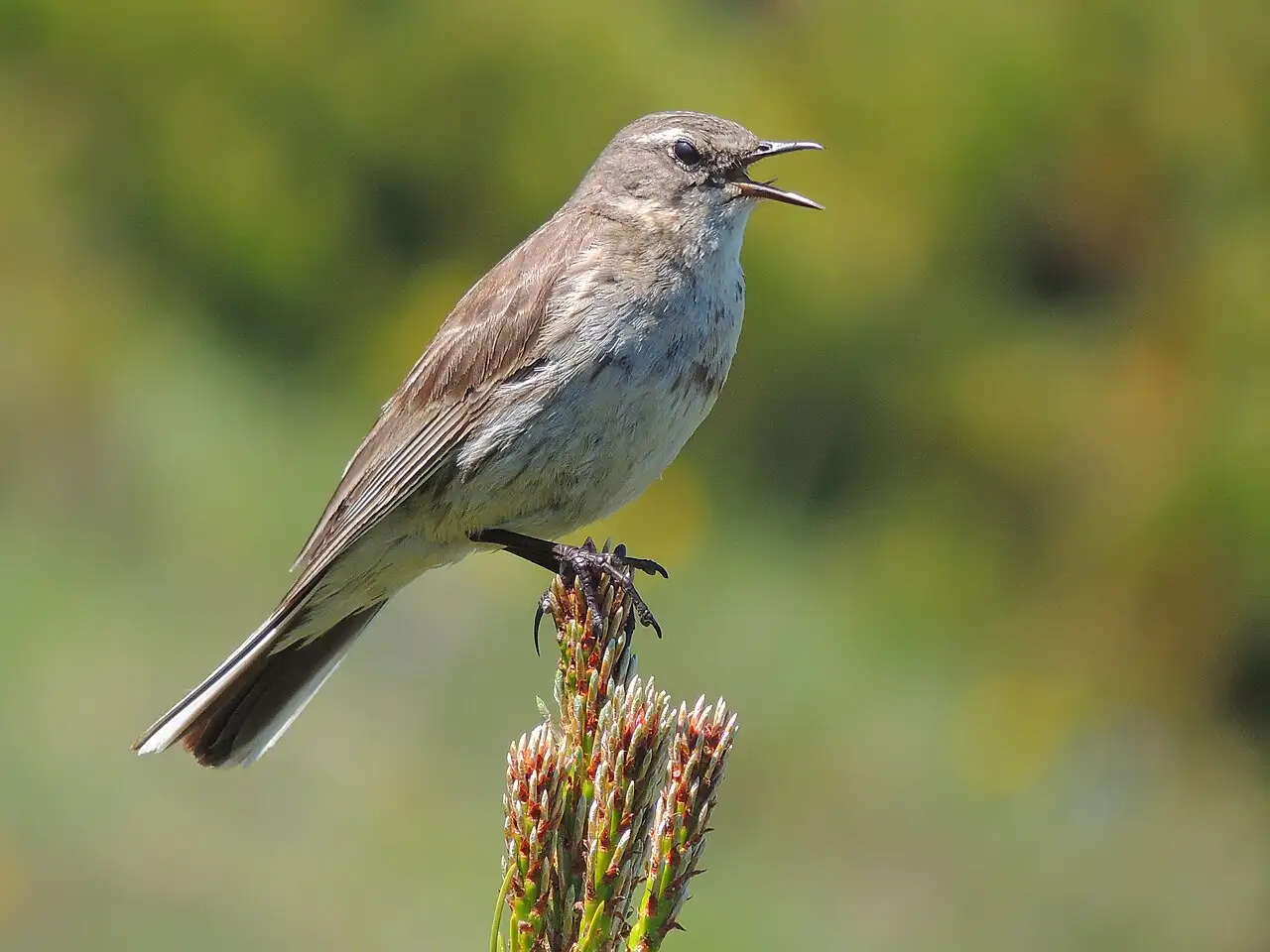
A set of high warbles that it gives in high flight, similar to the Tree Pipit’s, and a «tsiip» as a call.
SongWater Pipit
0:00 / 0:08
10 kHz5
The sonogram draws the sound: time runs from left to right, and the higher a trace sits, the higher the note.
Flight of the Water Pipit
It is a strong flight, alternating series of wingbeats and long, fast glides in which it drops to the ground. It can reach considerable heights and distances.
Flight typeUndulating
It springs from the grassland with a «tsip» and some quick flaps. The usual sight is of it alone, perched on the ground or on a stone.
Alternates series of flaps with long, fast glides, with the wings closed, in which it loses height. It thus draws a line of low waves.
It drops, brakes with its tail spread, showing the white edges, and lands on the shore.
Photo gallery of the Water Pipit
Water Pipit in breeding plumage, in a meadow in the Pyrenees: grey head, pale eyebrow and pinkish breast almost without streaksPhoto: Sandra from France, CC BY 2.0Photo 1 of 4
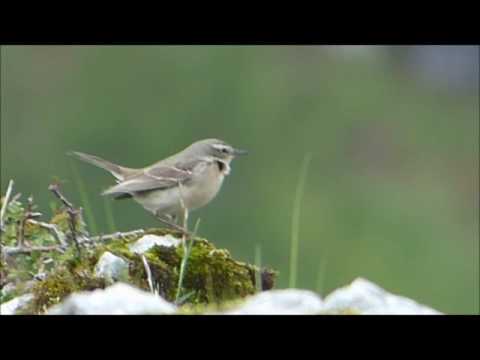
Water Pipit singing perched on a plant, with bill open and tail spreadPhoto: xulescu_g, CC BY-SA 2.0Photo 2 of 4
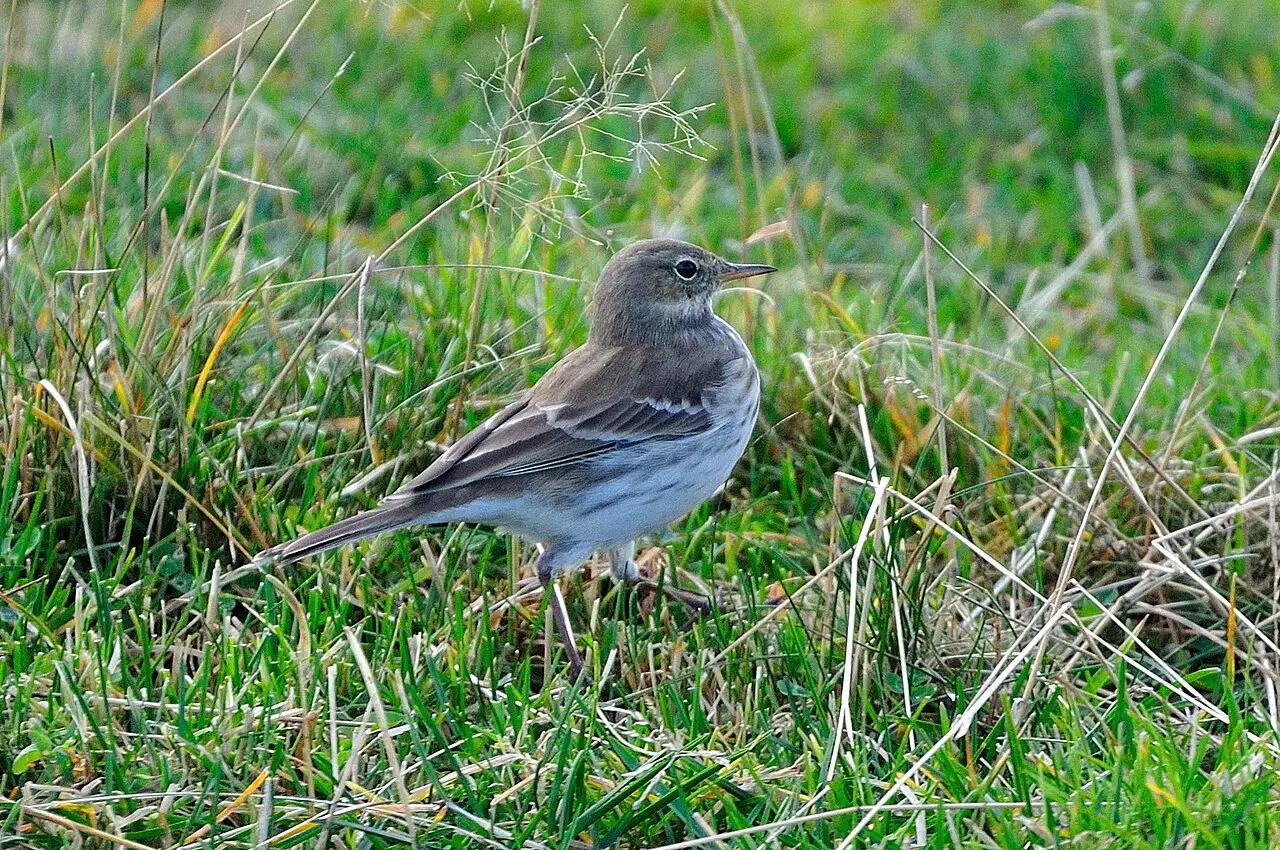
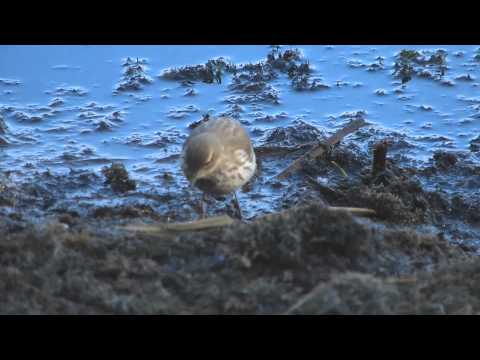
Water Pipit in winter on a mudflat: whitish breast with dark streaks and pale eyebrowPhoto: Alpsdake, CC BY-SA 4.0Photo 4 of 4
1 / 4
Identification of the Water Pipit
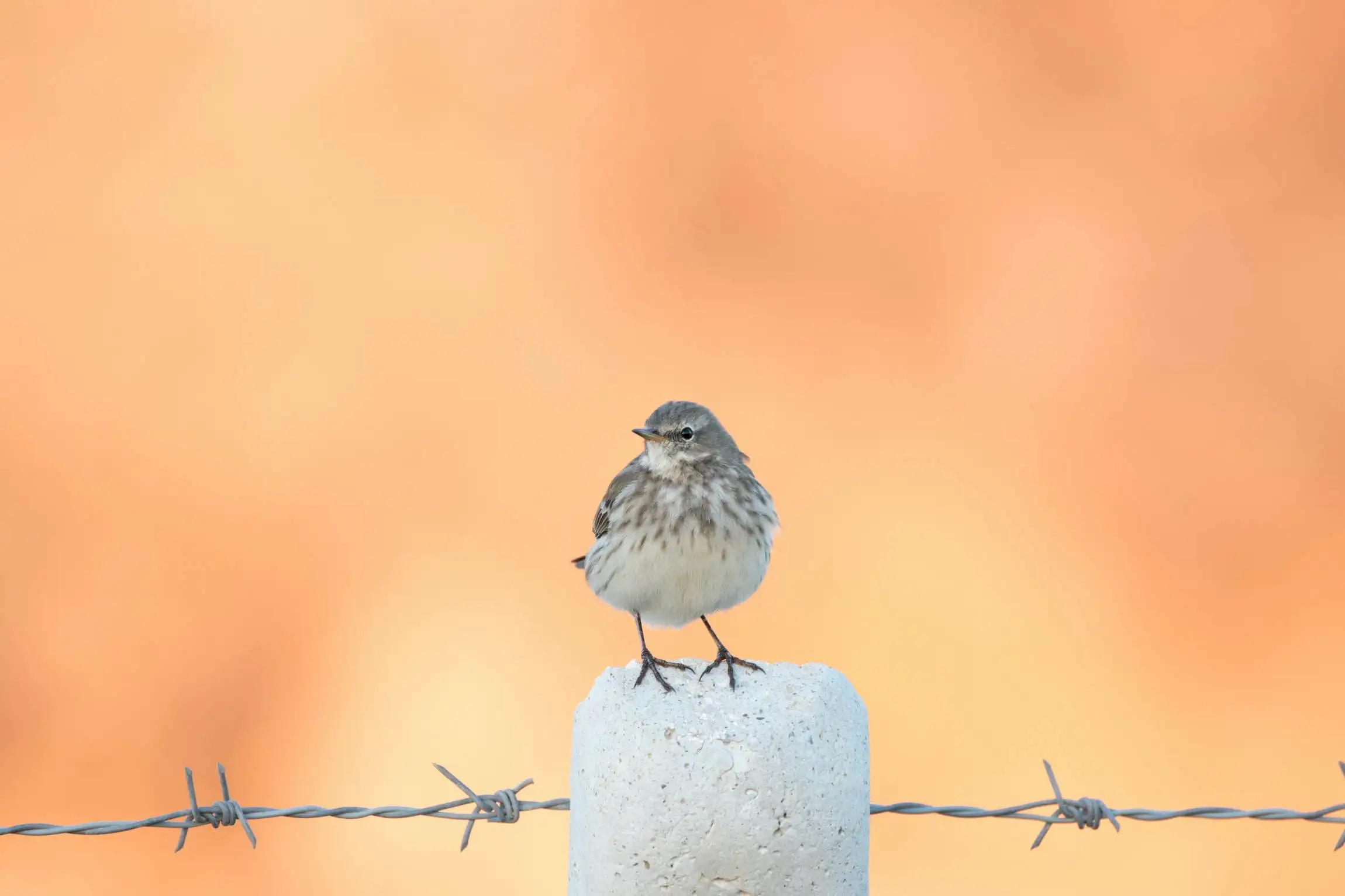
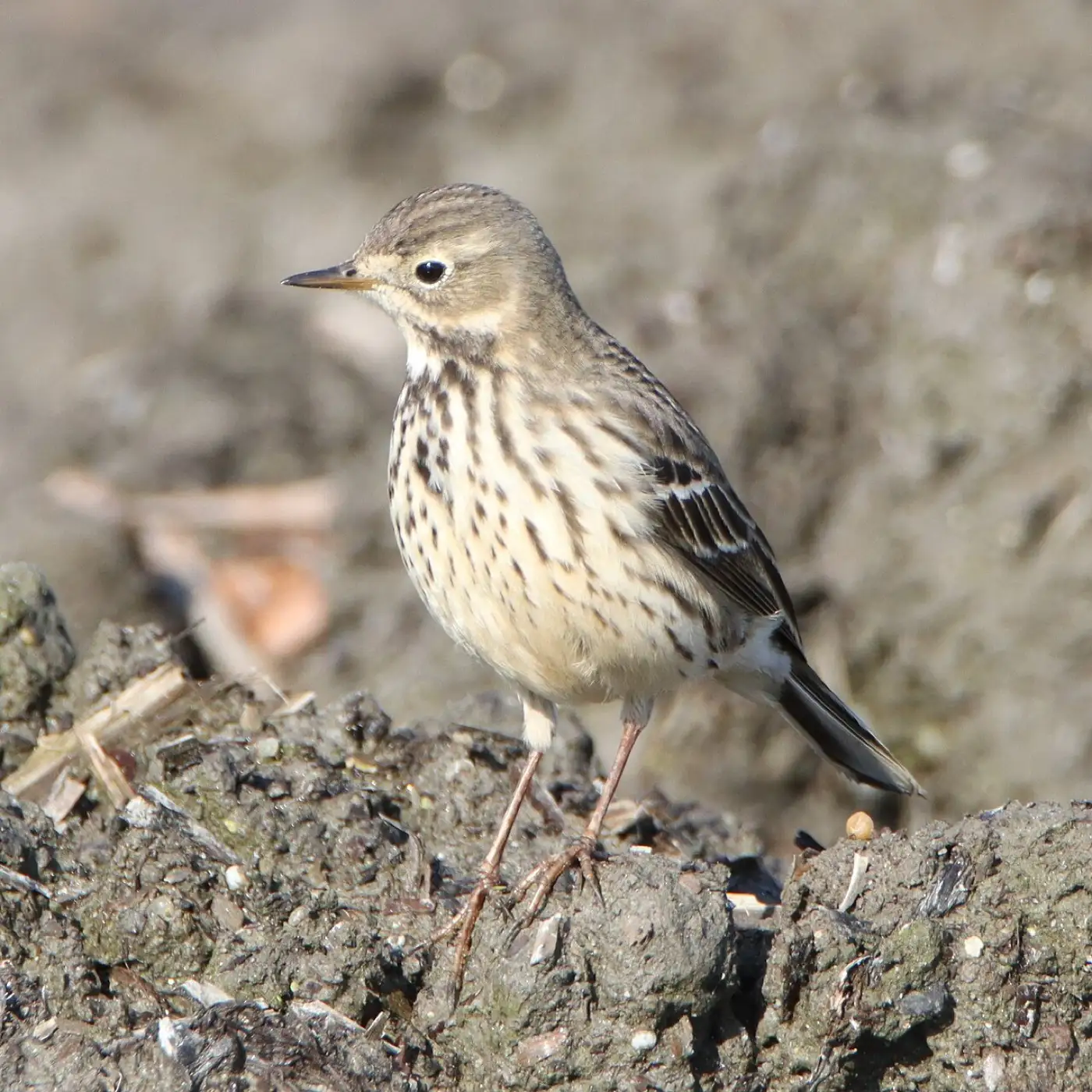
In winter: its head is grey, with a white band over each eye. They have a small mark on the chin and throat. The underparts are whitish, with a touch of pink. Their legs can be dark brown to reddish. The back looks warm brown, slightly streaked. The tail is dark with white edges. When it flies we can make out two whitish bars between its dark wings.
In summer: its brown head shows white bands. The bib and underparts are white, and the brown back is rather dark. The wings have two white bars and the flanks are streaked. The legs range from dark brown to blackish.
It is a large, wary bird, hard to spot. It has the peculiarity of being one of the Spanish birds that live in the high mountains. It is bigger than the other pipits and its plumage varies with the time of year. The usual sight is of one alone, perched on the ground.
Habitat and distribution of the Water Pipit
This wintering bird breeds in the high mountains and descends in winter, many of them heading north. The Water Pipit usually goes to the muddy edges of marshes, reedbeds and salt marshes, generally places with water. In summer we can find it in alpine meadows and on stony slopes, skirting the snow line. Its distant, shy nature makes it hard to see at close range. Besides, it can easily be confused with the coastal Rock Pipits of Scandinavian origin.
The Water Pipit breeds locally at high altitude. It is found on the Iberian Peninsula, the Pyrenees, the Alps, Italy and the Balkans, settling in the dampest alpine meadows.
In Spain we find it in the northern half of the country, above all in the Pyrenees and the Cantabrian range, although also in the Iberian System and the Central System. In winter it is distributed over almost the whole peninsula, in marshes, rice fields, waterlogged meadows and shores.
Areas where it is regularly recorded since 2010Squares of about 25 km where it is recorded regularly (occasional passage records are left out). Data from GBIF.org (71,799 records, retrieved October 2026); outline from Natural Earth.
Etymology of the Water Pipit
«Anthus» is the Latin name of a small grassland bird, which already appears in Pliny, and «spinoletta» is an Italian word by which this species was known. As for «bisbita», it is a word of onomatopoeic origin: it imitates the call of these birds.
Population of the Water Pipit
The population in our country was estimated to reach 30,000 pairs, although there are no up-to-date estimates1. In Europe the trend is decreasing, and in Spain it is classed as Near Threatened in the Red Book of birds.
Nest of the Water Pipit
They nest on the ground among the grass, and use it along with dry leaves to build the nest. They usually nest above 1,300 metres, even up to 2,700 metres, and always in damp areas, such as alpine grassland and near streams and peat bogs.
Courtship and breeding of the Water Pipit
The Water Pipit is a monogamous bird, yet it is possible to see pairs of one female with 2 or more males and vice versa. The female builds the nest and lays between 4 and 6 greyish-white eggs with dark spots, which she incubates for about 13 days. After two weeks, with care from both members of the pair, the chicks leave the nest. They raise 1 or 2 broods between May and August.
Diet of the Water Pipit
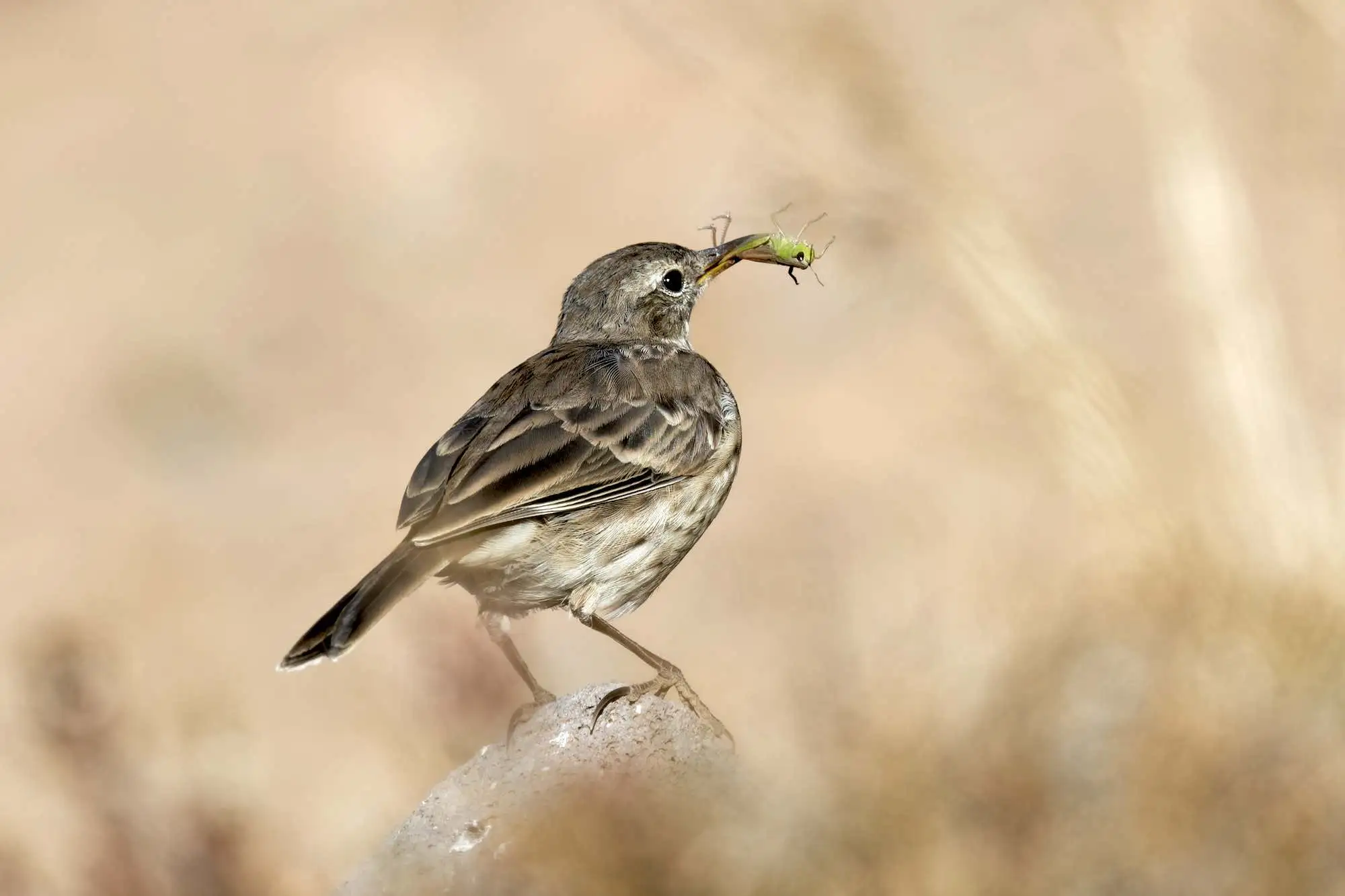
It feeds on insects and other invertebrates that it finds on the ground, mainly flies, butterfly caterpillars, mosquitoes, bugs and so on. Occasionally it eats seeds and algae.
Curious facts about the Water Pipit
The colour of its plumage changes between spring and winter.
Just like the accentors, this bird shows a polygamous character, something that seems common in mountain birds. Why make only your partner happy if you can please many more?
The Water Pipit in Cabañeros
It is an uncommon winter visitor. Its passage, however, is frequent in October, in the post-breeding season, and in March, in the pre-breeding one. Its habits are less gregarious than the Meadow Pipit’s.
Where to see the Water Pipit in Cabañeros
We find it on the shores of the Torre de Abraham reservoir. Also on the stony banks of the streams of the rañas.
When
From October to March. The passage is most frequent in October, post-breeding, and in March, pre-breeding.
What time
First thing in the morning and in the afternoon, when it moves along the shores looking for insects.
Where
On the shores of the Torre de Abraham reservoir and on the stony banks of the streams of the rañas.
What to look for
A slender, greyish-brown bird that scurries along the shore and takes off with a «tsiip» showing the white tail edges. Almost always alone.
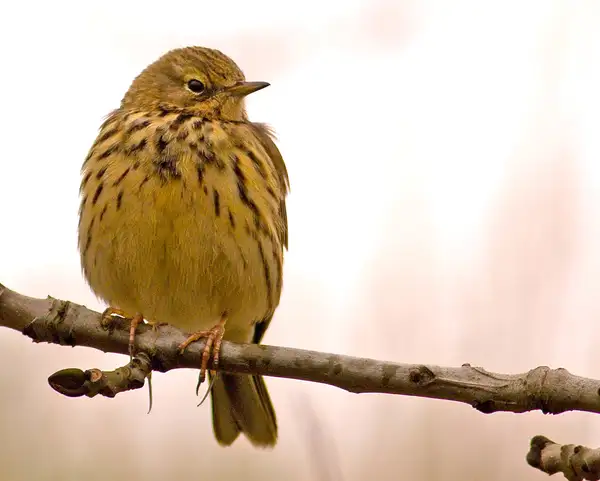
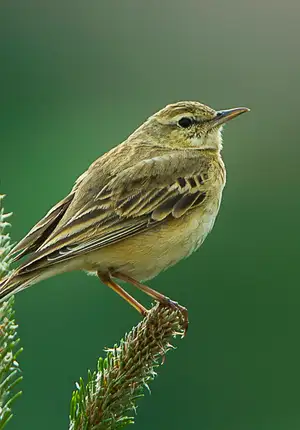
Somewhat smaller, more olive and with a heavily streaked breast in summer too. It has pale legs, and does not breed in the high mountains but in flat meadows. More gregarious.



 Same family
 Same family
 Same family
 Same family
 Same order
 Same order
 Same order
 Same order






