The pair shares the nest, daytime incubation and feeding equally; in winter it receives birds from northern Europe
Lifespan
Record of 10 years and 9 months in the wild according to EURING (a bird ringed in Great Britain and Ireland); AnAge gives 13.1 years
Conservation status
LC
NT
VU
EN
CR
EW
EX
Global (IUCN)
Least Concern
Spain
Near Threatened (NT) as a breeder in the Red List of the Birds of Spain; not on the List of Wild Species under Special Protection nor in the Spanish Catalogue of Threatened Species
When to see it
Resident
Months of the year when it is present
J
F
M
A
M
J
J
A
S
O
N
D
In Iberia
yes
yes
yes
yes
yes
yes
yes
yes
yes
yes
yes
yes
Breeding season
no
no
no
yes
yes
yes
yes
yes
no
no
no
no
Song or voice of the Eurasian Tree Sparrow
It is a fairly silent bird. Its sounds are like those of other sparrows, though somewhat higher and less loud, and it alternates the usual «chit» with quick repetitions, «tett-tet-tet». The recording, from Sweden, had quite a lot of background noise and we have filtered it.
SongEurasian Tree Sparrow
0:00 / 0:19
10 kHz5
The sonogram draws the sound: time runs from left to right, and the higher a trace sits, the higher the note.Recording by Max Karlsson, xeno-canto XC683396 (Solna, Estocolmo, Suecia) (CC BY-SA 4.0).
Flight of the Eurasian Tree Sparrow
It is more nervous than the House Sparrow and spends less time on the ground; it moves among the trees of riverside groves, farmland and dehesas.
Flight typeNervous, from tree to tree
It is the most woodland of our sparrows: it prefers crops with scattered trees, riverside groves and wasteland.
It behaves more nervously than the House Sparrow and spends less time on the ground.
It eats mainly seeds, fruit and berries, and in spring and summer many invertebrates, with which it feeds the chicks.
Photo gallery of the Eurasian Tree Sparrow
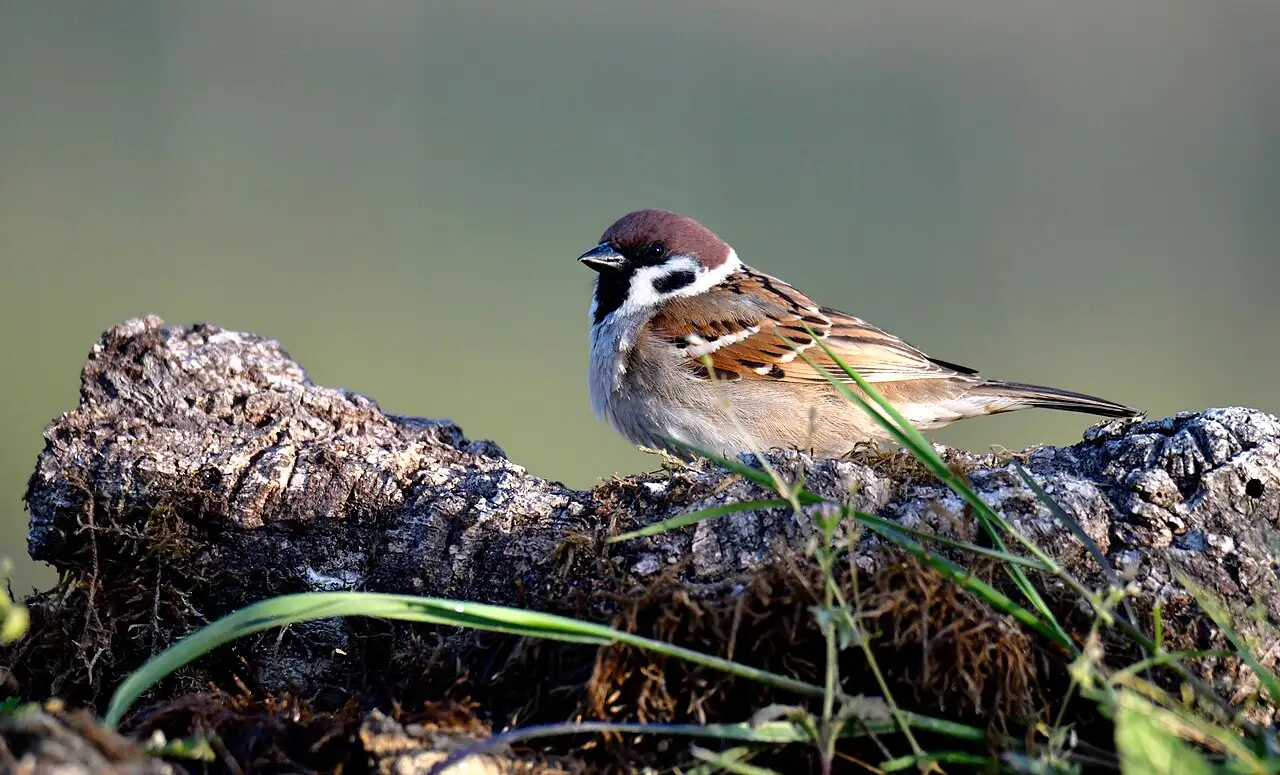
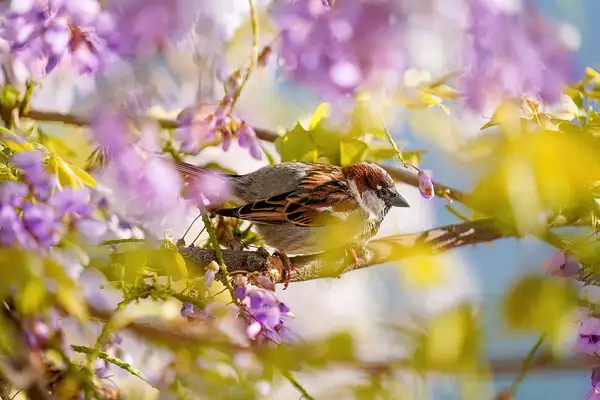
Eurasian Tree Sparrow perched on a trunk, with chestnut cap, white cheek with a black spot and streaked brown backPhoto: Luiz Lapa from Oeiras, Portugal, CC BY 2.0Photo 1 of 4
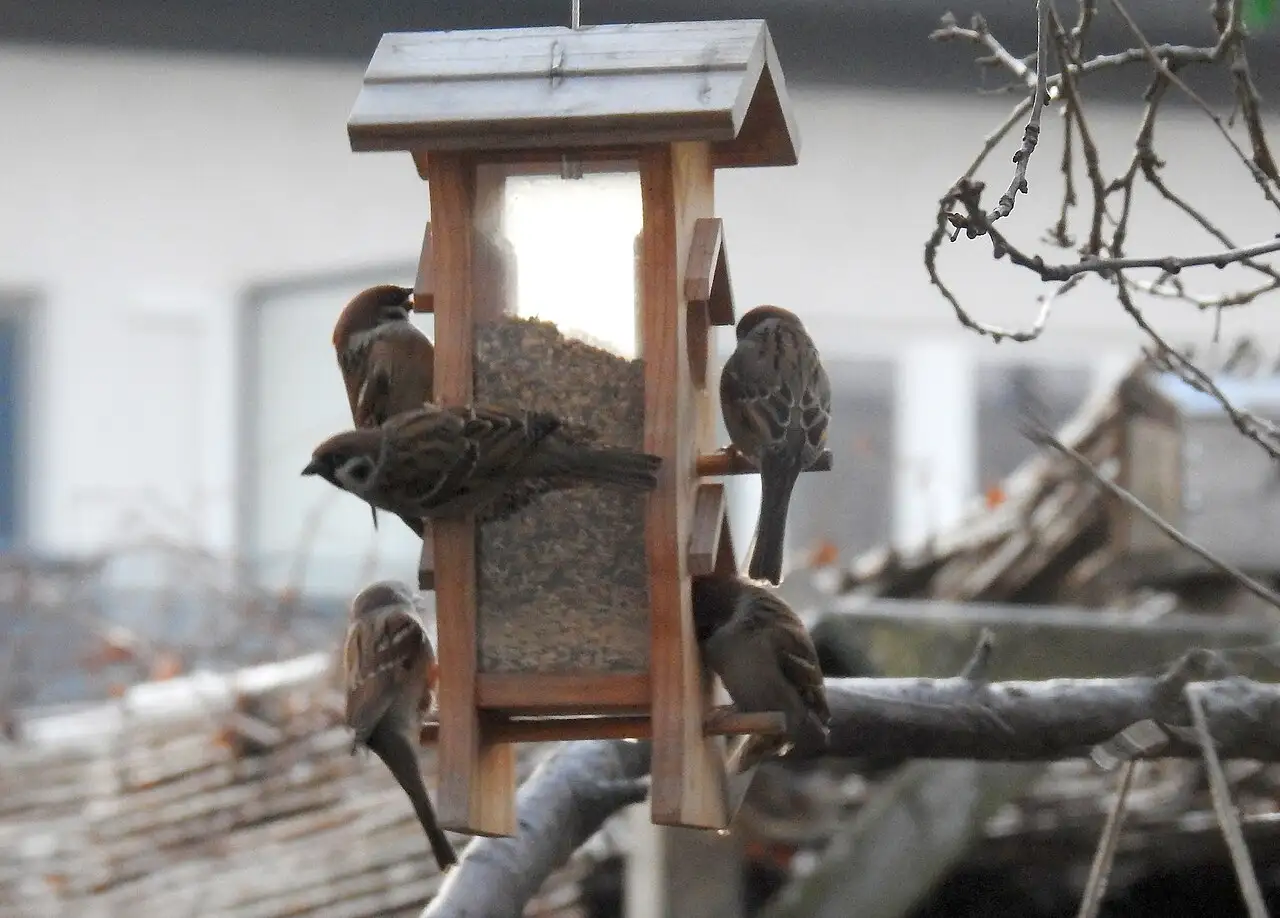
Several Eurasian Tree Sparrows clinging to a seed feeder hanging from a treePhoto: Arquus, CC BY-SA 4.0Photo 3 of 4
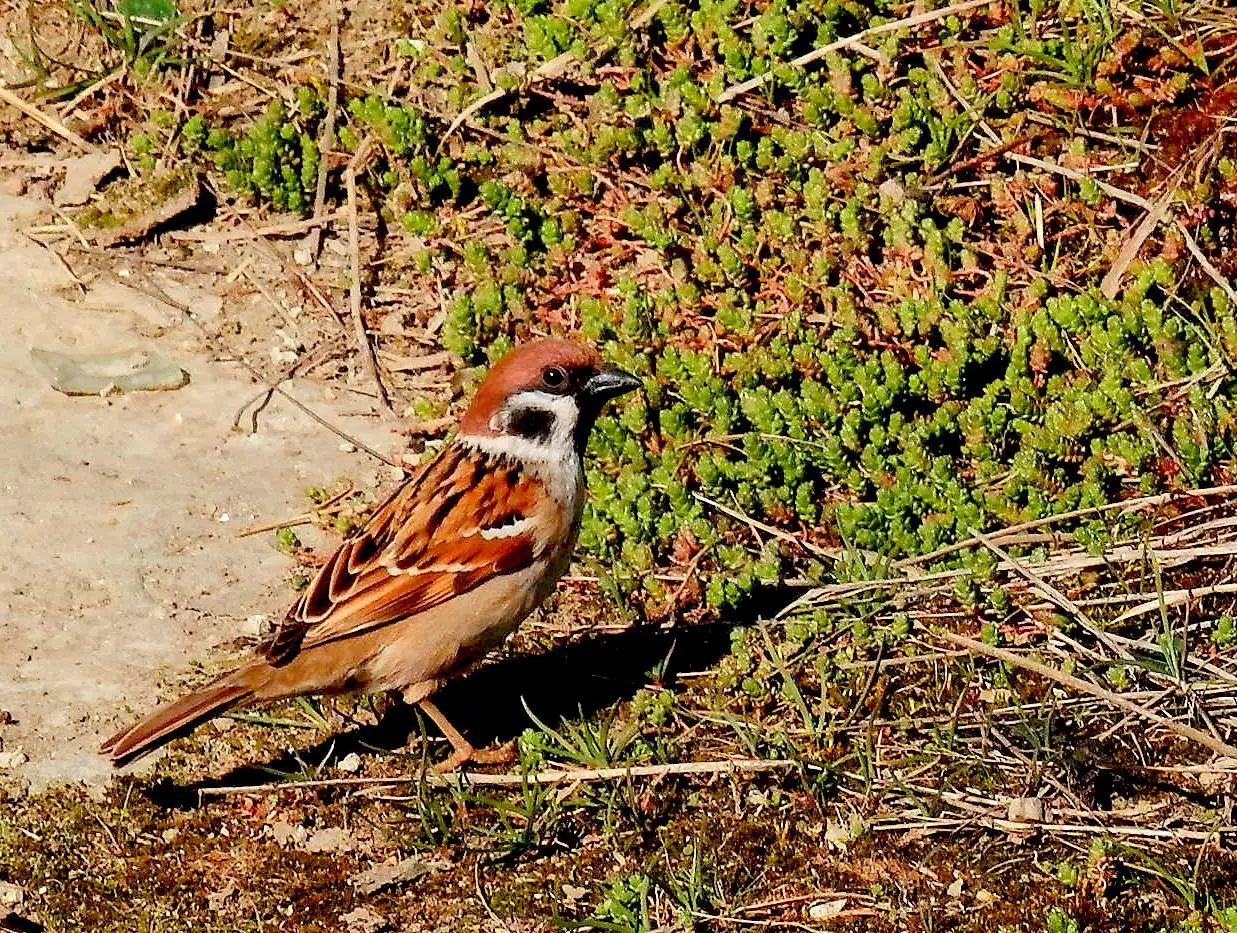
Eurasian Tree Sparrow on the ground among creeping plants, with chestnut cap and white collarPhoto: Ing.Mgr.Jozef Kotulič, CC BY-SA 4.0Photo 4 of 4
1 / 4
Identification of the Eurasian Tree Sparrow
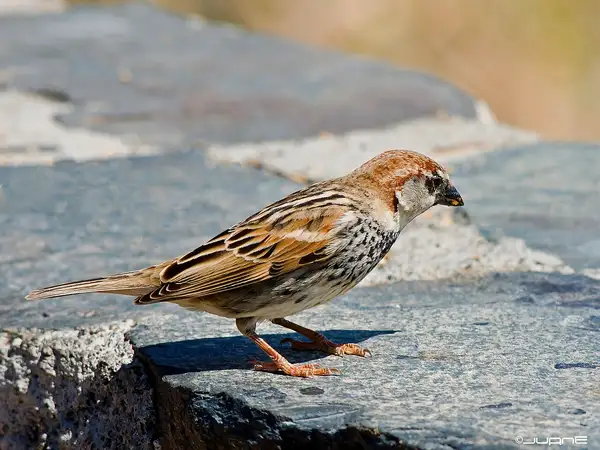
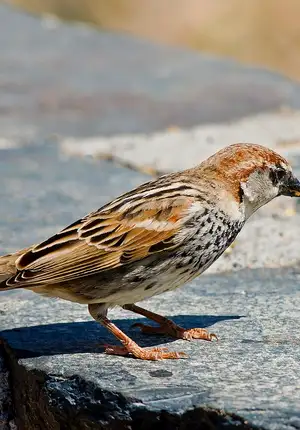
It is the smallest of the European sparrows and has colouring like the House Sparrow’s: back brown streaked with black and very pale grey breast. It is told from it by its extensive chestnut cap and by a striking black spot on the white cheek, and it also wears a white collar, broken at the nape, which the House Sparrow lacks. The bill is less robust and the bib much smaller. Males and females have no significant plumage differences, so they cannot be told apart in the field.
Adult
Chestnut cap, white cheek with a black spot and white collar.
Back brown streaked with black and very pale grey breast.
Young bird
Until late summer, with the cheeks a dirty white and without the black spot.
Habitat and distribution of the Eurasian Tree Sparrow
It is distributed across much of the Palearctic, from the United Kingdom to India and Japan, and to the south reaches north-west Africa, which it has colonised recently. Several subspecies are recognised, and «montanus» is the one that occupies most of Europe.
It is on the whole Peninsula, although better spread across the two plateaus, the south of Aragon, the Valencian Community and Catalonia. It also lives in the Balearics (Ibiza and Mallorca) and on Gran Canaria, which it colonised in the eighties. In Galicia and the Cantabrian fringe its population is more fragmented, and it does not breed in Ceuta or Melilla.
It occupies very varied environments, from open meadows to dense Mediterranean woods, but prefers crop fields with scattered trees, riverside groves and wasteland. It also frequents floodplains, olive groves, parks, vegetable plots and the outskirts of villages and towns, as long as they have some trees: it is the most woodland sparrow of our fauna. In Spain it is resident, and in winter it receives quite a few birds from northern Europe.
Areas where it is regularly recorded since 2010Squares of about 25 km where it is recorded regularly (occasional passage records are left out). Data from GBIF.org (189,074 records, retrieved October 2026); outline from Natural Earth.
Etymology of the Eurasian Tree Sparrow
According to Wikipedia, its scientific name joins two Latin words: «passer», «sparrow», and «montanus», «of the mountains», from «mons», «mountain». Linnaeus described it in 1758 as «Fringilla montana». In other languages it is called «pardal xarrec» in Catalan, «pardal orelleiro» in Galician, «landa-txolarrea» in Basque and «Eurasian tree sparrow» in English1.
Population of the Eurasian Tree Sparrow
In the 2021 European Red List of Birds the European breeding population is estimated at between 53,700,000 and 76,000,000 mature individuals, with a decreasing trend. In Spain it is estimated at 2,700,000 individuals, and Castilla y León, Castilla-La Mancha, Catalonia and Aragon account for 72 %. According to the SACRE programme, between 1998 and 2018 it lost around 20 %, and that is why the Red Book considers it Near Threatened.
It seems that in Spain it is beginning to follow the trend of Europe, where it has fallen by 20 % mainly through agricultural intensification and the indiscriminate use of pesticides. The transformation of native woodland and the abandonment of the rural environment are also cited, and competition with more prolific species as well1.
Nest of the Eurasian Tree Sparrow
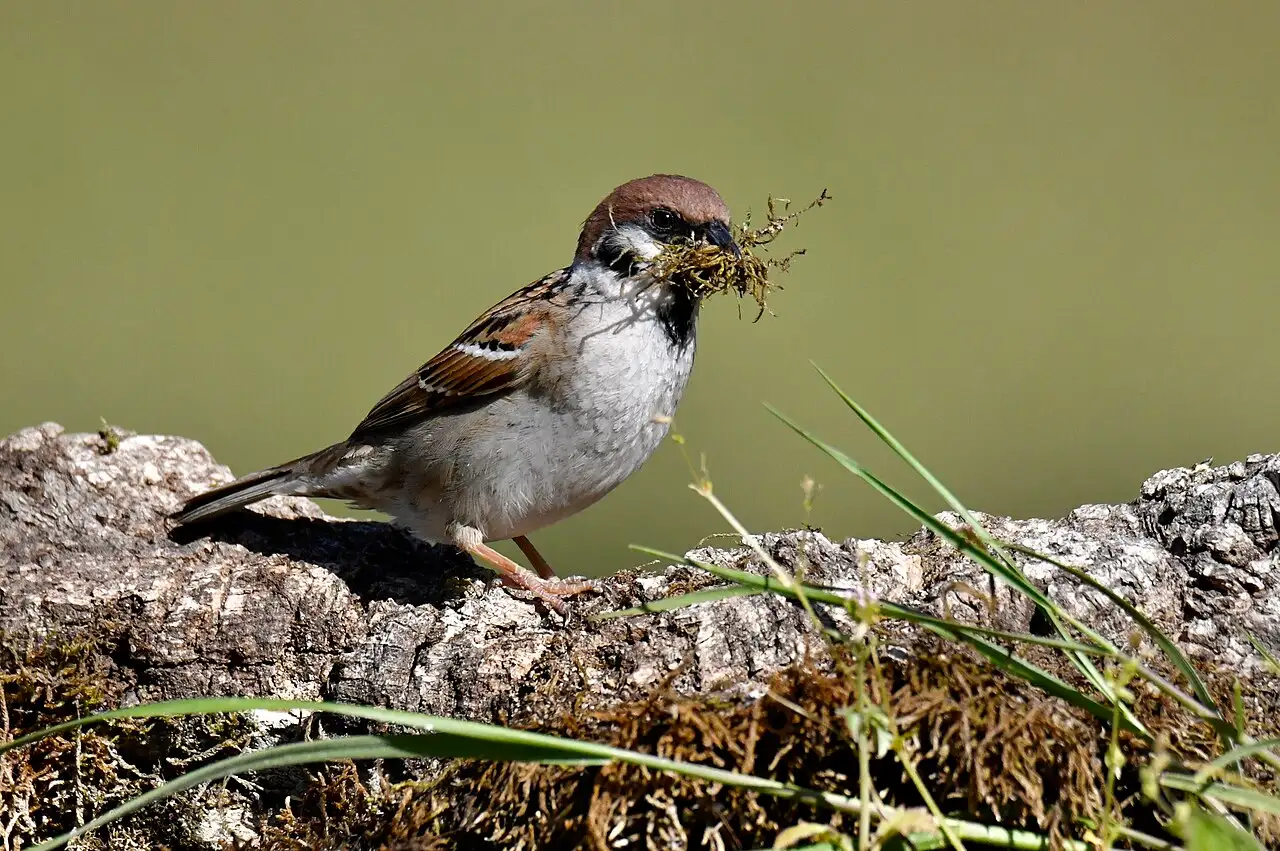
It sets it in a tree hole, in cracks in buildings, inside the nest of large birds or in holes in sandy banks, and if there are any it readily occupies nest boxes, from which it can evict smaller species. It is a globular, fairly closed and somewhat ramshackle construction, of grasses, leaves, pine needles or feathers, although one material usually predominates. The two members of the pair share the work.
Courtship and breeding of the Eurasian Tree Sparrow
The breeding period begins in mid-April and ends in August, and it usually makes two or three clutches a year. The female lays four to seven white or greenish, quite speckled eggs, which are incubated for 11 to 14 days from when the clutch is complete: by day male and female take turns, and at night only she incubates. Both parents feed the chicks equally during the 12–14 days they take to develop, and the fledglings go on begging for food for a few days after leaving the nest.
Diet of the Eurasian Tree Sparrow
It eats plant and animal matter in proportions that change with the season and the region. The plant part is mainly seeds of wild and cultivated plants, as well as fruit and berries, and the animal part, all kinds of small invertebrates that it looks for on the ground, among the leaf litter or in the grass. In spring and summer it eats more invertebrates, above all larvae, grasshoppers and beetles, with which it feeds the chicks.
Curious facts about the Eurasian Tree Sparrow
It is the smallest and most delicate of our sparrows, and the most woodland of all1. In the eighties it expanded and colonised some islands, such as Gran Canaria. EURING lists a Eurasian Tree Sparrow ringed in Great Britain and Ireland that lived 10 years and 9 months; AnAge gives a higher figure, 13.1 years.
The Eurasian Tree Sparrow in Cabañeros
The habitat pages of this website do not mention it, and we have not found any other published source on it in the Park. GBIF.org records 23 observations of the Eurasian Tree Sparrow in Cabañeros and its surroundings.
Where to see the Eurasian Tree Sparrow in Cabañeros
In Cabañeros and its surroundings, throughout the year, in riverside groves, dehesas and fields with scattered trees.
When
All year round: it is resident, and breeds from mid-April to August.
What time
By day, looking for seeds and insects.
Where
In crop fields with scattered trees, riverside groves, wasteland, floodplains, olive groves and vegetable plots.
What to look for
Look for the chestnut cap and the black spot on the white cheek.



 Same family
 Same family
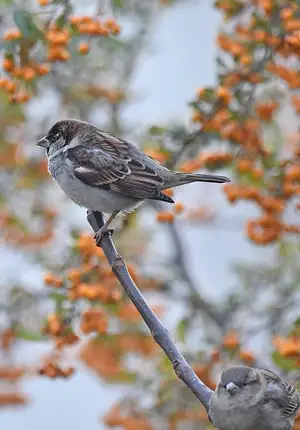 Same family
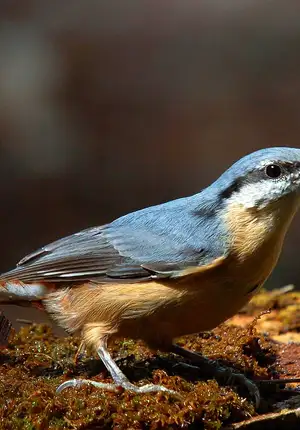 Same order
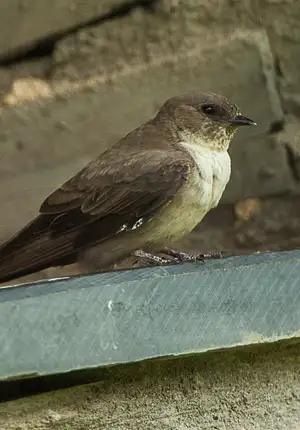 Same order
 Same order
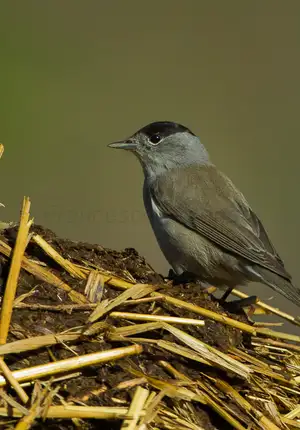 Same order
 Same order





