In pairs in the breeding season; in winter, in groups with other tits
Lifespan
Record of over 15 years in the wild
Conservation status
LC
NT
VU
EN
CR
EW
EX
Global (IUCN)
Least Concern
Spain
Included in the List of Wild Species under Special Protection; not in the Spanish Catalogue of Threatened Species
When to see it
Resident
Months of the year when it is present
J
F
M
A
M
J
J
A
S
O
N
D
In Iberia
yes
yes
yes
yes
yes
yes
yes
yes
yes
yes
yes
yes
Breeding season
no
no
yes
yes
yes
yes
yes
no
no
no
no
no
Song or voice of the Great Tit
Its most repeated call is a metallic «chi-chipán» that fills the woods from early spring, but it has an enormous repertoire, of more than thirty notes. And it changes from one region to another: the one in Sierra Morena does not sound the same as the one in the Central System, and you could almost recognise the accent.
SongGreat Tit
0:00 / 0:13
10 kHz5
The sonogram draws the sound: time runs from left to right, and the higher a trace sits, the higher the note.Recording by Sander Pieterse, Wikimedia Commons (CC BY-SA 4.0).
Flight of the Great Tit
It flies short and undulating, from branch to branch and tree to tree, with quick flaps and glides with wings tucked in. It is somewhat heavier than the Blue Tit, but just as restless: we almost never see it for long in the same place.
Flight typeShort, undulating and agile
It leaves the branch with a buzzing flutter, almost without warning. It is never still: it hops, hangs upside down and hops again.
Short, undulating flight: a few quick wingbeats lift it and it drops with its wings folded, over stretches of a few metres.
It brakes with its tail spread and wings extended and hangs from a fine branch, where it goes on looking for bugs.
Photo gallery of the Great Tit
Great Tit with wings open landing at a feeder: the black bib and the white-edged tail can be seenPhoto: Mirus255, CC0Photo 1 of 4
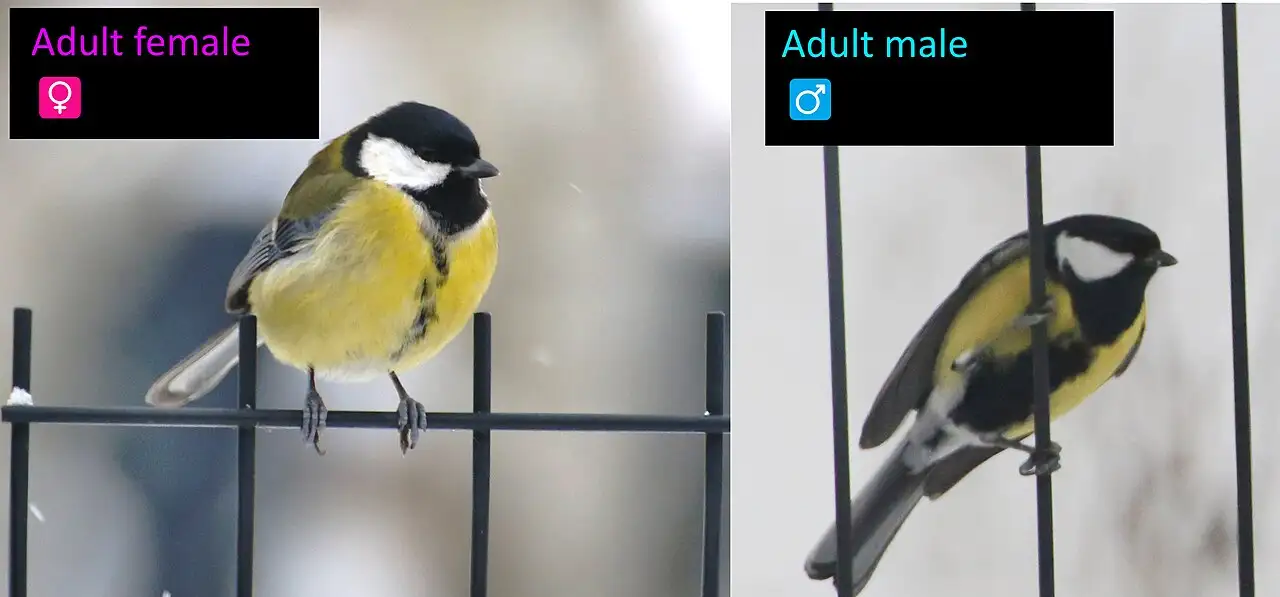
Female and male Great Tit, side by side: the black belly stripe is broader and more marked in the malePhoto: Mirus255, CC0Photo 2 of 4
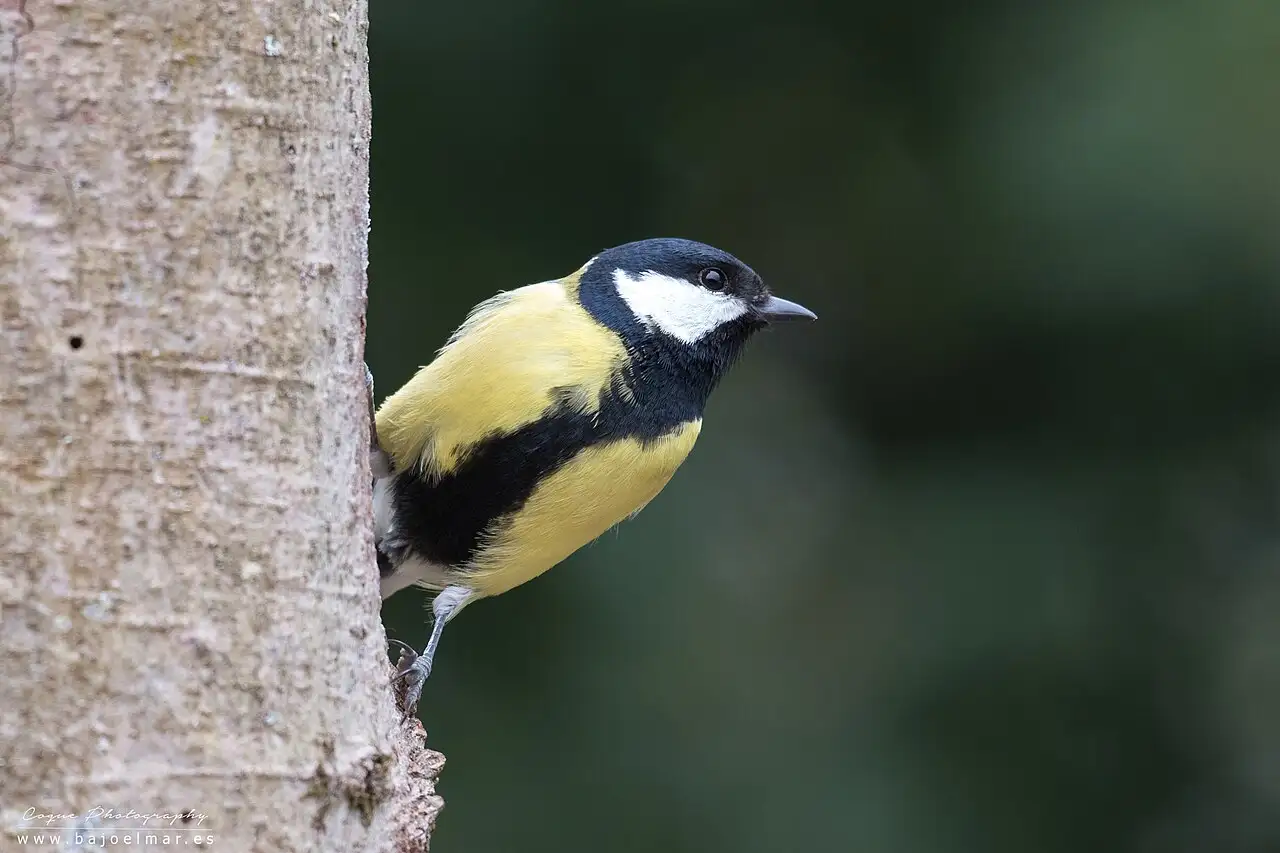
Great Tit clinging to a trunk: black head, white cheek and yellow belly with the black stripePhoto: Bajoelmar Es, CC0Photo 3 of 4
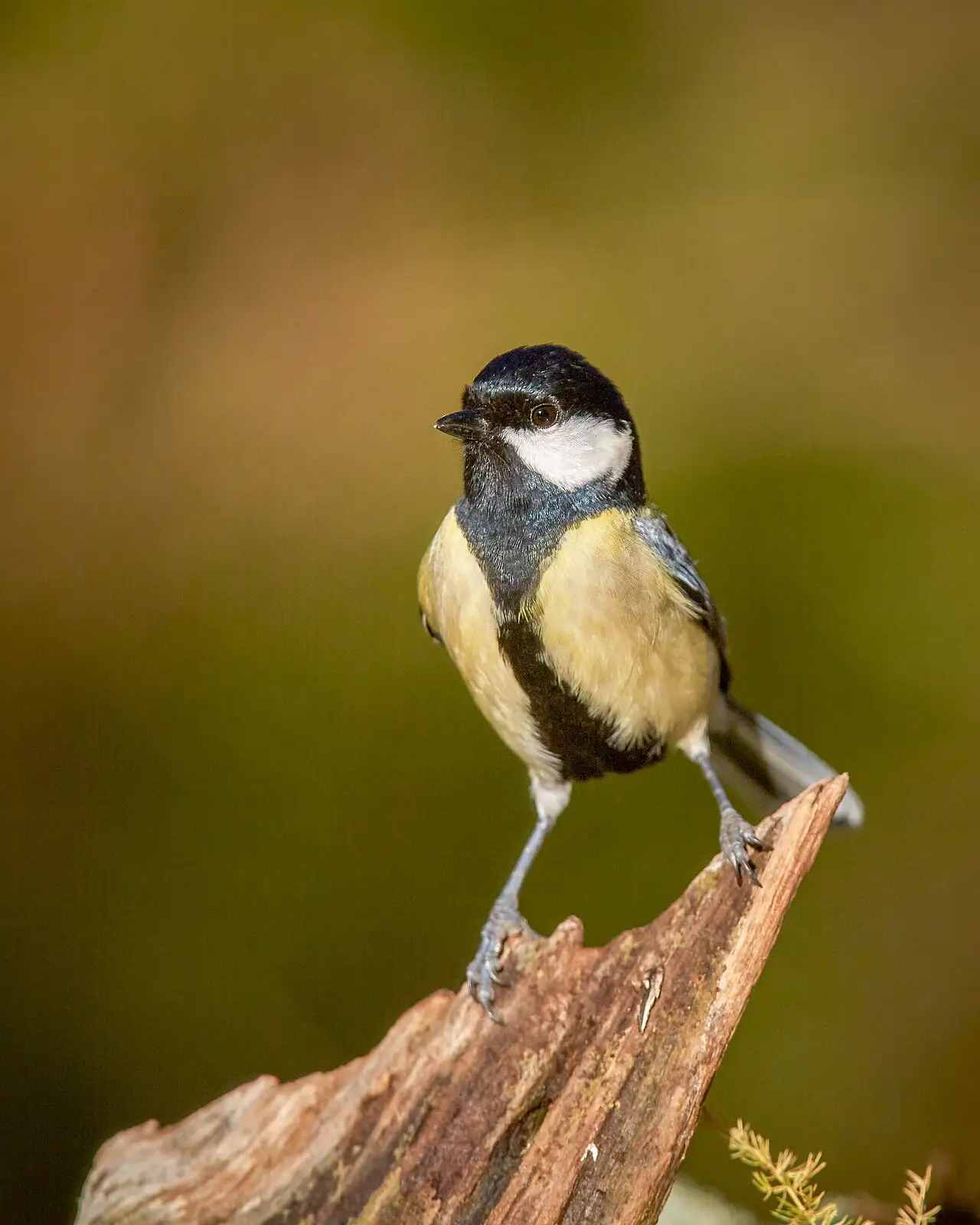
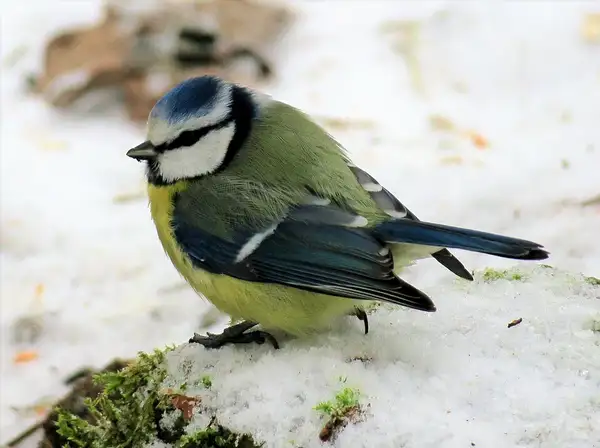
It is a bird hard to confuse with another, except the Blue Tit, which is smaller and has a blue cap. What is harder is telling sex and age apart, and for that you have to look at the black belly stripe.
Male
Jet black head with very white cheeks.
A broad, striking black stripe runs down the body from the throat to the base of the tail.
Greenish back, bluish wings and tail.
Female and young bird
The female has a much fainter stripe, which blurs on the belly.
Young birds of the year have somewhat yellowish cheeks.
Habitat and distribution of the Great Tit
It is very widespread across Europe, north-west Africa and Asia, as far as Japan, Indochina and Indonesia. In Spain it occupies the whole territory, except completely deforested areas and the Canary Islands.
It is a woodland bird, but does not need extensive or well-preserved woods: we find it almost anywhere there are scattered trees. It is common in holm oak woods, pine woods, Pyrenean oak woods, beech woods, cork oak woods, Portuguese oak woods, savin woods, plantations, orchards, parks and riverside woods. The highest densities occur in cork oak woods and oak woods, and it is less abundant in single-species conifer plantations. It is basically resident, although in northern Europe it makes altitudinal and latitudinal movements in winter.
Areas where it is regularly recorded since 2010Squares of about 25 km where it is recorded regularly (occasional passage records are left out). Data from GBIF.org (841,314 records, retrieved October 2026); outline from Natural Earth.
Etymology of the Great Tit
«Parus» is the Latin name of the tits, and «major», «greater», sets it apart from its smaller relatives: it is the biggest of the tits of our woods. The Spanish name, «carbonero» (charcoal burner), is usually explained by the black head, as if sooty with charcoal; in German, curiously, they do the same and call it «Kohlmeise», the «coal tit».
Population of the Great Tit
In Spain a breeding population of more than 10 million birds is estimated, with a positive trend according to the SACRE programme (1998–2018). In Europe, the 2021 Red List puts it at between 127 and 205 million mature individuals, and growing. It is classed as Least Concern and has no evident threats, because it is not demanding about habitat. It only accumulates two problems: badly placed nest boxes, where they lose clutches to predation by the Great Spotted Woodpecker and weasels, and climate change, which throws out of step the hatching of the caterpillars it feeds its chicks.
Nest of the Great Tit
The female builds the nest in a hollow: in a trunk or stump, or an artificial one, and it is one of the species that most readily accepts nest boxes. She makes it with fine roots, moss, lichens, grasses, hairy parts of plants, down and spiders’ webs.
Courtship and breeding of the Great Tit
It starts breeding in March. It usually raises two broods, although it can reach three. Each clutch is between 8 and 13 white eggs with small reddish-brown spots, which only the female incubates for 12 to 14 days. Both sexes feed the chicks, which leave the nest at three weeks and become independent at six or seven.
Diet of the Great Tit
It is insectivorous. It eats beetles, hymenopterans and, in spring, butterfly caterpillars, which are the staple food of the chicks. In autumn it adds fruit such as blackberries or elderberries.
Curious facts about the Great Tit
That the black stripe is broader in males is not just a matter of decoration: biologists have seen that those with the broadest stripe are also usually the most dominant. In winter, when food is scarce, it knows how to use feeders and mixes with other tits, Long-tailed Tits and nuthatches in mixed flocks that roam the woods together.
The Great Tit in Cabañeros
Among the birds that feed both in trees and shrubs and on the ground, in the sclerophyllous woodland, our pages list the Eurasian Blue Tit, the Great Tit, the Eurasian Blackbird and the European Robin. Its highest densities occur in cork oak woods and oak woods, two woods that Cabañeros has well represented1. SEO/BirdLife has filmed it visiting one of its Western Barn Owl cameras inside the park (see videos).
Where to see the Great Tit in Cabañeros
In any wooded area, above all in holm oak, cork oak and Pyrenean oak woods, and often at the fountains and near houses and recreation areas.
When
All year. In winter it is easier to see, because of the mixed flocks and because it comes to feeders.
What time
All day long, although it sings most strongly at dawn and in early spring.
Where
On the middle branches of holm oaks, cork oaks and Pyrenean oaks, and in the inhabited parts of the park, by the fountains and the edges of paths.
What to look for
A yellow bird with a black head and white cheek, which repeats a very loud «chi-chipán» non-stop from the branches.




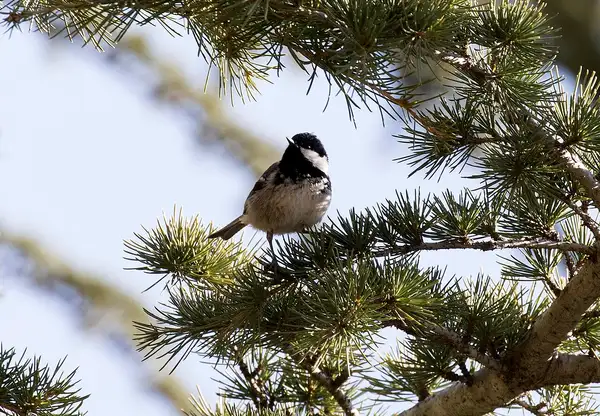
 Same family
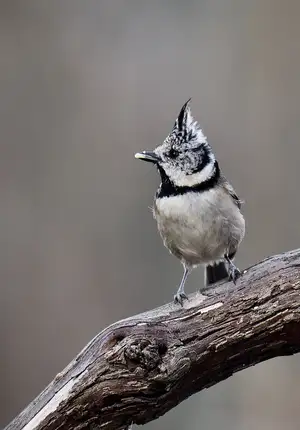 Same family
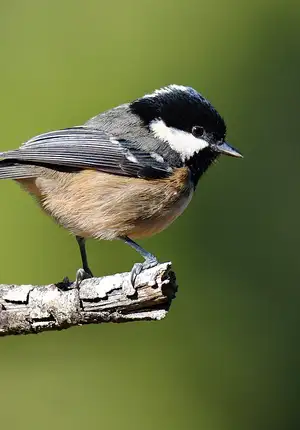 Same family
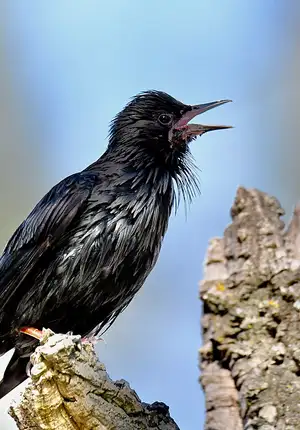 Also in sclerophyllous woodland
 Also in sclerophyllous woodland
 Also in sclerophyllous woodland
 Also in sclerophyllous woodland
 Also in sclerophyllous woodland






