A soft, low series of “oop-oop-oop”, hollow and fluty, that carries a long way and is repeated fairly fast.
SongEurasian Hoopoe
0:00 / 0:14
10 kHz5
The sonogram draws the sound: time runs from left to right, and the higher a trace sits, the higher the note.
Flight of the hoopoe
Its flight is quick and direct, slightly undulating, with fluttering wingbeats. Now and then it hesitates and flies erratically. When it lands it spreads its broad wings and shows off their bold black-and-white pattern.
Flight typeUndulating
Takes off with a few strong wingbeats, its broad wings spread and its crest folded back.
It alternates deep wingbeats, which lift it, with a moment of almost closed wings, which lets it drop a little. You can see the black and white bars flicker.
Brakes with its tail fanned and its wings outstretched, showing off its pattern, and raises its crest again.
Photos of the hoopoe
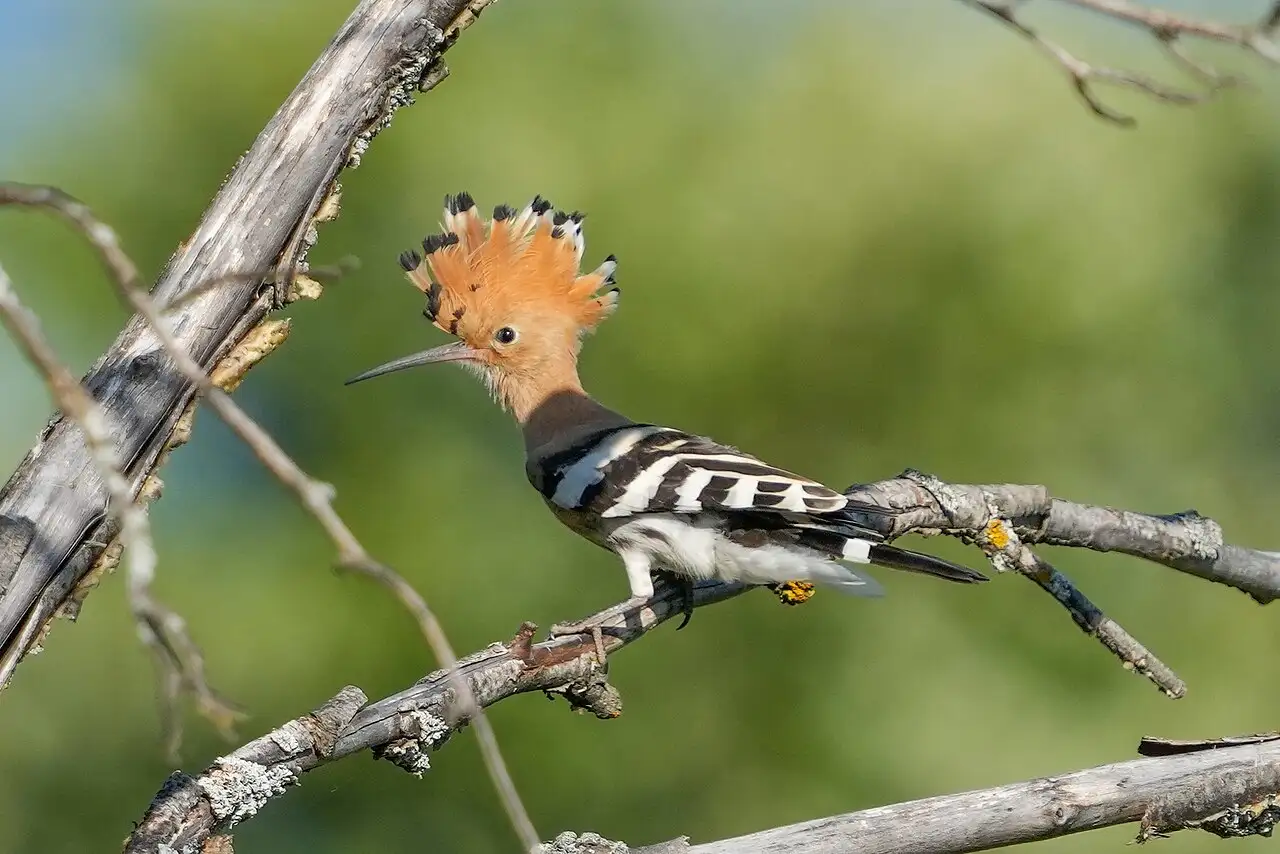
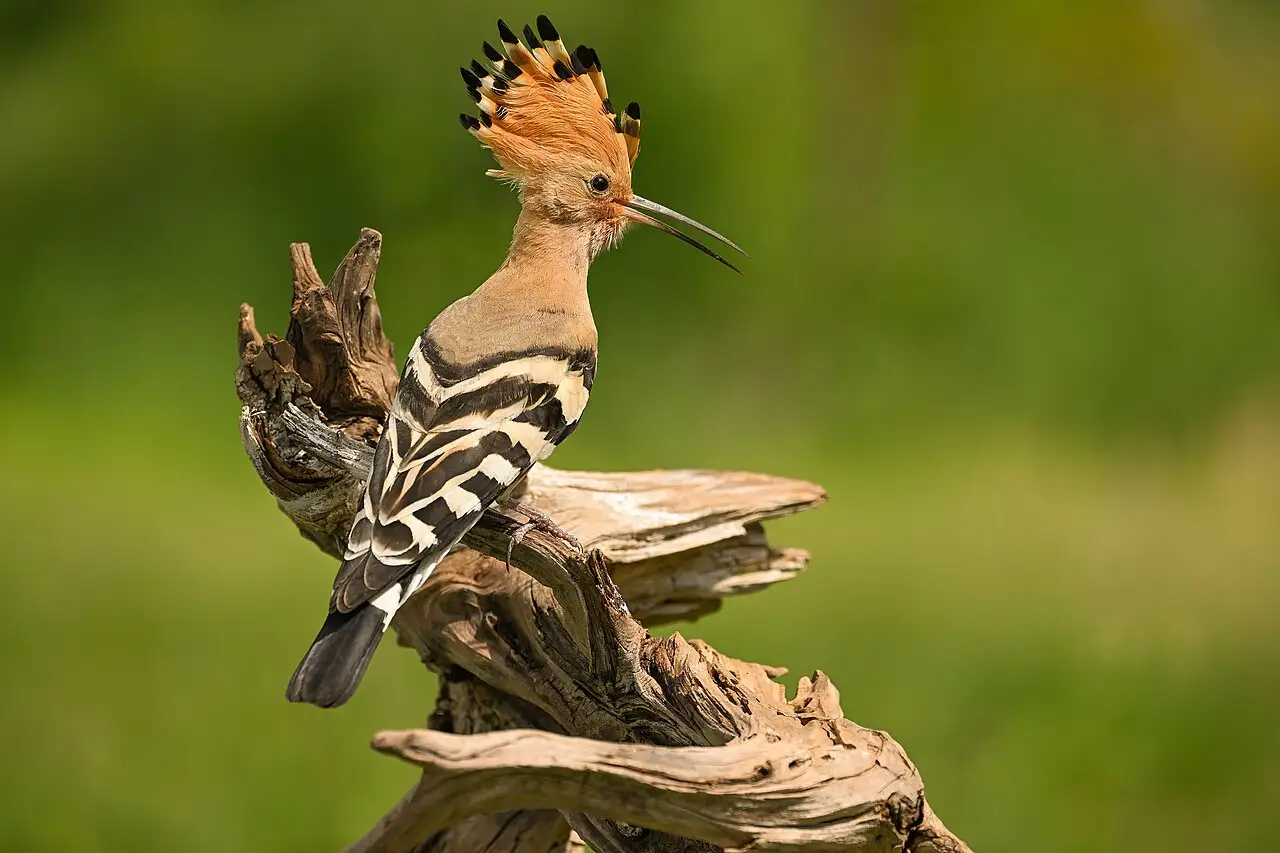
Eurasian Hoopoe perched on a dead branch with its crest raised and its long, thin billPhoto: Giles Laurent, CC BY-SA 4.0Photo 1 of 4
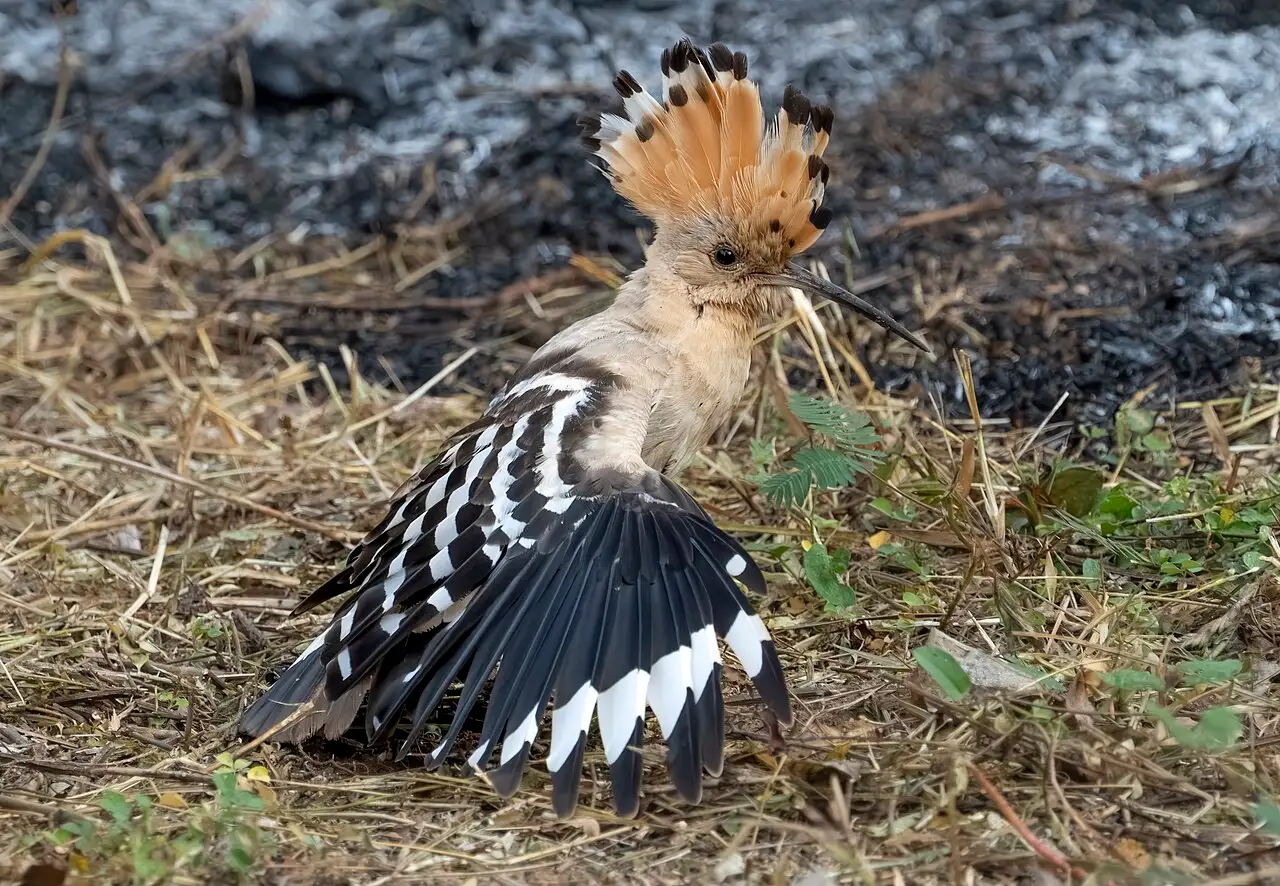
Eurasian Hoopoe sunbathing on the ground with its wings spread: the black and white bars and the tail band are clearly visiblePhoto: Vengolis, CC BY 4.0Photo 2 of 4
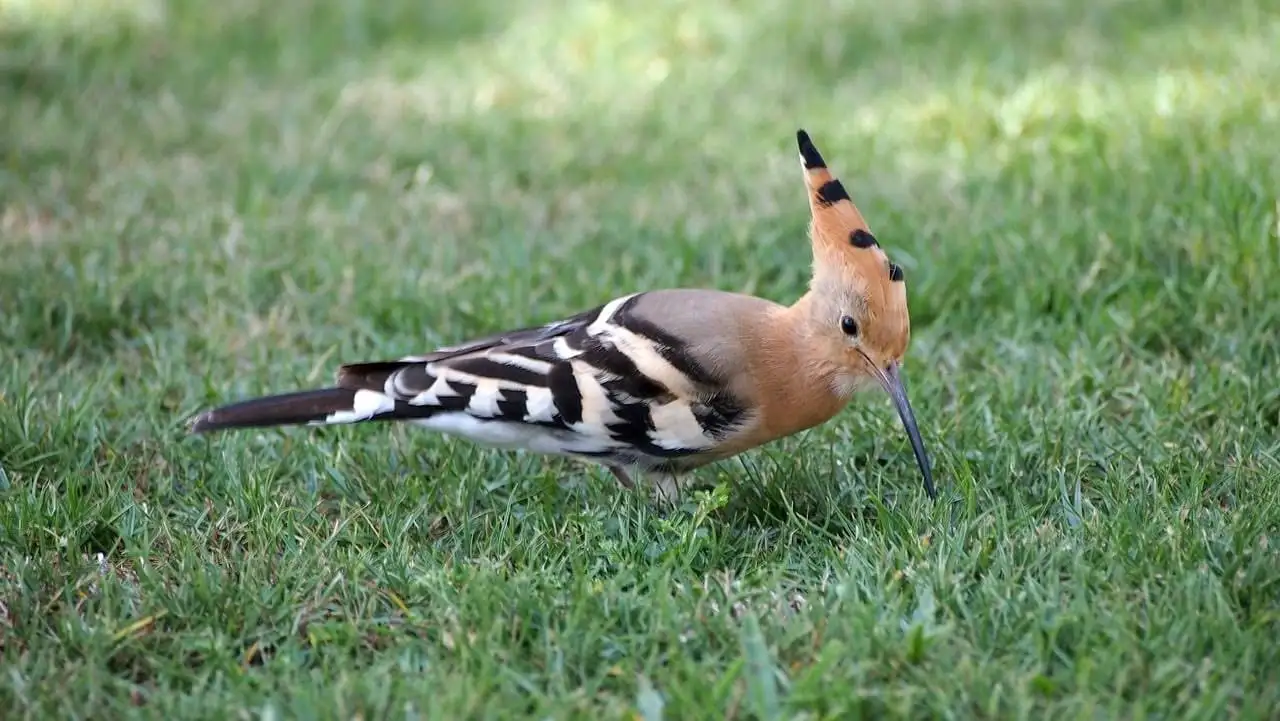
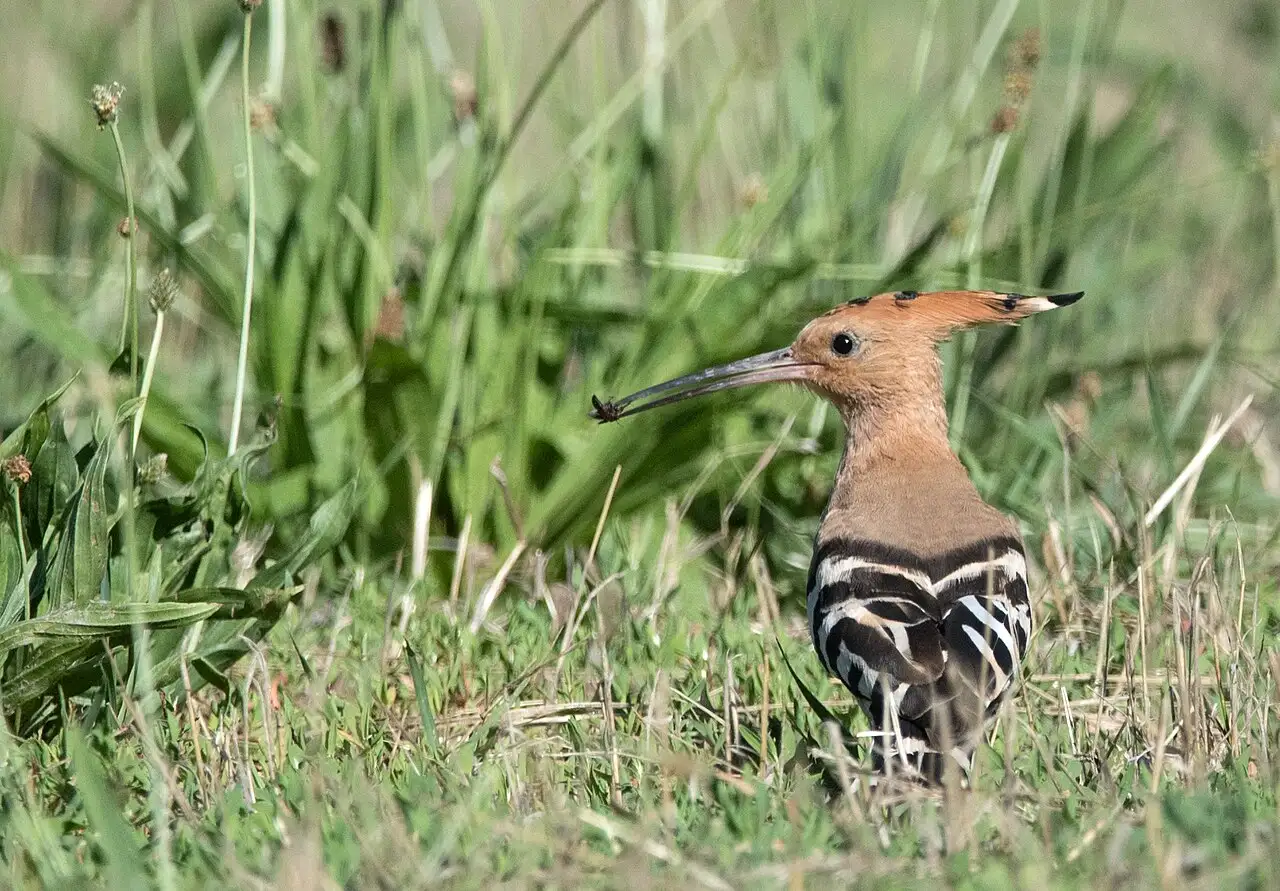
Eurasian Hoopoe foraging in the grass, with its long bill and its crest foldedPhoto: Pierre-Marie Epiney, CC BY-SA 2.0Photo 3 of 4
Eurasian Hoopoe with its fan-shaped crest raised, cinnamon with black tipsPhoto: Petr Knezour, CC BY-SA 4.0Photo 4 of 4
1 / 4
Identification of the hoopoe
Its most distinctive feature is the crest on its head: an erect fan whose flat tips are dipped in black, usually raised when it lands and when it courts. It raises it less often in flight.
Its bill is long, thin and slightly curved.
Its head and body are buff, with reddish glints and soft ochre tones. It is not a bird that stands out for its colour, but its shape is unmistakable. The male has a deeper orange breast.
Black and white bars run across its back and wings. Towards the ends of the outer wings there is a white band.
Where the body meets the tail there is a small white rump, visible when it spreads its wings.
Its legs are short and dark, and its fairly broad tail has a wide white band.
Its buff tones make it easy to overlook when it sits on the ground, but the moment it flaps its wings to take off you can admire it in all its glory.
Habitat and distribution of the hoopoe
The subspecies epops ranges across much of the Palearctic, from the Canary Islands to China.
In Spain it is found throughout the mainland. It prefers warm, sunny areas and is scarce in colder mountain areas and in wet climates. It settles below 1000 metres, in open woodland such as holm oak, cork oak and oak dehesas. It has also been recorded on the Balearic and Canary Islands and in Melilla.
Areas where it is regularly recorded since 2010Squares of about 25 km where it is recorded regularly (occasional passage records are left out). Data from GBIF.org (355,874 records, retrieved October 2026); outline from Natural Earth.
Etymology of the hoopoe
Its Spanish name, abubilla, comes from the Latin «upupella». The word has been said to imitate its call, but that does not fit other meanings of «upapa», which also means “beak” and “baby’s bottle”. If we look at the Greek words «ἔποψ» (épops) and «ἄπαφος» (ápaphos), the Armenian «popop» or the Latvian «pupukis», we can assume this is an Indo-European name, which in any case does not rule out an imitative origin.
Population of the hoopoe
Between 700,000 and 1,600,000 breeding pairs live in Europe. According to the Atlas of Breeding Birds of Spain (2003), Spain holds 500,000-700,000 pairs, the largest population in Europe. It is now put at around 2.2 million birds, with a slightly rising trend, and it is listed as Least Concern1.
Nest of the hoopoe
It nests in a hole in a tree or a wall; nests in piles of field stones also turn up, but less often.
Courtship and breeding of the hoopoe
The hoopoe’s breeding season begins in mid-May, when it starts looking for a suitable place to nest. After a long search, the pair settles in a hole in a tree, wall or ruin, first clearing it out and then laying a bed of leaves and grass.
The clutch is usually 7 to 10 eggs, which the female incubates on her own for about 17 to 20 days. It is not common, but there may be more than one clutch. The chicks stay in the nest for 26 to 29 days and leave at the end of July or early August.
Diet of the hoopoe
The hoopoe feeds on larvae, insects and worms that it finds on the ground, probing the soil with its bill. Above all it hunts for the larvae and pupae of insects buried in the earth or hidden in the leaf litter.
Curious facts about the hoopoe
Throughout history these birds have had a reputation for smelling foul, and were considered dirty animals. In fact it is not the birds but their nests that stink, full of droppings, to keep predators away. What’s more, when a nesting female is startled she releases a small drop of a truly pestilent secretion, produced by a gland at the base of the tail. Females often smear this substance over themselves with the bill, and over the eggs too.
Another curious habit is sunbathing: it lies flat on the ground with its wings and tail spread, in a pose that hardly looks like a bird at all.
The hoopoe in Cabañeros
The hoopoe is a common species in Cabañeros National Park, which has a large resident population. There is also a summer population of early-arriving trans-Saharan migrants, which lets us hear its song in early March. Even so, its migration pattern cannot be clearly defined, as wintering birds from other populations share North Africa with trans-Saharan migrants that travel as far as the Democratic Republic of the Congo (CURRY-LINDHAL, 1981).
Fledglings can be seen from early June, when family groups of hoopoes are about.
Where to see the hoopoe in Cabañeros
It favours clearings in the holm oak woods and the grasslands of the rañas. It also visits farmland.
When
All year round. Its song can be heard from early March, and from June you will see family groups with fledglings.
What time
Morning and afternoon, while it forages on the ground. In the midday heat you may catch it sunbathing.
Where
In clearings in the holm oak woods and in the grasslands of the rañas; also on farmland.
What to look for
A cinnamon bird that walks in little hops across the ground, pecking at the earth, and that shows black-and-white striped wings when it takes off.
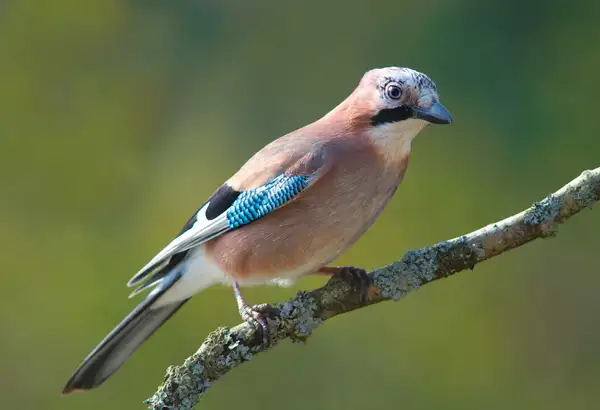
Also pinkish, but with no erect crest or long bill, and with a blue barred patch on the wing and a black tail. It lives among trees, not on open ground.



 Also in dehesas (wood pasture)
 Also in dehesas (wood pasture)
 Also in dehesas (wood pasture)
 Also in dehesas (wood pasture)
 Also in dehesas (wood pasture)
 Also in dehesas (wood pasture)
 Also in dehesas (wood pasture)
 Also in dehesas (wood pasture)






