The nest is built by the male and the female, and the chicks, soon after hatching, climb onto their parents' backs
Lifespan
Record of 17 years and 7 months according to EURING (a bird ringed in Switzerland and checked by a ringer), almost the same as the 17.5 of AnAge
Conservation status
LC
NT
VU
EN
CR
EW
EX
Global (IUCN)
Least Concern
Spain
Least Concern (LC) in the Red Book of the Birds of Spain, both as a breeder and as a winter visitor or migrant; on the List of Wild Species under Special Protection, but not in the Spanish Catalogue of Threatened Species
When to see it
Resident
Months of the year when it is present
J
F
M
A
M
J
J
A
S
O
N
D
In Iberia
yes
yes
yes
yes
yes
yes
yes
yes
yes
yes
yes
yes
Song or voice of the Little Grebe
It gives a long, high sound («bip-bip-bibibi»), trembling and very characteristic. In winter it is silent.
SongLittle Grebe
0:00 / 0:17
10 kHz5
The sonogram draws the sound: time runs from left to right, and the higher a trace sits, the higher the note.Recording by Aves Córdoba, Vídeo de YouTube «Zampullín común» (Vídeo de YouTube, con atribución).
Flight of the Little Grebe
It is recognised by its compact, tucked-in silhouette, with arched neck, short, pointed, straight bill and rounded «rear». It often dives to swim underwater.
Flight typeLow and fast over the water, between dives
It occupies a wide range of wetlands, natural or artificial, as long as there are submerged aquatic plants; to breed it prefers abundant emergent marsh vegetation in which to hide the nest.
It is recognised by its compact, tucked-in silhouette, with arched neck, short, pointed, straight bill and rounded «rear».
It often dives to swim underwater: it can cover several metres below the surface and then resurface at a different point after each dive.
Photo gallery of the Little Grebe
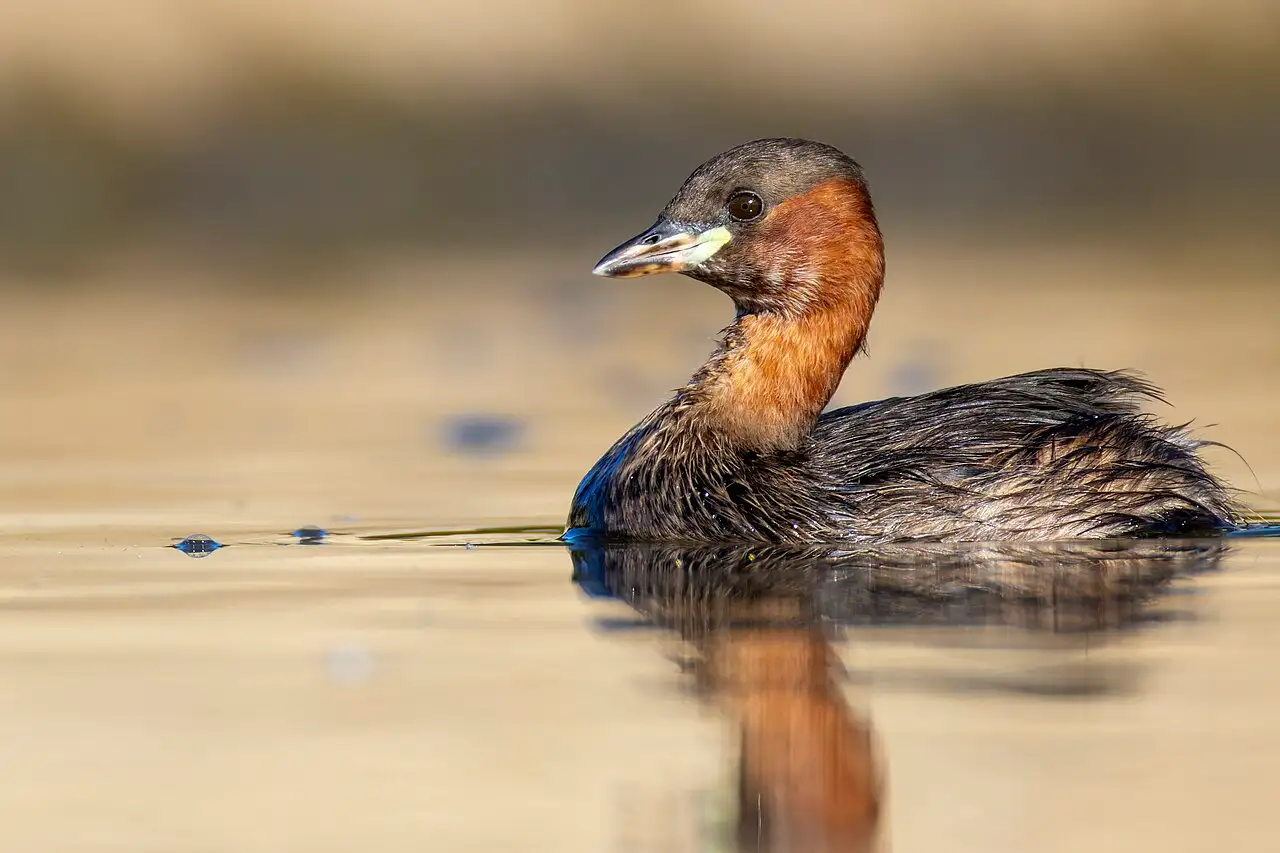
Little Grebe swimming in summer plumage, in profile, with dark head, chestnut neck and the yellow patch at the corner of the billPhoto: Alexis Lours, CC BY 4.0Photo 1 of 4
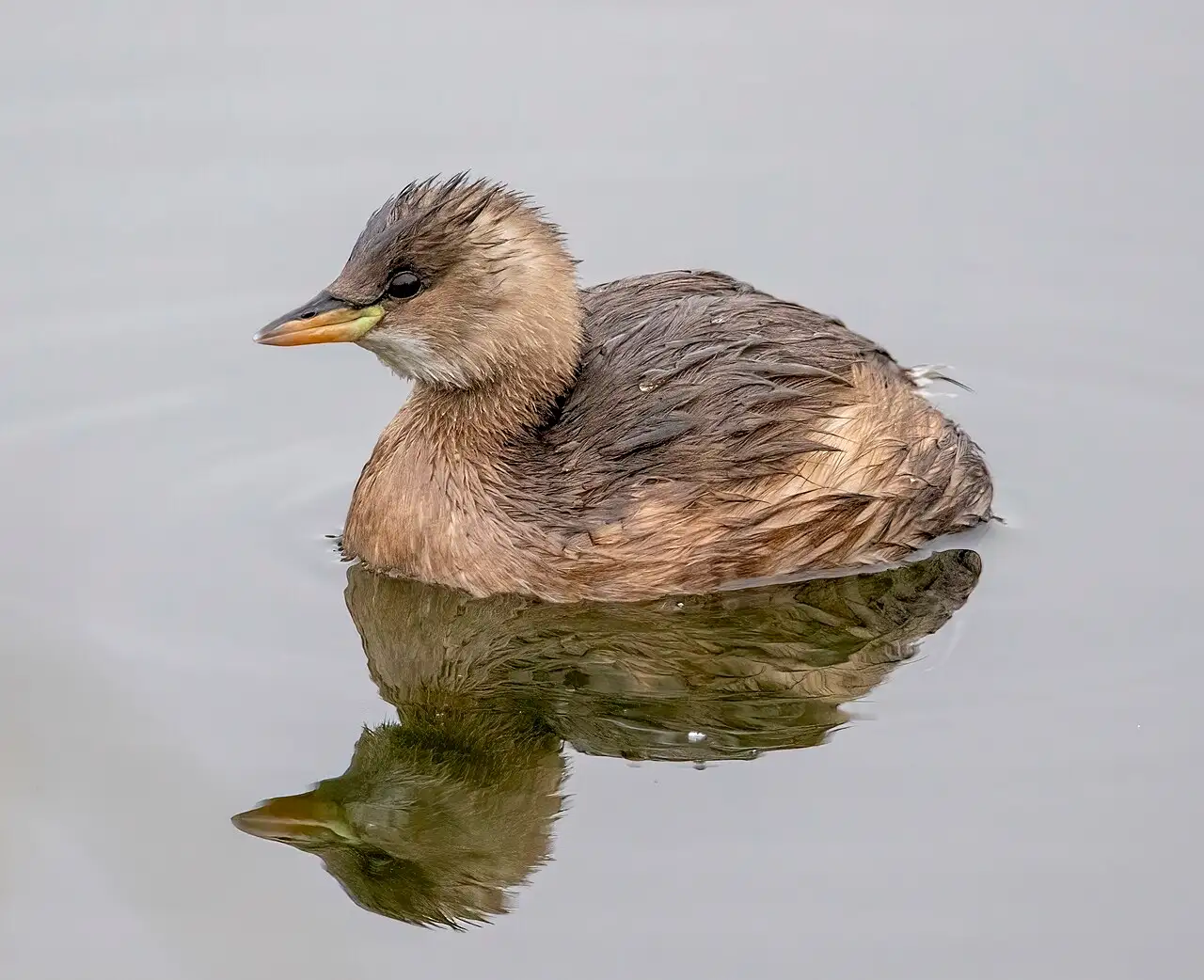
Little Grebe in winter plumage, swimming, with brown head and back, cream cheeks and yellowish billPhoto: Alexis Lours, CC BY 4.0Photo 2 of 4
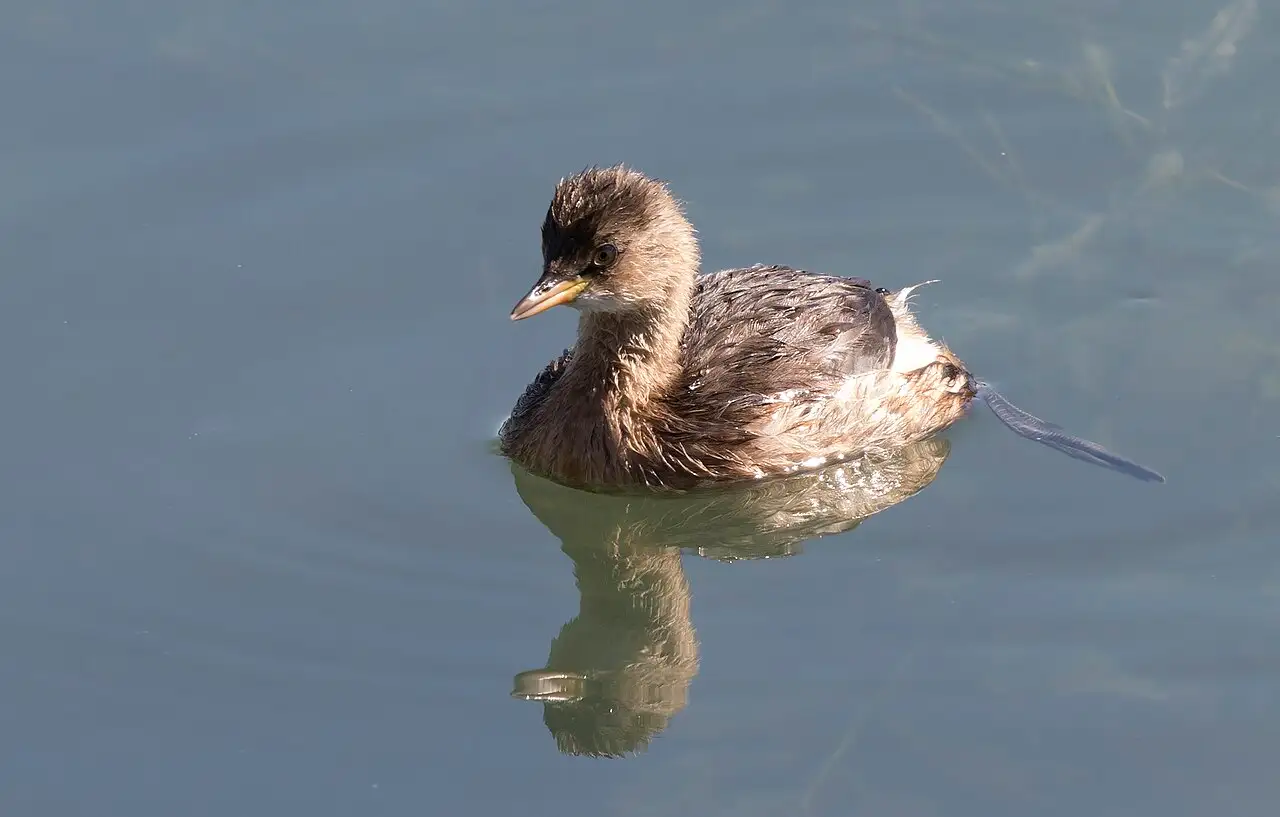
Little Grebe swimming, in profile, with arched neck, short bill and whitish, fluffy rearPhoto: Zeynel Cebeci, CC BY-SA 4.0Photo 3 of 4
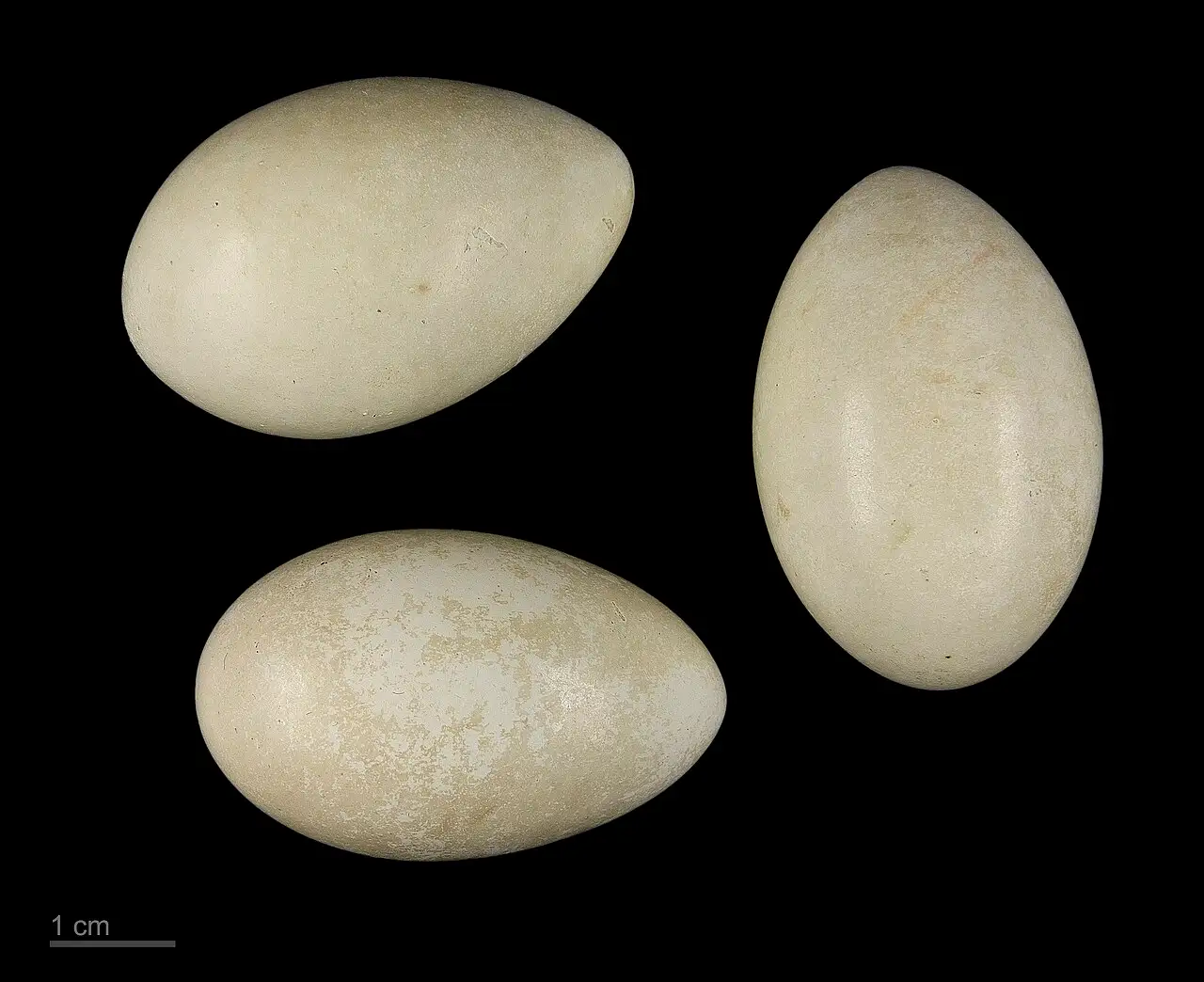
Three Little Grebe eggs, cream-coloured, on a black background, with a one-centimetre scalePhoto: Roger Culos, CC BY-SA 4.0Photo 4 of 4
1 / 4
Identification of the Little Grebe
The Little Grebe is the smallest of the grebes: a plump bird, with a medium, arched neck and a short, straight bill. In winter as in summer, the rear end has whitish tones and a fluffy look. There are no differences between the sexes.
Summer
Dark colouring, with body, head and nape black, and throat and neck chestnut.
Small yellow patch at the corner of the bill.
Winter
Underparts, cheeks, throat and neck cream; head and back dark brown.
Bill yellowish almost throughout.
Young bird
Resembles the adults in winter, and is told apart only by having on each cheek two black lines on a cream background.
Habitat and distribution of the Little Grebe
It spreads across Europe, Africa, Asia and Australia, and eight subspecies are recognised across its wide range. In Spain it occurs throughout the country, wherever there is suitable habitat, except in high-altitude wet environments, and it is absent from the Canaries. The subspecies «ruficollis» lives here, the same one that occupies the rest of Europe and North Africa.
It occupies a wide range of wetlands, natural (small lagoons, slow rivers, marshes) or artificial (abandoned gravel pits, reservoirs, irrigation ponds, canals), as long as there are submerged aquatic plants. To breed it prefers abundant emergent marsh vegetation in which to hide the nest.
Depending on the place, populations may be migratory, resident or limited to dispersal movements. The northernmost ones leave the breeding areas with winter and move to where the water does not freeze. In milder places, as in many parts of Spain, they only make dispersal movements to more sheltered spots, sometimes coastal wetlands such as coastal marshes.
Areas where it is regularly recorded since 2010Squares of about 25 km where it is recorded regularly (occasional passage records are left out). Data from GBIF.org (293,010 records, retrieved October 2026); outline from Natural Earth.
Etymology of the Little Grebe
According to Wikipedia, the genus name, «Tachybaptus», comes from the Ancient Greek «takhýs» («fast») and «báptō» («to sink»), and «ruficollis» is a New Latin word meaning «red-necked», from «rufus» («red») and «collum» («neck»). Pallas described it in 1764 as «Colymbus ruficollis». In other languages it is called «cabusset comú» in Catalan, «merguillete común» in Galician, «txilinporta txikia» in Basque and «little grebe» in English1.
Population of the Little Grebe
In the 2021 European Red List of Birds the European breeding population is estimated at between 209,000 and 390,000 mature individuals, with a stable trend. No recent population estimate has been made in Spain; the only national one available, from 2007, calculated 21,400 birds. The loss or degradation of habitat, above all through pollution or eutrophication, is a danger to the species. It colonises new artificial or restored habitats well, but this can be a problem when it breeds in heavily managed places, where the water level can change quickly. Another cause of disturbance is the burning of reedbeds in some areas.
Nest of the Little Grebe
The nest, generally a floating platform, is built by the male and the female from plant matter and anchored to the vegetation.
Courtship and breeding of the Little Grebe
It breeds in spring, when the emergent aquatic vegetation is well developed. The clutch usually consists of four to six eggs and incubation lasts about 21 days. The chicks are semi-nidifugous and, soon after hatching, climb onto their parents’ backs to leave the nest and go out looking for food. At about 40 days the young can become independent, although they sometimes stay a few days longer with their parents. It usually lays two clutches per season, sometimes three, which it lays when the chicks of the previous brood are 15 days old or more.
Diet of the Little Grebe
It eats various small organisms, above all aquatic insects and their larvae, molluscs, amphibians and fish fry. To find food it can cover several metres underwater and then surface at a different point after each dive.
Curious facts about the Little Grebe
It is one of the most widespread waterbirds as a nesting species on a great variety of inland wetlands1. It is, moreover, the smallest member of the family of grebes. EURING lists a bird ringed in Switzerland that lived 17 years and 7 months.
The Little Grebe in Cabañeros
The habitat pages of this website do not mention it. GBIF.org records 56 observations of the Little Grebe in Cabañeros and its surroundings.
Where to see the Little Grebe in Cabañeros
In Cabañeros and its surroundings, all year round, on ponds, lagoons and reservoirs with aquatic plants.
When
All year; in winter it is silent.
What time
In good light, in spring, when it sings.
Where
On ponds, lagoons, slow rivers, reservoirs and irrigation ponds with submerged aquatic plants and marsh vegetation.
What to look for
Look for the compact silhouette, the whitish rear and the dives: it resurfaces far from where it went under.



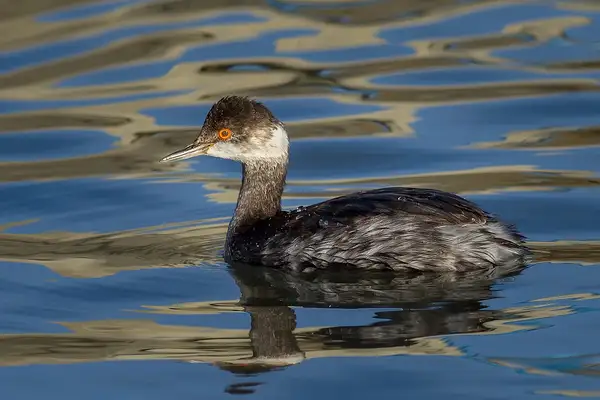
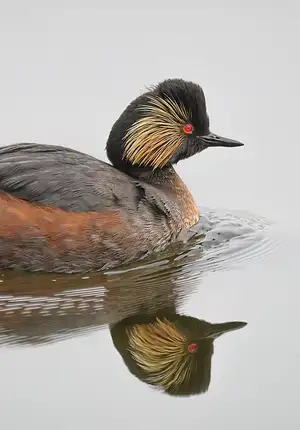 Same family
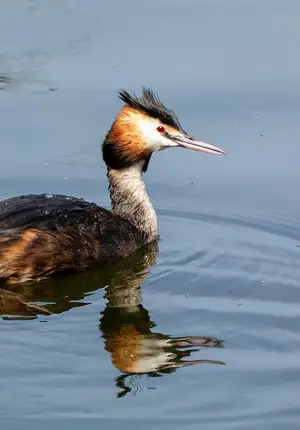 Same family
 Same season in the park
 Same season in the park
 Same season in the park
 Same season in the park
 Same season in the park
 Same season in the park






