Wingspan compared with a person with arms outstretched.
Length
28–34 cm
Wingspan
56–60 cm
Weight
306.5 g
Social life
Forms small colonies, of not much more than 10 nests, often alongside other species; in winter hundreds of birds may gather
Lifespan
EURING lists a bird ringed in Spain that lived 21 years and 4 months; AnAge gives a record of 13.1 years in the wild
Conservation status
LC
NT
VU
EN
CR
EW
EX
Global (IUCN)
Least Concern
Spain
Least Concern (LC), both as a winter visitor and as a breeder, in the 2021 Red Book of the Birds of Spain; it is on the List of Wild Species under Special Protection, but not in the National Catalogue of Threatened Species
When to see it
Resident
Months of the year when it is present
J
F
M
A
M
J
J
A
S
O
N
D
In Iberia
yes
yes
yes
yes
yes
yes
yes
yes
yes
yes
yes
yes
Song or voice of the Black-necked Grebe
It gives a high «puhiiií-phí», followed by a trembling, nervous sequence recalling a high murmur1. It is silent in winter1. The recording (song) is by Sven Normant and was made in Tierra de Campos (near Otero de Sariegos), Zamora, Castilla y León (xeno-canto XC1092268, quality B). It lasts 9 seconds and is a trimmed stretch of the original, without repeating or lengthening it, from which we have removed the bass below 200 Hz, reduced the background noise and adjusted the volume; neither pitch nor speed has been changed.
It is a water bird: after breeding it moves south in search of frost-free inland wetlands, and also to some sheltered coastal areas, such as rías, estuaries or bays1. In the breeding season the chicks leave the nest soon after hatching and the parents carry them on their backs.
Flight typeSwimmer and diver; the chicks ride on the parents' backs
To breed it prefers small or medium-sized wetlands, often temporary, shallow, open and with abundant emergent vegetation.
The chicks leave the nest soon after hatching and the parents carry them on their backs.
It eats mainly insects and their aquatic larvae, and depending on place and season also crustaceans, molluscs, amphibians or small fish.
Photo gallery of the Black-necked Grebe
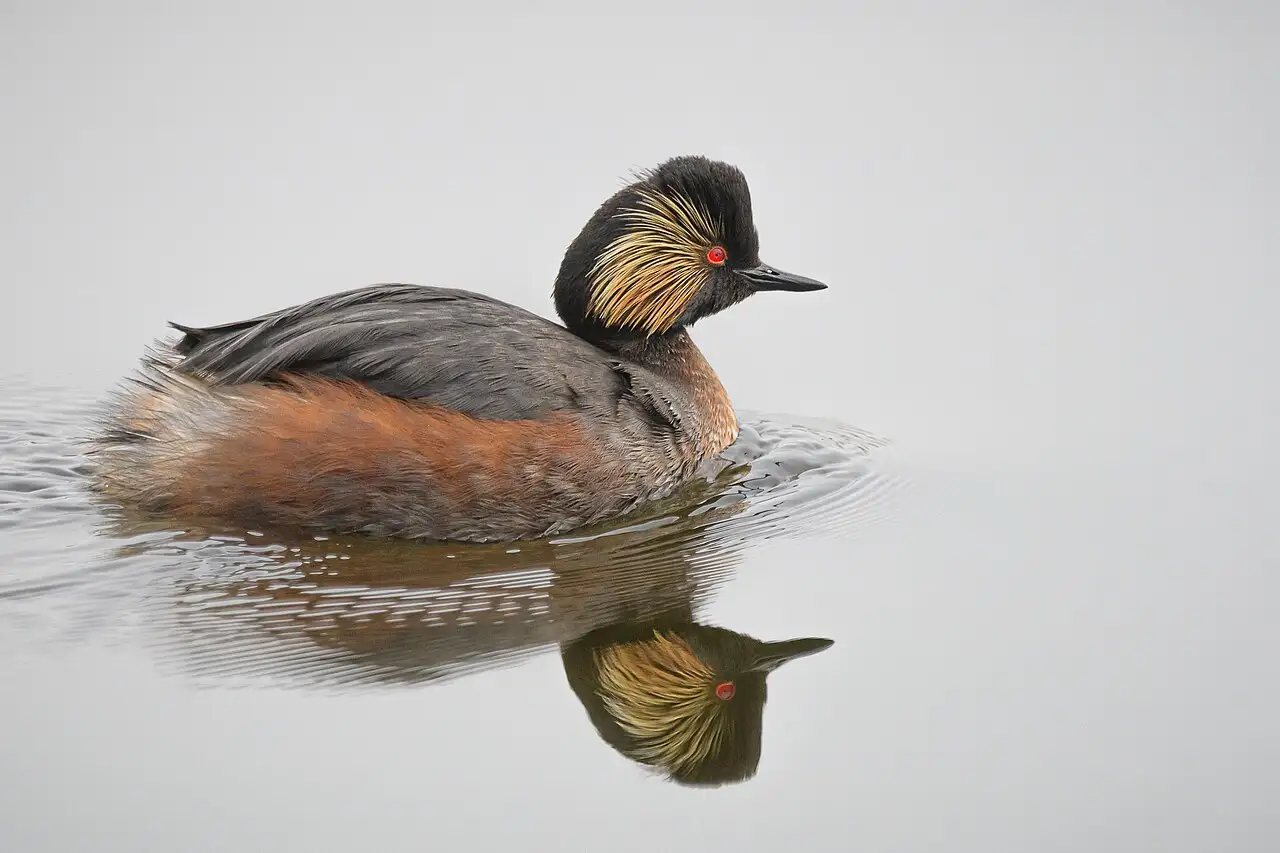
Black-necked Grebe in breeding plumage swimming on clear water, with black neck, red eye, yellow tufts behind the eye and orange flanks, with its reflectionPhoto: Stephan Sprinz, CC BY 4.0Photo 1 of 5
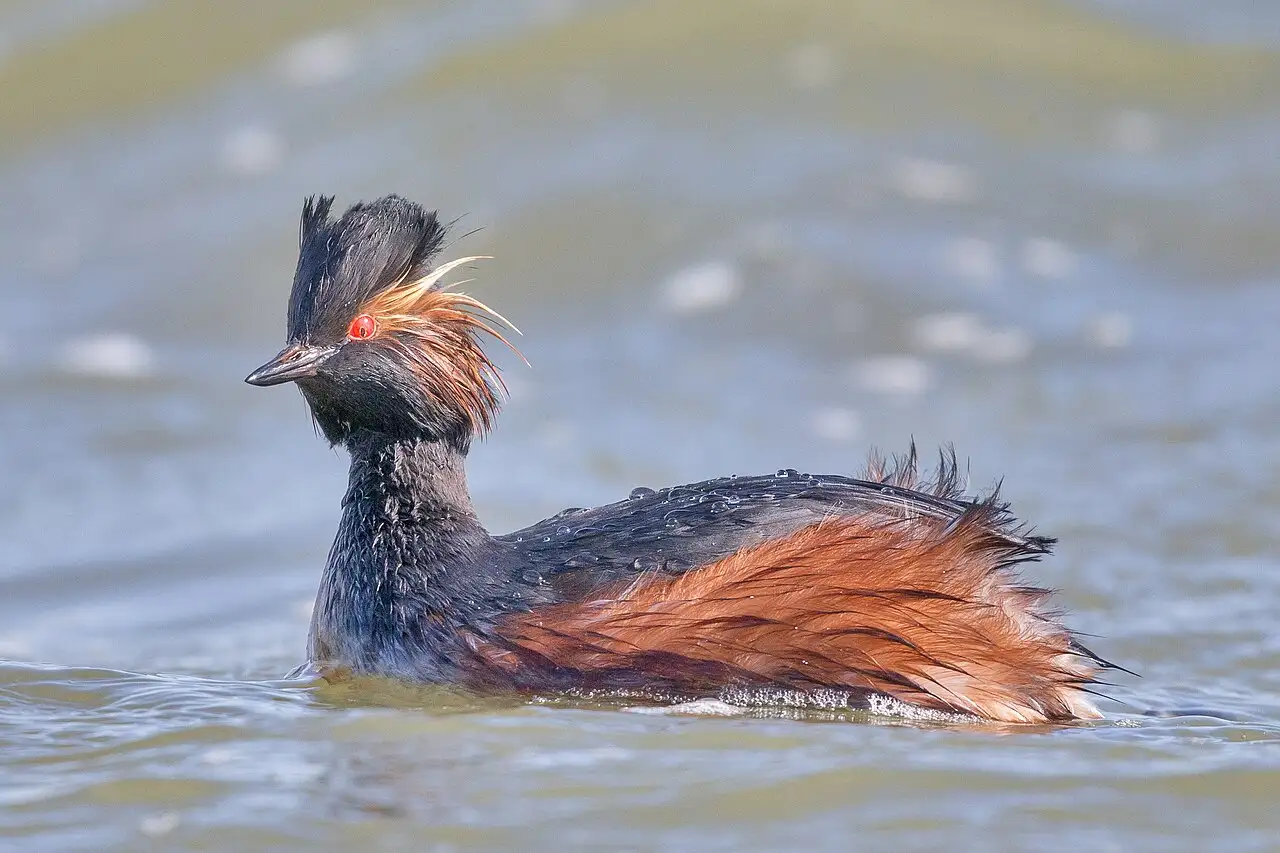
Black-necked Grebe with the crest of the head bristling and the yellow tufts spread, with red eye and chestnut flanksPhoto: Andreas Trepte, CC BY-SA 2.5Photo 2 of 5
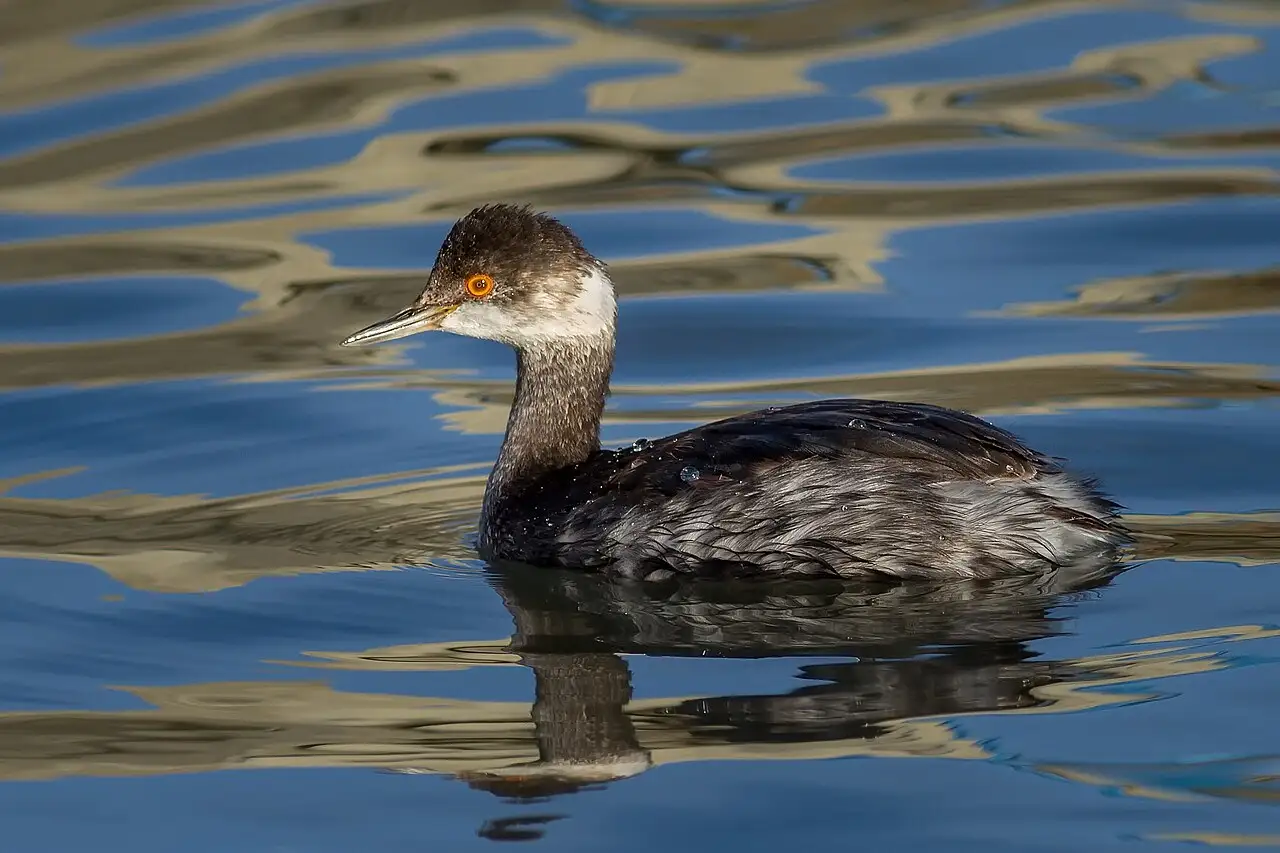
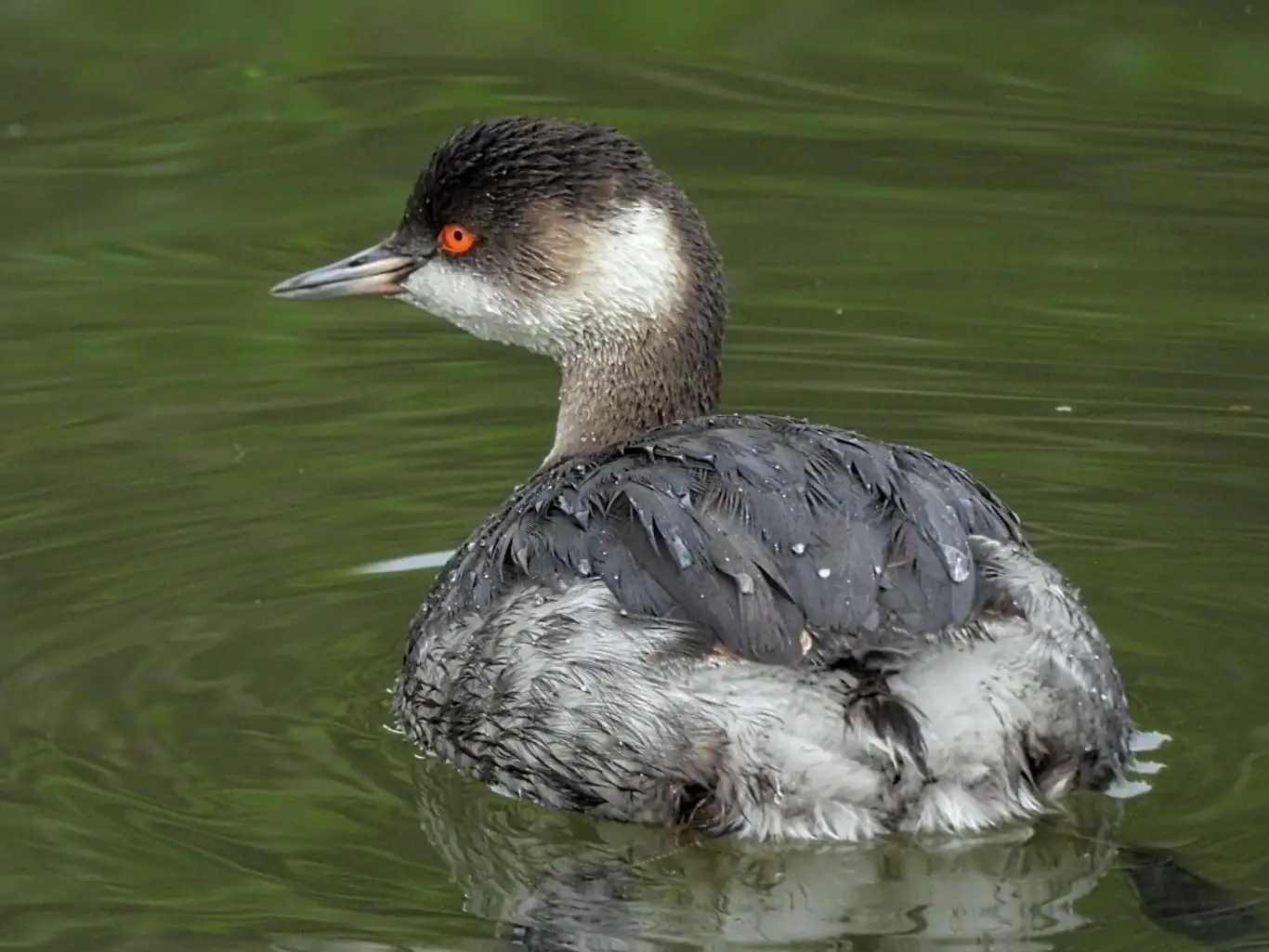
Black-necked Grebe in winter plumage, swimming in profile, with dark upperparts, white throat and cheeks and red eyePhoto: Frank Schulenburg, CC BY-SA 3.0Photo 3 of 5
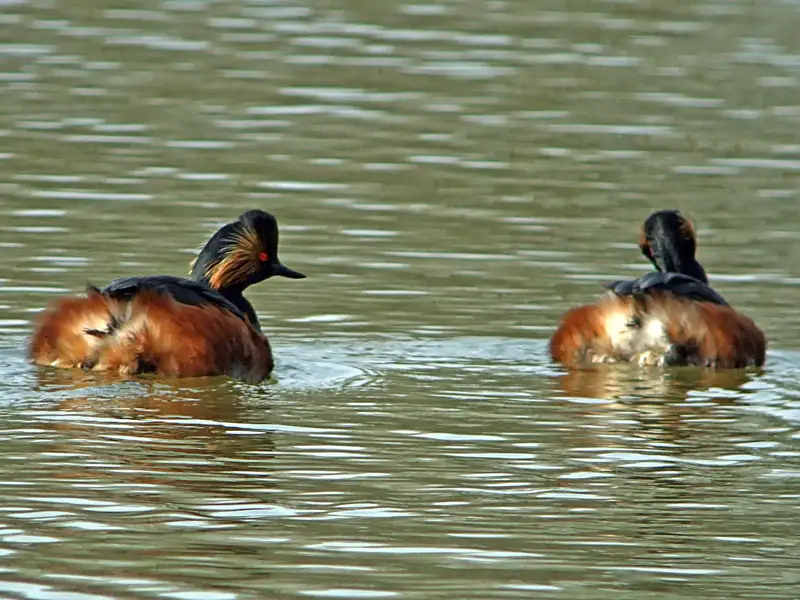
Two Black-necked Grebes on the water, with their backs to the camera, with chestnut flanks and golden tuftsPhoto: GabrielBuissart, CC BY-SA 3.0Photo 4 of 5
Black-necked Grebe swimming, with red eye and dark neck (Andalusia)Photo: Inma Torres, CC BY-NC 4.0Photo 5 of 5
1 / 5
Identification of the Black-necked Grebe
The Black-necked Grebe is small, though somewhat bigger and slimmer than the Little Grebe. It has a thin, pointed bill, slightly upturned, and seen close up its red eyes catch the attention. In breeding plumage it has an overall black colouring, except on the belly and flanks, which are orange; on the face, yellow feathers stand out, starting from the ear area like fan-shaped tufts. In winter it is unobtrusive, with overall blackish colouring, except on the throat, cheeks and sides of the nape, which are white, and the breast and belly are ash grey. There are no differences between the sexes. Juveniles resemble the adults in winter, though they have a more rounded head and the white parts of the head and neck are cream-toned.
Breeding plumage
Black, with orange belly and flanks.
Yellow fan-shaped tufts behind the eye; red eyes.
Winter and juvenile
Blackish, with the throat, cheeks and sides of the nape white, and breast and belly ash grey.
Juvenile: more rounded head and white parts in cream tones.
Habitat and distribution of the Black-necked Grebe
It is distributed across Europe, though more patchily in the west, Asia, Africa and North America. Three subspecies are recognised, and in Spain the subspecies «nigricollis» occurs, which also lives in the rest of Europe and Asia.
The breeding population fluctuates greatly with wetland water levels. Breeding is confirmed in every province except Galicia, Asturias and the Canaries, as well as the African territories, but its main breeding centres are the Doñana marshes, the La Mancha wetlands and El Hondo, in Alicante1. In winter it spreads along the Atlantic, Mediterranean and Cantabrian coasts; the largest concentrations are in Doñana and the Odiel marshes, and it also occupies the Balearics and, scarcely but regularly, the Canaries.
Depending on the time of year it uses different environments. To breed it prefers small or medium-sized wetlands, often temporary, shallow, open, with abundant emergent vegetation and rich in nutrients, such as lagoons, marshes, coastal lagoons and human-modified environments, such as salt pans, restored gravel pits or irrigation ponds. Outside the breeding season it is found on reservoirs, salt pans, bays, river arms at their mouths and some lagoons.
After breeding the birds move south, in search of frost-free inland wetlands and some sheltered coastal areas, such as rías, estuaries or bays; in the Spanish breeding population, individuals gather in certain wintering areas. There is also some movement towards North Africa.
Areas where it is regularly recorded since 2010Squares of about 25 km where it is recorded regularly (occasional passage records are left out). Data from GBIF.org (67,452 records, retrieved October 2026); outline from Natural Earth.
Etymology of the Black-necked Grebe
It is also known as «zampullín cuellinegro»; in other languages it is «cabussó collnegre» in Catalan, «mergullón de pescozo negro» in Galician, «txilinporta lepabeltza» in Basque and «black-necked grebe» in English1. According to Wikipedia, the genus name, «Podiceps», comes from two Latin words, «podicis», «vent» or «sucker», and «pes», «foot», and alludes to the insertion of the legs at the rear end of the body. We have found no source explaining the origin of the Spanish name «zambullidor orejudo».
Population of the Black-necked Grebe
The 2021 European Red List of Birds calculates 71,100–116,000 breeding pairs in Europe, three quarters of them in Russia and Ukraine, with a decreasing trend and enormous fluctuations from year to year depending on wetland water levels. The latest national estimate, from 2007, was 1,200–3,100 pairs (Palomino and Molina, 2009). The main breeding locality is the Guadalquivir marshes, provided the year has been rainy (in exceptional years, more than 1,000 pairs); in the La Mancha lagoons it can exceed 500 pairs in favourable seasons. Other places where in many years it may not nest are Gallocanta, El Hondo, some reservoirs and gravel pits in Castilla y León, Catalonia and Navarre. In winter hundreds of birds may gather, as at the La Mata salt pans (Alicante) and in Formentera.
Among the factors that threaten the species are cited the loss or degradation of habitat, pollution in coastal environments, disturbance during nesting and prolonged periods of drought1.
Nest of the Black-necked Grebe
The nest is a small floating platform, about 25 centimetres across, which both sexes build from plant matter and anchor to submerged or emergent vegetation.
Courtship and breeding of the Black-necked Grebe
It forms small colonies, of not much more than 10 nests, and is often associated with colonies of other species, such as the Whiskered Tern and the Black-headed Gull. The clutch is two or three eggs, sometimes up to five, which turn from white to brown in a short time. It generally lays a single clutch, although sometimes two, and may lay replacement clutches if the original fails. Both sexes incubate for 20–22 days. The chicks leave the nest soon after hatching, the parents carry them on their backs and they become independent from 20 days. A guide to the birds of Doñana documents courtship between April and June; that interval describes courtship, not all of breeding or local reproduction.
Diet of the Black-necked Grebe
It eats mainly insects and their aquatic larvae, although, depending on place and time of year, it may also feed on crustaceans, molluscs, amphibians or small fish.
Curious facts about the Black-necked Grebe
The species undergoes enormous year-to-year fluctuations, depending on the water level of the wetlands where it breeds1. EURING gives 21 years and 4 months of longevity to a bird ringed in Spain, considerably more than the 13.1 years of AnAge; BTO gives 306.5 g as the reference weight of adults; the other published weights correspond to other samples and are not mixed with it.
The Black-necked Grebe in Cabañeros
The habitat pages of this website do not mention it, and we have found no other published source about it in the Park; nor is it in the bird list of the «Visitor’s Guide to Cabañeros National Park» (OAPN). GBIF.org records 6 observations of the Black-necked Grebe in Cabañeros and its surroundings. The La Mancha wetlands are among its main breeding centres, and the La Mancha lagoons are a place where it can exceed 500 pairs in favourable seasons1. None of those observations falls within the Park boundary (according to OpenStreetMap): all are from the surroundings.
Where to see the Black-necked Grebe in Cabañeros
In Cabañeros and its surroundings, only occasionally, on reservoirs and lagoons.
When
Present all year in Spain, with more birds in winter on the coast and reservoirs.
What time
By day, swimming and diving in open water.
Where
On shallow lagoons and marshes with emergent vegetation; outside the breeding season, on reservoirs, salt pans and bays.
What to look for
Look for the red eye and the golden tufts; listen for the high «puhiiií-phí» followed by a murmur.



 Same family
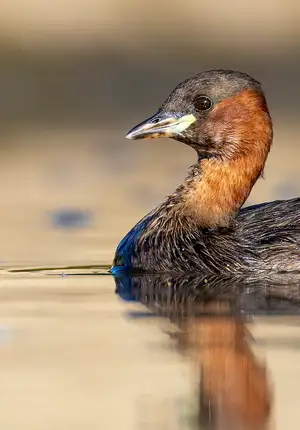 Same family
 Same season in the park
 Same season in the park
 Same season in the park
 Same season in the park
 Same season in the park
 Same season in the park






