Both parents bring the nest materials and feed the chicks; the female incubates alone
Lifespan
Record of 11 years and 2 months in the wild (a bird ringed in Finland)
Conservation status
LC
NT
VU
EN
CR
EW
EX
Global (IUCN)
Least Concern
Spain
Least Concern (LC) in the Red Book of the Birds of Spain; included in the List of Wild Species under Special Protection and not in the Spanish Catalogue of Threatened Species
When to see it
Summer visitor
Months of the year when it is present
J
F
M
A
M
J
J
A
S
O
N
D
In Iberia
no
no
no
yes
yes
yes
yes
yes
yes
no
no
no
Breeding season
no
no
no
no
yes
yes
yes
no
no
no
no
no
Song or voice of the Spotted Flycatcher
Unshowy and not very elaborate, its call often recalls those of some finches. A simple «zii» as a call and a song that starts slowly and then breaks up with changes of rhythm, «izz izz iri tchiritirri», are its most characteristic vocalisations.
SongSpotted Flycatcher
0:00 / 0:26
10 kHz5
The sonogram draws the sound: time runs from left to right, and the higher a trace sits, the higher the note.Recording by Bicheando Natura, Wikimedia Commons (Vídeo de YouTube, con atribución).
Flight of the Spotted Flycatcher
It is a decidedly insect-eating bird that catches its small prey in flight, directly in the air, thanks to the lightness and agility of its flight. It is a trans-Saharan migrant: it spends the winter in the tropical regions of Africa.
Flight typeAgile and light: hunts insects in the air from a perch
It launches itself from a branch, often in a riverside grove or a park, and flies lightly and with agility.
It catches butterflies, flies, mosquitoes or bugs directly in the air.
It returns to the same branch or another nearby, from where it will go on watching. It is a trans-Saharan migrant.
Photo gallery of the Spotted Flycatcher
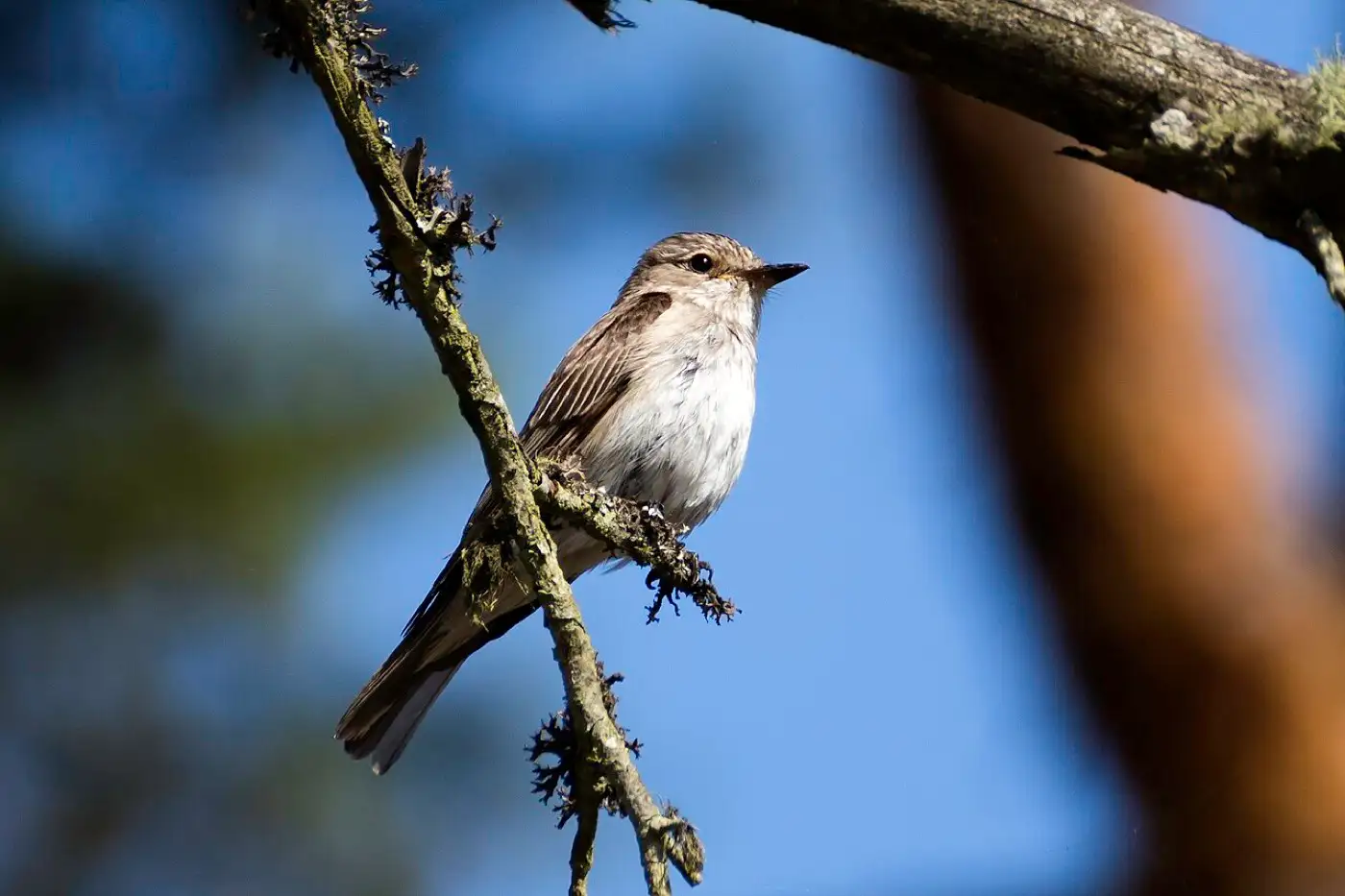
Spotted Flycatcher perched on a lichen-covered branch, in profile, with greyish-brown back and pale streaked breastPhoto: Bene Riobó, CC BY-SA 4.0Photo 1 of 4
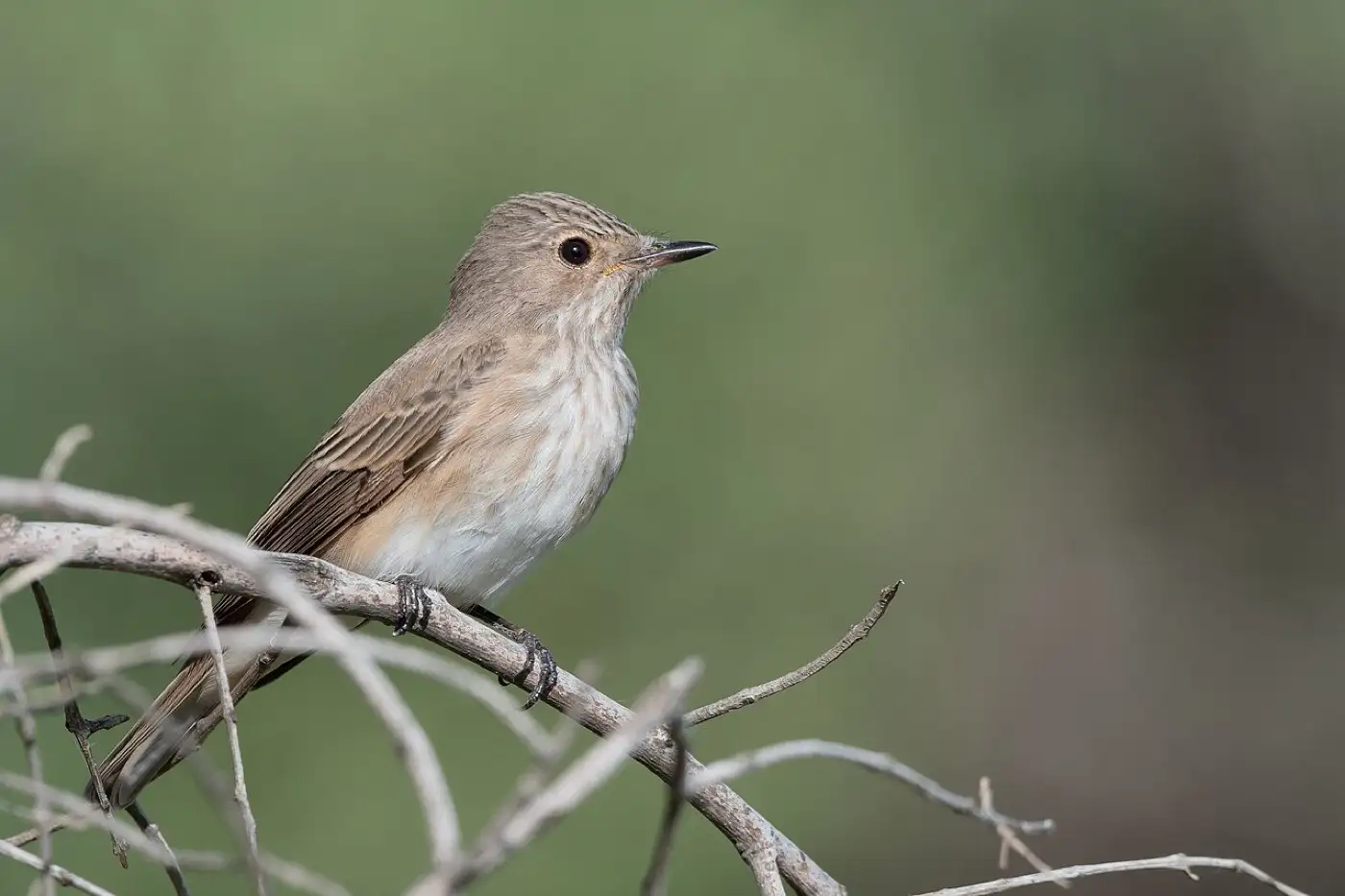
Spotted Flycatcher in profile on a branch, with the faint streaking of the head and breast and the dark eyePhoto: El Golli Mohamed, CC BY-SA 4.0Photo 2 of 4
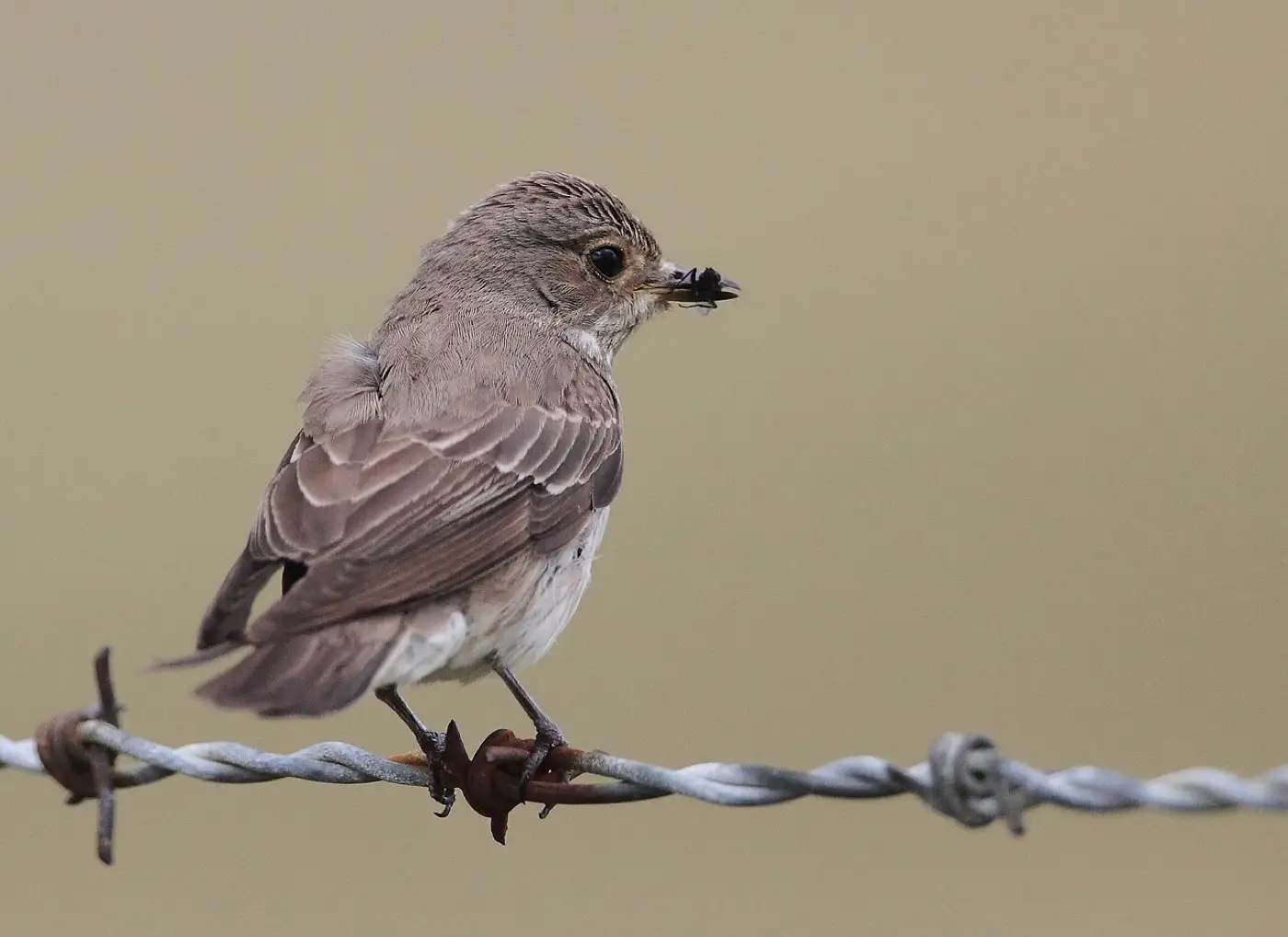
Spotted Flycatcher on a barbed-wire fence, with an insect in its billPhoto: Alun Williams333, CC BY-SA 4.0Photo 3 of 4
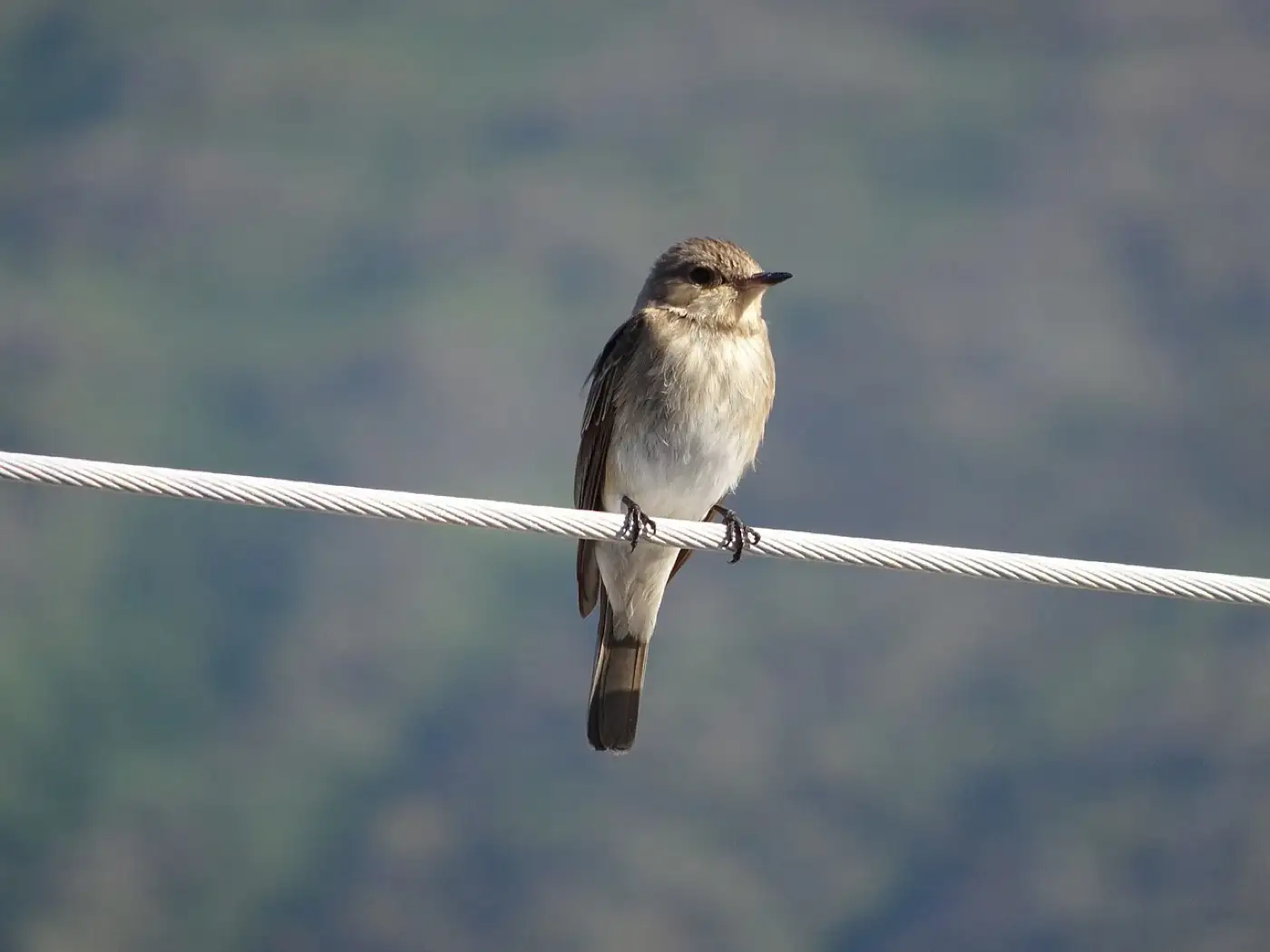
Spotted Flycatcher perched on a wire, from the front, with whitish breast and brown wingsPhoto: Badadaba, CC BY-SA 4.0Photo 4 of 4
1 / 4
Identification of the Spotted Flycatcher
Somewhat larger than the European Pied Flycatcher, the Spotted Flycatcher has a bulky head and the thin bill of a typical insect-eater. The adults’ colouring is fairly homogeneous, with greyish tones predominating on the back and whitish on the belly. With no significant differences between the sexes, there is no especially striking feature in its pattern, barely a faint streaking on the head, throat and breast. Young birds show a somewhat brownish colouring and are generally less plain than adults.
Adult
Back greyish and belly whitish; faint streaking on head, throat and breast.
Bulky head and thin bill.
Young bird
Browner and less plain than the adult.
Habitat and distribution of the Spotted Flycatcher
It is spread as a breeder over much of Europe, North Africa and Asia, except its far east and southern third. Several subspecies are known, and on the Peninsula the subspecies «striata» breeds.
In Spain it is widely distributed across the Mediterranean region and the Cantabrian strip, and is absent from the north-west (Zamora, much of León and the whole of Galicia). Its presence is much scarcer on the southern plateau, although it penetrates the peninsular interior along the Ebro valley, Sierra Morena and the Betic ranges. It is absent from the Canaries, but breeds in Ceuta and Melilla.
It occupies a great diversity of habitats, although it prefers wooded areas, though not very dense, with riverside groves, scrub and nearby wet areas. It often occupies fruit orchards, gardens and parks. Its distribution is more southerly than the Pied Flycatcher’s, and it occupies more varied habitats, generally in areas of lower altitude.
Areas where it is regularly recorded since 2010Squares of about 25 km where it is recorded regularly (occasional passage records are left out). Data from GBIF.org (113,550 records, retrieved October 2026); outline from Natural Earth.
Etymology of the Spotted Flycatcher
«Muscicapa» comes from Latin «musca», «fly», and «capere», «to catch»: the one that catches flies, like its Spanish name. «Striata» is Latin «striatus», «streaked».
Population of the Spotted Flycatcher
In the 2021 European Red List of Birds the European breeding population is estimated at between 20,600,000 and 37,400,000 mature individuals, with a decreasing trend. The Spanish population of this insect-eater is calculated at 824,608 birds, with the highest densities in the regions of the Mediterranean arc, and its trend seems to remain stable. No major conservation problems are known, although, since it feeds almost exclusively on insects, it is likely to be affected by the increasingly widespread use of insecticides.
Nest of the Spotted Flycatcher
It is a cup made of dry grasses and other plant materials, brought by the male and the female. It is normally set in tree cavities, although sometimes the pair places it on the branches of a tree or a dense shrub. Occasionally it uses human constructions and nest boxes.
Courtship and breeding of the Spotted Flycatcher
The breeding season begins in late May with the building of the nest. The clutch usually consists of four to six eggs of variable colour and somewhat spotted. Incubation lasts 12–14 days and is carried out only by the female. Once the eggs have hatched, the chicks are fed by both parents for 12–16 days. By late July the young have learned to fly, but still need to be fed some days more. Occasionally it may make a second clutch, especially in the south.
Diet of the Spotted Flycatcher
Basically insect-eating by nature, it catches mainly flying insects, such as butterflies, flies, mosquitoes and bugs, which it catches directly in the air thanks to the lightness and agility of its flight. Occasionally it adds some fruit and berries to its diet, especially in autumn.
Curious facts about the Spotted Flycatcher
It is one of the most discreet birds of its group: it has no especially striking feature and its song is not very elaborate. It hunts flying insects in the air from a branch, and returns to it.
The Spotted Flycatcher in Cabañeros
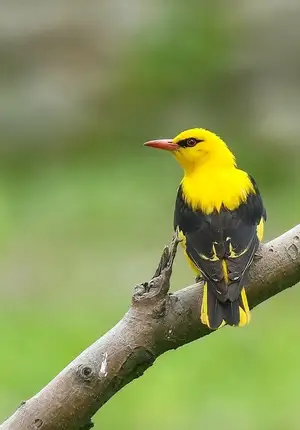
This website’s page on the sclerophyllous forest includes it among the species that stand out in the community of nesting passerines of the mature scrub of Cabañeros, together with the Great Spotted Woodpecker, the Cetti’s Warbler, the Western Orphean Warbler, the Eurasian Wren, the Western Subalpine Warbler, the Short-toed Treecreeper and the Eurasian Golden Oriole.
Where to see the Spotted Flycatcher in Cabañeros
In the mature scrub of Cabañeros.
When
From April to September: it arrives in spring, breeds and leaves.
What time
Throughout the day, hunting from a branch.
Where
In not very dense wooded areas, with riverside groves and wet areas nearby, and in parks and gardens.
What to look for
A grey, unremarkable little bird that sets out from a branch for an insect and returns to it.
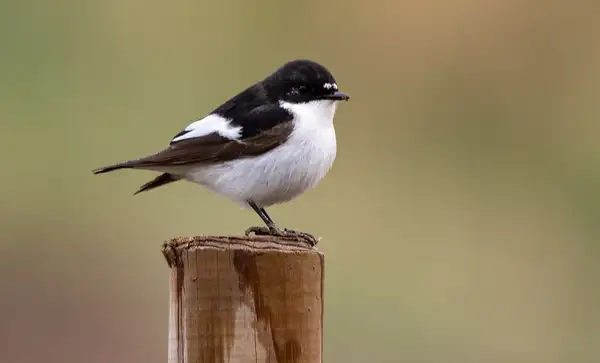
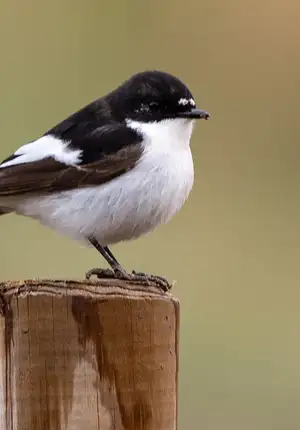
They are similar in appearance1. It is somewhat smaller, with a compact body, broad head and thin bill. In spring, the male is black above and white below, with a white patch on the forehead and an extensive white panel on the wings.
Photo: Hans Ollonen, CC BY-SA 4.0
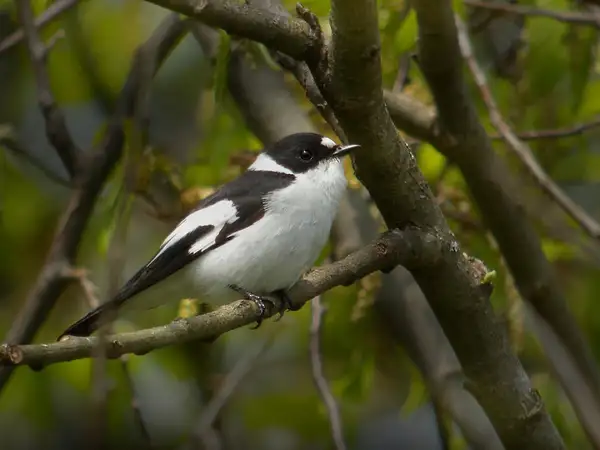
Collared Flycatcher
Ficedula albicollis
How to tell them apart
It is similar to the Pied Flycatcher1. The adult male in spring plumage has a complete white collar, which extends towards the nape; it is occasional in Spain.
Photo: Frank Vassen, CC BY 2.0
Other birds
Birds related to the Spotted Flycatcher or sharing its habitats in Cabañeros.



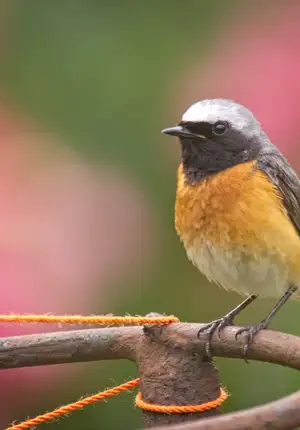 Same family
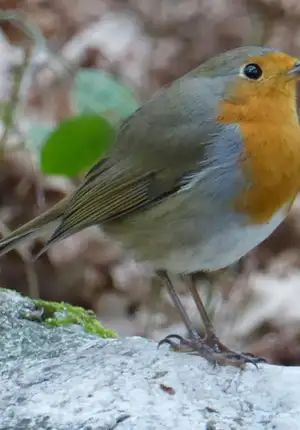 Same family
 Same family
 Same family
 Also in sclerophyllous woodland
 Also in sclerophyllous woodland
 Also in sclerophyllous woodland
 Also in sclerophyllous woodland






