It usually makes a single clutch a year; both sexes incubate and care for the chicks
Lifespan
Record of 7 years and 10 months in the wild (a bird ringed in Spain)
Conservation status
LC
NT
VU
EN
CR
EW
EX
Global (IUCN)
Least Concern
Spain
Least Concern (LC) in the Red Book of the Birds of Spain; included in the List of Wild Species under Special Protection and not in the Spanish Catalogue of Threatened Species
When to see it
Summer visitor
Months of the year when it is present
J
F
M
A
M
J
J
A
S
O
N
D
In Iberia
no
no
yes
yes
yes
yes
yes
yes
yes
yes
no
no
Breeding season
no
no
no
yes
yes
yes
yes
no
no
no
no
no
Song or voice of the Western Orphean Warbler
It gives a melodious warble that recalls the Common Blackbird’s (hence its Spanish name) and is characterised by its fluty timbre, slow rhythm and low pitch. The call is similar to the Sardinian Warbler’s or to the clicking of the Blackcap.
SongWestern Orphean Warbler
0:00 / 0:20
10 kHz5
The sonogram draws the sound: time runs from left to right, and the higher a trace sits, the higher the note.Recording by Aves Córdoba, Wikimedia Commons (Vídeo de YouTube, con atribución).
Flight of the Western Orphean Warbler
Unlike other warblers, which prefer dense scrub, this one prefers to move through the treetops and among open woodland. It is a long-distance trans-Saharan migrant.
Flight typeAmong the treetops and in open woodland
Unlike other warblers, it prefers to move through the treetops and among open woodland, not through dense scrub.
Short flight among the holm oaks, pines or olive trees of its territory, with the dark tail showing the white outer feathers.
It lands and gives its melodious warble, fluty in timbre, slow in rhythm and low in pitch, which recalls the Common Blackbird's.
Photo gallery of the Western Orphean Warbler
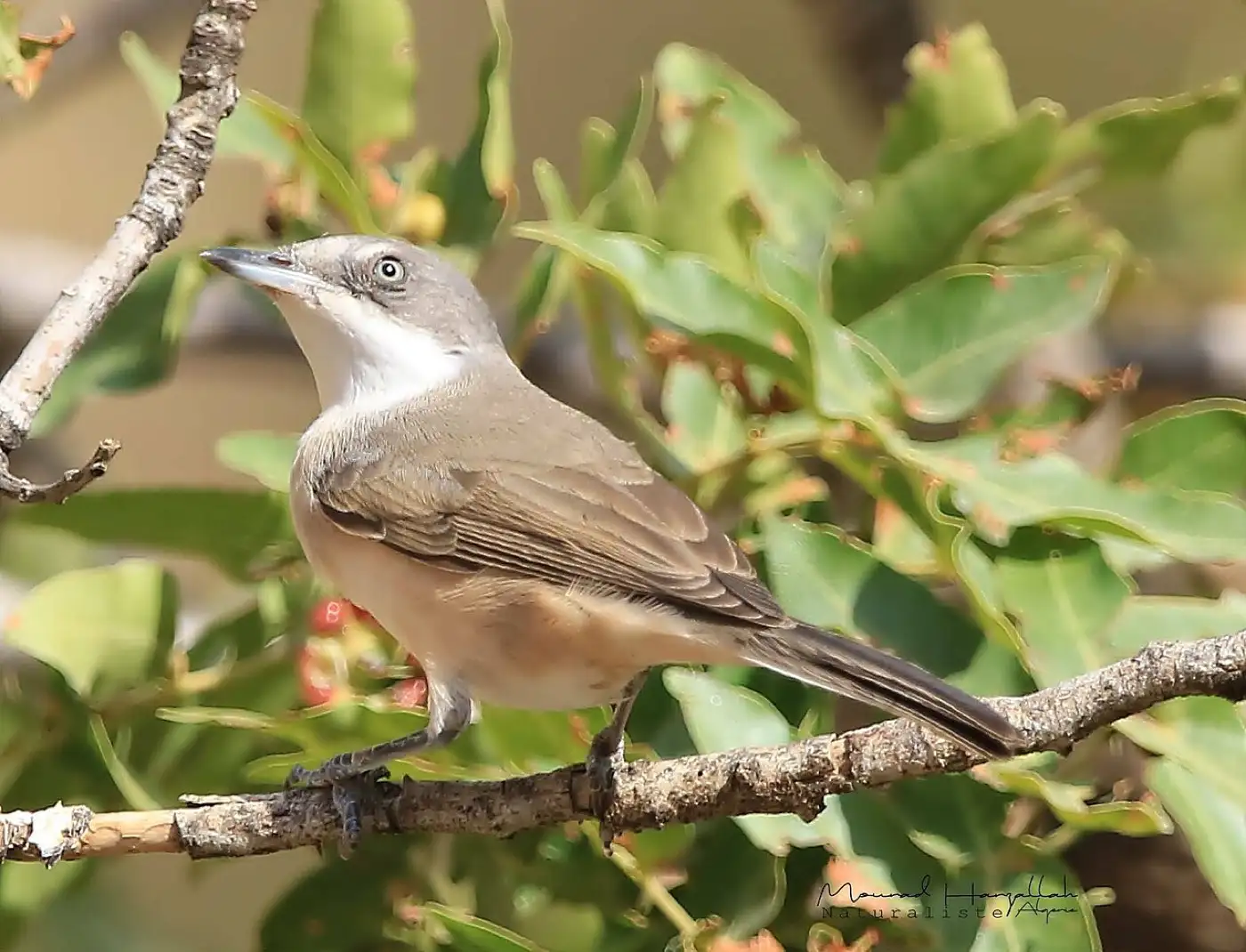
Western Orphean Warbler in profile on a branch among leaves, with greyish back, white throat and robust billPhoto: Mourad Harzallah, CC BY 4.0Photo 1 of 4
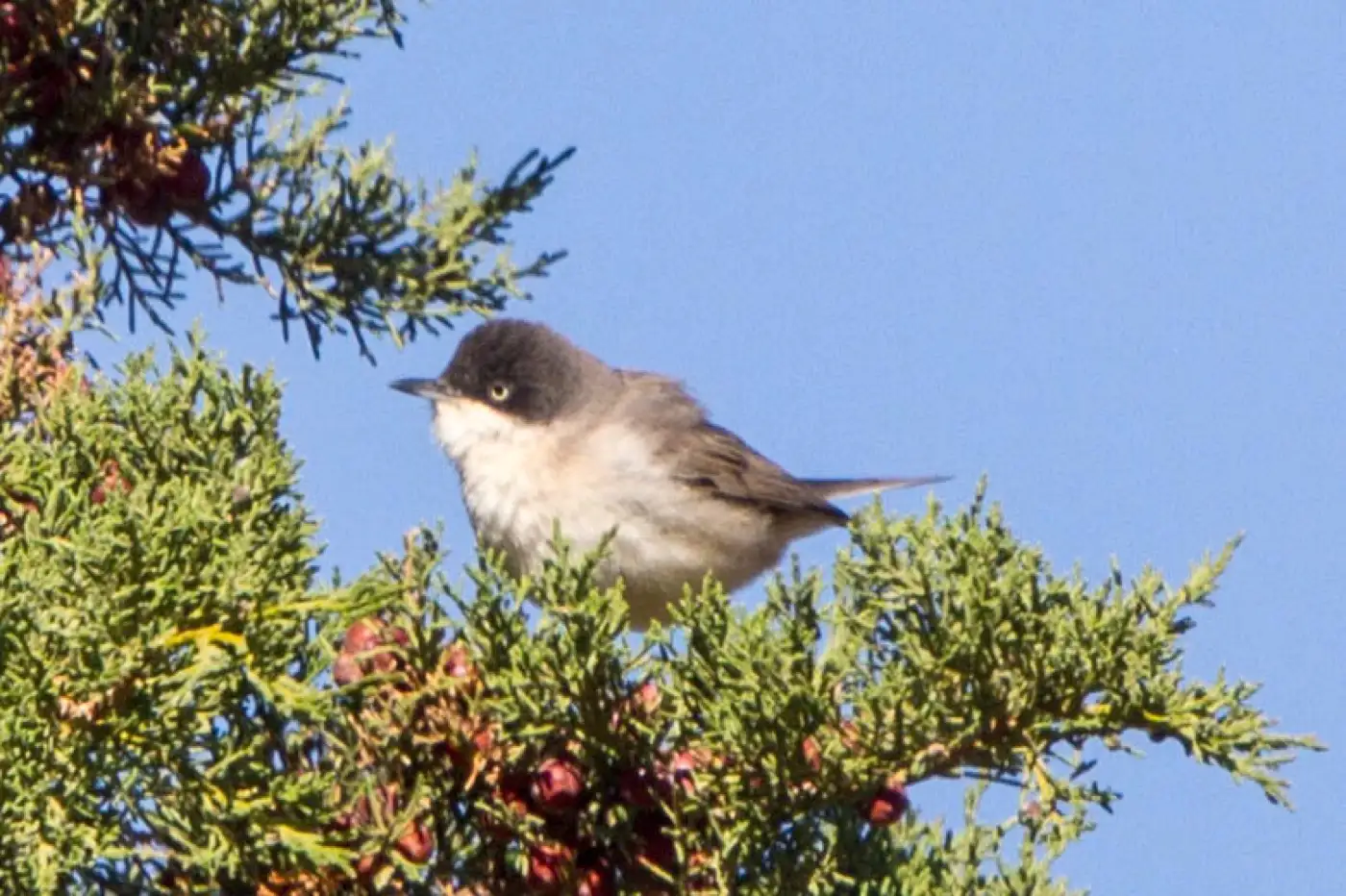
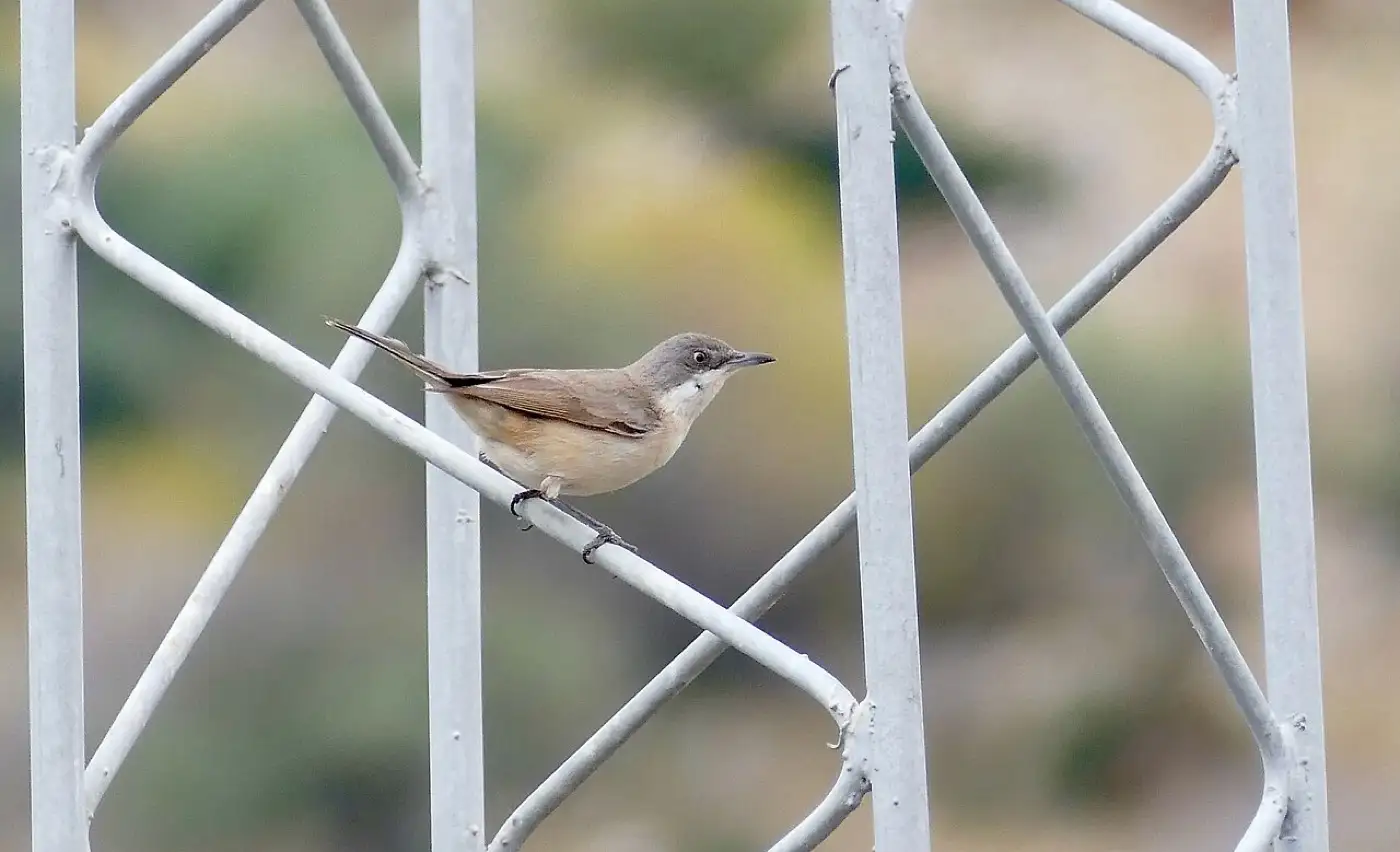
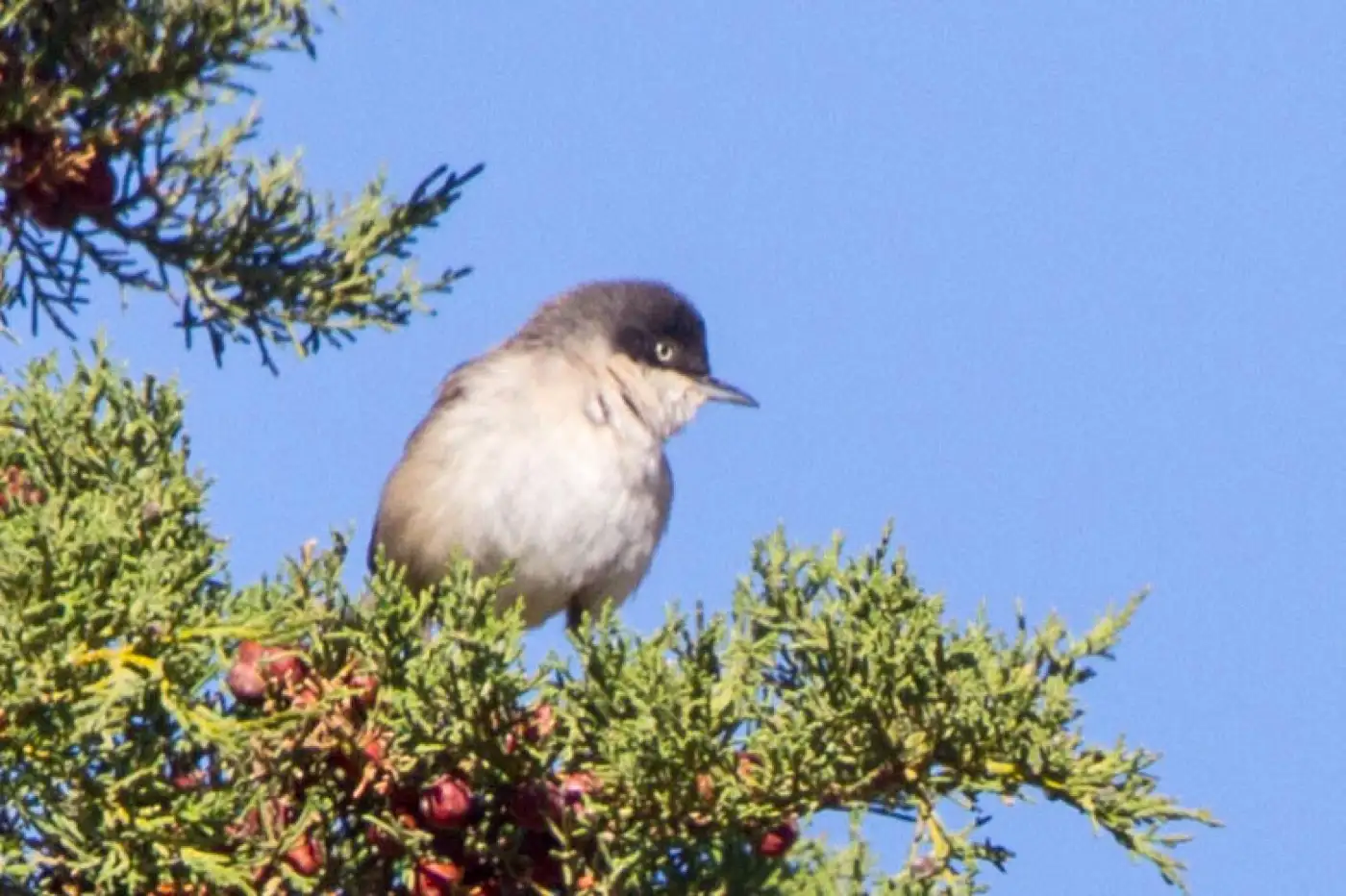
It is the largest and stockiest of our warblers. It has greyish upperparts and whitish underparts, with pink tints on the breast and greyer ones on the belly. It has a robust bill, pale yellow iris and white throat. The male shows a dark band, almost black, like a mask, and the forehead and cap are also very dark. This hood is greyer (less dark) in females, and brown in young birds. The tail is dark, with the outer tail feathers white.
Male
Mask, forehead and cap very dark, almost black; white throat.
Greyish upperparts and whitish underparts, with pink tints on the breast.
Female and young bird
Female with a greyer cap; young bird with a brown cap.
Habitat and distribution of the Western Orphean Warbler
As a breeder it ranges across the western Mediterranean, including south-west Europe (the Iberian Peninsula, Italy and southern France) and north-west Africa (northern Morocco, Algeria and Tunisia). The wintering areas are south of the Sahara, between Senegal and Chad.
In Spain it has a wide distribution across the Peninsula, although quite patchy: it is frequent throughout the peninsular Mediterranean region, normally in the thermo-Mediterranean belt, but is absent or scarce on the Cantabrian fringe, in large treeless areas of both plateaus, on the Mediterranean coast and in the south-west of the Peninsula. It has not been detected as a breeder on either archipelago or in Melilla either.
It shows a clear preference for areas of well-developed, open, sparse tree vegetation: holm oak woods, pine woods, juniper woods and, to a lesser extent, Lusitanian oak woods, Pyrenean oak woods and tree crops (olive groves, orange groves). It is distributed from sea level up to 1,500 metres altitude (Sierra Nevada), although it is scarce above 1,000.
It is a long-distance trans-Saharan migratory species. The pre-breeding passage is detected between March and June, with peaks in early May, and the post-breeding one between July and October, with peaks in September.
Areas where it is regularly recorded since 2010Squares of about 25 km where it is recorded regularly (occasional passage records are left out). Data from GBIF.org (14,733 records, retrieved October 2026); outline from Natural Earth.
Etymology of the Western Orphean Warbler
«Mirlona» comes from its warble recalling that of the Common Blackbird1. «Hortensis» is the Latin adjective meaning «of orchards or gardens». It is now called «curruca mirlona occidental», «Curruca hortensis»1.
Population of the Western Orphean Warbler
The 2021 European Red List of Birds does not give population data for this species for the continent. Spain holds practically all the birds of the species in Europe (98 %), with a total of 821,426 birds, and the most numerous populations are shared between Castilla-La Mancha and Castilla y León. The trend has been clearly positive in recent years, according to the SACRE programme for 1998–2018. The species’ expansion in the northern half of the Peninsula and in the more mountainous regions seems linked to global warming, given its thermophilic nature. It is not considered threatened, although its possible threats are not well known: the disappearance of dehesas and other open woodland, infrastructure, urban development and agricultural or livestock intensification may contribute to the loss of its habitat.
Nest of the Western Orphean Warbler
Both parents build it: a small basket of twigs and leaves, lined with mosses and fine grasses, set low down in the thicket of a shrub or tree.
Courtship and breeding of the Western Orphean Warbler
The breeding season runs from April to July, and it usually makes a single clutch a year. The clutch consists of three to six eggs, white or bluish with variable speckling. Incubation lasts 12 or 13 days and is carried out by both sexes, with the female playing a special part. The chicks, which both parents care for, make their first flights at 12 or 13 days, and are then fed for 5 or 6 days more.
Diet of the Western Orphean Warbler
Its diet is based on invertebrates (spiders, snails, grasshoppers, bugs, Lepidoptera), which it supplements with various berries and fruits (blackberries, elderberries, mastic berries).
Curious facts about the Western Orphean Warbler
Spain holds 98 % of the birds of the species in Europe. It is the largest of our warblers. Its expansion northwards seems linked to global warming.
The Western Orphean Warbler in Cabañeros
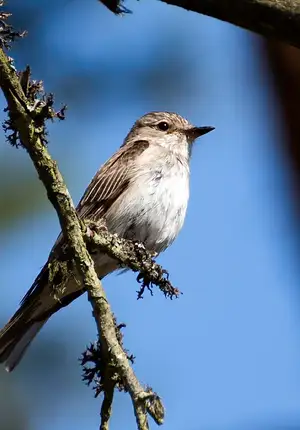
This website’s page on sclerophyllous forest includes it among the species that stand out in the community of nesting passerines of the mature scrub of Cabañeros, together with the Great Spotted Woodpecker, the Cetti’s Warbler, the Eurasian Wren, the Western Subalpine Warbler, the Spotted Flycatcher, the Short-toed Treecreeper and the Eurasian Golden Oriole.
Where to see the Western Orphean Warbler in Cabañeros
In the mature scrub of Cabañeros, among the crowns of the holm oaks.
When
From March to October: it arrives in spring and leaves in autumn.
What time
Throughout the day, and its warble is heard before it is seen.
Where
In holm oak woods, pine woods, juniper woods, olive groves and dehesas, among the treetops.
What to look for
A stocky warbler with a dark mask and white throat, which sings like a blackbird.
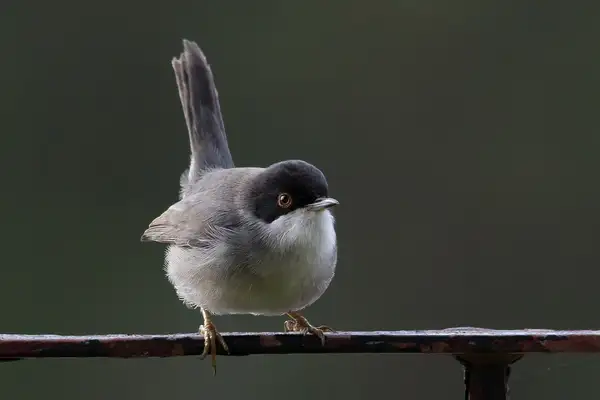
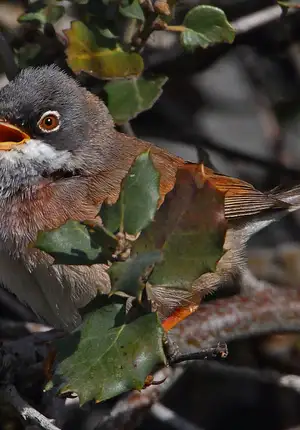
They are similar in appearance, and its call is similar to the Orphean’s1. The Sardinian Warbler is smaller and has a black cap, with red eye-ring and white throat.



 Same family
 Same family
 Same family
 Same family
 Also in sclerophyllous woodland
 Also in sclerophyllous woodland
 Also in sclerophyllous woodland
 Also in sclerophyllous woodland






