Characteristics of the Western Black-eared Wheatear
Order
Passeriformes
Family
Muscicapidae
Species
Oenanthe hispanica
Wingspan compared with a sheet of A4 paper.
Length
14 cm
Wingspan
25–27 cm
Weight
15.1 g
Social life
One or two clutches a year; both parents feed the chicks
Lifespan
Record of 4.9 years in the wild (AnAge)
Conservation status
LC
NT
VU
EN
CR
EW
EX
Global (IUCN)
Least Concern
Spain
Near Threatened (NT) in the Red Book of the Birds of Spain; included in the List of Wild Species under Special Protection and not in the Spanish Catalogue of Threatened Species
When to see it
Summer visitor
Months of the year when it is present
J
F
M
A
M
J
J
A
S
O
N
D
In Iberia
no
no
yes
yes
yes
yes
yes
yes
yes
yes
no
no
Breeding season
no
no
no
yes
yes
yes
yes
no
no
no
no
no
Song or voice of the Western Black-eared Wheatear
It is a loud song, consisting of a succession of rapid, grating phrases, with quickened, high trills. It gives short calls, including some variety of whistles and clicks.
SongWestern Black-eared Wheatear
0:00 / 0:28
10 kHz5
The sonogram draws the sound: time runs from left to right, and the higher a trace sits, the higher the note.Recording by Bicheando Natura, Wikimedia Commons (Vídeo de YouTube, con atribución).
Flight of the Western Black-eared Wheatear
It is a species typical of open, dry environments, and is a trans-Saharan migrant: it spends the winter in the Sahel strip. The pre-breeding passage is detected from March to May, with peaks in early April; the post-breeding one runs from August to October, with peaks at the end of August.
Flight typeDrops from a perch onto insects and returns to it
It launches itself from a stone, a shrub or a low branch on open, dry ground, in search of an insect.
It catches insects, which are the basis of its diet; at the end of summer it also takes small fruits.
It returns to the stone or the shrub, where the contrast of the black of the wings and mask with the ochre-white of the body can be seen.
Photo gallery of the Western Black-eared Wheatear
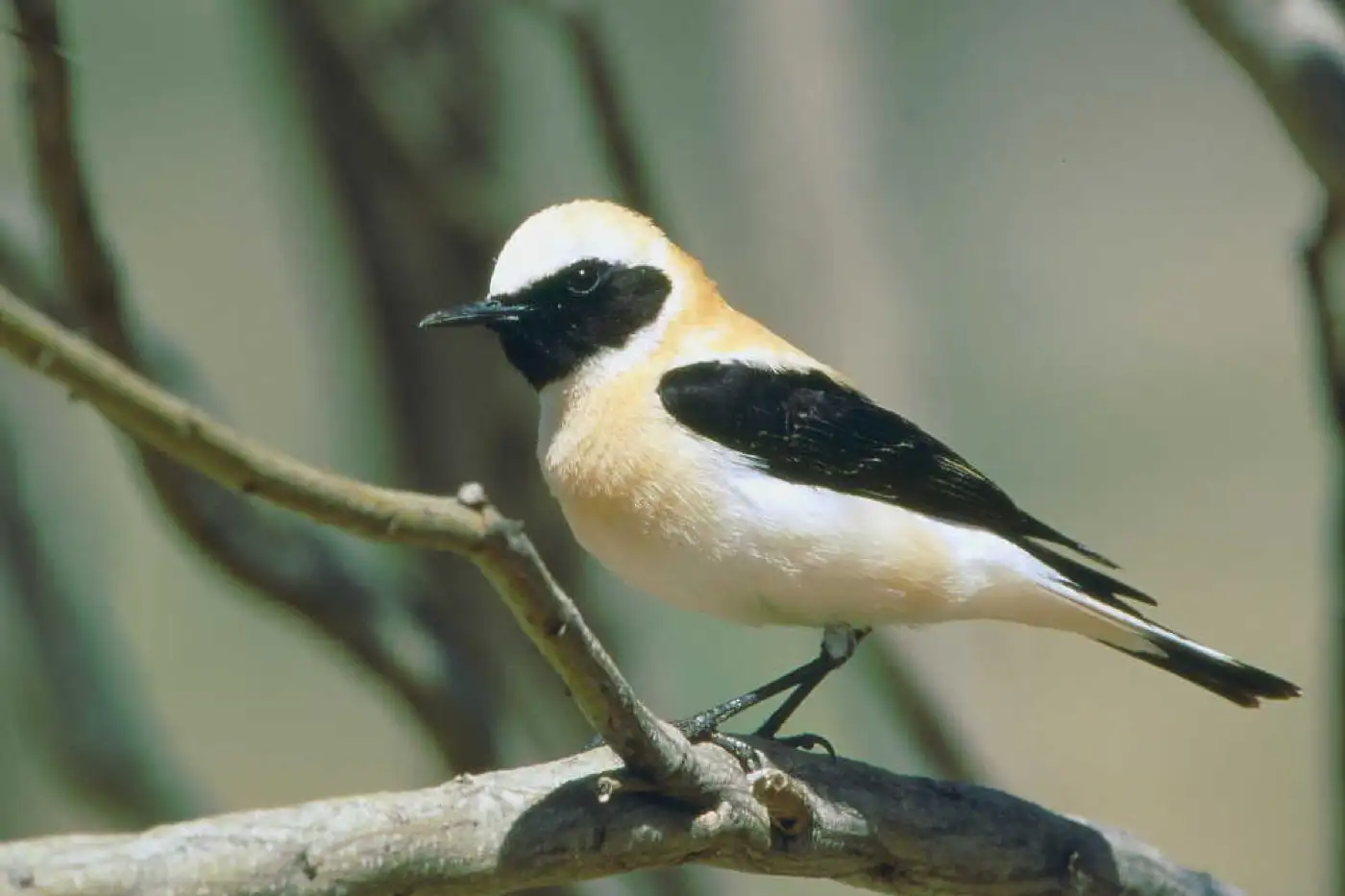
Male Western Black-eared Wheatear on a branch, with black mask and throat, black wings and white-ochre bodyPhoto: carlespastor, CC BY-SA 4.0Photo 1 of 4
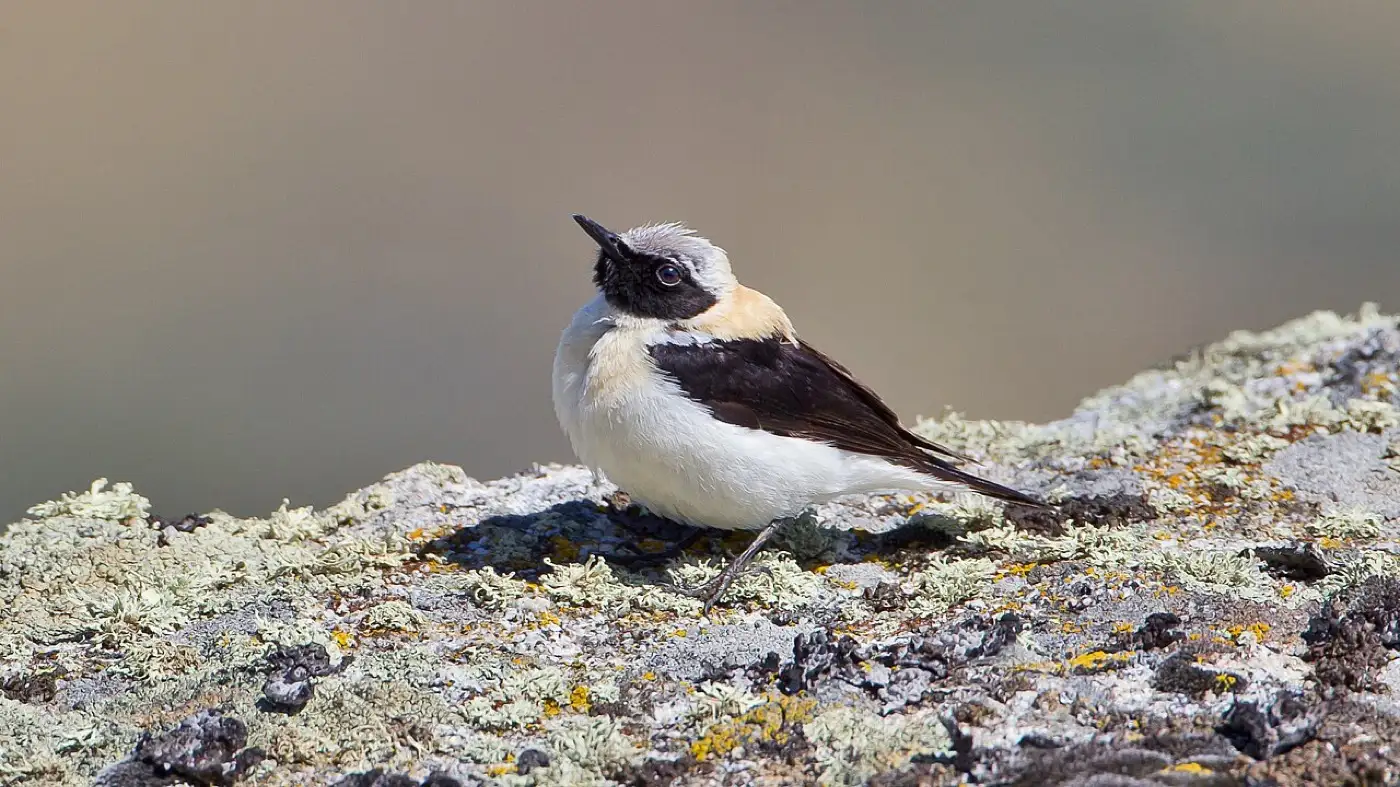
Male Western Black-eared Wheatear perched on a lichen-covered rock, with black mask, black wings and ochre backPhoto: Juan Lacruz, CC BY-SA 3.0Photo 2 of 4
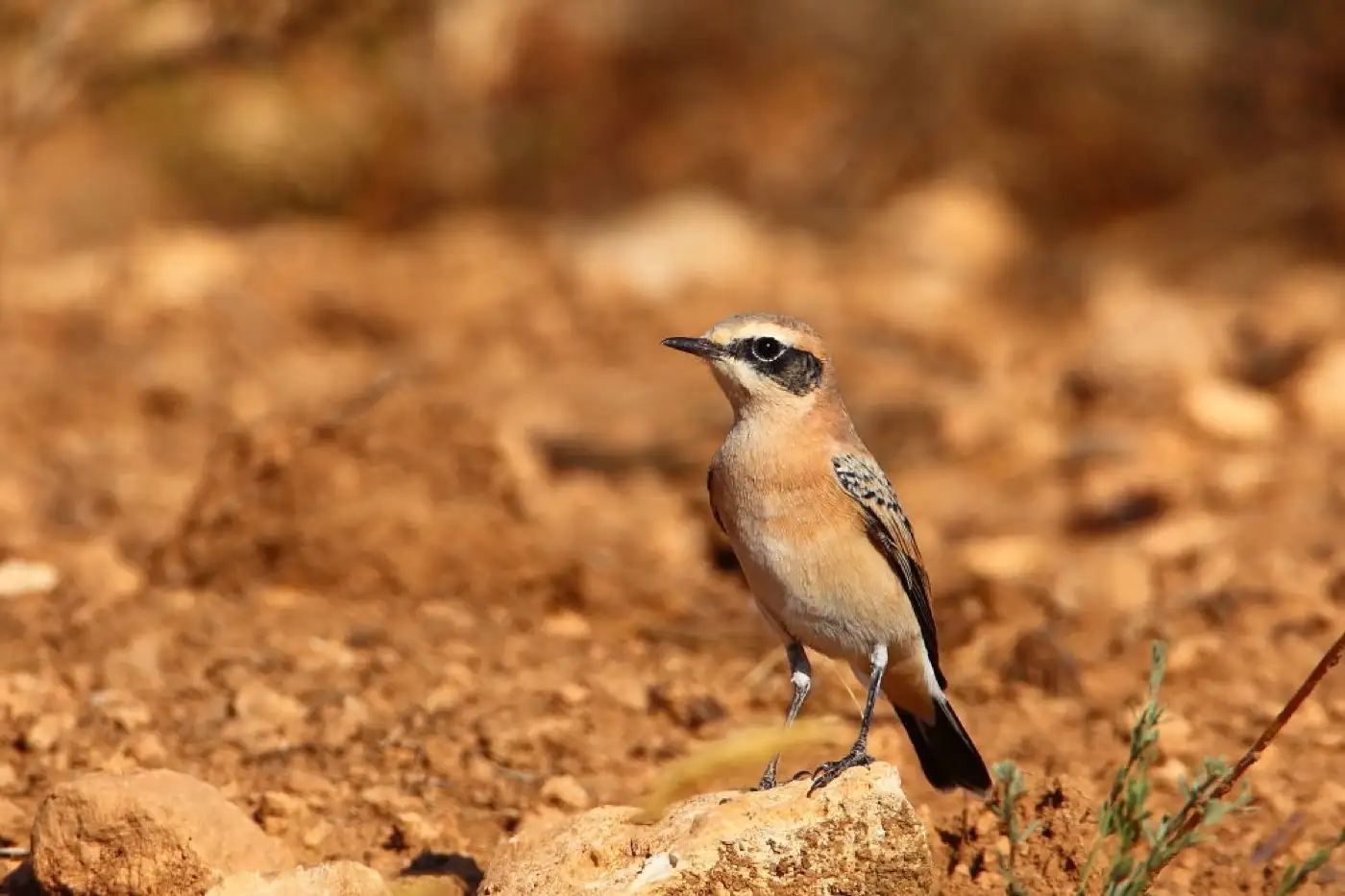
Female Western Black-eared Wheatear, browner, standing on reddish earthPhoto: carlespastor, CC BY-SA 4.0Photo 4 of 4
1 / 4
Identification of the Western Black-eared Wheatear
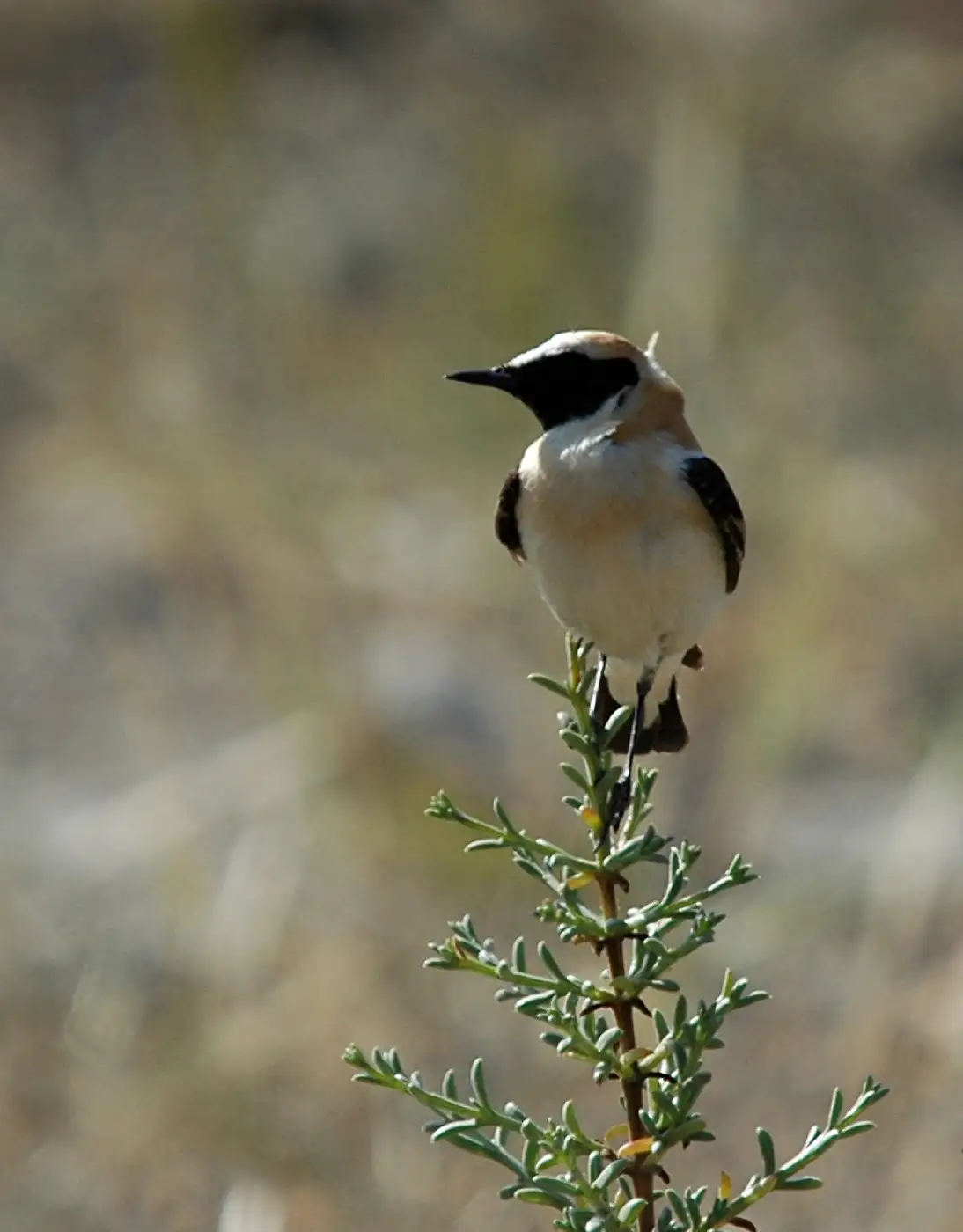
It is a small bird of elegant look. Males show a marked contrast between the black of the wings and mask and the white-ochre tones of the back and belly. Females are similar to males, although browner in appearance. There are two morphs with different throat colouring, white in one and black in the other.
The species is similar to the Northern Wheatear, from which it differs by the absence of a supercilium and by the tail pattern, with more white on the edges. It is even more like the Eastern Black-eared Wheatear, raised to species rank in 2022 and considered in Spain a rarity.
Male
Black wings and mask; back and belly white-ochre.
Throat white or black, according to the morph.
Female
Similar to the male, browner in appearance.
Habitat and distribution of the Western Black-eared Wheatear
Until 2022 the Black-eared Wheatear was considered to have two subspecies, the western «hispanica» and the eastern «melanoleuca», until the latter was raised to species rank. After that split, the Western Black-eared Wheatear breeds in the western Mediterranean countries, with a distribution limited to south-western Europe and north-west Africa. The wintering areas are in sub-Saharan Africa.
In Spain it is well spread across the whole Mediterranean region as a breeder, and is absent from areas of Atlantic climate and high mountains, such as Galicia, the whole Cantabrian region, the northernmost areas of Castilla y León, Navarre, Aragón and Catalonia, and the Balearic and Canary archipelagos.
It is typical of open, dry environments. It frequents deforested areas and wasteland with sparse herbaceous cover and scattered shrubs, as well as vineyards, some tree crops (olive groves, almond groves) and open Mediterranean woods (dehesas).
Areas where it is regularly recorded since 2010Squares of about 25 km where it is recorded regularly (occasional passage records are left out). Data from GBIF.org (17,112 records, retrieved October 2026); outline from Natural Earth.
Etymology of the Western Black-eared Wheatear
«Oenanthe» comes from the ancient Greek «oînos», «wine», and «ánthos», «flower». «Hispanica» is Latin for «Spanish»: Linnaeus described it as «Motacilla hispanica», citing Edwards’ work.
Population of the Western Black-eared Wheatear
In the 2021 European Red List of Birds the combined European breeding population of Western and Eastern Black-eared Wheatear is estimated at between 2,530,000 and 7,250,000 mature individuals, with an unknown trend. The Spanish contingent has been estimated at 555,015 individuals, although these data must be taken with caution, because the estimates from the Catalan and Valencian atlases correct them sharply downwards. The SACRE programme shows a clearly negative population trend since 1998, caused by loss of space, the intensification of farming uses and the urbanisation of its habitat. The main threats are the alteration or destruction of its breeding habitats, through agricultural intensification or reforestation of marginal land, to which are added severe droughts in the wintering areas and the increase of terrestrial predators.
Nest of the Western Black-eared Wheatear
It builds a nest on the ground, a small cup of grasses and mosses, sheltered by a stone or a bush.
Courtship and breeding of the Western Black-eared Wheatear
The breeding period runs from April to July, with the possibility of one or two clutches a year. The clutch consists of four to six bluish eggs, finely speckled with reddish brown, which the female incubates for 13–14 days. Both parents feed the chicks, which can fly at 12 days and become independent at 20.
Diet of the Western Black-eared Wheatear
It is based on eating insects. It also takes small fruits, above all at the end of summer, before and during migration.
Curious facts about the Western Black-eared Wheatear
In 2022 the Eastern Black-eared Wheatear was split off as a species, so what is called Black-eared Wheatear here is the «western» one. Its Spanish population shows a clearly negative trend since 1998.
The Western Black-eared Wheatear in Cabañeros
This website’s page on grasslands lists it among the nesting birds of the grasslands of Cabañeros, of Mediterranean affinity: it places it between the raña of Los Pescados and Los Esmataos, together with the Thekla’s Lark.
Where to see the Western Black-eared Wheatear in Cabañeros
In the grasslands of the raña of Cabañeros, between Los Pescados and Los Esmataos.
When
From March to October; the passage peaks are in early April and late August.
What time
Throughout the day, perched on stones and bushes.
Where
On open, dry terrain, wasteland with scattered shrubs, vineyards, olive groves and dehesas.
What to look for
A white-ochre bird with a black mask and wings, which stays on a low perch.
They are similar in song and appearance1. The male has a blue-grey back, black wings, ochre underparts and a black mask, with a supercilium; the tail is white, with a black inverted T.
Photo: Alexis Lours, CC BY 4.0
Eastern Black-eared Wheatear
Oenanthe melanoleuca
How to tell them apart
It is even more similar: raised to species in 2022, in Spain it is considered a rarity.
Photo: Charles J. Sharp, CC BY-SA 4.0
Other birds
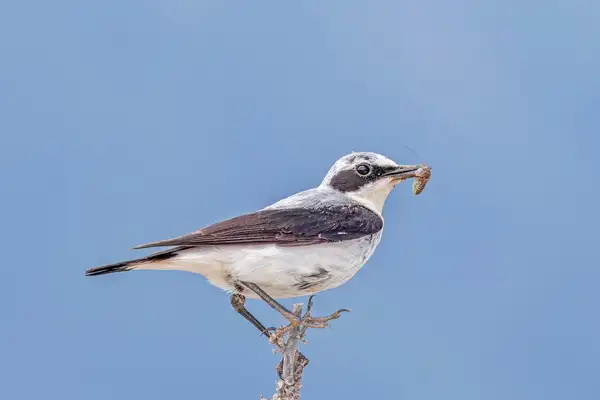
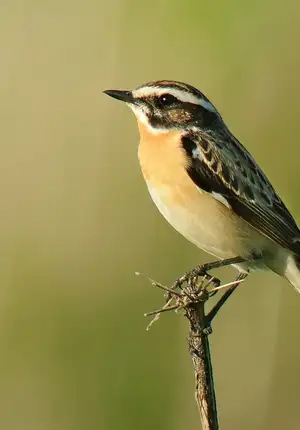
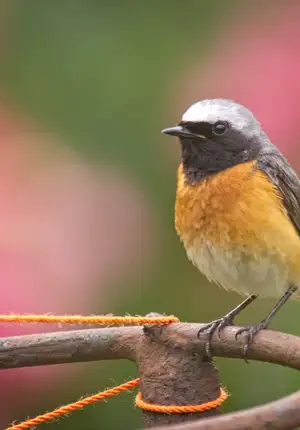
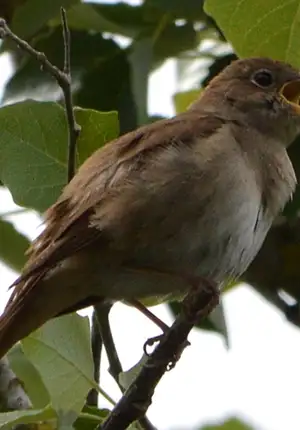
Birds related to the Western Black-eared Wheatear or sharing its habitats in Cabañeros.




 Same family
 Same family
 Same family
 Same family
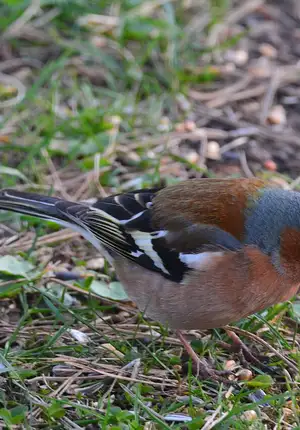 Also in grasslands and rañas
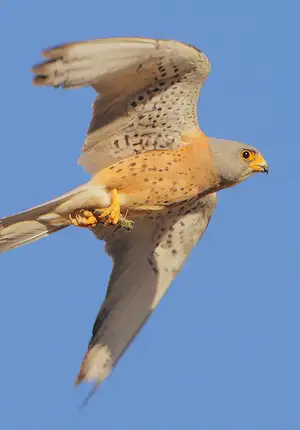 Also in grasslands and rañas
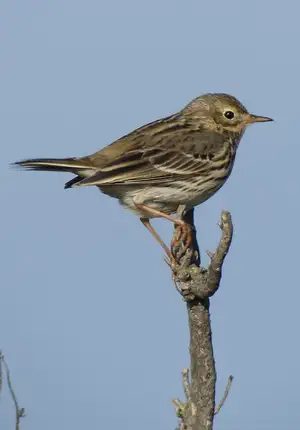 Also in grasslands and rañas
 Also in grasslands and rañas




