Wingspan compared with a person with arms outstretched.
Length
55–60 cm
Wingspan
1.3–1.55 m
Weight
0.8–1 kg
Social life
Gregarious; it breeds in colonies or near other pairs, and forms roosts
Lifespan
Record of almost 29 years in the wild (a bird ringed in France)
Conservation status
LC
NT
VU
EN
CR
EW
EX
Global (IUCN)
Least Concern
Spain
On the List of Wild Species under Special Protection; Least Concern in the 2021 Red Book of the Birds of Spain
When to see it
Summer visitor
Months of the year when it is present
J
F
M
A
M
J
J
A
S
O
N
D
In Iberia
no
yes
yes
yes
yes
yes
yes
yes
yes
no
no
no
Breeding season
no
no
no
yes
yes
yes
yes
no
no
no
no
no
Song or voice of the Black Kite
It gives a quick call, like a whinny, «pii-iiiii», and also a sort of mew. The recording we hear is of that whinny, which it repeats in bouts.
CallBlack Kite
0:00 / 0:30
10 kHz5
The sonogram draws the sound: time runs from left to right, and the higher a trace sits, the higher the note.Recording by Joost van Bruggen, Wikimedia Commons (CC BY-SA 4.0).
Flight of the Black Kite
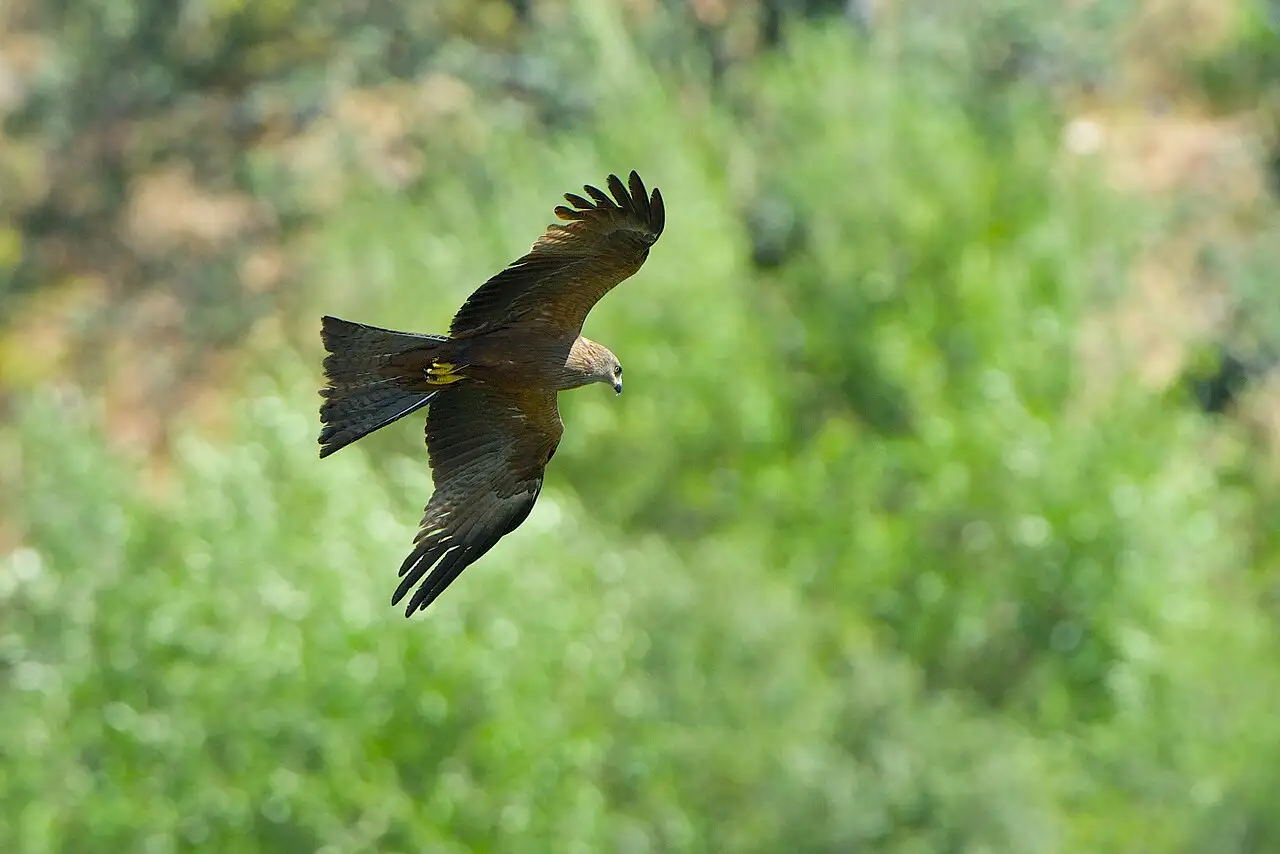
It is an agile bird that shows an extraordinary ability to manoeuvre in the air, although it is not as elegant as the Red Kite. It glides with long wings and forked tail, and patrols roads, rubbish tips and riverbanks tirelessly in search of easy food.
Flight typeAgile, gliding, with a forked tail that acts as a rudder
It climbs in circles with long wings and the tail, less forked than the Red Kite's, spread to manoeuvre. It is agile and manoeuvres with ease in the air.
It goes over roads, riverbanks and grasslands at low height, looking for weakened prey, carrion and any easy food. It is often with other kites, and sometimes steals food from other raptors.
When it sees the carcass, the fish or the rodent, it drops down and catches it with its talons, never ceasing to manoeuvre with its tail.
Photo gallery of the Black Kite
Black Kite in flight over a green hillside, with the forked tail spread and the long wings extendedPhoto: Arturo de Frias Marques, CC BY-SA 4.0Photo 1 of 4
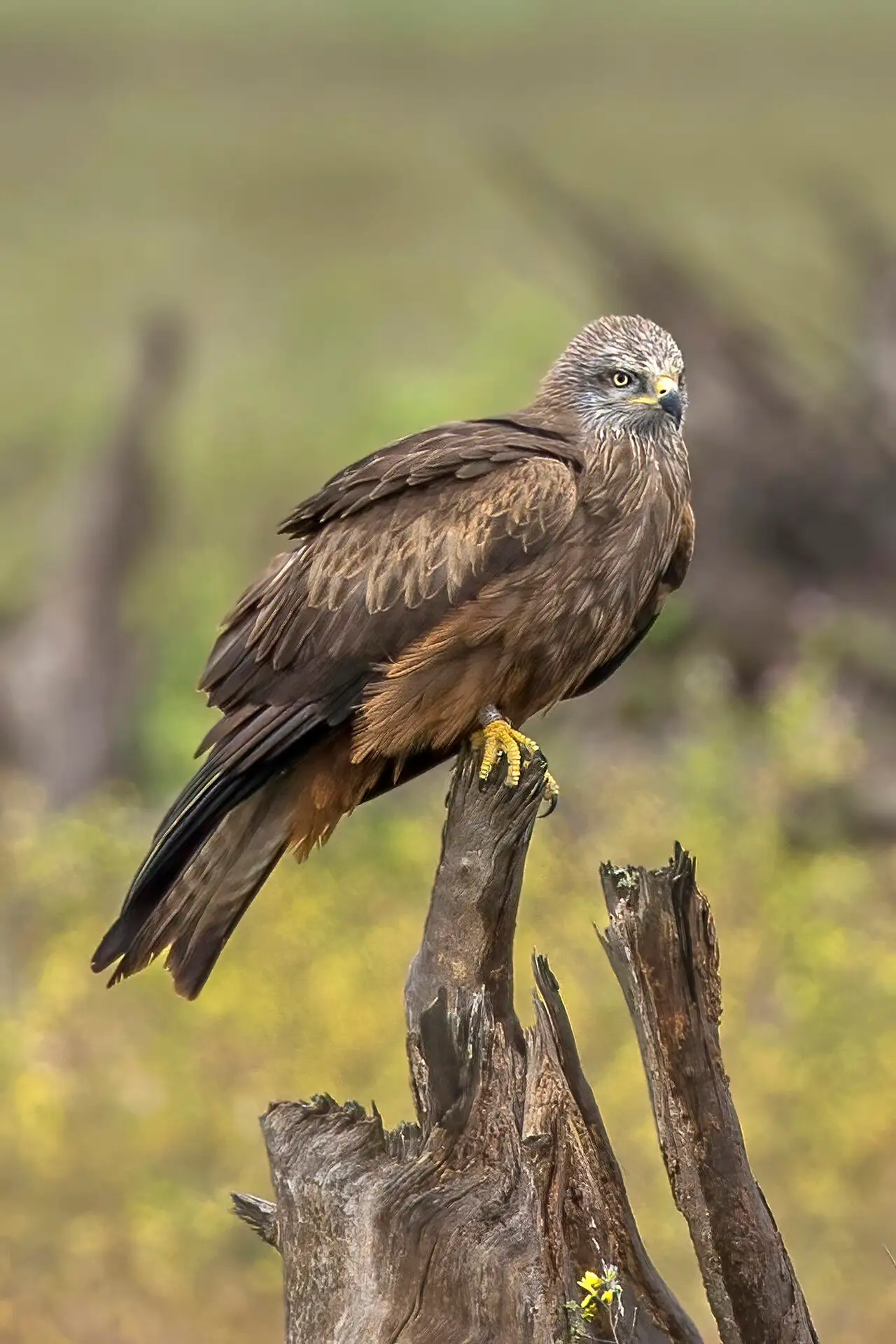
Black Kite perched on a dry stump, with streaked greyish head and yellow legsPhoto: Charles J. Sharp, CC BY-SA 4.0Photo 2 of 4
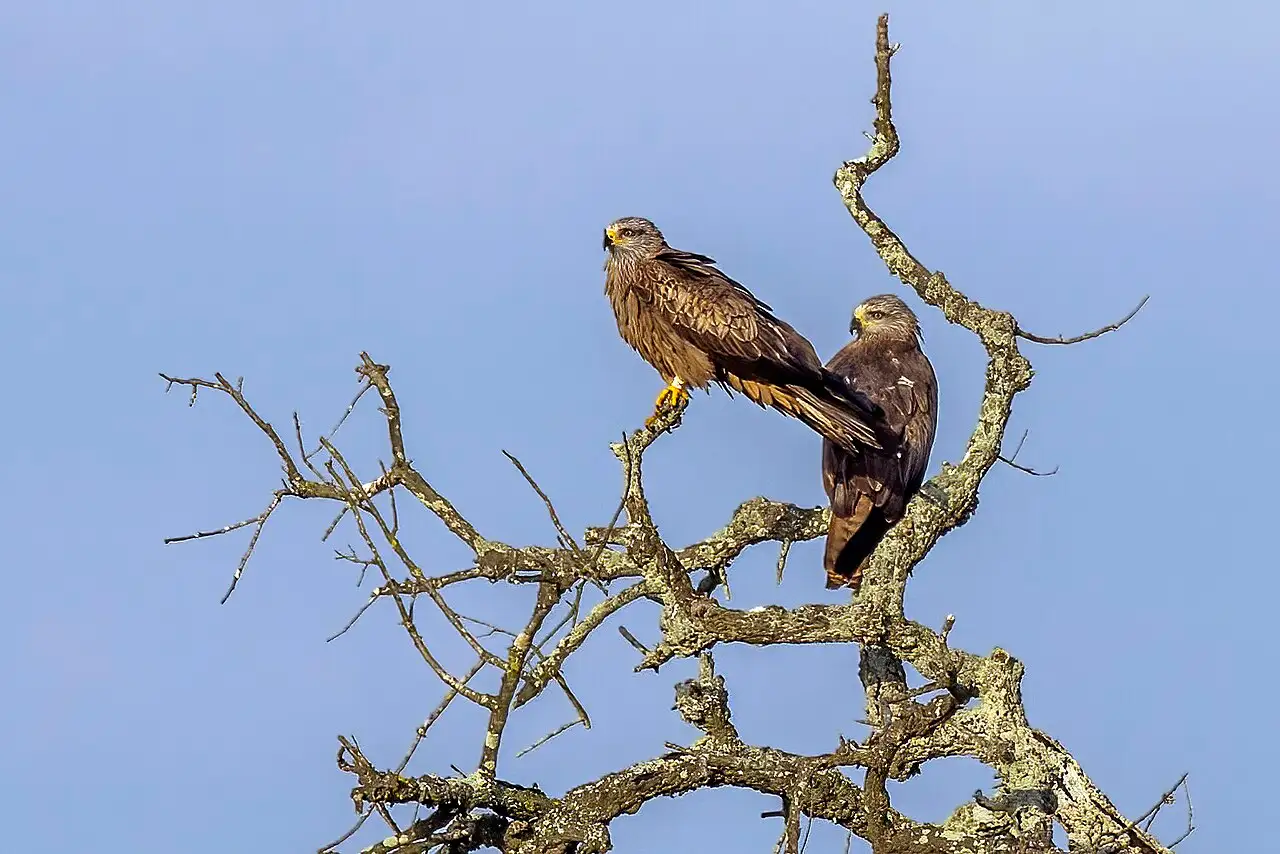
Two Black Kites perched on the branch of a dry tree, against the blue skyPhoto: Charles J. Sharp, CC BY-SA 4.0Photo 3 of 4
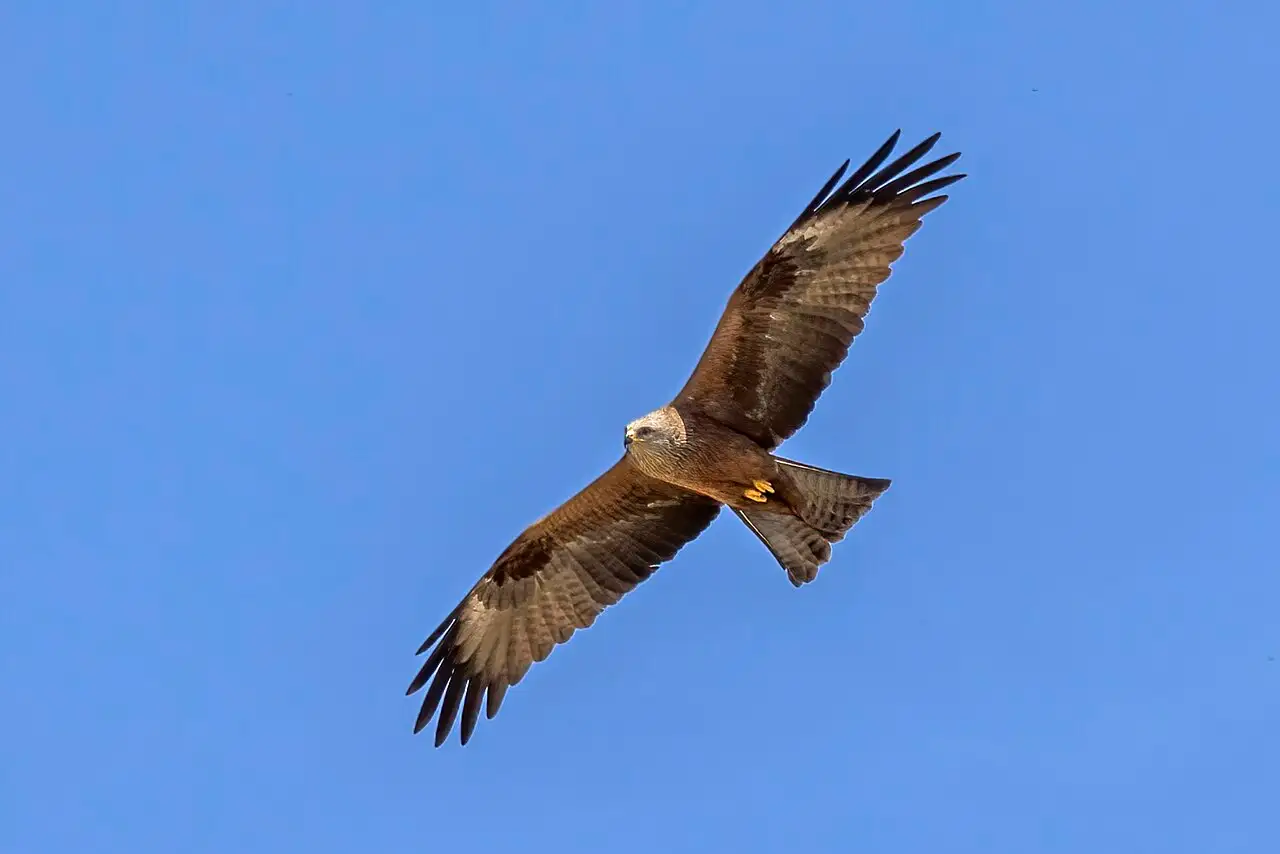
Black Kite gliding seen from below, with forked tail and the pale patches under the wingsPhoto: Charles J. Sharp, CC BY-SA 4.0Photo 4 of 4
1 / 4
Identification of the Black Kite
It is a medium-sized raptor of fairly dark overall colouring, with rather long wings and a long, forked tail, although less so than the Red Kite’s, which has a more slender look and is larger. The adult is considerably dark, with the head greyish and finely streaked; the underparts are somewhat rufous and marked with elongated spots, and the wing coverts have pale edges, which draws a characteristic pattern above. The tail is greyish brown and heavily barred.
Adult
Very dark, with the head greyish, finely streaked.
Tail greyish brown, barred and forked.
Young bird
Paler, with a noticeable pale spotting on the underparts and the coverts edged in cream, with a scaly look.
The tail is less forked, sometimes with no notch, and under the wings it has two large pale patches.
Habitat and distribution of the Black Kite
It is a species of very wide distribution, occupying most of the temperate areas of the Palearctic, Africa and Australasia. In Europe it ranges from the Mediterranean to the mildly cold areas of the Nordic countries, and the largest cores are in Russia, Spain, France and Germany. In Spain the subspecies «migrans» lives.
In our country it is distributed mainly in the northern and western regions, in particular along the valleys of the great rivers and in the dehesas of Extremadura, Castilla y León and Aragon, and in the lowlands of the Pyrenees, the Cantabrian range and the Central System. It does not appear on much of the Mediterranean coast or in wide regions of Castilla-La Mancha, eastern Andalusia and the Iberian System, and is absent from the Balearics and the Canaries. It settles in very varied habitats, although it prefers areas near water: reservoirs, lakes, wetlands and rivers. To breed it needs wooded areas, though not large forests: riverside groves, dehesas, island copses and pine woods, at modest altitudes. To hunt it prefers more or less open areas, with grasslands, wasteland and mosaics, and the shores of rivers and wetlands. It is a summer visitor on the Peninsula: the first arrive from February, and through August they leave the breeding areas on their way to the straits, where at Gibraltar between 40,000 and 60,000 birds gather. It is more and more usual to see some in winter, above all in western Andalusia and Extremadura, where they join Red Kite roosts. In summer they form roosts with many non-breeding adults and immatures.
Areas where it is regularly recorded since 2010Squares of about 25 km where it is recorded regularly (occasional passage records are left out). Data from GBIF.org (338,022 records, retrieved October 2026); outline from Natural Earth.
Etymology of the Black Kite
«Milvus» is the Latin name for the kite, and «migrans» is the participle of «migrare», «to migrate»: «the kite that migrates». The Spanish name alludes to the dark colouring.
Population of the Black Kite
The 2021 European Red List of Birds calculates between 372,000 and 507,000 Black Kites in Europe, with an increasing trend. In Spain, the III Atlas of Breeding Birds considers the population to be stable or slightly increasing; the first and last national census, based on indirect methods, quantified some 10,300 pairs and some 42,896 individuals (Palomino, 2006). The data seem to indicate that it has no serious conservation problems, although the threats are varied: the most important is the illegal use of poison, to which it is very sensitive, as well as accidents on power lines and direct persecution. In some places it is affected by the disappearance of traditional food sources, such as rubbish tips and vulture restaurants.
Nest of the Black Kite
The male tidies the nest, a crude construction of sticks in the main fork of a tree or on a large branch, to which he adds a motley collection of plastics, papers and other remains, generally of eye-catching colours. These platforms are used for several seasons.
Courtship and breeding of the Black Kite
The male returns from Africa before the female, takes possession of his territory and waits for his mate; then the two fly over their domain giving constant calls. The female lays one to five eggs, commonly two or three, and incubates them alone for 26 to 38 days, while the male brings food and defends the territory. At 30 to 35 days of age the chicks already eat on their own, and their plumage is complete by about 42 days. Then they make their first flights, but stay for a while near where they were born. Breeding begins in April, and in July the chicks are already flying. Although it can breed alone, it usually does so in more or less numerous colonies or, at least, near other pairs.
Diet of the Black Kite
It is an absolute eclectic. It eats everything from small rodents and rabbits to birds, amphibians, reptiles, fish and large insects, and as it is not a great predator it usually catches weakened, sick or young prey. It is markedly a scavenger and is closely tied to rubbish tips, vulture restaurants, farms, villages and any human activity that gives it easy food, such as roads, which it patrols tirelessly in search of road-killed animals. It often practises kleptoparasitism, stealing food from other raptors or from its own kind, and takes advantage of plagues of voles and locusts, concentrations of fish and crabs in shallow water and rabbits sick with myxomatosis.
Curious facts about the Black Kite
In summer Black Kites form roosts with large numbers of non-breeding adults and immatures, from areas several kilometres away, usually in a riverside grove, a eucalyptus wood or a copse, which are kept up until migration. In the Strait of Gibraltar between 40,000 and 60,000 birds gather waiting for the right moment to cross to Africa, and many of them are Iberian.
The Black Kite in Cabañeros
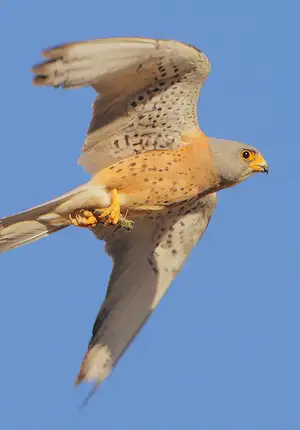
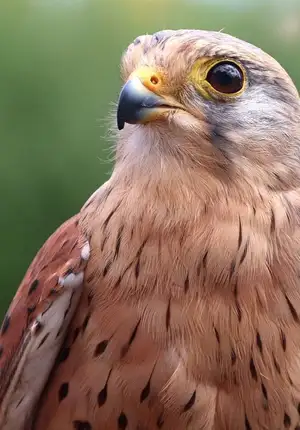
The habitat pages of this website cite it on the rañas of Cabañeros: in the grasslands, groups of White Storks sometimes associate in commensalism with other species, among them the Black Kite, as well as the Lesser Kestrel and the Common Kestrel.
Where to see the Black Kite in Cabañeros
Over the rañas and grasslands of Cabañeros and along the rivers, above all in spring and summer.
When
From February to September; it leaves through August, and more and more, a few stay in winter.
What time
Throughout the day; it patrols tirelessly, and is usually with other kites.
Where
On the rañas and grasslands, the banks of rivers and near roads and rubbish tips.
What to look for
A dark raptor with forked tail that glides lightly, with a greyish head.
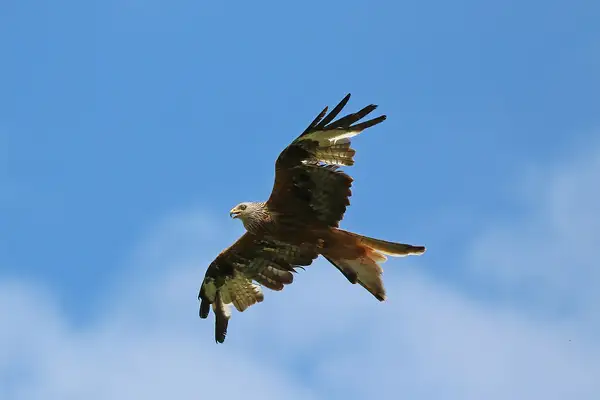
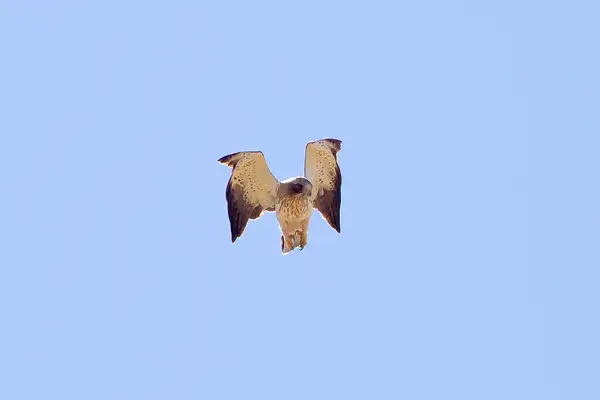
In its dark phase, with chestnut tones on the underparts, it can be confused with it in size and colouring. The Booted Eagle has long, narrow wings and feathered tarsi.
Photo: Juan Lacruz, CC BY-SA 3.0
Other birds
Birds related to the Black Kite or sharing its habitats in Cabañeros.



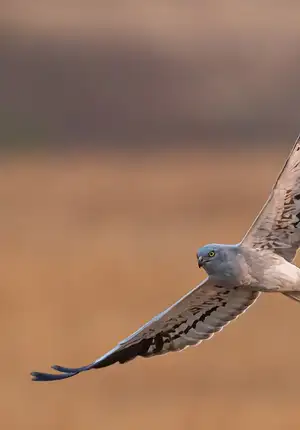 Same family
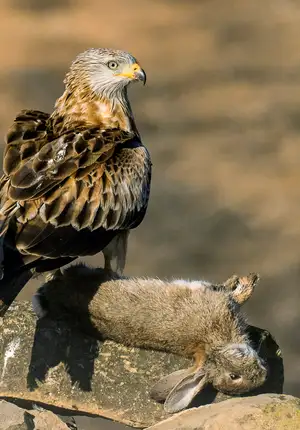 Same family
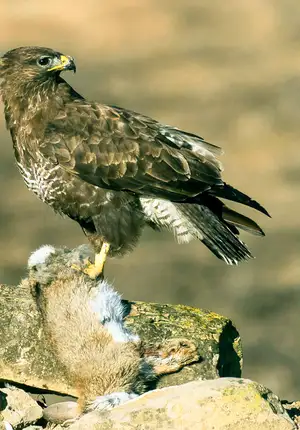 Same family
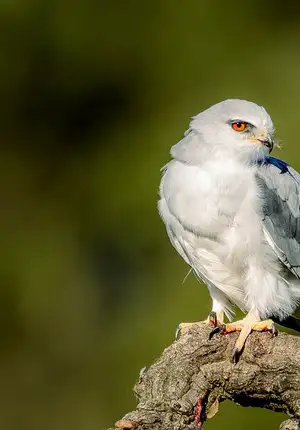 Same family
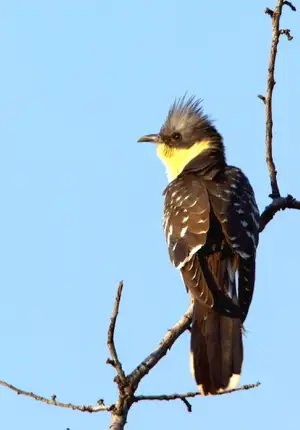 Also in grasslands and rañas
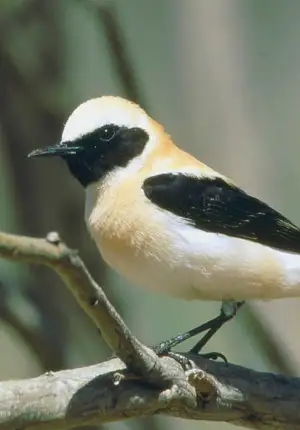 Also in grasslands and rañas
 Also in grasslands and rañas
 Also in grasslands and rañas






