Solitary and very territorial; males defend their patch with song
Lifespan
Record of almost 11 years in the wild
Conservation status
LC
NT
VU
EN
CR
EW
EX
Global (IUCN)
Least Concern
Spain
Included in the List of Wild Species under Special Protection; not in the Spanish Catalogue of Threatened Species
When to see it
Summer visitor
Months of the year when it is present
J
F
M
A
M
J
J
A
S
O
N
D
In Iberia
no
no
yes
yes
yes
yes
yes
yes
yes
yes
no
no
Breeding season
no
no
no
yes
yes
yes
no
no
no
no
no
no
Song or voice of the Common Nightingale
A long, very elaborate, ringing song, heard by day as well as by night. It usually begins with soft peeps, «puiii-puiii-puii», which gain in intensity and frequency and suddenly burst into ringing notes. Each note is repeated three to eight times in crescendo until it changes or is finished off with a click or a warble. For its power, variety and constancy, it is possibly the most outstanding song of all birds.
SongCommon Nightingale
0:00 / 0:28
10 kHz5
The sonogram draws the sound: time runs from left to right, and the higher a trace sits, the higher the note.Recording by Marie-Lan Taÿ Pamart, Wikimedia Commons (CC BY-SA 4.0).
Flight of the Common Nightingale
We see little of it: it flies low, in short, quick bursts, from bush to bush, and almost never leaves the thicket. When it crosses a clearing it shows the reddish tail, which is its best identity mark.
Flight typeLow, fast and in the undergrowth
It slips out of the bramble, almost without a sound. It is usually heard and not seen.
Low flight, with short, agile wingbeats, a little undulating, from one bush to the next. The reddish tail is seen.
It brakes by spreading the reddish tail and vanishes into another bush, from where, once it calms down, it will sing again.
Photo gallery of the Common Nightingale
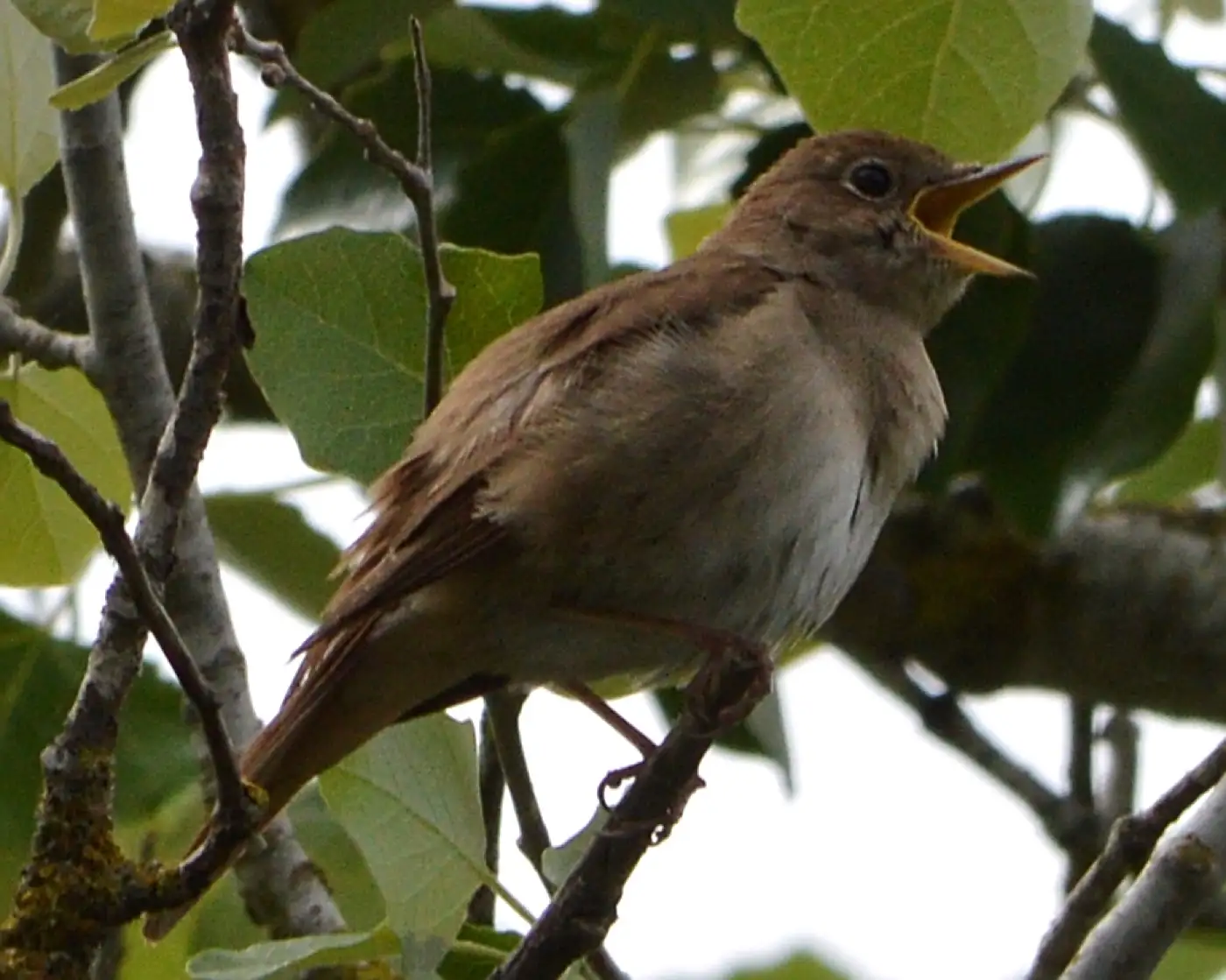
Common Nightingale singing with open bill, among the leaves of a tree, in the Parque Natural de s'AlbuferaPhoto: Ryan Hodnett, CC BY-SA 4.0Photo 1 of 4
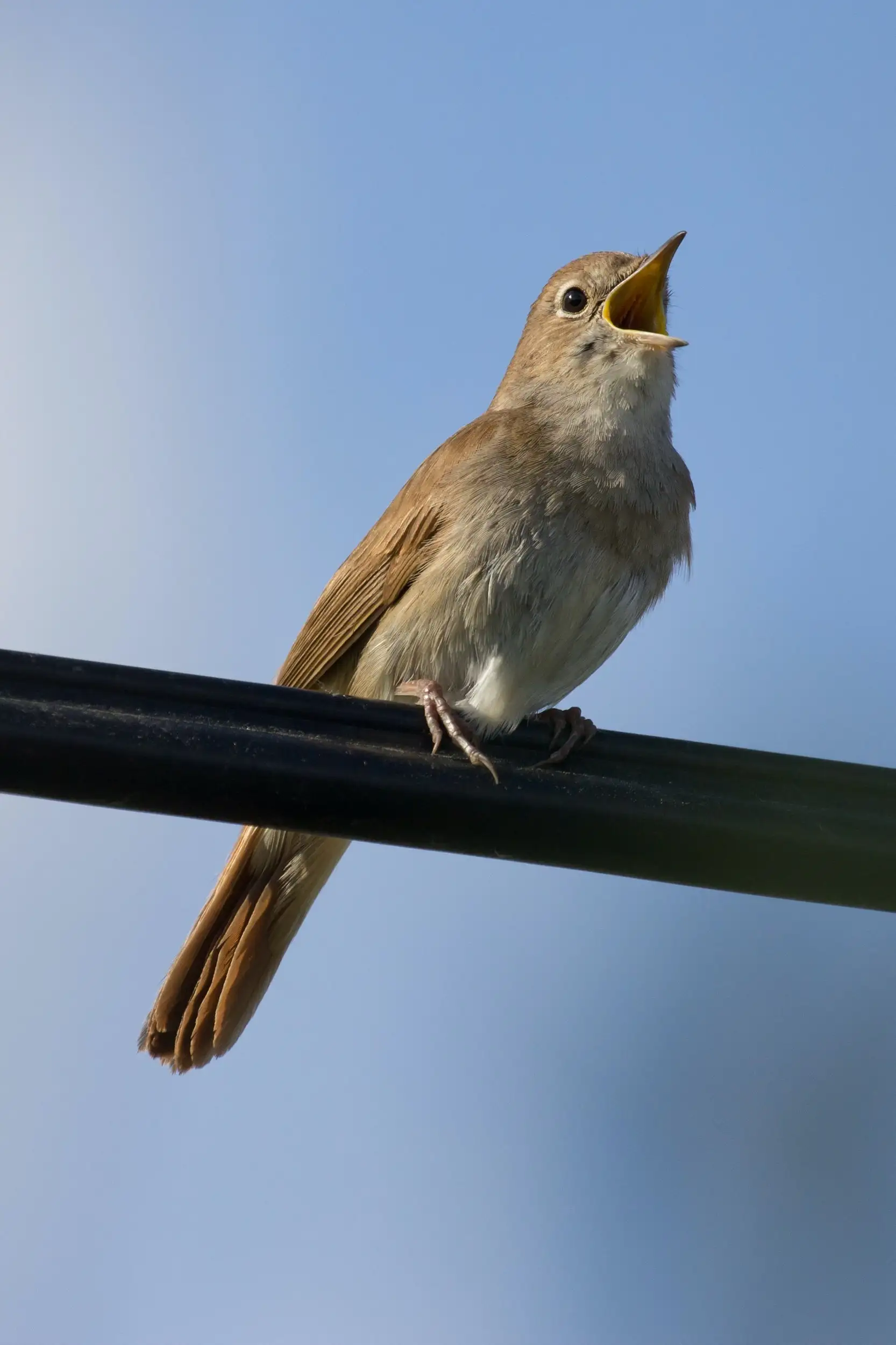
Common Nightingale singing on a wire, with open bill and reddish tailPhoto: Carlos Delgado, CC BY-SA 4.0Photo 2 of 4
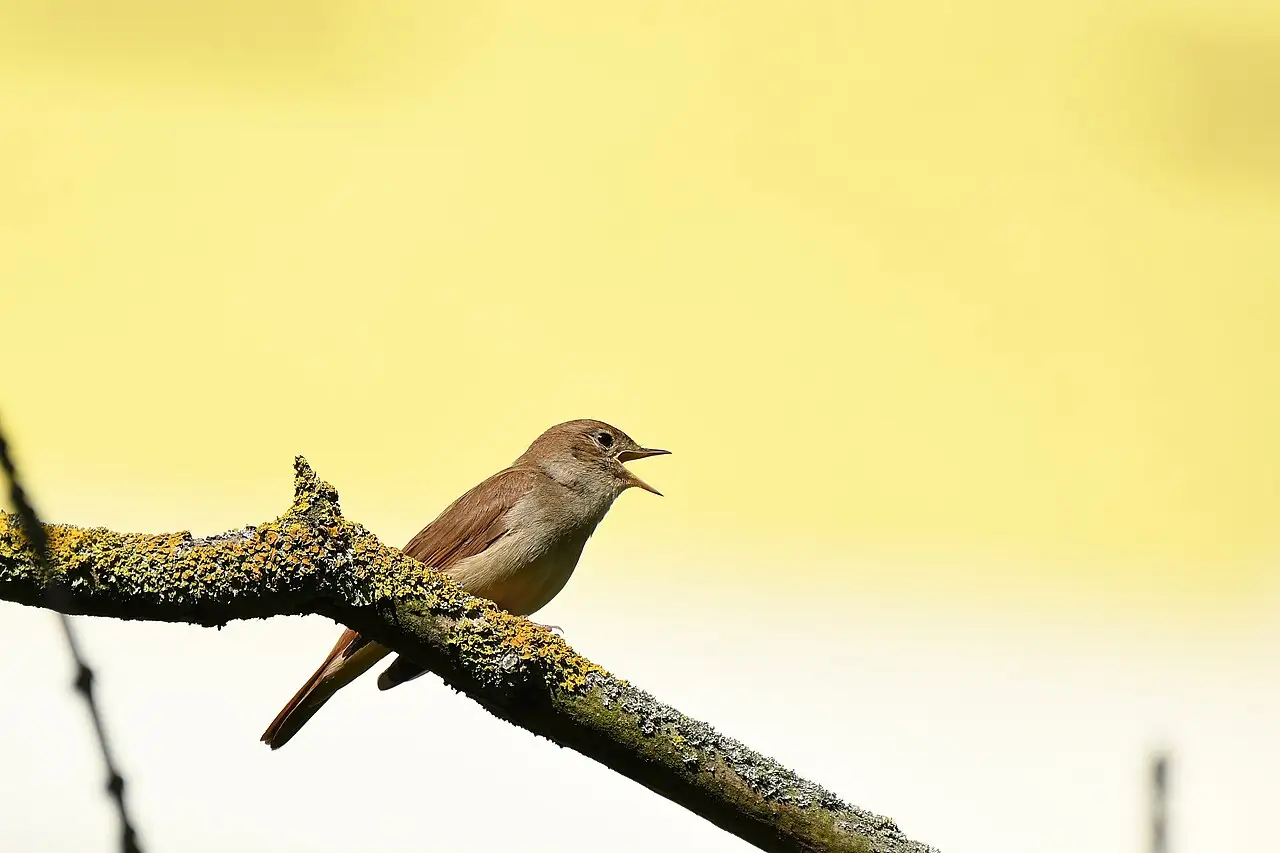
Common Nightingale on a lichen-covered branch, in profile, with brown back and reddish tailPhoto: Romzig, CC0Photo 3 of 4
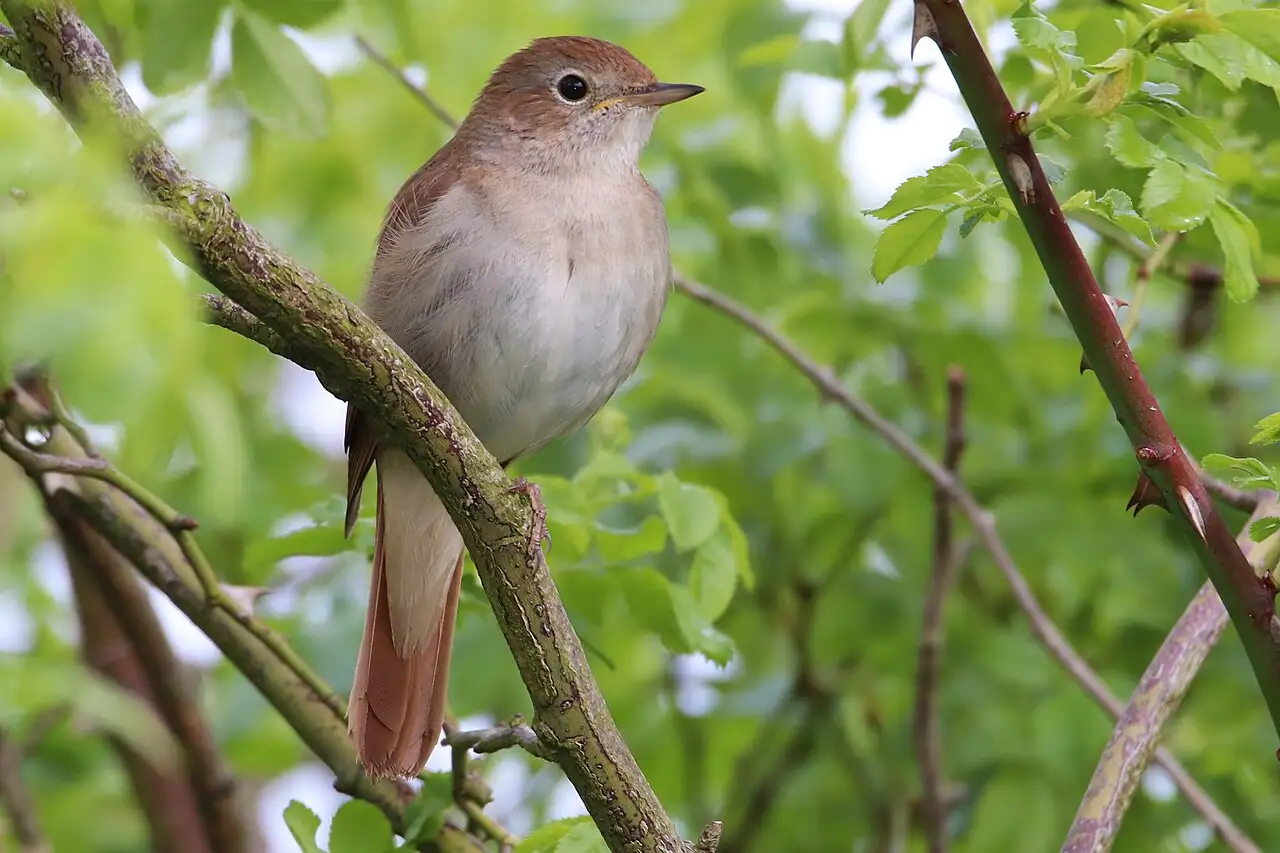
Common Nightingale perched on a thorny branch, seen almost from behind, with a reddish-brown tailPhoto: Warrieboy, CC BY-SA 4.0Photo 4 of 4
1 / 4
Identification of the Common Nightingale
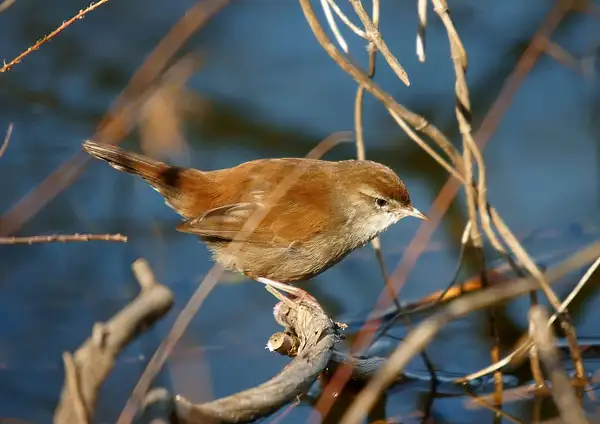
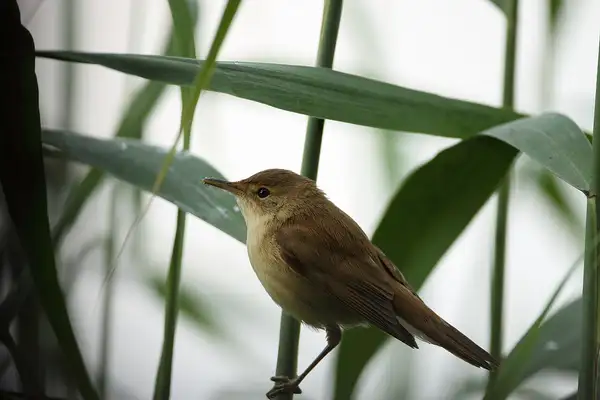
It is a sleek bird, with a fine bill and a long tail. Females and males are alike. The mantle and wings are a uniform ochre brown, except for the tail, a distinctive reddish-brown tone, and the underparts much paler, cream-white. Very skulking, it rarely leaves the thicket. It can be confused with the Common Reed Warbler and with Cetti’s Warbler, with which it sometimes shares the riverside undergrowth: the reed warbler is paler and more yellowish and lacks the reddish tail, and Cetti’s Warbler has a white line above the eye and short, rounded wings and tail.
Adult
Ochre brown, with a reddish-brown tail.
Cream-white underparts.
Young bird
Brown, with feathers spotted at the tip with yellowish dots, before the partial moult prior to migration.
Habitat and distribution of the Common Nightingale
It breeds across much of the southern half of Europe and in Asia, from Turkey to the Caspian Sea. European populations are complete migrants, and spend the winter in western and central Africa.
In spring it colonises the whole Peninsula, the Balearics and Ceuta, although it is very scarce in the northern half of Galicia and on the northern slope of the Cantabrian Range, and thins out in the highest mountains and in heavily deforested areas. It is absent from the Canaries and Melilla. It breeds mostly below 1,000 metres and is abundant in damp places: banks of rivers, streams and lagoons with dense vegetation, and damp montane woods with shrubs. In the northern half it also breeds in farmland with bramble hedges. Autumn passage through Spain runs from August to October.
Areas where it is regularly recorded since 2010Squares of about 25 km where it is recorded regularly (occasional passage records are left out). Data from GBIF.org (276,041 records, retrieved October 2026); outline from Natural Earth.
Etymology of the Common Nightingale
«Luscinia» is the Latin name of the nightingale, and «megarhynchos» comes from the Greek «megas», «big», and «rhynchos», «bill»: «the big-billed one». The Spanish «ruiseñor» comes from the Occitan «rossinhol», and this from the Latin «lusciniolus», «little nightingale».
Population of the Common Nightingale
In Spain there are about 7 million individuals, concentrated almost exclusively in the Mediterranean region, with a moderate annual increase. In Europe between 20.4 and 30.7 million mature individuals are estimated, stable. It is listed as Least Concern. It disappears from riverbanks that are channelled or stripped of vegetation, and it is affected by pesticides, but it gains ground on farmland being abandoned and where riverside and hillside woodland recovers, which gives it shady, cool surroundings.
Nest of the Common Nightingale
It places it on the ground or making use of the slight rise of fallen branches, in areas of very dense vegetation. It is a shallow cup of dry leaves and grasses, lined inside with fine grasses and hair.
Courtship and breeding of the Common Nightingale
Males arrive before females and mark out the territory with song. Courtship and nest building take place between April and June. It lays a single clutch of four to six eggs, sometimes three or seven, green, greyish or reddish. The chicks hatch after 13 or 14 days of incubation and leave the nest before they are two weeks old.
Diet of the Common Nightingale
It is essentially insectivorous: it eats beetles, ants, mosquitoes, spiders and worms, which it catches searching among the leaf litter or in flight. At the end of summer, in the middle of migration, it adds fruits, such as blackberries and elderberries, to build up fat reserves.
Curious facts about the Common Nightingale
Males sing by day and by night. By day, in sonorous «duels» with other males, and by night, now more intent on attracting females. It sings even in winter, in Africa. And although it is famous, almost nobody has seen it properly: the nightingale is heard, not seen.
The Common Nightingale in Cabañeros
The habitat pages of this website highlight its presence in the riverside woods, with high density near the River Bullaque.
Where to see the Common Nightingale in Cabañeros
On the banks, above all those of the River Bullaque, and in gullies with dense bramble patches.
When
From March to October. The song is most intense in spring, from April to June.
What time
At dawn and at dusk, and sometimes all night, when the males sing.
Where
In the dense vegetation of rivers and streams, among brambles and shrubs, always near water.
What to look for
Let us not look for it with our eyes: we follow the song and wait by the bush until a brown bird with a reddish tail peeks out.
It also lives in the riverside undergrowth, but has a pale line above the eye, short, rounded wings and tail and a redder brown over the whole back. Its song is a sudden, dry burst.
Photo: Ferran Pestaña from Barcelona, Spain, CC BY-SA 2.0



 Same family
 Same family
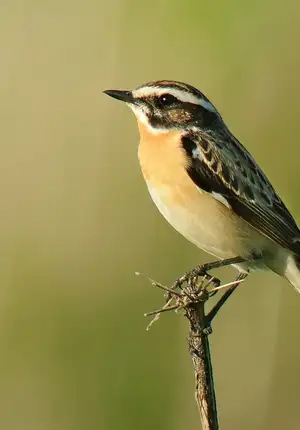 Same family
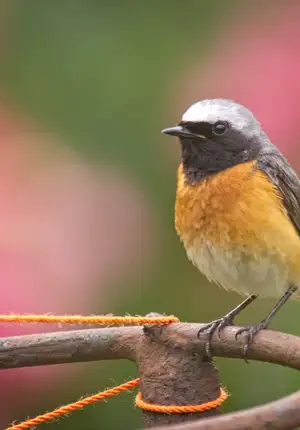 Same family
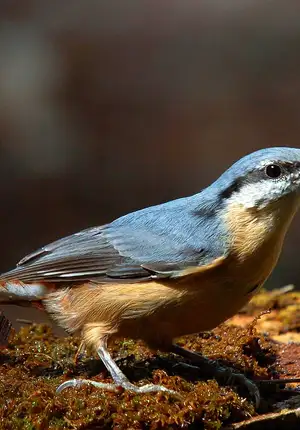 Also in deciduous woodland
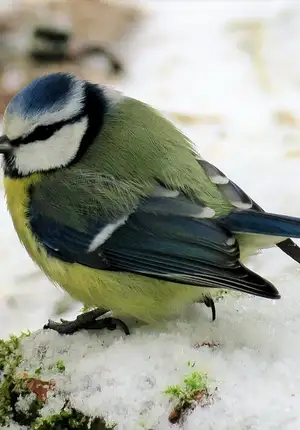 Also in deciduous woodland
 Also in deciduous woodland
 Also in deciduous woodland






