Variable mating, from monogamy to polygamy and promiscuity; the female incubates and cares for the chicks
Lifespan
Record of 12 years and 1 month in the wild (a bird ringed in Israel)
Conservation status
LC
NT
VU
EN
CR
EW
EX
Global (IUCN)
Least Concern
Spain
Endangered (EN) in the 2021 Red Book of the Birds of Spain; not on the List of Wild Species under Special Protection or in the Spanish Catalogue of Threatened Species
When to see it
Summer visitor
Months of the year when it is present
J
F
M
A
M
J
J
A
S
O
N
D
In Iberia
no
yes
yes
yes
yes
yes
yes
yes
yes
yes
yes
no
Breeding season
no
yes
yes
yes
yes
yes
yes
no
no
no
no
no
Song or voice of the Common Quail
Males give a characteristic «pas-pa-llás», a rapid, three-syllable whistle repeated rhythmically. Their repertoire also includes rasping and mewing sounds in courtship.
SongCommon Quail
0:00 / 0:17
10 kHz5
The sonogram draws the sound: time runs from left to right, and the higher a trace sits, the higher the note.Recording by IngurumenaEJGV, Wikimedia Commons (Vídeo de YouTube, con atribución).
Flight of the Common Quail
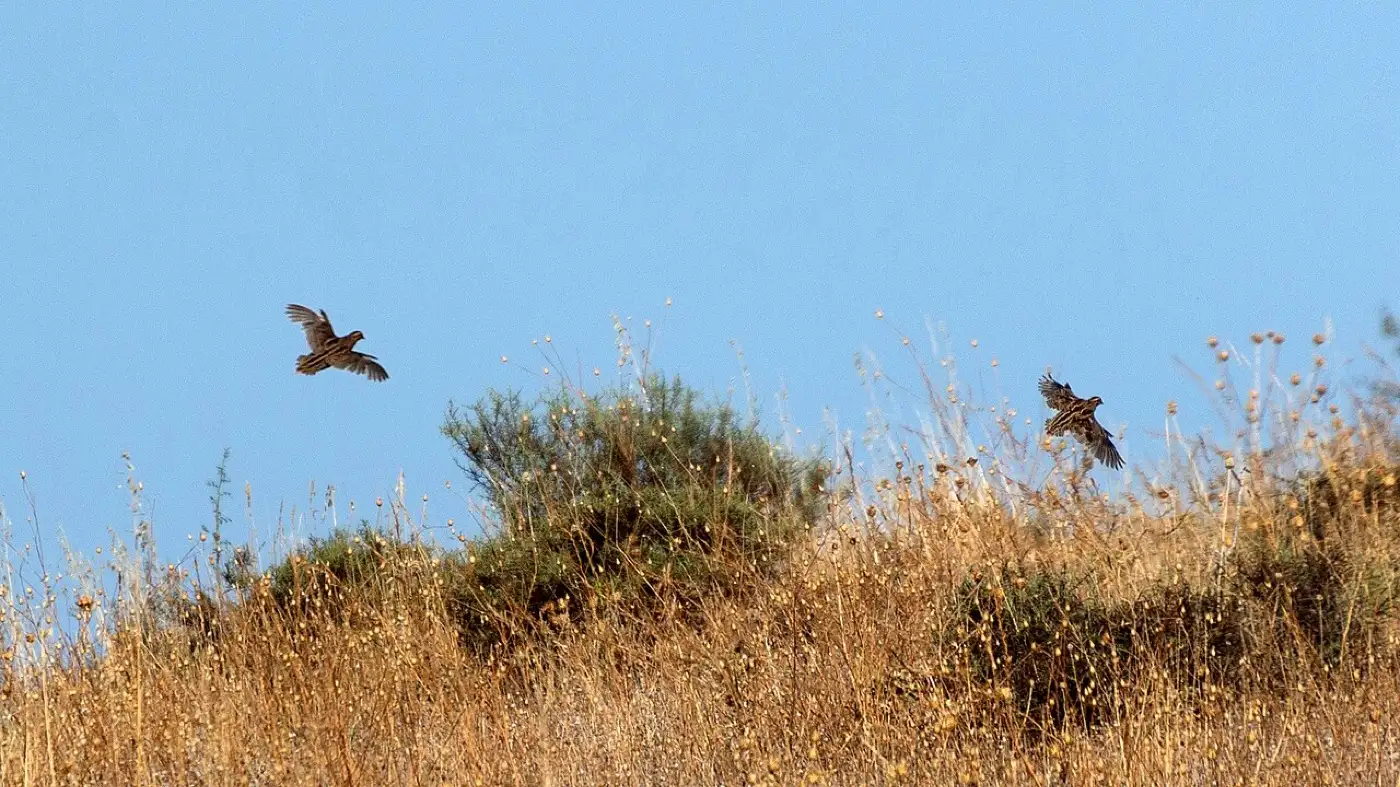
It is a very terrestrial species. In flight its long wings and rapid flapping low over the ground stand out.
Flight typeRapid flapping low over the ground, with long wings
It is very terrestrial: it hides in the grass and takes off suddenly, when it is almost trodden on.
Flight of quick wingbeats at low height above the ground, in which its elongated wings stand out.
It lands again among the vegetation and runs to hide; there the male goes back to his whistle, «pas-pa-llás».
Photo gallery of the Common Quail
Two Common Quails in flight over dry grassland, at Tañabueyes (Burgos)Photo: euqirneto, CC BY 4.0Photo 1 of 4
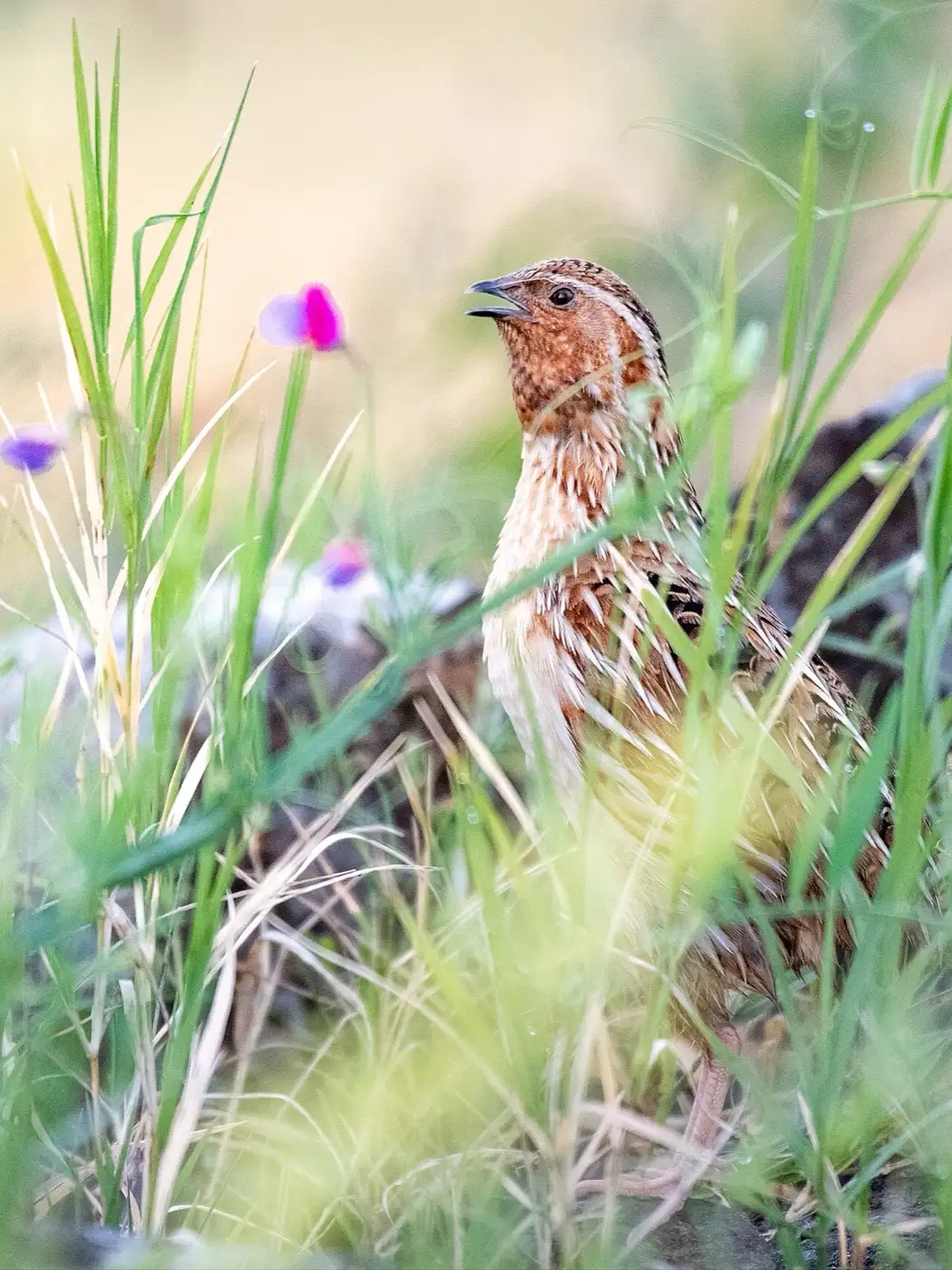
Male Common Quail among tall grass, with white eyebrow, streaked breast and the dark anchor on the throatPhoto: LuisNDamas, CC BY-SA 4.0Photo 2 of 4
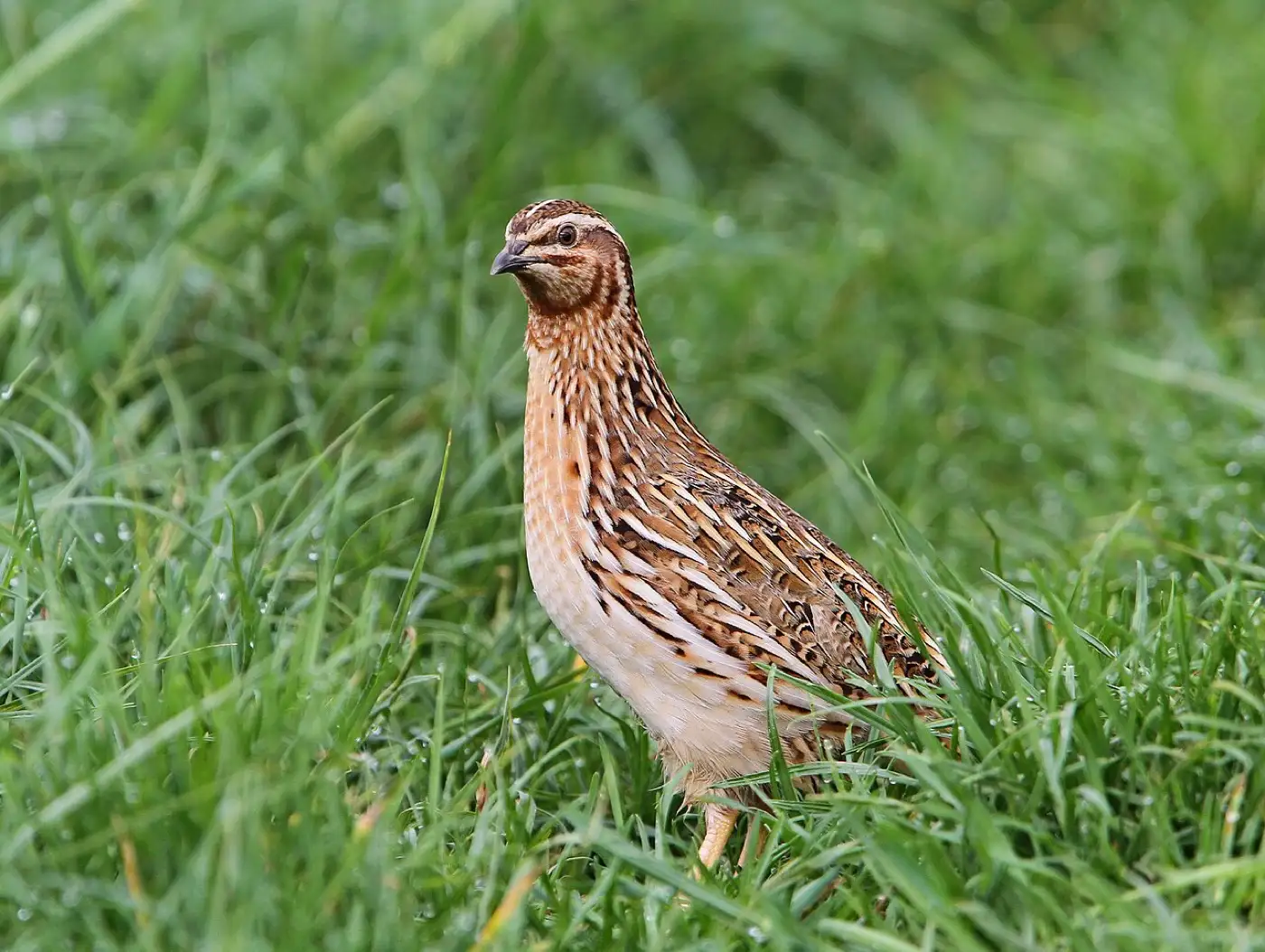
Male Common Quail standing on green grass, with streaked body and white eyebrowPhoto: christoph_moning, CC BY 4.0Photo 3 of 4
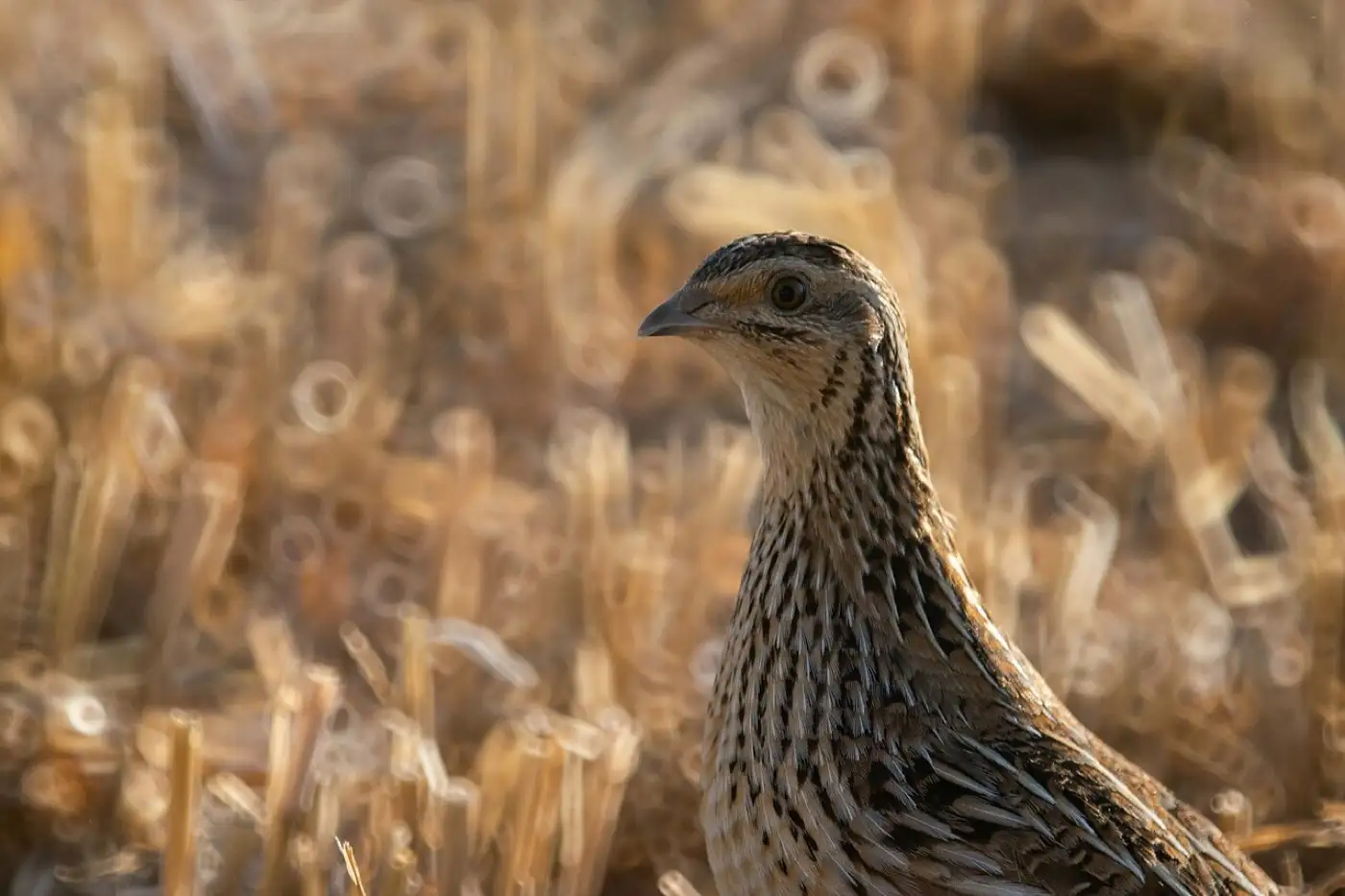
Common Quail camouflaged among the stems of stubble, earthy and streakedPhoto: TRinaud, CC BY 4.0Photo 4 of 4
1 / 4
Identification of the Common Quail
The Common Quail is a plump bird of small size. It is the smallest of the gamebirds and looks like young partridges. Its pattern is cryptic, earthy in colour, with dark brown, white and cream streaking. It has a prominent white eyebrow and a pale throat, white in females and young birds, and with a dark anchor in males, although quite variable.
It is very terrestrial; in flight its long wings and rapid flapping low over the ground stand out.
Male
Prominent white eyebrow and throat with a dark, variable anchor.
Earthy colour with dark brown, white and cream streaking.
Female and young birds
White throat, without the dark anchor.
Habitat and distribution of the Common Quail
It is widely distributed across the whole Palaearctic, from the Iberian Peninsula to south-east Asia. Its northern limit is marked by the 60th parallel, and it is absent from northern Russia and the Scandinavian countries. To the south it extends across North Africa and the Middle East, although there are populations in eastern and southern Africa, Madagascar and some Indian Ocean islands.
In Spain it occupies almost the whole Peninsula, and is absent from the central area of the Cantabrian range and the driest parts of the Levante coast. It is present on all the islands of the Balearics and Canaries. It has not been recorded as a breeder in Ceuta or Melilla.
It is a species tied to open environments, generally plains or gently rolling land, from sea level to 1,000 metres altitude, although occasionally it appears in high mountain areas. It is found in all kinds of crops, grasslands and meadows, and reaches its highest densities in the cereal fields of central and southern Spain.
It shows a complex pattern of movements. It is a long-distance migrant, with the main wintering territories south of the Sahara (in the case of western European populations). There are also nomadic movements according to rain and the state of crops and pastures, usually northwards as spring and summer advance, and «donjuanesque» movements of males looking for a mate when females start breeding. There are some wintering populations on the Peninsula, possibly increasing, and always away from areas likely to have snow.
Areas where it is regularly recorded since 2010Squares of about 25 km where it is recorded regularly (occasional passage records are left out). Data from GBIF.org (85,424 records, retrieved October 2026); outline from Natural Earth.
Etymology of the Common Quail
«Coturnix» is the Latin word for «quail», and from it comes the Spanish name too. The word «coturnix», which designates the species, is also used as the specific epithet.
Population of the Common Quail
Quail population sizes are very difficult to estimate, because of their mating system, their mobility and strong year-to-year swings. The 2021 European Red List of Birds estimates a population in Europe of between 5 and 9 million birds, and the Third Atlas of Breeding Birds in Spain, between 320,000 and 370,000 birds in Spain. It used to be very common at the end of the 20th century, but today shows a marked decline: between 1998 and 2018 it suffered a fall of practically 74 % (Molina and Escandell, 2020). The threats are related to the alteration of farming habitats, hunting pressure, genetic contamination from the annual releases of hybrid farm breeds and climate change, which affects the arrival dates of breeders and the wintering ecosystems.
Nest of the Common Quail
It is a bird that nests on the ground. The female does the incubation and cares for the chicks, which are precocial: soon after hatching they leave the nest and feed themselves.
Courtship and breeding of the Common Quail
It is a species of great reproductive capacity: it can make two or three clutches a year, of 8 to 13 cream eggs with brown spots or flecks, and the young, precocial, are able to breed in their first year. Part of the population raises a first brood in February–March in North Africa or the south of the Peninsula, and a second clutch in June–July further north; most, however, start breeding between March and May. The mating system is variable, from monogamy to polygamy and promiscuity. The female does the incubation (17–20 days) and the care of the chicks.
Diet of the Common Quail
It is omnivorous. It feeds mainly on wild seeds or cereal grains, as well as invertebrates.
Curious facts about the Common Quail
It is the smallest of the Spanish gamebirds and looks like a young partridge. It used to be very common at the end of the 20th century, and between 1998 and 2018 its population fell by almost 74 %. Males move in search of a mate when females start breeding.
The Common Quail in Cabañeros
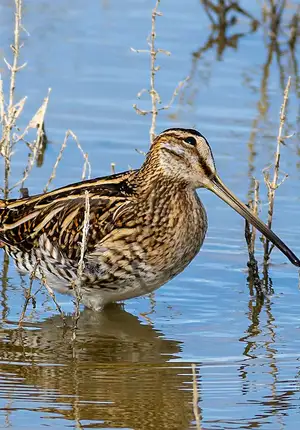
This website’s page on wetlands lists it among the birds of the waterlogged meadows of Cabañeros, shallow seasonal wetlands that form with winter and dry out at the start of summer: there it is the summer species, as against the three winter ones (Common Snipe, Northern Lapwing and European Golden Plover).
Where to see the Common Quail in Cabañeros
On the waterlogged meadows of the raña of Cabañeros, in summer.
When
From February to November; in Cabañeros it is a summer visitor.
What time
Throughout the day, and above all the male can be heard singing from the grassland.
Where
In cereal crops, grasslands and meadows, above all on open, gently rolling terrain.
What to look for
A plump, earthy bird heard far more than seen: «pas-pa-llás».
Videos of the Common Quail
Similar species
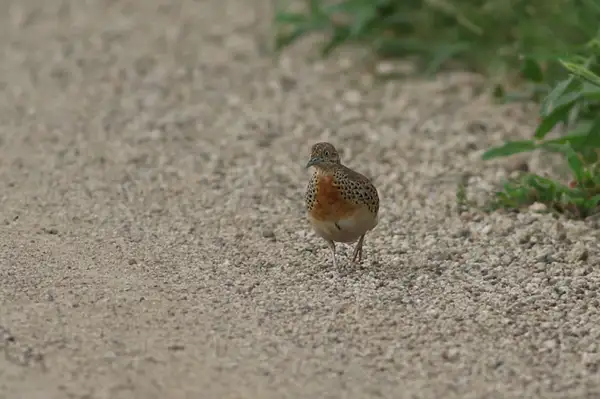
Andalusian Buttonquail
Turnix sylvaticus
How to tell them apart
They are similar in appearance1. The buttonquail is small and very shy, with earthy tones on the back and cream on the belly, a reddish-orange band on the breast and dark V-shaped marks on the flanks; the female is showier than the male.
Photo: Brendan Ryan from Canterbury, UK, CC BY-SA 2.0
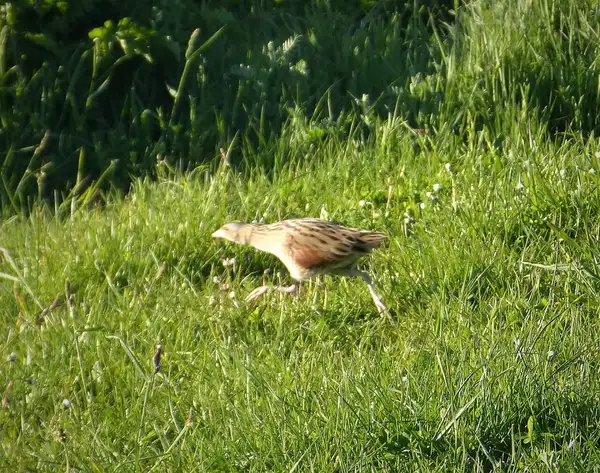
Corn Crake
Crex crex
How to tell them apart
It is a rail of relatively large size and cryptic plumage, with ochre mottled back and a bluish-grey line over the eye. It is similar in appearance1.
Photo: gailhampshire, CC BY 2.0
Other birds
Birds related to the Common Quail or sharing its habitats in Cabañeros.



 Same family
 Also in wetlands
 Also in wetlands
 Also in wetlands
 Also in wetlands
 Also in wetlands
 Also in wetlands
 Same season in the park






