Wingspan compared with a person with arms outstretched.
Length
28–31 cm
Wingspan
67–72 cm
Weight
214–295 g
Social life
Often joins in relatively compact breeding colonies; in winter large contingents arrive from Europe
Lifespan
Record of 30 years and 3 months in the wild (a bird ringed in the Netherlands)
Conservation status
LC
NT
VU
EN
CR
EW
EX
Global (IUCN)
Near Threatened
Spain
As a winter visitor, Least Concern (LC) in the Red Book of the Birds of Spain; as a breeder, Data Deficient (DD); not on the List of Wild Species under Special Protection or in the Spanish Catalogue of Threatened Species
When to see it
Winter visitor
Months of the year when it is present
J
F
M
A
M
J
J
A
S
O
N
D
In Iberia
yes
yes
yes
yes
yes
yes
yes
yes
yes
yes
yes
yes
Song or voice of the Northern Lapwing
It is a noisy bird, which often gives its characteristic alarm call, a shrill, sudden «pi-uí». The song that accompanies the males’ acrobatic flight in the breeding season is a rising, flute-like «cuiup-cuí», which can show some variations.
CallNorthern Lapwing
0:00 / 0:22
10 kHz5
The sonogram draws the sound: time runs from left to right, and the higher a trace sits, the higher the note.Recording by AviCanto, Wikimedia Commons (Vídeo de YouTube, con atribución).
Flight of the Northern Lapwing
In flight, which is leisurely and fairly slow, it shows long, rounded wings, white and black on the underside. Males perform an acrobatic flight in the breeding season.
Flight typeLeisurely and fairly slow, with long, rounded wings
It rises from the grassland or the fallow with a shrill alarm cry, «pi-uí».
Unhurried, rather slow flight, on long, rounded wings. Underneath they look black and white.
It lands on the meadow or at the water's edge, where it runs a few steps, stops and scans the ground with eye and ear.
Photo gallery of the Northern Lapwing
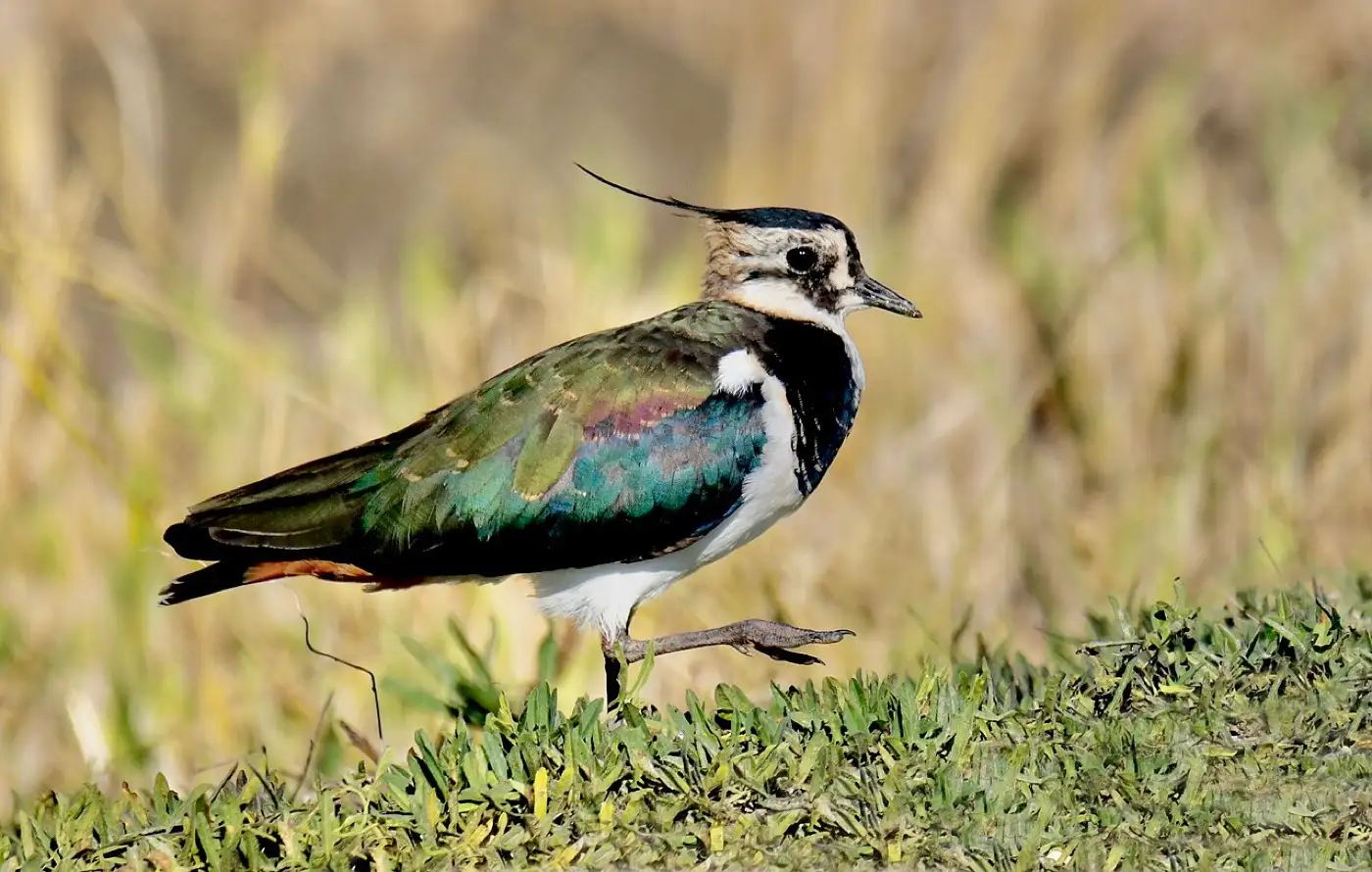
Northern Lapwing walking over dry grass, with its thin crest, metallic green back and the black breast bandPhoto: Luiz Lapa from Oeiras, Portugal, CC BY 2.0Photo 1 of 4
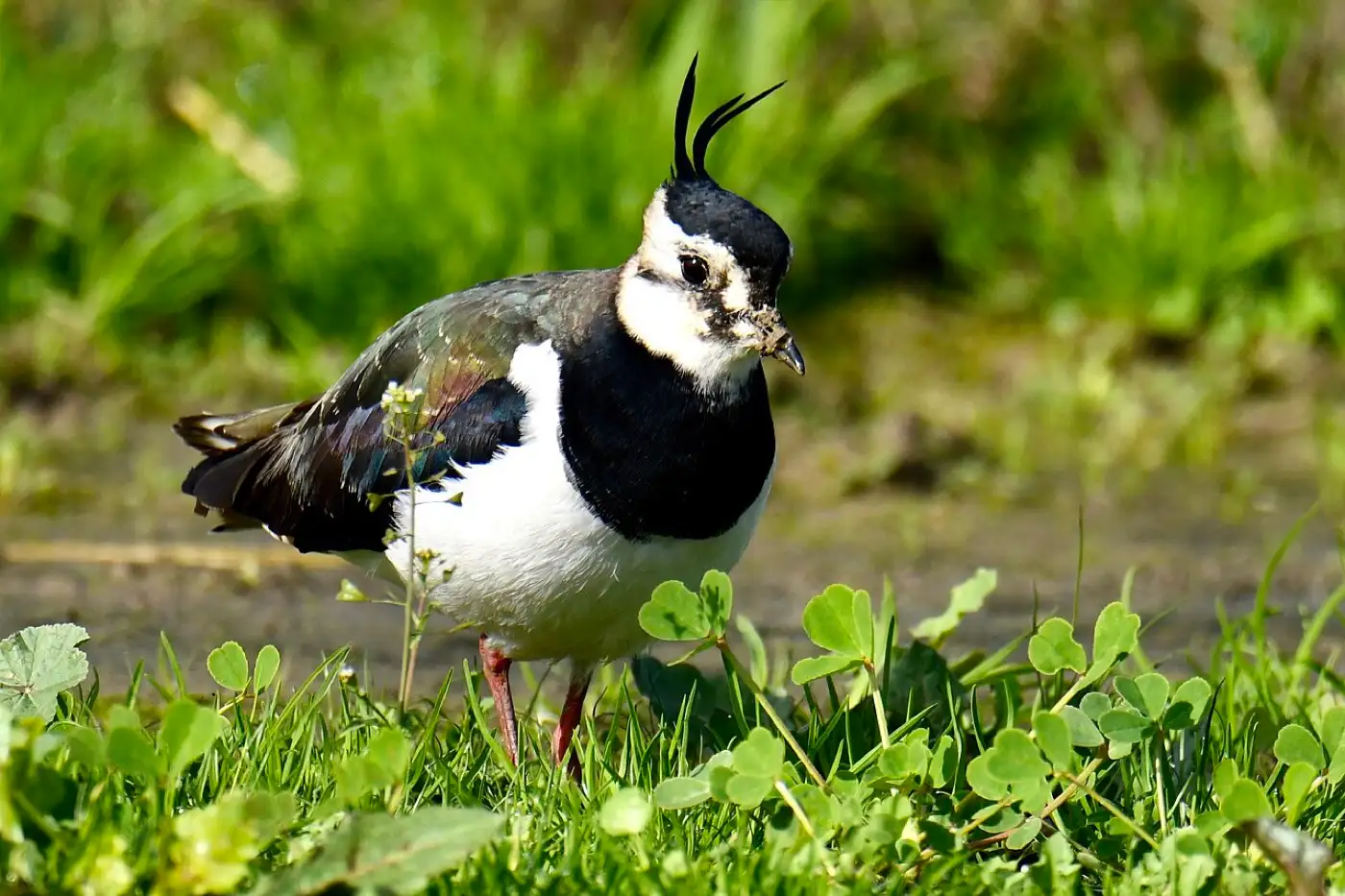
Northern Lapwing from the front on a green meadow, with the crest erect, white face and black breastPhoto: Luiz Lapa from Oeiras, Portugal, CC BY 2.0Photo 2 of 4
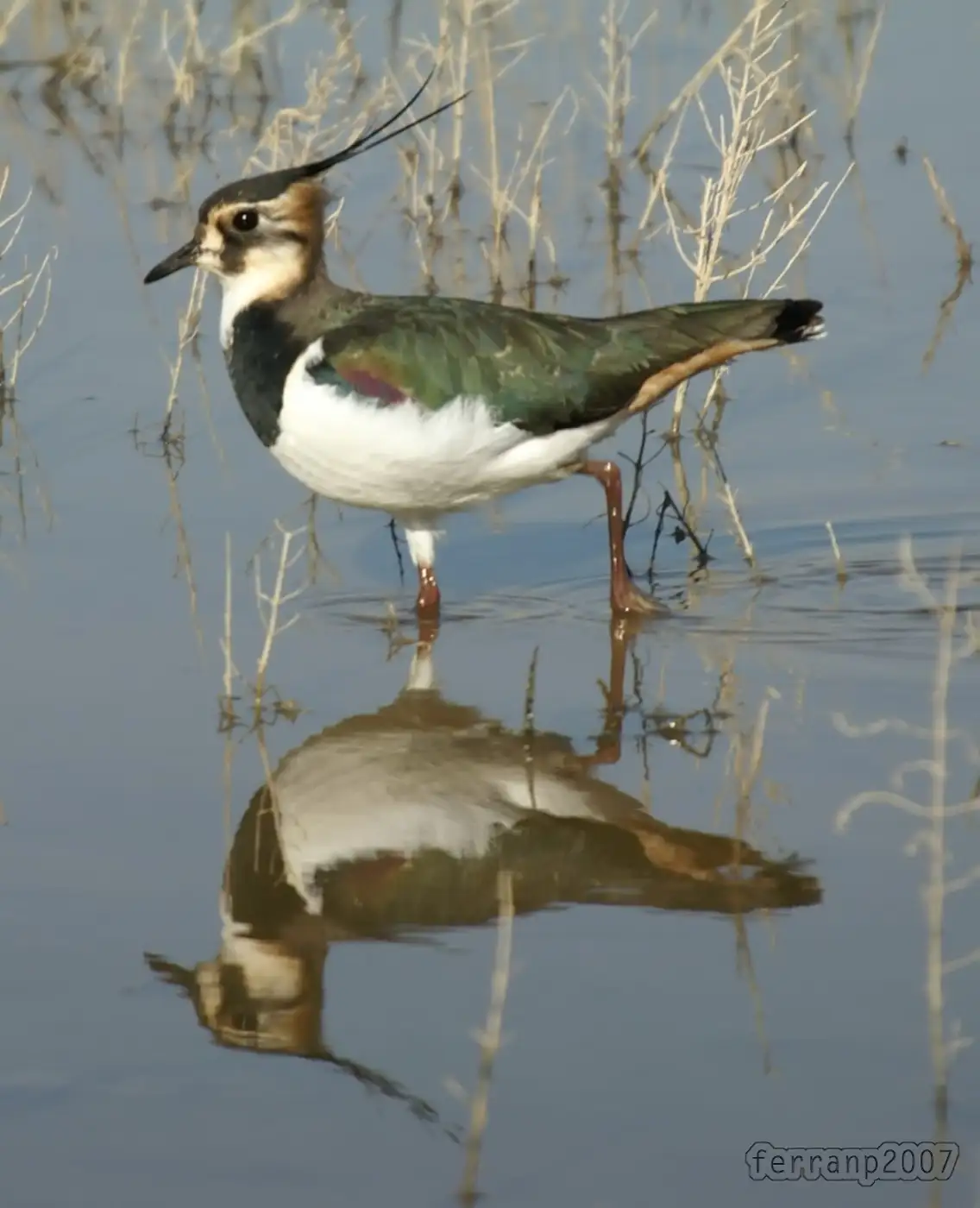
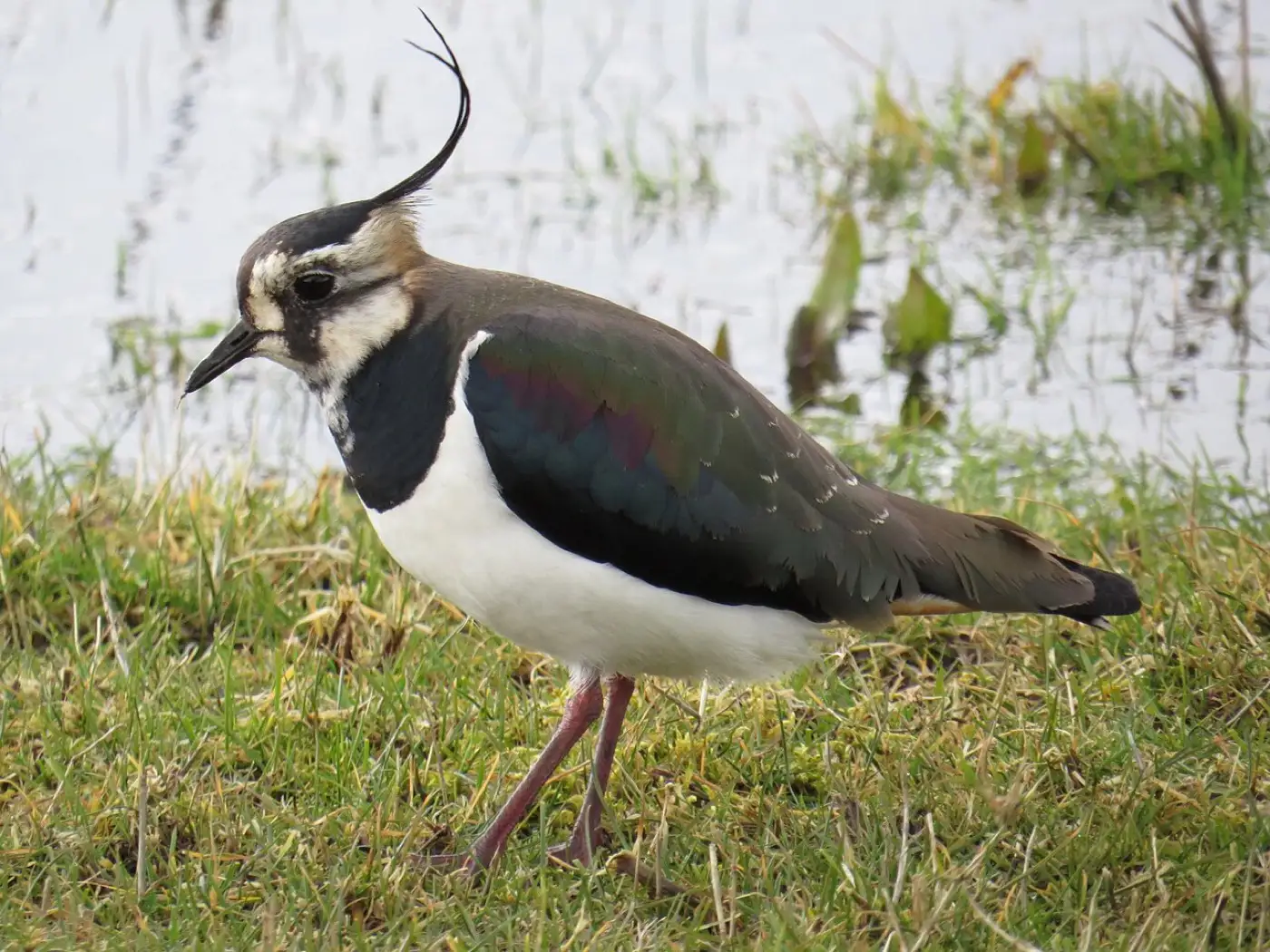
Unlike what usually happens with other members of the family, identifying the Lapwing raises no doubt. It is a medium-sized wader with a very short bill, wearing a striking crest of fine feathers, much longer in males than in females.
The male’s breeding plumage is characterised by a black crest, crown, forehead, throat and broad breast band. The underparts are mostly white, except the undertail coverts, which show an intense chestnut tone, while the upperparts have a lovely greenish colour, with metallic sheen. The female shows a very similar breeding plumage, but with the black of the face less marked and a shorter crest. Non-breeding birds look more like the female, and young birds have a less contrasting plumage and, above all, a much shorter crest than adults.
Male in breeding plumage
Crest, crown, forehead, throat and broad breast band black; belly white.
Back greenish with metallic sheen and chestnut undertail coverts.
Female, non-breeding birds and young
Female with the black of the face less marked and a shorter crest.
Young birds less contrasting and with a much shorter crest.
Habitat and distribution of the Northern Lapwing
It is a species of wide Palaearctic distribution, spreading across Europe, North Africa and western Asia, where it reaches northern China.
Within our territory, the Lapwing breeds only at some sites on the Peninsula. Its main breeding cores are in Castilla y León (Duero basin, with special mention for Villafáfila), Castilla-La Mancha, the Guadalquivir marshes and northern Málaga, and there are other less important cores in Galicia, Extremadura, Andalusia, Madrid and the Ebro valley. Spain receives a high number of birds in winter, with numbers and distribution fluctuating with the weather, and the Canaries are the only region it does not reach.
Iberian populations are resident, but in winter important contingents arrive from central and western Europe, from November until March. At this time it is distributed across a good part of the Peninsula and the Balearics, and it can make movements of some magnitude towards warmer areas when conditions worsen in the north.
The habitat par excellence of these waders is flood-prone plains, with extensive marshy areas and grasslands. As those sites have been turned into farmland and pasture, Lapwings have had to adapt to very modified environments: it breeds in pastures, wasteland, crops, temporarily floodable areas, transformed wetlands, rush beds and peat bogs, from sea level to 1,000 metres. In winter it occupies a greater diversity of open or semi-wooded environments, from marshes and «navazos» to dehesas, wasteland, fallows and pastures.
Areas where it is regularly recorded since 2010Squares of about 25 km where it is recorded regularly (occasional passage records are left out). Data from GBIF.org (166,517 records, retrieved October 2026); outline from Natural Earth.
Etymology of the Northern Lapwing
«Vanellus» is the medieval Latin name for the lapwing, and derives from «vannus», the winnowing fan. The Spanish name, «avefría», according to Wikipedia, derives from the cold months from October to March, during which it is very easy to see in Spain: the «ave fría», or «cold bird».
Population of the Northern Lapwing
In the 2021 European Red List of Birds the European breeding population is estimated at between 3,180,000 and 4,590,000 mature individuals, with a decreasing trend. The Spanish population is little known, and the data are based more on estimates than on censuses: the number of nesting pairs is put at around 1,600, always subject to strong year-to-year fluctuations. The winter figures also fluctuate greatly: between 1990 and 2002 they varied between 8,233 and 148,250 birds. There are signs of a major decline. The main threat is habitat degradation, through the drainage of lagoons and marshes, the channelling of streams and rivers, agricultural intensification, new irrigation, the ploughing of pastures and fallows, reforestation in marginal areas, gravel pits and infrastructure.
Nest of the Northern Lapwing
The eggs are laid in a shallow hollow in the ground, sometimes covered with plant material. Although they can nest alone, it is most usual for Lapwings to join in relatively compact colonies, which they defend cooperatively against predators.
Courtship and breeding of the Northern Lapwing
The breeding cycle lasts about 70 days. Most pairs begin breeding in May, although it can come earlier or later. Clutches generally consist of four pear-shaped eggs, cream or green and profusely speckled. Incubation lasts 26–28 days and is done by both adults, although the female spends more time. The chicks can move and feed themselves as soon as they hatch, although they still receive parental care, above all in the first days or in bad weather, and complete their development at 35–40 days.
Diet of the Northern Lapwing
The diet is made up mainly of terrestrial invertebrates, such as worms, beetles, grasshoppers, ants, millipedes, spiders and molluscs, which it supplements with some small vertebrates, such as frogs and small fish. It hunts by moving at some speed for short stretches and suddenly stopping to scan the ground by sight and hearing; on locating prey, it catches it with a quick movement of the neck and resumes the search. Occasionally it takes seeds and grasses.
Curious facts about the Northern Lapwing
It has always been associated, in rural communities, with the arrival of grey days and storms, cold and winter frosts. Although it breeds sparsely in Spain, every winter it receives a large contingent of European birds. The species’ European longevity record, 30 years and 3 months, belongs to a bird ringed in the Netherlands.
The Northern Lapwing in Cabañeros
This website’s page on wetlands lists it on the waterlogged meadows of Cabañeros, shallow seasonal wetlands that form with winter, when the annual grasslands of the raña flood, and dry out at the start of summer. It is one of the three winter species of these meadows, together with the Common Snipe and the European Golden Plover; the Common Quail is the summer one.
Where to see the Northern Lapwing in Cabañeros
On the waterlogged meadows of the raña of Cabañeros, in winter.
When
From November to March, when the contingents from Europe arrive; winter is when it is seen best.
What time
Throughout the day; its flocks move over the meadows.
Where
On flood-prone plains, pastures, fallows and crops; in winter, also in dehesas and wasteland.
What to look for
A thin-crested wader, black in front and white below, which runs a few steps and stops.
Videos of the Northern Lapwing
Similar species
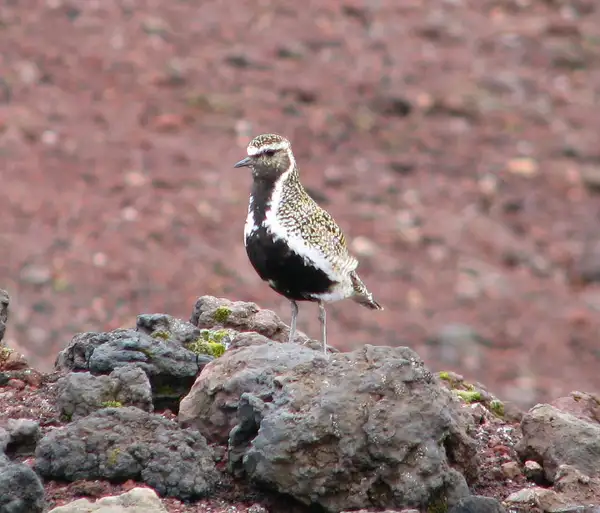
European Golden Plover
Pluvialis apricaria
How to tell them apart
It shares the waterlogged meadows in winter. It is a medium-sized wader, with a short bill and bulky body, with the back sprinkled with gold, yellow and black, and without the Lapwing’s crest.
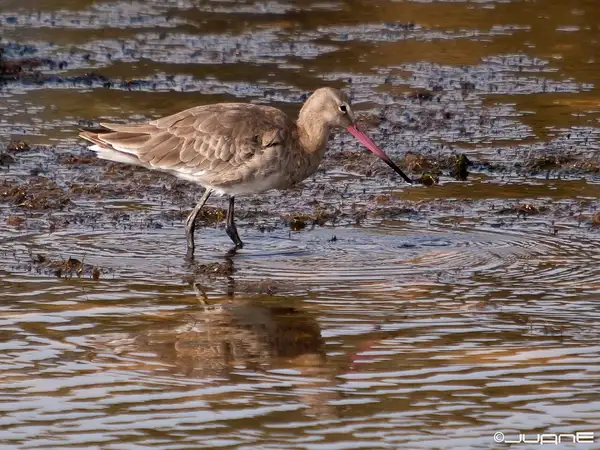
They are similar in song1. The Black-tailed Godwit is a good-sized wader, with a very long, straight bill, long legs and an elongated neck, of very slender look, without a crest.
Photo: Juan Emilio from Las Palmas de Gran Canaria, Spain, CC BY-SA 2.0
Other birds
Birds related to the Northern Lapwing or sharing its habitats in Cabañeros.



 Same family
 Same family
 Same family
 Also in wetlands
 Also in wetlands
 Same order
 Also in wetlands
 Same order






